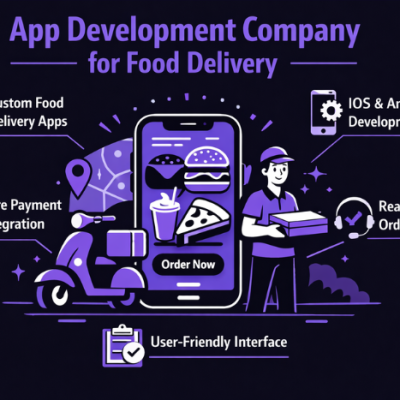
Discover the key features of a successful food delivery app, including GPS tracking, secure payments, smart search, and scalable technology.
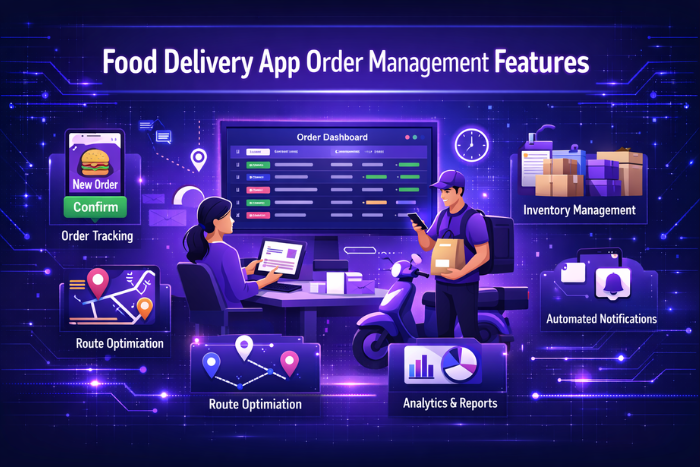
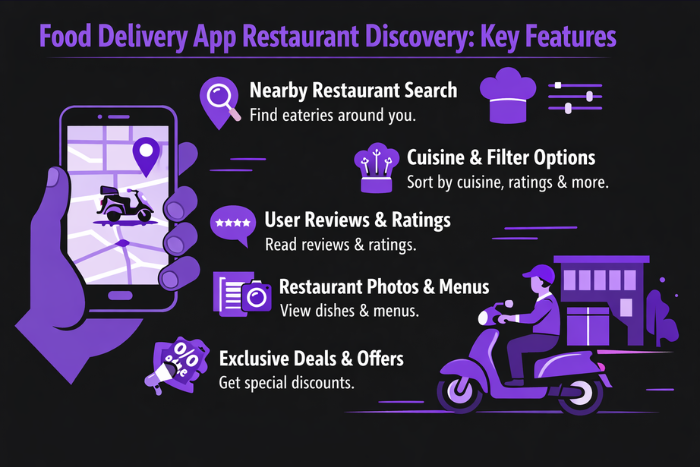
Key Features of a Successful Food Delivery App
The food delivery industry has experienced rapid growth as customers increasingly rely on mobile applications to order meals conveniently from restaurants and cloud kitchens. Businesses looking to enter this competitive market must focus on building a feature-rich and user-friendly platform that ensures a seamless ordering experience. Understanding the key features of a successful food delivery app is essential for creating a reliable, scalable, and customer-focused digital product.
A well-designed food delivery app allows customers to browse restaurant menus, place orders, make secure payments, and track deliveries in real time. At the same time, restaurants and delivery partners need efficient tools to manage orders, optimize delivery routes, and monitor performance. These integrated functionalities create a complete ecosystem that benefits customers, restaurants, and delivery personnel alike.
Successful apps combine intuitive user interfaces, secure payment gateways, real-time GPS tracking, and advanced analytics to enhance efficiency and user satisfaction. By implementing these essential features, businesses can improve customer engagement, streamline operations, and increase revenue. In this guide, we explore the most important features, development process, technology stack, and trends that help businesses build a successful food delivery application.
Why Key Features of a Successful Food Delivery App Are Important
The right set of features directly influences the performance, scalability, and user adoption of a food delivery application. Businesses that prioritize essential functionalities can create a seamless customer experience and improve operational efficiency.
Here’s why the key features of a successful food delivery app matter:
Improved Customer Convenience
Customers can easily browse menus, place orders, and receive meals without leaving their homes.Efficient Order Management
Restaurants can handle large volumes of orders through automated order processing systems.Real-Time Delivery Tracking
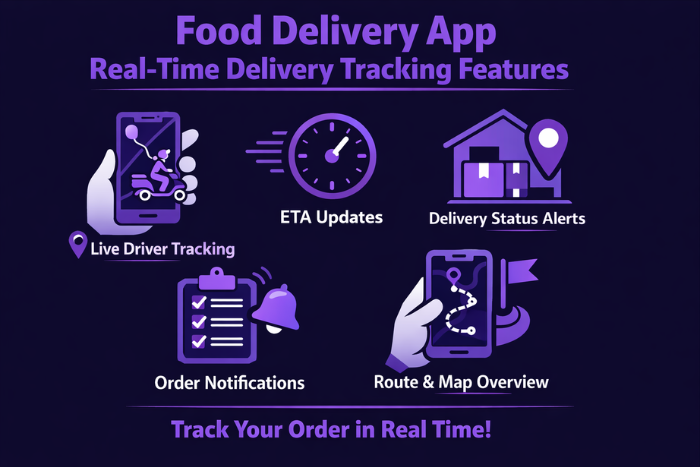
GPS tracking ensures transparency and improves customer trust in delivery timelines.Higher Customer Engagement
Push notifications, personalized offers, and loyalty programs encourage repeat orders.Streamlined Business Operations
Integrated dashboards help businesses manage users, restaurants, and delivery partners efficiently.Scalability for Growth
A robust app infrastructure allows businesses to handle increasing orders and user traffic.
By implementing the right features, food delivery platforms can deliver better user experiences and maintain a competitive edge.
Types of Food Delivery App Solutions
Different business models influence the features and architecture of a food delivery application.
Aggregator Food Delivery Apps
Platforms that connect customers with multiple restaurants, allowing them to browse menus and place orders from various vendors.Restaurant-Owned Delivery Apps
Applications developed for a single restaurant or brand to manage direct customer orders.Cloud Kitchen Delivery Apps
Apps designed for virtual restaurants operating without physical dining spaces.On-Demand Delivery Apps
Platforms that focus on fast or instant delivery services in specific geographic areas.Subscription-Based Food Delivery Apps
Apps offering recurring meal plans or membership-based delivery services.
Each type of solution requires tailored features, payment integrations, and delivery logistics management.
Key Features of a Successful Food Delivery App
A successful food delivery app must deliver convenience, speed, and reliability to both customers and restaurants. The following features play a critical role in building a competitive platform.
User Registration and Profile Management
Customers should be able to sign up using email, phone numbers, or social media accounts.Advanced Search and Smart Filters
Users can quickly find restaurants or dishes based on cuisine, price, ratings, or location.Menu Browsing and Item Customization
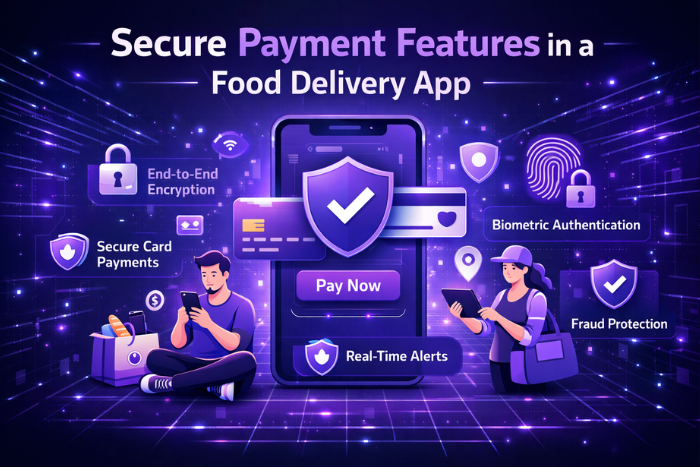
Customers can view detailed menus, select meal options, and customize orders.Secure Payment Gateway Integration
Support for multiple payment methods such as credit cards, digital wallets, and online banking.Real-Time GPS Order Tracking
Customers can monitor delivery progress and estimated arrival time.Push Notifications and Promotions
Businesses can send order updates, discounts, and promotional offers.Ratings and Reviews System
Customers can rate restaurants and delivery services to maintain quality standards.Reorder and Favorite Options
Users can easily reorder previously purchased meals.Multi-Address Support
Customers can save multiple delivery addresses for convenience.Delivery Partner Management System
Drivers can manage delivery tasks, track earnings, and navigate optimized routes.
These features ensure a smooth ordering process and improve overall customer satisfaction.
Development Process for a Successful Food Delivery App
Creating a scalable and efficient food delivery application requires a structured development process.
Requirement Analysis and Market Research
Identify target users, business model, and feature requirements for the platform.UI/UX Design and Prototyping
Design intuitive interfaces that simplify menu browsing, ordering, and payment.Backend and Frontend Development
Develop core functionalities such as restaurant listings, order processing, and delivery management.Payment Gateway and API Integration
Integrate secure payment systems, location services, and third-party APIs.Testing and Quality Assurance
Conduct performance testing, usability testing, and security audits.Deployment and App Store Launch
Release the application on mobile platforms and ensure stable performance.Maintenance and Continuous Improvement
Update features, fix bugs, and optimize performance based on user feedback.
This development approach helps businesses launch a reliable and scalable food delivery app.
Technology Stack for Food Delivery App Development
Choosing the right technology stack is essential for building a high-performance food delivery application.
Frontend Technologies: React Native, Flutter, Swift, Kotlin
Backend Technologies: Node.js, Python, Java, PHP
Databases: MongoDB, PostgreSQL, MySQL, Firebase
Cloud Platforms: AWS, Google Cloud Platform, Microsoft Azure
Payment Gateways: Stripe, PayPal, Razorpay, Apple Pay
Mapping and Navigation: Google Maps API, Mapbox
DevOps Tools: Docker, Kubernetes, CI/CD pipelines
Security Technologies: SSL encryption, OAuth 2.0, JWT authentication
These technologies help developers create scalable, secure, and efficient food delivery platforms.
Cost Factors in Successful Food Delivery App Development
The cost of building a food delivery app depends on several technical and business factors.
Complexity of features and functionalities
Platform choice (iOS, Android, or cross-platform)
Integration with payment gateways and mapping services
Number of user roles (customer, restaurant, delivery partner, admin)
UI/UX design customization
Third-party API integrations
Cloud infrastructure and hosting
Maintenance and post-launch updates
Basic applications with core features require lower investment, while advanced platforms with AI recommendations and large restaurant networks require higher budgets.
Latest Trends in Food Delivery App Development
The food delivery market continues to evolve as new technologies improve efficiency and customer experience.
AI-Powered Personalized Recommendations
Suggest meals based on user preferences and past orders.Voice-Based Ordering Systems
Customers can place orders using voice assistants.Smart Route Optimization for Delivery
Machine learning algorithms optimize delivery routes.Contactless and Digital Payment Solutions
Safe and convenient payment methods for customers.Cloud Kitchens and Virtual Restaurants
Businesses can operate delivery-only restaurants without physical dining spaces.Sustainable Delivery Practices
Eco-friendly packaging and electric delivery vehicles.Subscription-Based Meal Plans
Customers receive regular meals through subscription services.
Adopting these trends helps businesses remain competitive in the evolving food delivery market.
Why Choose Us for Food Delivery App Development?
Selecting the right development partner is crucial when building a successful food delivery application. Our team specializes in designing scalable, feature-rich food delivery platforms tailored to your business goals.
Here’s why businesses choose our services:
Expert Mobile App Developers – Experienced in building on-demand food delivery platforms.
User-Centered Design Approach – Intuitive interfaces that enhance customer experience.
Secure Payment and Data Protection – Implementation of industry-standard security protocols.
Scalable Cloud Infrastructure – Apps designed to handle high order volumes and growing users.
Advanced Analytics and Performance Monitoring – Data-driven insights for business growth.
Cross-Platform Development Expertise – Build apps for iOS, Android, and web platforms efficiently.
Agile Development Workflow – Transparent process with continuous collaboration.
Long-Term Support and Maintenance – Ongoing improvements and performance optimization.
We help businesses launch powerful food delivery apps that deliver exceptional user experiences and support long-term growth.
Ready to build a powerful food delivery mobile app?
Let our experts develop a feature-rich platform tailored to your business needs.
Contact us today for a free consultation and customized development plan.
Key Points :
- A successful food delivery app must provide an intuitive user interface that allows customers to easily browse menus, place orders, and navigate the platform.
- Advanced search and smart filters help users quickly find restaurants, cuisines, or dishes based on preferences, price, and ratings.
- Secure payment gateway integration supports multiple payment options such as cards, digital wallets, and online banking for safe transactions.
- Real-time GPS tracking enables customers to monitor their order status and estimated delivery time, improving transparency and trust.
- Real-time GPS tracking enables customers to monitor their order status and estimated delivery time, improving transparency and trust.
- Efficient delivery management systems and scalable cloud infrastructure ensure smooth operations and support business growth.
FAQ's
Essential features include restaurant listings, smart search filters, secure payment gateways, real-time GPS tracking, order management, and push notifications.
Development timelines typically range from three to six months depending on the complexity and features required.
Costs vary based on features, platform choice, integrations, and design requirements.
Popular technologies include React Native, Flutter, Node.js, Python, MongoDB, and cloud platforms like AWS.
Yes. GPS tracking helps customers monitor delivery progress and improves overall transparency.
Yes. AI can analyze user behavior and suggest personalized meals or restaurants.
Yes. Regular updates, security patches, and performance improvements are necessary to ensure smooth operation.