
Discover the must-have features of a bike rental app including booking, GPS tracking, payments, and fleet management to build a successful rental platform.
Must-Have Features of a Bike Rental App
Bike rental businesses are rapidly growing as cities embrace eco-friendly transportation, tourism, and shared mobility solutions. With the rise of smartphones and digital platforms, businesses are increasingly investing in mobile apps to streamline bike rental operations and enhance the customer experience. Understanding the must-have features of a bike rental app is essential for companies looking to launch a competitive and scalable rental platform.
A well-designed bike rental application simplifies the entire rental process—from discovering available bikes and booking rides to tracking usage and making secure payments. These applications not only improve operational efficiency but also provide customers with convenience, transparency, and flexibility.
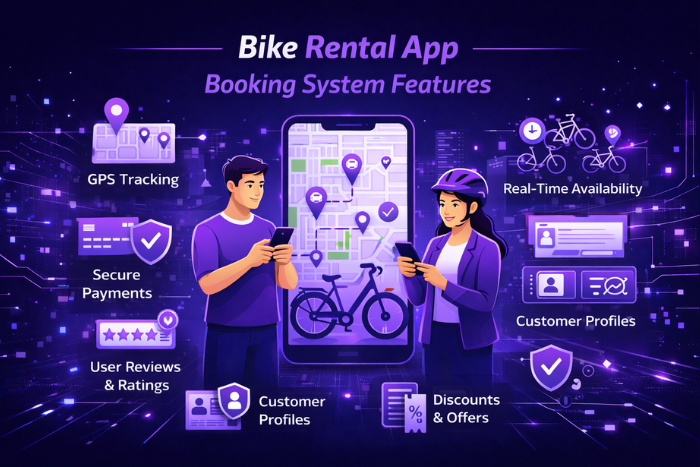
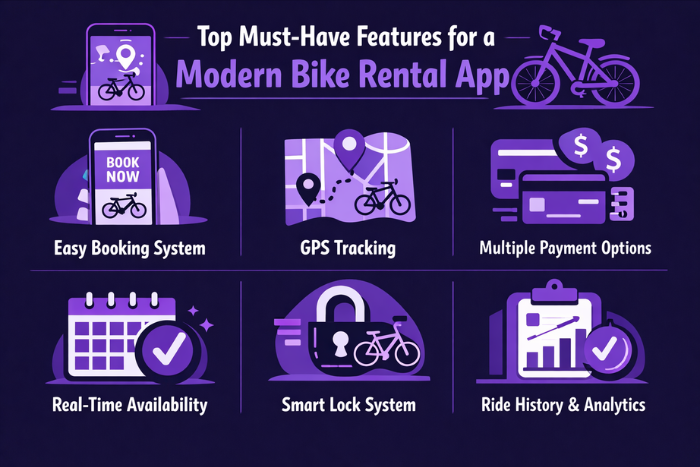
Modern bike rental apps typically include features such as real-time bike availability, GPS tracking, digital payments, booking management, and automated pricing systems. For business owners, these platforms also offer tools for fleet management, maintenance tracking, analytics, and customer engagement.
Whether you’re launching a startup bike rental service, expanding a tourism-based rental business, or building a large-scale bike-sharing platform, integrating the right features ensures smooth operations and long-term scalability. In this guide, we’ll explore the essential features every bike rental app should include, along with development considerations, technology stacks, costs, and emerging industry trends.
Why Must-Have Features of a Bike Rental App Are Important
Developing a bike rental application with the right functionality directly impacts both user experience and business efficiency. The success of any rental platform depends on how easily customers can book rides and how effectively operators can manage their fleet.
Here’s why including the right features in a bike rental app is crucial:
Improved Customer Convenience
Users can quickly find available bikes, book rentals, and complete payments through a single mobile interface.Efficient Fleet Management
Businesses can monitor bike availability, location, and maintenance needs in real time.Automated Booking and Scheduling
Rental platforms streamline reservations and prevent double bookings.Enhanced Security
GPS tracking, identity verification, and digital payments improve safety for both users and operators.Scalable Business Operations
Digital platforms allow rental businesses to expand to multiple locations while maintaining centralized control.Better Customer Insights
Data analytics helps businesses understand user behavior and optimize pricing strategies.
By implementing these essential features, businesses can create a seamless bike rental ecosystem that attracts customers and drives sustainable growth.
Types of Bike Booking App Solutions
Bike rental applications can be designed for different business models depending on the target market and operational structure.
Peer-to-Peer Bike Rental Platforms
These platforms allow individuals to list their bikes for rent while the app manages bookings, payments, and customer interactions.Bike Sharing Systems
Common in urban areas, these apps allow users to locate nearby bikes, unlock them through the app, and pay based on usage time.Tourism-Based Bike Rental Apps
These platforms cater to tourists and travelers who want to explore destinations using rented bicycles or motorcycles.Fleet-Based Rental Management Systems
Businesses with their own fleet use these apps to manage inventory, reservations, maintenance schedules, and payments.Subscription-Based Bike Rental Apps
Customers pay monthly or weekly subscription fees for unlimited or discounted bike rentals.
Each solution requires slightly different features, but the core functionality remains similar across most platforms.
Key Features of a Bike Rental App
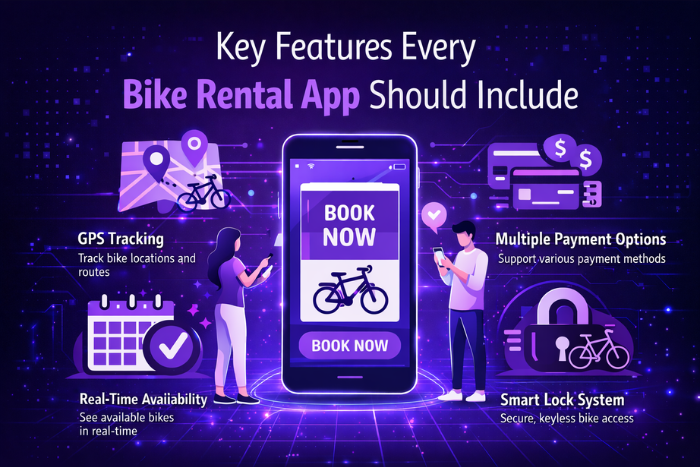
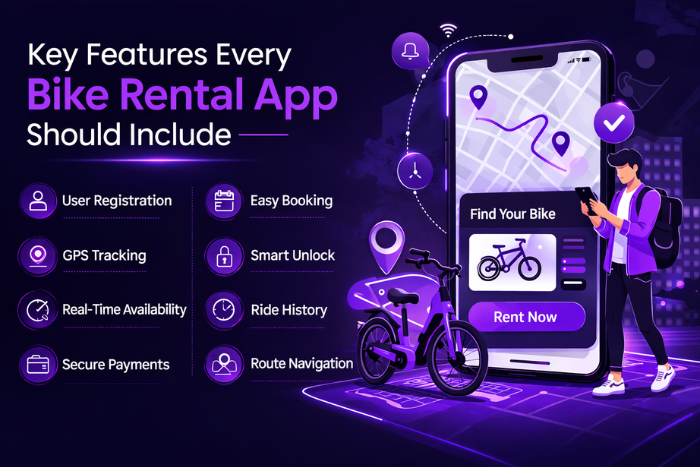
To build a successful bike rental platform, several core features must be included for both users and administrators.
User Registration and Profile Management
Customers should be able to register quickly using email, phone numbers, or social login. User profiles typically include identity verification, ride history, and payment details.
Bike Search and Availability
Users should be able to view nearby available bikes through a map-based interface that displays real-time availability.
Online Booking System
A seamless booking system allows customers to reserve bikes in advance or instantly rent one from a nearby location.
Real-Time GPS Tracking
GPS tracking helps users locate bikes and allows businesses to monitor fleet movement and security.
Digital Payments and Wallet Integration
Secure payment gateways allow customers to pay via credit cards, digital wallets, or in-app balances.
QR Code or Smart Lock Integration
Many modern bike rental apps use QR codes or smart locks to unlock bikes directly through the mobile application.
Fleet and Inventory Management
Administrators should have access to a dashboard that displays bike availability, status, and location across different locations.
Maintenance and Service Tracking
The system should notify operators when bikes require servicing or maintenance to ensure safety and reliability.
Dynamic Pricing System
Apps can adjust pricing based on demand, location, rental duration, or peak hours.
Booking History and Ride Analytics
Users can review past rides, while businesses can analyze usage patterns and customer preferences.
Push Notifications
Notifications inform users about booking confirmations, ride reminders, promotional offers, and updates.
Admin Dashboard and Reporting
Administrators can monitor performance metrics such as revenue, booking trends, and user engagement.
These features ensure a seamless experience for customers while helping operators manage their bike rental business effectively.
Development Process for a Bike Booking App
Building a high-quality bike rental application requires a structured development approach that ensures functionality, performance, and scalability.
Requirement Analysis and Market Research
Identify the target audience, business model, and core features required for the platform.UI/UX Design and Wireframing
Create intuitive interfaces that allow users to easily find bikes, make bookings, and manage payments.Technology Selection and Architecture Planning
Choose the appropriate frameworks, databases, and infrastructure for scalable development.Frontend and Backend Development
Developers build the mobile interface, backend systems, APIs, and administrative dashboards.Integration of Core Features
Implement booking systems, payment gateways, GPS tracking, and smart lock integrations.Testing and Quality Assurance
Perform security testing, performance testing, and usability testing to ensure reliability.Deployment and Launch
Publish the application on app stores and configure cloud infrastructure.Maintenance and Feature Updates
Continuously improve the platform with updates, bug fixes, and new features.
A well-defined development process ensures that the bike rental platform is reliable, secure, and scalable.
Technology Stack for Bike Rental App Development
Modern bike rental platforms rely on a combination of mobile technologies, cloud infrastructure, and analytics tools.
- Mobile App Development: Kotlin, Swift, Flutter, React Native
- Frontend Technologies: HTML5, CSS3, JavaScript, TypeScript
- Backend Technologies: Node.js, Python, PHP, Java
- Databases: PostgreSQL, MySQL, MongoDB, Firebase
- Maps and Location Services: Google Maps API, Mapbox
- Payment Gateways: Stripe, PayPal, Razorpay
- Cloud Platforms: AWS, Google Cloud Platform, Microsoft Azure
- DevOps Tools: Docker, Kubernetes, GitHub Actions, Jenkins
- Security Technologies: OAuth 2.0, JWT authentication, SSL encryption
Using a modern technology stack ensures reliable performance and seamless scalability as the platform grows.
Cost Factors in Developing a Bike Rental App
The cost of building a bike rental application depends on several factors including functionality, complexity, and development resources.
Major cost considerations include:
Number of features and integrations
Mobile platform requirements (Android, iOS, or both)
UI/UX design complexity
GPS and map integration
Payment gateway setup
Backend infrastructure and cloud hosting
Third-party integrations such as smart locks or IoT devices
Ongoing maintenance and updates
A basic bike rental app may require a moderate budget, while advanced platforms with AI features, fleet analytics, and IoT integrations may require a larger investment.
Latest Trends in Bike Rental App Development
The bike rental industry is evolving rapidly as new technologies transform how shared mobility platforms operate.
Some key trends include:
IoT-enabled smart bike locks for automated rentals
AI-powered demand forecasting and pricing models
Integration with smart city infrastructure
Electric bike (e-bike) rental platforms
Subscription-based rental services
Blockchain-based identity verification systems
Advanced analytics for fleet optimization
Sustainable transportation initiatives in urban areas
These innovations are shaping the future of mobility and creating new opportunities for bike rental businesses.
Why Choose Us for Bike Rental App Development
Building a successful bike rental application requires a strong combination of technology expertise, mobility solutions experience, and scalable architecture design.
Here’s why businesses partner with us:
Expertise in Mobility App Development – We build advanced transportation and rental platforms tailored to modern business needs.
Custom Feature Development – Our team integrates essential bike rental app features such as GPS tracking, booking systems, and digital payments.
Scalable Cloud-Based Architecture – Applications are built to support growing fleets and expanding markets.
Secure Payment and Data Systems – We implement industry-standard security protocols and encryption methods.
Intuitive User Experience – Our design approach focuses on seamless booking and navigation.
Flexible Business Model Support – We develop solutions for bike sharing, peer-to-peer rentals, tourism platforms, and fleet management systems.
End-to-End Development Services – From strategy and design to development and maintenance.
We help businesses launch reliable bike rental platforms that deliver excellent user experiences and sustainable growth.
Planning to build a bike rental mobile app for your business?
Our experts can help you design and develop a feature-rich bike rental platform.
Contact us today to discuss your project and get a customized development plan.
Key Points :
- Bike rental apps help users easily locate, book, and unlock bikes through mobile devices.
- Key features include real-time bike availability, GPS tracking, secure payments, and booking management.
- Advanced tools like fleet dashboards, maintenance tracking, dynamic pricing, and ride analytics improve operations.
- These apps use technologies such as cloud platforms, payment gateways, map APIs, and cross-platform frameworks.
- Development costs vary based on features, platform support, integrations, UI/UX design, and backend systems.
- New trends include IoT smart locks, e-bike rentals, AI-based pricing, and smart city mobility integration.
FAQ's
Essential features include user registration, bike search, real-time availability, booking systems, GPS tracking, digital payments, and fleet management tools.
Users locate available bikes through a map interface, reserve or unlock them using the app, ride the bike, and pay digitally after completing the trip.
The cost varies depending on features, platform requirements, integrations, and development complexity.
Yes. Most modern bike rental platforms include centralized fleet management that allows businesses to operate across multiple cities.
Technologies commonly include Flutter or React Native for mobile apps, Node.js or Python for backend development, and cloud platforms such as AWS or Google Cloud.
Yes. GPS tracking is essential for locating bikes, preventing theft, and monitoring fleet movement.
Tourism companies, transportation startups, bike-sharing platforms, and urban mobility services can all benefit from bike rental applications.