




Explore must-have features of a mobile app design including intuitive UI, security, fast performance, push notifications, and cross-platform compatibility.
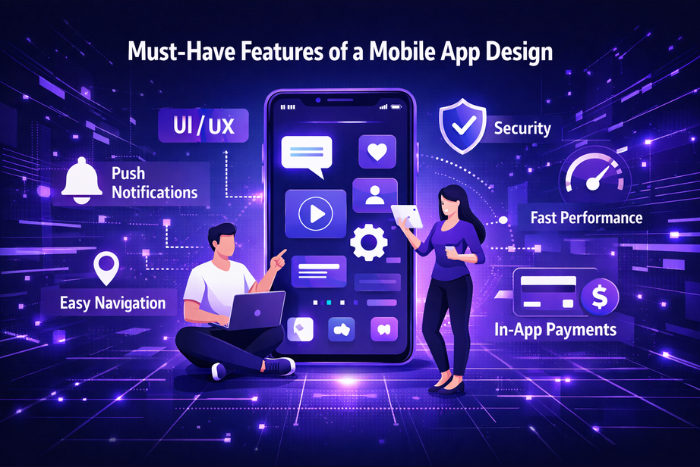
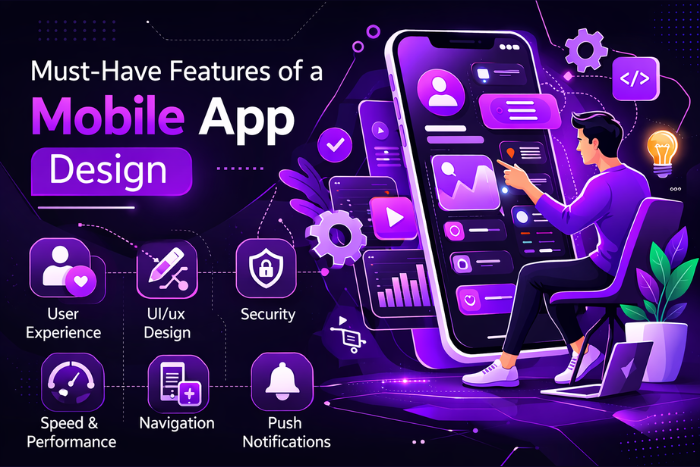
Must-Have Features of a Mobile App Design
Mobile applications have become a central part of modern digital experiences. From eCommerce platforms and banking apps to productivity tools and social media platforms, users rely on mobile apps to perform daily tasks quickly and efficiently. To meet user expectations and stand out in competitive app marketplaces, businesses must focus on the must-have features of a mobile app design.
A well-designed mobile app combines usability, performance, security, and engaging user interfaces to deliver a seamless experience. The design of an app is not just about visual aesthetics—it also determines how users interact with features, navigate through screens, and complete tasks. If the design is intuitive and responsive, users are more likely to stay engaged and continue using the application.
Successful mobile apps integrate essential elements such as simple navigation, responsive layouts, secure authentication, push notifications, and fast loading performance. These features help improve user satisfaction while also increasing retention rates and conversions.
Whether you are developing a startup application or upgrading an enterprise mobile platform, understanding the essential features of mobile app design helps ensure your app meets user expectations and performs effectively across devices.
Why Must-Have Features of a Mobile App Design Are Important
The success of a mobile application depends heavily on how well it meets the needs and expectations of its users. Apps that provide intuitive experiences and strong functionality tend to achieve higher user engagement and retention.
Here are several reasons why focusing on the must-have features of mobile app design is important:
Improved User Experience
A well-designed app allows users to navigate easily and complete tasks efficiently.Higher User Retention
Apps that perform smoothly and provide valuable features encourage users to return regularly.Better Performance and Reliability
Optimized design ensures apps run smoothly on different devices and operating systems.Enhanced Security and Data Protection
Security features help protect sensitive user information and build trust.Competitive Advantage
Apps with modern design and functionality stand out in crowded app marketplaces.Increased Conversion Rates
User-friendly design encourages actions such as purchases, subscriptions, or registrations.
By incorporating essential design features, businesses can create mobile apps that deliver both functionality and satisfaction.
Types of Mobile App Design Solutions
Different mobile app design approaches are used depending on the purpose and platform of the application.
Native App Design
Applications designed specifically for platforms like iOS or Android to maximize performance.Cross-Platform App Design
Apps built to function across multiple operating systems using a single codebase.Enterprise App Design
Applications designed for internal business processes and productivity.eCommerce Mobile App Design
Apps optimized for product browsing, purchasing, and payment processing.On-Demand Service App Design
Apps that connect users with services such as transportation, delivery, or booking systems.Progressive Web App (PWA) Design
Web-based apps that function like native mobile applications.
Each solution focuses on delivering efficient functionality while maintaining a seamless user experience.
Key Features of a Successful Mobile App Design
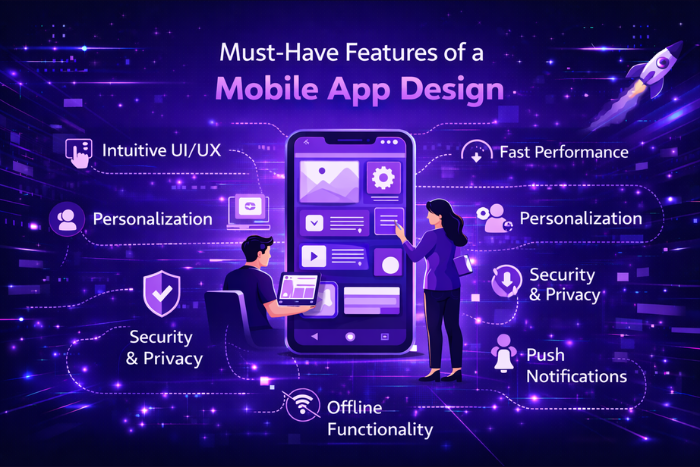
A high-performing mobile app incorporates several essential design features that improve usability, security, and engagement.
Intuitive User Interface (UI)
Simple and visually appealing design that makes navigation easy.Consistent Visual Design
Uniform colors, typography, and layouts that strengthen brand identity.Smooth Navigation and User Flow
Logical app structure that helps users move between screens effortlessly.Fast Loading Speed and Performance
Optimized code and assets ensure quick response times.Responsive and Adaptive Layouts
Interfaces that adjust to different screen sizes and orientations.Secure Authentication and Data Protection
Features such as biometric authentication, encryption, and secure login systems.Push Notifications
Timely alerts that keep users informed and engaged.Offline Functionality
Allowing certain features to work without an internet connection.Integration with Device Features
Access to camera, GPS, microphone, and sensors enhances app capabilities.User Feedback and Analytics
Tools that collect user insights and track app performance.
These features ensure that mobile apps remain functional, engaging, and reliable.
Development Process
Creating a successful mobile app design requires a structured development workflow.
Requirement Analysis and Research
Identify user needs, target audience, and business objectives.User Experience Strategy and Planning
Define user journeys, app features, and navigation structure.Wireframing and Prototyping
Design interactive prototypes that visualize app functionality.UI Design and Visual Development
Create visually appealing interfaces aligned with brand identity.App Development and Feature Integration
Implement the design using programming frameworks and APIs.Testing and Quality Assurance
Evaluate usability, performance, and compatibility across devices.Deployment and App Store Launch
Publish the application on app marketplaces.Monitoring and Continuous Improvement
Analyze user feedback and update the app regularly.
This structured approach ensures mobile apps deliver optimal performance and usability.
Technology Stack for Mobile App Design
Mobile app development uses various technologies and tools to build powerful and scalable applications.
Programming Languages: Swift, Kotlin, Java, Dart
Cross-Platform Frameworks: Flutter, React Native, Xamarin
UI Design Tools: Figma, Adobe XD, Sketch
Backend Technologies: Node.js, Firebase, Python
Database Systems: MongoDB, PostgreSQL, MySQL
Analytics Tools: Google Firebase Analytics, Mixpanel
Security Tools: OAuth authentication, biometric authentication, SSL encryption
Using modern technology stacks helps developers create efficient and scalable mobile applications.
Cost Factors in Mobile App Design
The cost of designing and developing a mobile application depends on several factors.
App complexity and number of features
Platform choice (iOS, Android, or cross-platform)
UI/UX design requirements
Third-party integrations and APIs
Security and compliance requirements
Development timeline
Testing and quality assurance processes
Maintenance and updates
Businesses can choose between basic MVP apps or fully customized applications depending on their budgets and goals.
Latest Trends
Mobile app design continues to evolve as technology and user expectations change.
Some of the most influential trends include:
AI-Powered Personalization
Apps that adapt content based on user behavior.Voice and Gesture-Based Interfaces
New interaction methods improving accessibility and convenience.Dark Mode and Adaptive Themes
Display options that enhance visual comfort.Augmented Reality (AR) Integration
Immersive user experiences in gaming, retail, and education apps.Minimalist UI Design
Simplified interfaces that improve usability.Super Apps and Multi-Feature Platforms
Apps combining multiple services in a single platform.Advanced Security Features
Biometric authentication and secure data encryption.
These trends demonstrate how mobile app design continues to evolve toward smarter and more personalized experiences.
Why Choose Us for Mobile App Design Services?
Choosing the right development partner is essential for building a successful mobile application. Our team combines creative design, advanced technology, and user-centered strategies to create mobile apps that deliver exceptional experiences.
Here’s why businesses trust our mobile app design services:
User-Focused Design Approach – Every feature is designed with the end user in mind.
Modern and Intuitive Interfaces – Apps that are visually appealing and easy to navigate.
Cross-Platform Development Expertise – Seamless functionality across multiple devices.
Performance-Optimized Applications – Fast, reliable apps that run smoothly.
Secure and Scalable Architecture – Built with strong security and future growth in mind.
Continuous Support and Optimization – Regular updates and performance improvements.
Our goal is to create mobile apps that deliver value to users while helping businesses achieve measurable growth.
Ready to design a powerful mobile app that users love?
Let our experts build an intuitive and high-performance mobile application for your business.
Contact us today for a free consultation and mobile app design proposal.
Key Points :
- A successful mobile app design includes intuitive UI, smooth navigation, and consistent visual elements to improve usability.
- Fast loading speed and optimized performance ensure users can interact with the app without delays.
- Strong security features such as data encryption and biometric authentication help protect user information.
- Responsive and adaptive layouts ensure the app works seamlessly across different devices and screen sizes.
- Push notifications help keep users engaged by delivering timely updates and personalized messages.
- Integration with device features like GPS, camera, and sensors enhances functionality and user experience.
FAQ's
Essential features include intuitive UI, smooth navigation, responsive design, fast performance, push notifications, and strong security.
Good UI/UX design improves usability, increases user satisfaction, and encourages long-term app usage.
Mobile apps should include data encryption, secure authentication, biometric login, and regular security updates.
The timeline depends on app complexity but typically ranges from several weeks to several months.
Popular platforms include iOS, Android, and cross-platform frameworks such as Flutter and React Native.
Design tools such as Figma, Adobe XD, and Sketch are commonly used.
Mobile apps improve customer engagement, increase brand visibility, and provide convenient access to products or services.
Costs vary depending on app features, complexity, and development requirements.