Discover the must-have features of a podcast website including audio players, episode management, SEO optimization, and audience engagement tools.
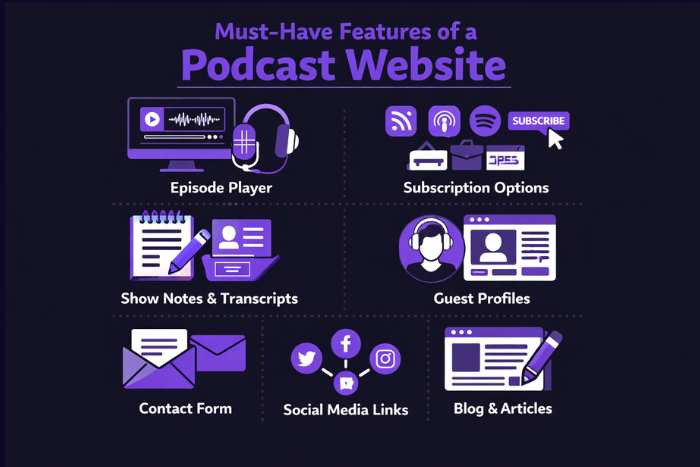
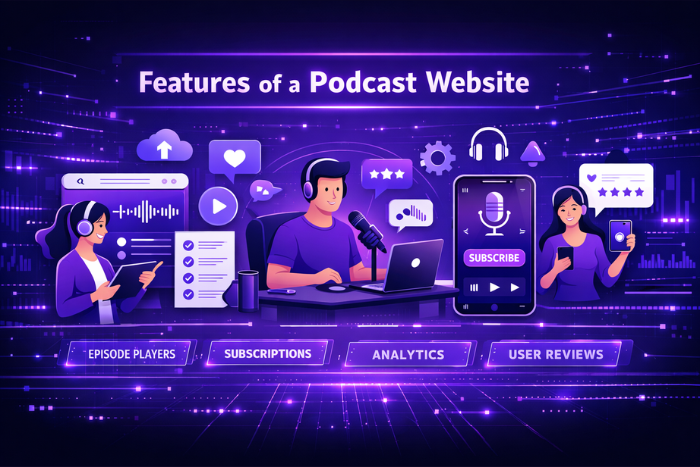
Must-Have Features of a Podcast Website
Podcasting has rapidly become one of the most powerful digital content formats, allowing creators, businesses, and educators to connect with audiences through engaging audio storytelling. While podcast hosting platforms distribute episodes across directories such as Spotify or Apple Podcasts, having a dedicated website is essential for branding, audience growth, and content discovery. Understanding the must-have features of a podcast website helps creators build a professional platform that enhances listener experience and expands their reach.
A well-designed podcast website acts as the central hub for all podcast-related content. It allows listeners to browse episodes, access show notes, subscribe to updates, and explore additional resources. Unlike third-party podcast directories, a website gives creators full control over design, branding, and user experience.
Modern podcast websites also integrate advanced tools such as embedded audio players, episode libraries, SEO optimization, analytics dashboards, and email subscription features. These capabilities help podcasters attract new listeners, track engagement, and monetize their content effectively.
Whether you are launching a new podcast or expanding an existing show, implementing the right website features ensures a professional platform that supports audience growth and long-term success.
Why Must-Have Features of a Podcast Website Are Important
A podcast website plays a crucial role in building brand identity and connecting with audiences beyond podcast streaming platforms. Without the right features, podcasters may miss opportunities to grow their listener base and increase engagement.
Here are key reasons why the must-have features of a podcast website are important:
Centralized Content Hub
A website organizes all podcast episodes, show notes, and resources in one place.
Improved Discoverability
SEO-friendly podcast websites help episodes appear in search engine results.
Stronger Brand Identity
Custom designs and branding strengthen the podcast’s identity and credibility.
Audience Engagement
Interactive features allow listeners to comment, share, and connect with hosts.
Monetization Opportunities
Websites enable sponsorship placements, affiliate links, and premium content.
Ownership and Control
Podcasters maintain full control over content distribution and user experience.
By implementing these features, podcast creators can build stronger relationships with their audiences while expanding their digital presence.
Types of Podcast Platform Solutions
Podcast websites can serve different purposes depending on the content strategy and audience goals.
Personal Podcast Websites
Platforms created by individual hosts to showcase episodes, blogs, and personal branding.
Business Podcast Websites
Companies use podcasts as part of their marketing strategy to share insights and industry knowledge.
Network Podcast Platforms
Websites hosting multiple podcasts under a single network or media brand.
Educational Podcast Platforms
Platforms delivering learning content through podcasts and supplementary materials.
Community Podcast Websites
Platforms where listeners interact, discuss episodes, and engage with podcast hosts.
Each type of podcast website requires specialized features to support content distribution, audience interaction, and growth.
Key Features of a Podcast Website
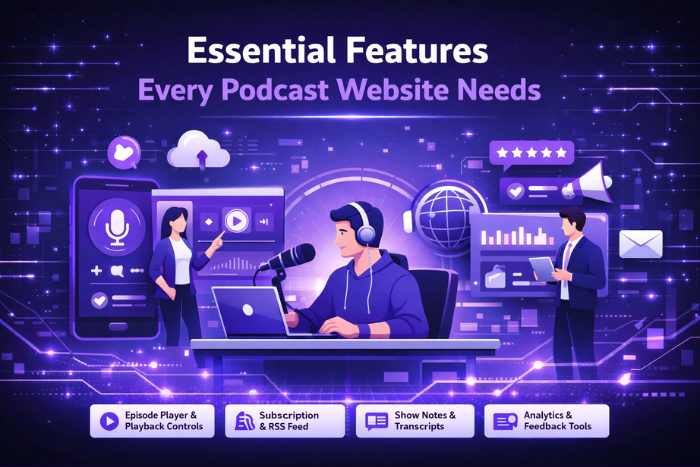
A successful podcast website includes multiple features that improve usability, accessibility, and engagement.
Embedded Podcast Audio Player
Built-in audio players allow visitors to listen to episodes directly on the website.
Episode Library and Archive
Organized episode libraries help users browse past podcast episodes easily.
Show Notes and Transcripts
Detailed show notes and transcripts improve accessibility and SEO visibility.
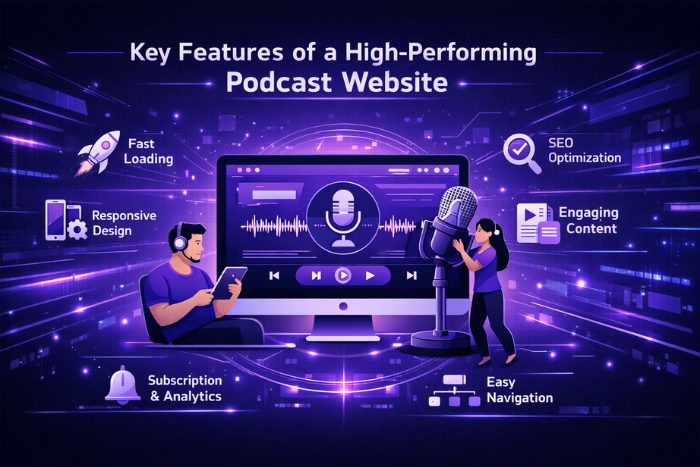
Responsive and Mobile-Friendly Design
Mobile optimization ensures smooth listening experiences across devices.
Search Functionality
On-site search tools help listeners quickly find specific episodes or topics.
Podcast Subscription Options
Links to major podcast platforms enable listeners to subscribe easily.
SEO Optimization
SEO-friendly structures help podcast episodes rank in search engines.
Social Media Integration
Sharing tools allow listeners to promote episodes across social platforms.
Email Newsletter Integration
Email subscription forms help podcasters build loyal audiences.
Listener Engagement Tools
Comment sections, feedback forms, and discussion boards encourage interaction.
Analytics and Listener Insights
Analytics tools help track downloads, listener behavior, and engagement.
Monetization Features
Integration with sponsorships, advertising, and membership platforms supports revenue generation.
These features ensure podcast websites provide engaging user experiences while supporting audience growth.
Development Process for a Podcast Website
Building a professional podcast website with key features requires careful planning and technical implementation.
Podcast Strategy Planning
Define the podcast niche, audience, and branding strategy.
Information Architecture Design
Structure episode libraries, categories, and navigation systems.
UI/UX Design
Design visually appealing layouts optimized for audio content.
CMS and Backend Development
Implement systems for episode management and content publishing.
Audio Integration and Hosting
Integrate audio players and podcast hosting services.
SEO and Performance Optimization
Optimize episode pages for search engines and fast loading speeds.
Testing and Quality Assurance
Conduct usability, performance, and security testing.
Deployment and Episode Publishing
Launch the website and publish podcast episodes regularly.
This structured development process ensures the podcast website remains scalable, secure, and user-friendly.
Technology Stack for Podcast Website Development
Modern podcast platforms rely on advanced technologies for performance and scalability.
Frontend Technologies: HTML5, CSS3, JavaScript, React.js, Vue.js
Backend Technologies: Node.js, PHP, Python
Content Management Systems: WordPress, Ghost, custom CMS
Databases: MySQL, PostgreSQL, MongoDB
Podcast Hosting Integrations: Spotify, Apple Podcasts, RSS feeds
Analytics Tools: Google Analytics, podcast analytics tools
Cloud Platforms: AWS, Google Cloud Platform, Microsoft Azure
Security Technologies: SSL encryption, authentication systems
DevOps Tools: Docker, CI/CD pipelines
These technologies help create scalable podcast platforms capable of supporting large audiences.
Cost Factors
The cost of developing a podcast website with essential features depends on several factors.
Key cost considerations include:
Custom website design and branding
Audio player and podcast hosting integration
Episode library and content management systems
SEO optimization and performance improvements
Email marketing and newsletter integrations
Monetization features such as sponsorship placements
Hosting infrastructure and scalability
Security and data protection measures
Maintenance and updates
Podcasters should consider both initial development costs and ongoing operational expenses.
Latest Trends in Podcast Website Development
Podcast platforms continue to evolve with new technologies enhancing audio experiences and audience engagement.
Key trends include:
AI-powered podcast transcription and summaries
Voice search optimization for podcast discovery
Interactive audio content and listener polls
Podcast video integration for multimedia storytelling
Subscription-based podcast models
Personalized episode recommendations
Mobile-first podcast websites
Advanced analytics for audience insights
These innovations are shaping the future of podcast platforms and digital audio publishing.
Why Choose Us for Podcast Website Development?
Creating a successful podcast website with key features requires expertise in audio integration, web development, and SEO optimization. Our team specializes in building podcast websites that help creators grow audiences and deliver engaging listening experiences.
Here’s why podcasters choose us:
Custom Podcast Website Development
Tailored platforms designed for professional podcast branding.
SEO-Optimized Podcast Pages
Websites structured to improve search engine visibility.
User-Friendly Audio Experience
Seamless audio players and episode libraries.
Scalable Content Management Systems
Efficient tools for managing podcast episodes and resources.
Performance Optimization
Fast-loading websites designed for smooth browsing.
Monetization Integration
Tools for sponsorships, memberships, and premium content.
Analytics and Listener Insights
Data-driven tools to understand audience engagement.
Long-Term Support and Maintenance
Continuous updates and performance improvements.
We help podcasters build powerful websites that expand reach, improve engagement, and grow loyal audiences.
Ready to launch your podcast website?
Let’s build a feature-rich platform that helps your podcast reach more listeners.
Contact us today for a free consultation and customized development plan.
Key Points :
- A podcast website should include an embedded audio player so visitors can listen to episodes directly on the site.
- An organized episode library helps users easily browse and access past podcast episodes.
- Show notes and transcripts improve accessibility and help podcasts rank better in search engines.
- Mobile-responsive design ensures listeners can access and play episodes smoothly on any device.
- Social media integration allows users to share podcast episodes and increase audience reach.
- Analytics tools help track downloads, listener behavior, and overall podcast performance.
FAQ's
Essential features include embedded audio players, episode libraries, SEO optimization, responsive design, and subscription links.
A podcast website improves discoverability, strengthens branding, and provides a central hub for episodes and resources.
Yes, podcast websites can embed audio players or integrate with podcast hosting platforms.
Development timelines typically range from 3–6 weeks depending on features and complexity.
Yes, podcasts can monetize through sponsorships, advertising, premium memberships, and affiliate marketing.
SEO optimization, social sharing, and email marketing help grow podcast audiences.
Yes, transcripts improve accessibility and help podcasts rank better in search engines.