Professional web developer portfolio design services to showcase your skills, projects, and experience with modern, responsive layouts.
Web Developer Portfolio
A powerful Web Developer Portfolio is more than just a personal website—it’s your digital identity, professional showcase, and most valuable marketing asset. Whether you’re a freelance developer, full-stack engineer, front-end specialist, or backend expert, your portfolio is often the first impression potential clients and employers have of your work.
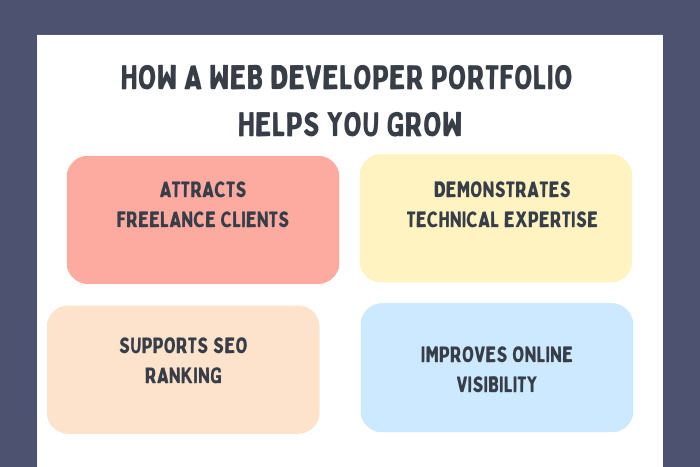
In a competitive tech industry, a well-designed developer portfolio helps you stand out by demonstrating your coding skills, UI/UX capabilities, project experience, and technical expertise. Instead of simply listing technologies on a resume, your portfolio proves your abilities through real projects, case studies, and live demos.
Our Web Developer Portfolio design services focus on creating modern, responsive, and performance-optimized portfolio websites tailored to your personal brand. From sleek minimal layouts to interactive and animated experiences, we build portfolios that highlight your strengths and convert visitors into clients or job opportunities.
If you’re ready to elevate your professional presence, let’s build a portfolio that truly represents your skills and potential.
Why This Service is Important
In today’s digital hiring landscape, resumes alone are not enough. Recruiters and clients want proof of your expertise.
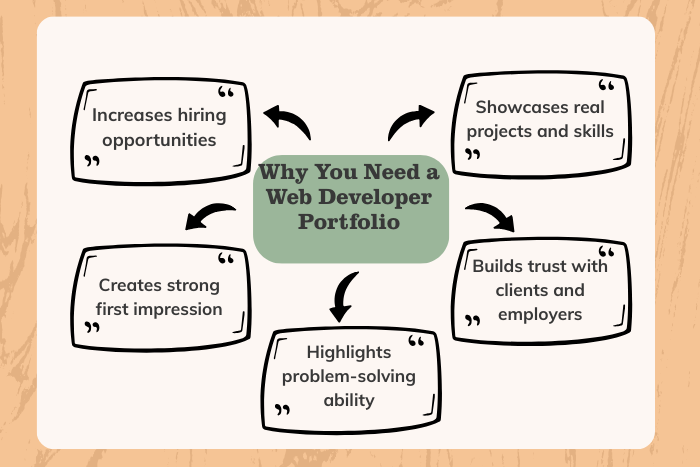
A professionally designed Web Developer Portfolio helps you:
Showcase real-world projects and code samples
Build credibility and trust
Highlight technical and soft skills
Demonstrate problem-solving abilities
Improve job and freelance opportunities
Strengthen personal branding
Rank on search engines for your name
Stand out in competitive job markets
Your portfolio acts as a 24/7 marketing tool, helping you attract opportunities even when you’re not actively applying.
Types of Web Developer Portfolio Solutions
We create custom portfolio solutions tailored to your career goals:
Personal Portfolio Website
A clean and modern site highlighting your bio, skills, and projects.Freelance Developer Portfolio
Designed to attract clients with service pages and testimonials.Full-Stack Developer Portfolio
Showcasing both frontend and backend projects with case studies.Creative & Interactive Portfolio
Animation-rich designs for designers and front-end specialists.Minimalist Portfolio Design
Clean layouts focused on content and performance.GitHub-Integrated Portfolio
Live project integration with repositories and demos.Resume + Portfolio Combo Website
Downloadable CV combined with interactive project showcase.One-Page Developer Portfolio
Compact, scroll-based layout ideal for quick impact.
Key Features of Our Web Developer Portfolio
We design portfolio websites that are:
Fully responsive and mobile-friendly
Fast-loading and performance-optimized
SEO-friendly for personal branding
Clean, modern, and visually appealing
Integrated with GitHub and live demos
Structured with project case studies
Equipped with contact forms and CTAs
Optimized for recruiters and clients
Secure and scalable
Easy to update and maintain
Each portfolio is customized to reflect your unique coding style, industry niche, and career goals.
Development Process
Our structured approach ensures a portfolio that delivers results:
Discovery & Branding Strategy
Understanding your skills, target audience, and personal brand.Content Planning
Structuring sections such as About, Skills, Projects, and Contact.Wireframing & Layout Design
Designing the visual hierarchy and user flow.UI/UX Design
Creating visually engaging and intuitive interfaces.Development & Coding
Building responsive, optimized portfolio websites.Integration & Testing
Connecting GitHub, live demos, and testing responsiveness.SEO Optimization
Optimizing meta tags, speed, and search visibility.Launch & Support
Deployment and ongoing updates if needed.
Technology Stack
We use modern technologies to build high-performance portfolios:
Front-End: HTML5, CSS3, JavaScript, React, Next.js
Frameworks: Tailwind CSS, Bootstrap
Backend (Optional): Node.js, PHP
CMS (Optional): WordPress, Headless CMS
Hosting: Vercel, Netlify, AWS
Version Control: Git & GitHub Integration
Optimization Tools: Lighthouse, Google Analytics
Cost Factors
The cost of creating a Web Developer Portfolio depends on:
Design complexity
Number of project pages
Custom animations and interactions
CMS integration
SEO optimization level
Hosting and domain setup
Custom backend functionality
Ongoing maintenance needs
A simple one-page portfolio is more affordable than a fully interactive multi-page portfolio with dynamic project management features.
Latest Trends in Web Developer Portfolio Design
Dark mode UI
Micro-interactions and smooth animations
Minimalist layouts
Interactive project previews
Case-study driven storytelling
AI-powered chat integrations
Personal branding through custom illustrations
Performance-first development
Modern portfolios are not just visually impressive—they are optimized for speed, usability, and storytelling.
Why Choose Us for Your Web Developer Portfolio?
We understand what recruiters and clients look for in a developer’s portfolio.
Here’s why professionals trust us:
Tailored Personal Branding – Every portfolio is unique.
Conversion-Focused Design – Built to attract opportunities.
Technical Excellence – Clean, maintainable code.
Modern UI/UX Principles – User-friendly and engaging layouts.
SEO Optimization – Improved visibility on search engines.
Scalable Solutions – Easy to expand as your career grows.
End-to-End Support – From idea to deployment.
We don’t just design websites, we build digital identities that help you grow professionally.
Ready to build a Web Developer Portfolio that stands out?
Let’s showcase your skills with a powerful, modern portfolio website.
Contact us today for a free consultation and custom design plan.
Key Points :
- A Web Developer Portfolio showcases real skills and projects, helping build trust with potential clients.
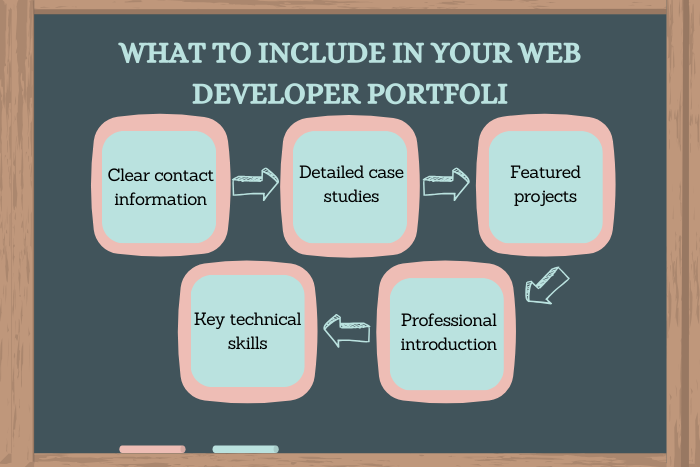
- Including detailed case studies improves credibility, by explaining problems, solutions, and results.
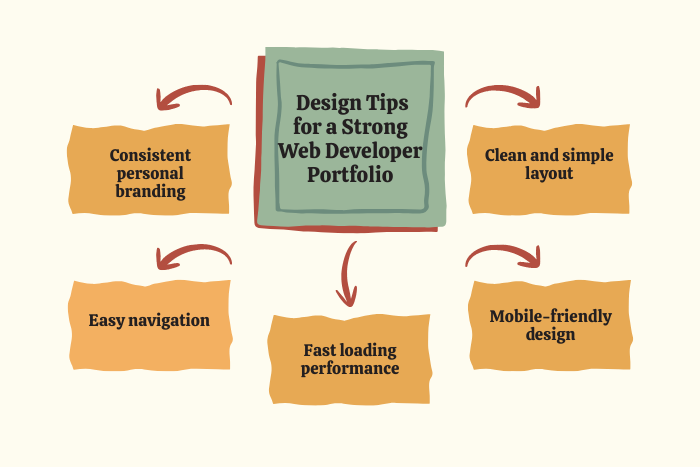
- Clean and simple design enhances user experience, making it easy for visitors to explore your work.
- Mobile-friendly and fast-loading portfolios attract more engagement, especially from smartphone users.
- Personal branding strengthens professional identity, through consistent colors, fonts, and messaging.
- Clear contact information improves conversion rates, making it easy for clients to reach you.
FAQ's
A Web Developer Portfolio is a personal website that showcases your projects, skills, and experience. It highlights real work instead of just listing qualifications.
A portfolio showcases your skills, projects, and experience beyond what a resume can offer.
Typically 3–6 high-quality projects with detailed case studies are ideal.
Yes, integrating GitHub increases credibility and demonstrates coding expertise.
Yes, SEO helps recruiters find your name and portfolio online.
Most portfolio websites take 1–4 weeks depending on complexity.
Yes, we offer redesign and optimization services.
It depends on your experience level and the number of projects you want to showcase.