


What Are the App Design Trends in 2024? Complete Guide
Discover the top app design trends in 2024 including AI UX, dark mode, minimal UI, microinteractions, and immersive experiences.
What Are the App Design Trends in 2024?
Mobile applications are evolving rapidly, and design plays a crucial role in determining their success. A well-designed mobile app not only attracts users but also improves engagement, usability, and customer satisfaction. If you’re wondering what are the app design trends in 2024, the focus is shifting toward intelligent, immersive, and user-centered experiences powered by modern technologies and advanced design principles.
In 2024, app design is moving beyond traditional user interfaces to deliver personalized, accessible, and interactive experiences. Innovations such as AI-powered personalization, voice interfaces, AR/VR integration, minimalistic layouts, and dark mode are shaping the future of mobile application design. These trends are helping businesses create apps that are more intuitive, visually appealing, and aligned with modern user expectations.
Companies that adopt modern UI/UX trends can significantly improve user retention, brand perception, and product adoption. Whether you are designing a startup application, enterprise mobile platform, or SaaS product, staying updated with the latest design practices ensures your application remains competitive in the digital marketplace.
In this guide, we explore the most important mobile app design trends of 2024, their benefits, and how businesses can implement them to create exceptional user experiences.
Why Modern App Design Trends in 2024 Are Important
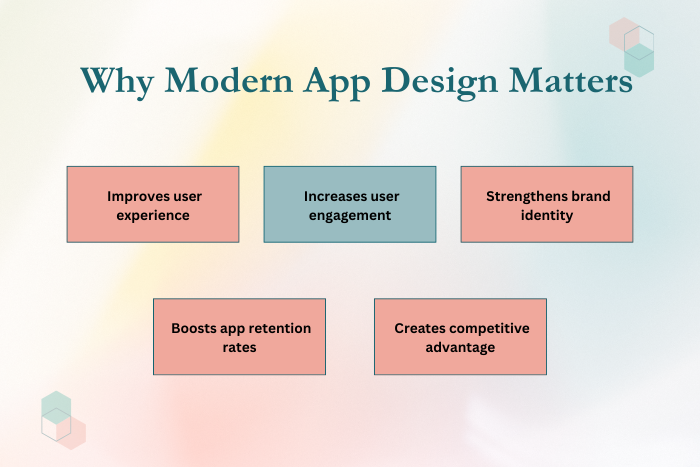
User expectations are constantly evolving, and mobile app design must adapt to deliver seamless experiences. Implementing modern design trends helps businesses improve usability, engagement, and overall application performance.
Here are some reasons why modern app design trends matter:
Enhanced User Experience
Modern design practices make apps easier to navigate and more enjoyable to use.Higher User Engagement
Interactive elements like animations and microinteractions keep users engaged.Improved Accessibility
Inclusive design ensures apps are usable by people with different abilities.Stronger Brand Identity
Consistent visual design strengthens brand recognition.Better Conversion Rates
Well-designed apps encourage users to complete actions like purchases or sign-ups.Competitive Advantage
Businesses that follow the latest design trends stand out in crowded marketplaces.
Adopting modern UI/UX trends ensures that your application meets current user expectations and remains relevant.
Types of Modern App Design Solutions
Different design approaches help businesses create engaging and functional mobile applications.
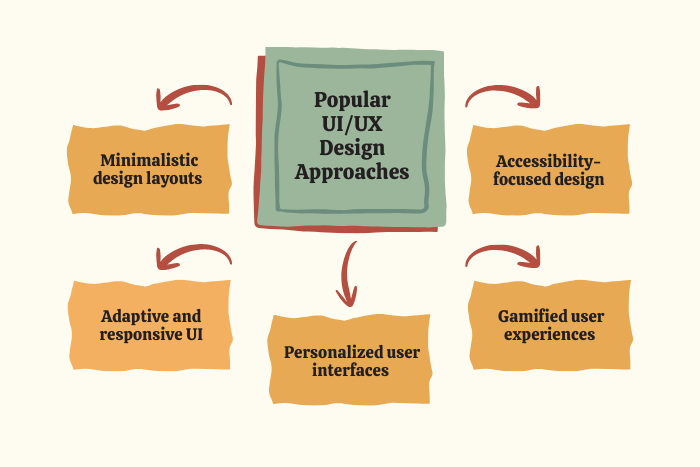
Minimalistic UI Design
Clean layouts with fewer visual elements improve usability and focus user attention on important features.
Dark Mode and Adaptive Themes
Dark mode reduces eye strain and improves readability, especially in low-light environments.
Voice User Interface (VUI)
Voice-enabled interfaces allow users to interact with applications using voice commands.
Augmented Reality (AR) Experiences
AR enables immersive interactions in industries such as retail, education, and gaming.
Personalized User Interfaces
AI-driven personalization adapts content and design based on user behavior.
Gamified User Experience
Gamification elements such as rewards and progress tracking increase engagement.
Each of these solutions contributes to creating modern, intuitive, and engaging mobile apps.
Key Features of Modern App Design
Successful mobile applications incorporate design features that improve usability, performance, and visual appeal.
Important features include:
Clean and intuitive user interface
Responsive design for different screen sizes
Smooth animations and microinteractions
Personalized user experiences
Accessible and inclusive design elements
Seamless navigation and user flows
High-performance visual elements
Secure and privacy-focused interfaces
These features help deliver a smooth and engaging digital experience for users.
App Design Development Process
Designing a successful mobile application requires a structured approach to ensure usability and performance.
User Research and Market Analysis
Understand user behavior, preferences, and industry trends.Information Architecture Planning
Organize app content and navigation structure.Wireframing and Layout Design
Create low-fidelity layouts that define the app structure.UI/UX Design Creation
Develop high-fidelity visual designs with colors, typography, and interactions.Prototype Development
Build interactive prototypes to test user flows.Usability Testing
Collect feedback from users to identify design improvements.Design Refinement
Optimize the design based on feedback and testing results.Design Handoff to Development Team
Deliver final design assets and guidelines for development.
Following this process ensures the final application delivers a high-quality user experience.
Technology Stack Based on App Design Trends in 2024
Modern UI/UX design relies on various tools and technologies that support efficient design workflows.
- Design Tools: Figma, Adobe XD, Sketch, InVision
- Prototyping Tools: Marvel, Proto.io, Axure
- User Research Tools: Maze, Hotjar, UserTesting
- Collaboration Tools: Notion, Slack, Miro
- Frontend Technologies: HTML5, CSS3, JavaScript, React
- Animation Tools: Lottie, Principle, Framer Motion
- Cloud Collaboration: Google Drive, Dropbox, GitHub
These tools help designers create interactive prototypes and collaborate effectively with development teams.
Cost Factors in App Design
The cost of designing a mobile application depends on several factors:
Complexity of the user interface
Number of screens and features
Level of design fidelity (basic vs advanced UI)
Custom illustrations, animations, and graphics
User research and usability testing
Integration with branding guidelines
Prototyping and interaction design
Investing in professional app design can significantly improve user satisfaction and product success.
Latest Trends in Mobile App Design (2024)
Several emerging trends are shaping the future of mobile app UI/UX design.
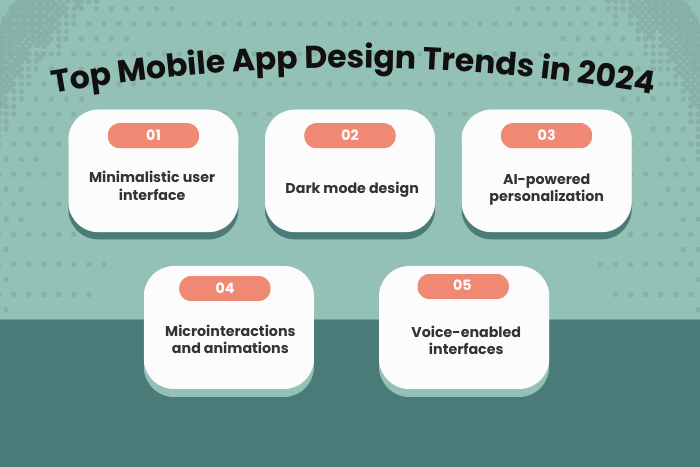
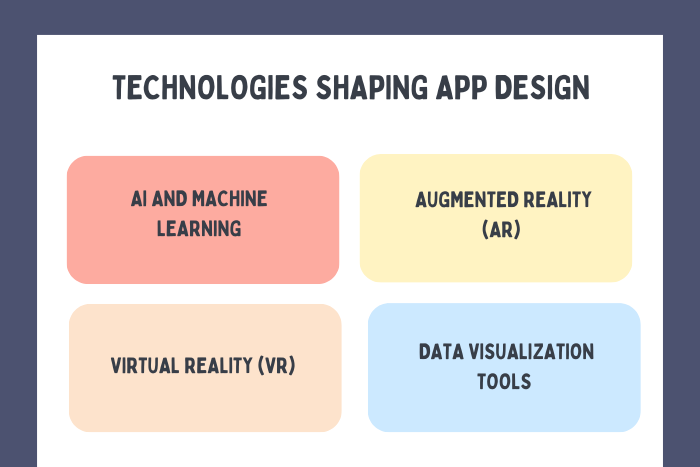
AI-powered personalization that adapts the interface based on user behavior
Voice-enabled interfaces for hands-free interaction
AR and VR experiences for immersive engagement
Minimalistic UI with bold typography
Dark mode and adaptive color schemes
Advanced microinteractions and animations
Data visualization dashboards for analytics-driven apps
Accessibility-focused design for inclusive experiences
These trends help businesses build apps that are modern, engaging, and aligned with user expectations.
Why Choose Us for App Design Services?
Choosing the right design partner can significantly impact your application’s success. Our team specializes in creating modern, user-centered mobile app designs that combine aesthetics with functionality.
Here’s why businesses trust us for mobile app design:
User-Centered Design Approach – We design apps based on user behavior, research, and usability principles.
Expert UI/UX Designers – Our team has extensive experience designing apps across industries.
Modern Design Tools and Technologies – We use industry-leading tools like Figma and Adobe XD.
Scalable Design Systems – Design frameworks that support future growth and feature expansion.
Cross-Platform Design Expertise – Consistent design experiences across iOS and Android devices.
Performance-Focused Interfaces – Designs optimized for speed and responsiveness.
Collaborative Design Process – Continuous communication with clients throughout the project.
End-to-End Product Design Services – From research and wireframing to final UI delivery.
We create visually stunning and user-friendly mobile applications that drive engagement and business growth.
Ready to design a modern mobile app that users love?
Let our experts create a stunning UI/UX experience for your application.
Contact us today for a free consultation and customized design strategy.
Key Points :
- Modern app design focuses on user-friendly and intuitive interfaces.
- Minimalistic UI and bold typography are major design trends in 2024.
- Dark mode and adaptive themes improve visual comfort and usability.
- AI-powered personalization enhances user experience and engagement.
- AR and VR integration creates immersive app experiences.
- Microinteractions and animations improve user interaction and feedback.
- Voice-enabled interfaces are becoming popular in mobile apps.
- Accessibility-focused design ensures apps are usable for all users.
FAQ's
Key trends include AI personalization, dark mode, AR/VR integration, minimalistic design, and microinteractions.
Good UI/UX design improves usability, engagement, and overall user satisfaction.
Popular tools include Figma, Adobe XD, Sketch, InVision, and Axure.
Dark mode is a design feature that uses darker color schemes to reduce eye strain and improve readability.
AI helps personalize interfaces, recommend content, and enhance user experiences.
Microinteractions are small animations or feedback responses that improve user engagement.
The timeline depends on the complexity but typically ranges from a few weeks to several months.
Yes, intuitive design and smooth user experience significantly improve retention rates.