

Discover what are the app development best practices for building secure, scalable, and high-performing mobile and web applications.
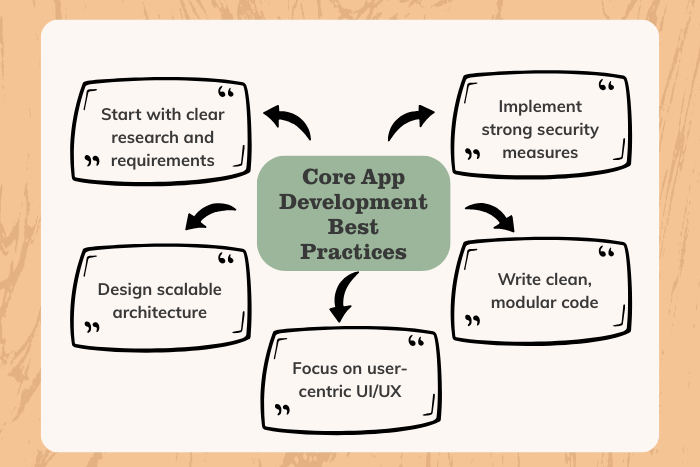
What Are the App Development Best Practices?
If you’re asking, “What are the app development best practices?”, you’re likely looking to build a mobile or web application that is secure, scalable, high-performing, and user-friendly. In today’s competitive digital landscape, simply launching an app is not enough. Businesses must follow proven application development standards to ensure long-term success, optimal performance, and seamless user experience.
App development best practices cover every stage of the lifecycle — from research and planning to architecture design, coding standards, testing, deployment, and post-launch optimization. Whether you’re building a startup MVP, enterprise platform, SaaS product, or customer-facing mobile app, following structured development methodologies reduces risk, improves efficiency, and maximizes ROI.
This comprehensive guide explains the most important mobile and web app development best practices, including solution types, core features, development processes, technology stack considerations, cost factors, and emerging trends — helping you build a future-ready digital product.
Why App Development Best Practices Are Important
Following app development best practices is critical for delivering reliable, scalable, and secure applications. Poor planning, weak architecture, or inadequate testing can lead to performance issues, security vulnerabilities, and costly redesigns.
Here’s why best practices matter:
Improved App Performance – Optimized architecture ensures speed and responsiveness.
Enhanced Security – Secure coding and data protection reduce breach risks.
Better User Experience (UX) – User-centered design increases retention.
Scalability & Flexibility – Cloud-ready systems handle growth efficiently.
Faster Time-to-Market – Agile and CI/CD practices streamline releases.
Lower Long-Term Costs – Proper planning reduces technical debt.
By implementing modern application development standards, businesses can avoid common pitfalls and build software that performs reliably across devices and platforms.
Types of Development Solutions
When discussing what are the app development best practices, it’s important to understand different solution models:
Native App Development – Platform-specific apps (iOS with Swift, Android with Kotlin) offering maximum performance and device integration.
Cross-Platform App Development – Single codebase solutions using Flutter or React Native to deploy on multiple platforms.
Web Application Development – Browser-based applications built using modern frontend frameworks.
Progressive Web Apps (PWAs) – Hybrid solutions combining web and mobile features.
Enterprise Application Development – Secure, scalable internal systems integrated with CRM, ERP, and legacy tools.
Cloud-Native Applications – Apps designed for cloud infrastructure with microservices architecture.
Choosing the right development approach depends on business goals, budget, performance requirements, and scalability needs.
Key Features of High-Quality App Development
Adhering to best practices ensures applications include essential features that drive long-term success:
User-Centric UI/UX Design
Secure Authentication & Data Encryption
Scalable Architecture (Microservices or Modular Design)
API-First Development Strategy
Performance Optimization & Caching
Cross-Device Compatibility
Automated Testing & QA Integration
Analytics & Monitoring Tools
Cloud Integration & Backup Systems
Accessibility Compliance
Modern apps must be intuitive, secure, responsive, and capable of handling large user bases without downtime.
App Development Process Following Best Practices
A structured development lifecycle ensures predictable and high-quality outcomes:
Market Research & Requirement Analysis
Identify target users, competitors, and key pain points before writing any code.Define Scope & MVP Planning
Prioritize core features to reduce risk and validate quickly.Architecture Design & Technology Selection
Choose scalable frameworks and define system architecture.UI/UX Prototyping & Wireframing
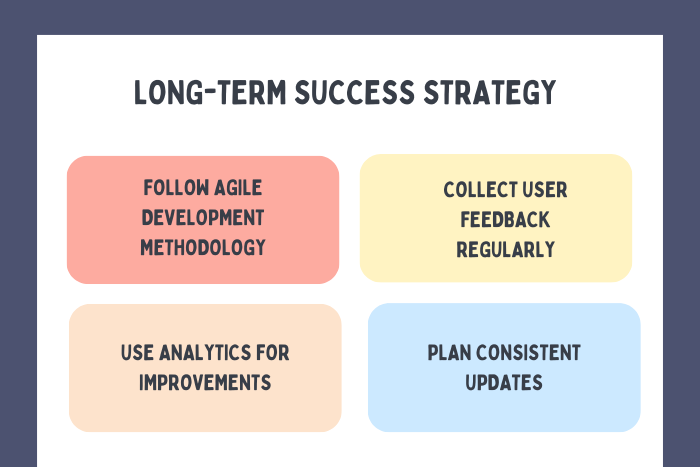
Validate user flows before development begins.Agile Development & Modular Coding
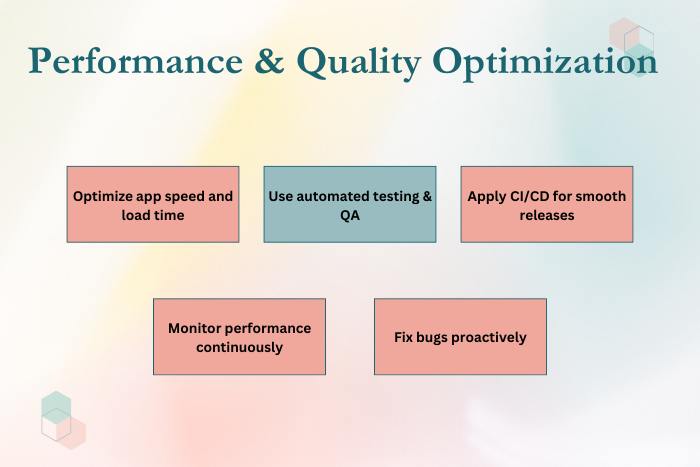
Use sprint-based development cycles for flexibility.Testing & Quality Assurance
Perform unit testing, integration testing, security testing, and load testing.Continuous Integration & Continuous Deployment (CI/CD)
Automate builds and releases for faster updates.Deployment & Monitoring
Launch with monitoring tools to track performance and stability.Maintenance & Iterative Improvements
Release updates, fix bugs, and optimize based on analytics.
This structured approach minimizes technical debt and improves product stability.
Technology Stack for Modern Application Development
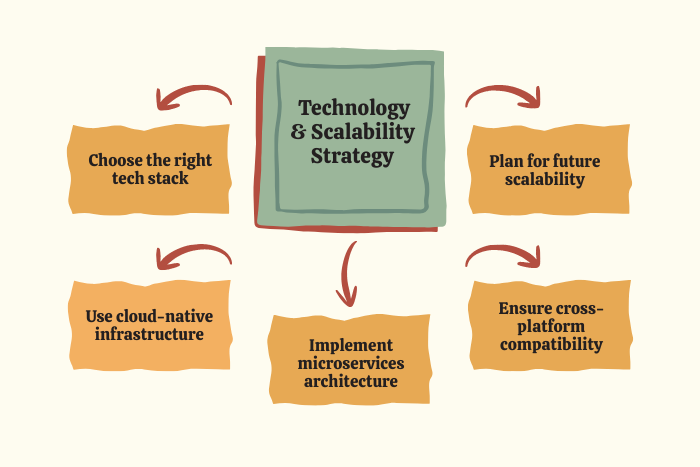
Selecting the right technology stack is a foundational best practice.
- Frontend Technologies:
React.js, Angular, Vue.js, Flutter, React Native - Backend Technologies:
Node.js, Python (Django/FastAPI), .NET Core, Java Spring Boot - Databases:
PostgreSQL, MySQL, MongoDB, Firebase - Cloud Platforms:
AWS, Microsoft Azure, Google Cloud - DevOps & CI/CD Tools:
Docker, Kubernetes, GitHub Actions, Jenkins - Security Tools:
OAuth 2.0, JWT Authentication, SSL/TLS Encryption
Choosing scalable, secure, and well-supported technologies ensures long-term maintainability and performance.
Cost Factors in App Development
Understanding cost considerations is a key part of following best practices:
App complexity and feature set
Platform selection (iOS, Android, Web)
UI/UX design requirements
Backend infrastructure and scalability
Security and compliance needs
Third-party integrations
Testing and QA requirements
Post-launch maintenance and updates
Investing in proper architecture and testing may increase initial cost but significantly reduces long-term operational expenses.
Latest Trends in App Development Best Practices
Modern application development continues evolving. Key trends include:
AI-Powered Applications & Automation
Cloud-Native & Serverless Architectures
Microservices & Modular Design
Low-Code & No-Code Acceleration Tools
DevSecOps Integration
Edge Computing & IoT Integration
Progressive Web Apps (PWAs)
Enhanced Cybersecurity Measures
Staying updated with these trends ensures your application remains competitive and future-proof.
Why Choose Us for App Development Following Best Practices?
Building a high-performing application requires technical expertise, strategic planning, and industry experience. We specialize in delivering scalable, secure, and user-centric applications aligned with modern development standards.
Here’s why businesses trust us:
Architecture-First Approach – Built for scalability and performance.
Security-Focused Development – Compliance-ready solutions.
Agile & Transparent Workflow – Predictable delivery timelines.
Cross-Platform Expertise – Native and hybrid app specialists.
CI/CD & DevOps Implementation – Faster and reliable releases.
Ongoing Optimization & Support – Continuous performance enhancement.
We don’t just develop apps — we engineer digital solutions that drive measurable growth.
Ready to build a high-performance, scalable application?
Let’s implement the best app development practices for your next project.
Contact us today for a free consultation and project estimate.
Key Points :
- Understand what are the app development best practices for building secure and scalable applications.
- Learn how user-centric design improves mobile app performance and engagement.
- Discover the importance of secure coding and data protection in modern app development.
- Explore the right technology stack for mobile, web, and cloud-native application development.
- Identify key cost factors that impact app development and long-term maintenance.
- Stay updated with the latest trends like AI integration, microservices architecture, and DevSecOps practices.
FAQ's
App development best practices include proper research, scalable architecture design, secure coding, user-centric UX, automated testing, and continuous deployment strategies.
Secure coding prevents vulnerabilities, protects user data, and ensures compliance with industry regulations.
Native apps are built specifically for one platform, while cross-platform apps use a single codebase to run on multiple platforms.
Continuous Integration and Continuous Deployment automate testing and releases, reducing errors and accelerating updates.
User experience directly impacts retention, engagement, and customer satisfaction.
Development time depends on complexity but typically ranges from 3–6 months for a full-featured application.
Start with MVP planning, use agile methodology, implement automated testing, and monitor performance post-launch.
Yes. We offer maintenance, monitoring, updates, and performance improvements to ensure long-term success.