




What Are the App Development Best Practices for Performance? Guide
Discover the best practices for app development performance including optimization techniques, scalable architecture, testing, and modern technologies.
What Are the App Development Best Practices for Performance?
Application performance is one of the most critical factors that determine the success of a mobile or web application. Slow loading times, crashes, or poor responsiveness can lead to user frustration and ultimately cause users to uninstall the app. Businesses often ask what are the app development best practices for performance because optimizing performance directly impacts user satisfaction, retention, and overall business growth.
Modern applications are expected to deliver smooth user experiences across multiple devices, operating systems, and network conditions. Achieving this requires developers to follow proven development practices such as efficient code optimization, scalable architecture, resource management, and continuous performance testing.
Performance optimization is not just about making an app run faster; it also involves improving responsiveness, reducing resource consumption, and ensuring stability during high user traffic. From startup time optimization and database efficiency to network performance and UI rendering, multiple factors influence how well an application performs.
In this guide, we will explore the best practices for app development performance, including key optimization strategies, development processes, technology stacks, cost considerations, and emerging trends that help businesses build high-performing applications.
Why App Development Best Practices for Performance Are Important
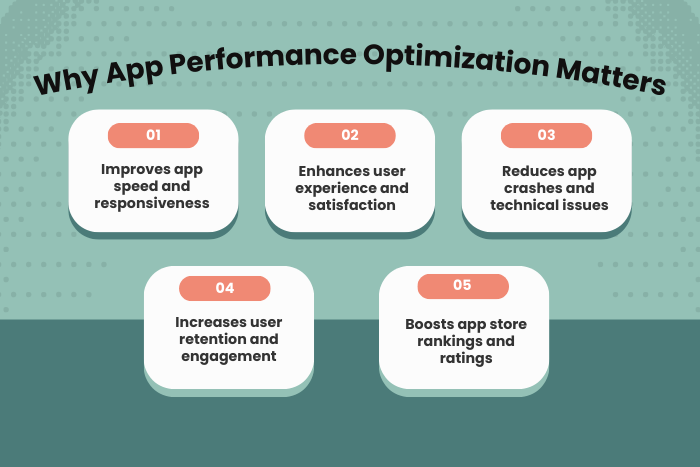
High-performance applications create better user experiences and improve business outcomes. Optimizing application performance ensures that users can interact with the app smoothly without delays or technical issues.
Key reasons performance optimization is important include:
Improved User Experience
Fast-loading apps provide seamless navigation and enhance customer satisfaction.Higher User Retention Rates
Applications with poor performance often experience high uninstall rates.Better App Store Rankings
App stores prioritize high-performing apps with better ratings and engagement.Reduced Server and Resource Usage
Efficient applications consume fewer resources and reduce infrastructure costs.Scalability for Growing User Bases
Performance optimization ensures that apps remain stable during traffic spikes.Competitive Advantage
High-performing apps stand out in competitive markets and attract more users.
Businesses that prioritize performance optimization can deliver better digital products and improve long-term application success.
Types of App Performance Optimization Solutions
Several optimization strategies can improve application speed, responsiveness, and reliability.
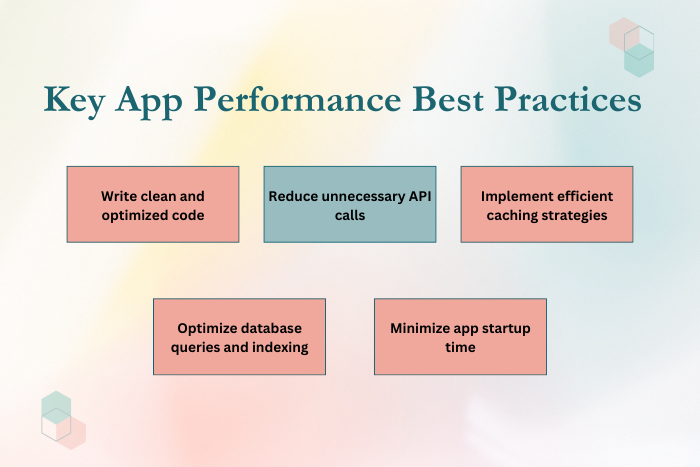
Startup Time Optimization
Reducing the time required for an app to launch and load essential resources.UI Performance Optimization
Improving animations, rendering speed, and responsiveness of the user interface.Backend Performance Optimization
Enhancing server response times and database performance.Network Optimization
Reducing API latency and optimizing data transfer.Memory Management Optimization
Preventing memory leaks and optimizing memory allocation.Database Performance Optimization
Improving query performance and indexing strategies.Code Optimization and Refactoring
Removing unnecessary code and improving execution efficiency.Cloud Performance Optimization
Using scalable cloud infrastructure to support high traffic.
These solutions ensure that applications perform consistently across different devices and platforms.
Key Features of High-Performance Applications
Applications built with performance best practices include features that ensure reliability, speed, and scalability.
Important features include:
Fast application startup and loading times
Smooth user interface animations and transitions
Efficient background processing
Optimized API communication and data transfer
Intelligent caching mechanisms
Scalable backend infrastructure
Efficient database queries and indexing
Error monitoring and crash reporting systems
Adaptive performance for different network conditions
Real-time analytics and monitoring tools
Resource-efficient memory and CPU usage
Offline functionality for improved user experience
These features help deliver fast and reliable application performance across devices.
App Performance Optimization Development Process
Optimizing application performance requires a structured development approach.
Performance Requirement Analysis
Identify performance goals, expected traffic, and user behavior.Architecture Planning
Design scalable system architecture to support high user loads.Code Optimization
Implement efficient algorithms and remove redundant processes.UI and Frontend Optimization
Improve rendering performance and reduce unnecessary UI updates.Backend and API Optimization
Improve server performance and reduce API response times.Database Optimization
Implement indexing, caching, and query optimization techniques.Performance Testing
Conduct load testing, stress testing, and benchmarking.Monitoring and Analytics Integration
Implement tools for monitoring app performance and crash reporting.Deployment and Optimization
Launch the application and continuously improve performance.Ongoing Maintenance
Monitor performance metrics and release updates to improve efficiency.
This development process ensures applications remain fast and reliable.
Technology Stack for High-Performance Applications
The right technology stack plays a crucial role in application performance.
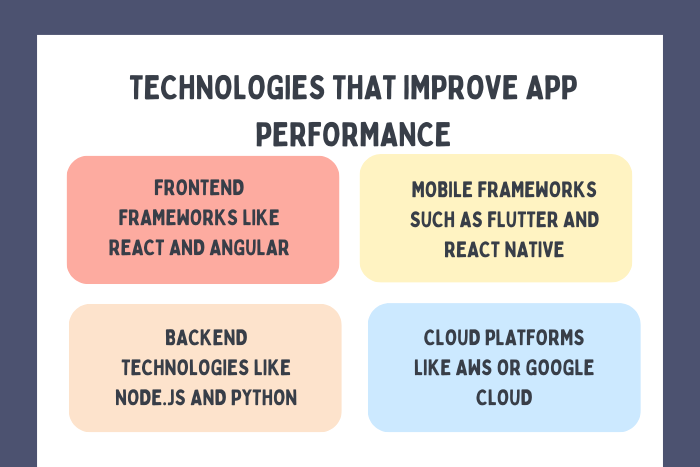
Frontend Technologies: React.js, Angular, Vue.js, HTML5, CSS3, TypeScript
Mobile Development: Flutter, React Native, Swift, Kotlin
Backend Technologies: Node.js, Python, Java, Go, .NET
Databases: PostgreSQL, MySQL, MongoDB, Redis
Cloud Platforms: AWS, Google Cloud Platform, Microsoft Azure
API Technologies: RESTful APIs, GraphQL
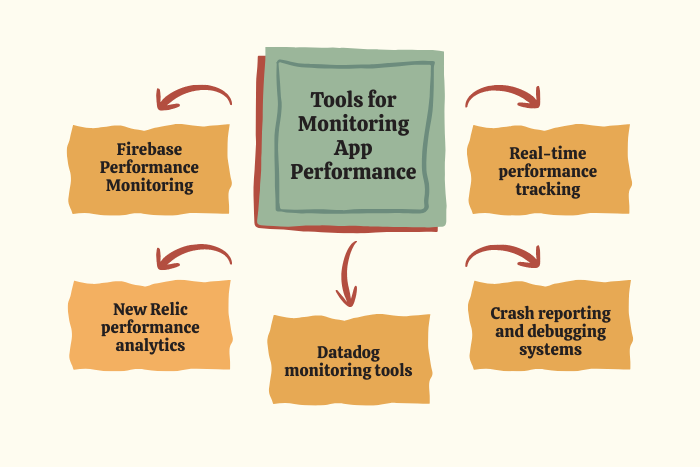
Performance Monitoring Tools: New Relic, Firebase Performance Monitoring, Datadog
DevOps Tools: Docker, Kubernetes, CI/CD pipelines
Using modern technologies helps developers build scalable and high-performance applications.
Cost Factors in App Performance Optimization
The cost of performance optimization depends on various technical and operational factors.
Key cost factors include:
Application complexity and architecture design
Level of performance optimization required
Integration with monitoring and analytics tools
Cloud infrastructure and server configuration
Performance testing and benchmarking requirements
Development team expertise and experience
Maintenance and continuous performance improvements
Investing in performance optimization often reduces long-term operational costs and improves user satisfaction.
Latest Trends in App Performance Optimization
Modern technologies are introducing new methods for improving application performance.
Important trends include:
Edge computing for faster data processing
Serverless architecture for scalable backend systems
AI-driven performance monitoring tools
Advanced caching techniques for faster data access
Microservices architecture for scalable applications
Progressive Web Apps (PWAs) with optimized performance
Low-code development platforms with optimized frameworks
Real-time analytics for performance tracking
These trends enable businesses to build faster and more scalable applications.
Why Choose Us for Performance-Optimized App Development?
Building a high-performance application requires expertise in modern development frameworks, system architecture, and performance monitoring tools. Our team focuses on creating optimized digital products that deliver exceptional user experiences.
Here’s why businesses choose us:
Performance-First Development Approach
Applications are optimized for speed, responsiveness, and reliability.Expert Development Team
Skilled developers with expertise in modern frameworks and scalable architectures.Advanced Optimization Techniques
Implementation of caching, load balancing, and efficient data management.Comprehensive Performance Testing
Extensive load testing, stress testing, and benchmarking.Scalable Infrastructure Design
Cloud-native architecture that supports growing user traffic.Continuous Monitoring and Optimization
Real-time analytics and performance monitoring tools.Secure and Stable Applications
Optimized systems with strong security and stability.Long-Term Technical Support
Ongoing performance improvements and updates.
Ready to build a high-performance application?
Let our experts optimize your app for speed, scalability, and reliability.
Contact us today for a free consultation and project estimate.
Key Points :
- App performance best practices focus on improving speed, responsiveness, and stability across devices.
- Key optimization techniques include efficient code structure, caching, database optimization, and API performance improvements.
- Performance testing methods such as load testing, benchmarking, and monitoring help detect issues early.
- Modern frameworks like React, Flutter, Node.js, and cloud platforms support scalable app performance.
- Performance monitoring tools like Firebase Performance Monitoring and New Relic help track app behavior.
- Emerging trends include serverless architecture, edge computing, microservices, and AI-based performance monitoring.
FAQ's
They include optimizing code, improving UI rendering, reducing API latency, and implementing scalable architectures.
High-performance apps provide better user experiences and improve user retention rates.
Startup time can be improved by optimizing code loading, reducing resource usage, and using efficient initialization processes.
Tools like Firebase Performance Monitoring, New Relic, and Datadog help monitor application performance.
Caching stores frequently used data temporarily to reduce server requests and improve response times.
Yes, optimized apps consume fewer resources, which can reduce infrastructure and operational costs.
Apps should undergo regular testing during development and after updates to ensure consistent performance.