

Discover the app development costs for large businesses, including enterprise features, technology stacks, development stages, and cost factors.
What Are the App Development Costs for Large Business?
Mobile and enterprise applications have become critical digital assets for large businesses aiming to improve customer engagement, streamline operations, and scale their services globally. Organizations across industries such as finance, retail, healthcare, and logistics rely on mobile apps to provide seamless digital experiences to customers and employees. Because enterprise-level applications require complex infrastructure and advanced functionality, many companies ask what are the app development costs for large business before starting their projects.
Unlike small startup apps or simple MVPs, enterprise applications involve larger development teams, robust backend architecture, integrations with multiple systems, and strict security compliance. These apps may include advanced features such as AI-powered analytics, cloud scalability, real-time data processing, and enterprise resource integration. As a result, the cost of developing apps for large businesses varies significantly depending on complexity, technology choices, and project scope.
Understanding the cost factors involved in large-scale app development helps businesses plan budgets effectively and choose the right development strategy. In this guide, we explore the key aspects of enterprise app development costs, including development stages, technology stacks, cost drivers, and the latest trends shaping large-scale digital solutions.
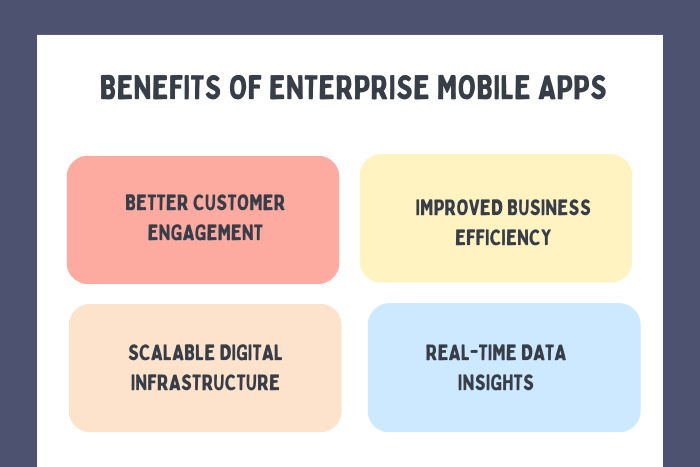
Why Enterprise App Development Services Are Important
Large businesses operate in highly competitive digital environments where efficient software solutions are essential for growth. Enterprise mobile and web applications allow companies to automate processes, improve productivity, and deliver better customer experiences.
Here are several reasons why enterprise app development services are important:
Enhanced Customer Engagement
Mobile apps allow businesses to connect directly with customers through personalized services.Operational Efficiency
Enterprise applications streamline workflows and automate complex business processes.Scalable Digital Infrastructure
Large organizations require applications capable of supporting millions of users.Data-Driven Decision Making
Apps provide analytics and insights that help companies improve strategies.Competitive Advantage
Businesses with advanced digital platforms can innovate faster and stay ahead of competitors.
For large organizations, investing in high-quality app development is essential for long-term growth and digital transformation.
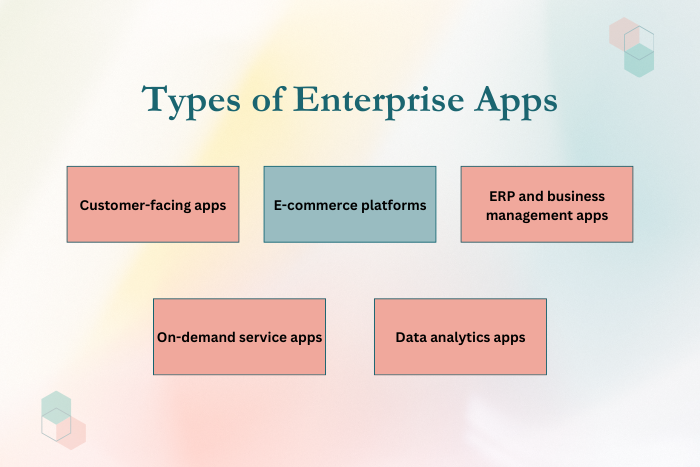
Types of App Development Solutions for Large Business
Large businesses develop different types of applications depending on operational needs and business goals.
Customer-Facing Mobile Applications
Apps designed to improve customer experience, such as retail, banking, and service apps.Enterprise Resource Planning (ERP) Apps
Platforms that help businesses manage resources, finances, and operations.E-Commerce Applications
Large-scale online shopping platforms with secure payment systems and inventory management.Internal Business Management Apps
Tools used by employees to manage tasks, collaboration, and productivity.On-Demand Service Platforms
Applications supporting delivery, booking, logistics, or transportation services.Data Analytics and Business Intelligence Apps
Platforms that analyze business data to provide actionable insights.
These enterprise solutions help large businesses optimize processes and deliver high-quality digital experiences.
Key Features That Impact App Development Costs for Large Business
Enterprise applications require advanced features to support large-scale operations and high user traffic.
High Scalability
Systems capable of handling large user bases and high data volumes.Secure Authentication and Data Protection
Features such as multi-factor authentication and encryption.Real-Time Data Processing
Instant updates and analytics for operational efficiency.API and Third-Party Integrations
Integration with CRM systems, payment gateways, and enterprise software.Cloud Infrastructure Support
Cloud-based architecture ensures reliability and scalability.Advanced Analytics and Reporting
Dashboards and reports that support strategic decision-making.User Role Management
Access control for different user roles within the organization.Cross-Platform Compatibility
Applications accessible across mobile devices, tablets, and desktops.
These features ensure enterprise apps can support complex business operations.
Enterprise App Development Process
Developing an enterprise-level application involves multiple stages to ensure reliability and performance.
Market Research and Business Analysis
Understand business goals, user needs, and market trends.Project Planning and Requirement Gathering
Define app features, integrations, and technical architecture.UI/UX Design
Create user-friendly interfaces suitable for large-scale applications.Application Development
Develop frontend and backend systems using scalable technologies.Integration with Enterprise Systems
Connect the app with CRM, ERP, payment systems, and third-party tools.Testing and Quality Assurance
Conduct performance testing, security checks, and bug fixing.Deployment and Launch
Release the application on app stores or enterprise platforms.Maintenance and Continuous Improvement
Provide updates, monitoring, and performance optimization.
Following a structured development process ensures enterprise apps remain reliable and scalable.
Technology Stack for Enterprise App Development
Enterprise applications require robust technologies that support scalability, security, and performance.
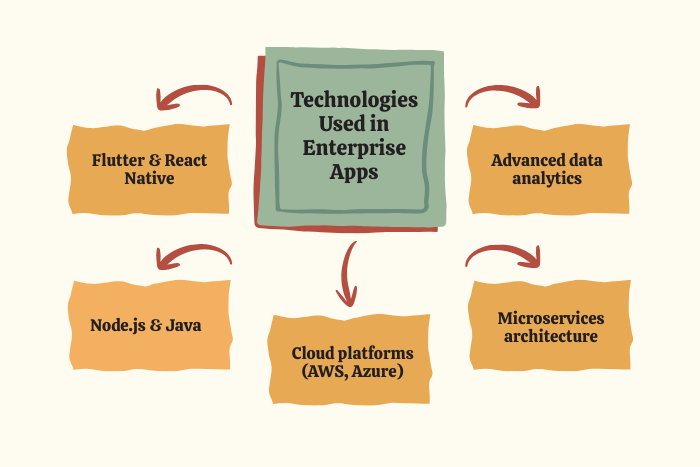
Mobile Development: Swift, Kotlin, Java, Dart
Cross-Platform Frameworks: Flutter, React Native
Frontend Technologies: HTML5, CSS3, JavaScript, TypeScript
Backend Technologies: Node.js, Python, Java, .NET
Databases: PostgreSQL, MongoDB, MySQL, Firebase
Cloud Platforms: AWS, Google Cloud Platform, Microsoft Azure
DevOps Tools: Docker, Kubernetes, Jenkins, GitHub Actions
Security Technologies: OAuth 2.0, SSL encryption, multi-factor authentication
This technology stack enables enterprise apps to support complex operations and large user bases.
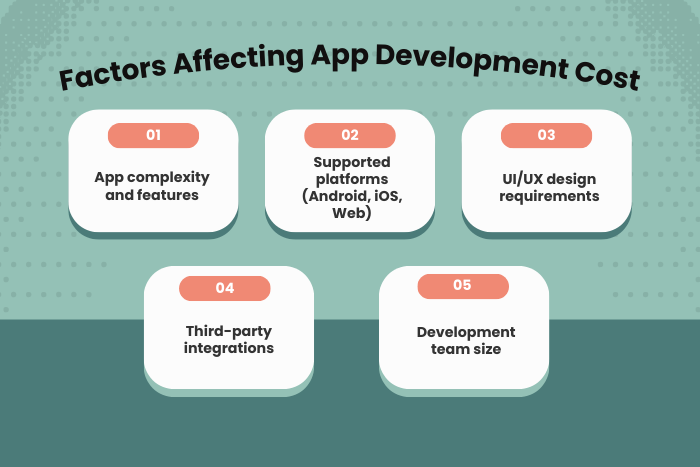
Cost Factors in Enterprise App Development
The cost of app development for large businesses varies depending on several factors.
Application Complexity
Advanced features such as AI, analytics, and real-time systems increase development costs.Number of Platforms Supported
Apps developed for Android, iOS, and web platforms require additional resources.UI/UX Design Complexity
High-quality designs with animations and custom interfaces require more time.Third-Party Integrations
Integration with payment gateways, APIs, and enterprise software increases complexity.Development Team Size and Expertise
Large projects require experienced developers, designers, and architects.Security and Compliance Requirements
Industries such as finance and healthcare require strict security standards.Infrastructure and Cloud Hosting
Large-scale apps require reliable cloud infrastructure and server resources.
Enterprise-level apps typically require larger budgets compared to startup or small business applications due to their complexity and scalability requirements.
Latest Trends Affecting App Development Costs for Large Business
Enterprise app development continues to evolve with new technologies that improve performance and user experience.
Artificial Intelligence Integration
AI tools provide automation, predictive analytics, and personalized experiences.Cloud-Native Applications
Businesses are building scalable apps using cloud infrastructure.Low-Code and No-Code Development Platforms
Companies are adopting faster development tools for internal apps.Advanced Data Analytics
Real-time analytics help organizations make smarter decisions.Blockchain for Enterprise Security
Blockchain technology improves transparency and data security.Internet of Things (IoT) Integration
Enterprise apps connect with smart devices and industrial systems.
These trends are shaping the next generation of enterprise applications.
Why Choose Us for Enterprise App Development?
Building enterprise-level applications requires expertise in large-scale software architecture, security, and performance optimization. Our development team specializes in delivering scalable digital solutions tailored to large organizations.
Here’s why businesses trust us:
Enterprise Development Expertise – Experience building complex digital platforms for large organizations.
Scalable Architecture Design – Applications designed to support millions of users.
Advanced Technology Integration – AI, cloud computing, analytics, and enterprise integrations.
Cross-Platform Development Capabilities – Mobile and web apps built using modern frameworks.
Secure Development Practices – Implementation of advanced security protocols and compliance standards.
Agile Development Approach – Transparent workflows and milestone-based delivery.
End-to-End Development Services – From strategy and design to deployment and long-term support.
We help large businesses build reliable digital platforms that drive innovation and operational efficiency.
Ready to build a powerful enterprise application?
Let our experts estimate the development cost and strategy for your project.
Contact us today for a free consultation and customized development plan.
Key Points :
- App development costs for large businesses depend on app complexity, features, integrations, and technology stack.
- Enterprise applications often include advanced features like AI analytics, cloud scalability, and real-time data processing.
- Development costs increase when apps require multi-platform support for Android, iOS, and web platforms.
- Large business apps often integrate with CRM systems, ERP platforms, payment gateways, and third-party APIs.
- Factors like UI/UX design complexity, security requirements, and development team expertise significantly impact the overall cost.
- Modern enterprise apps use technologies such as cloud computing, microservices architecture, and advanced data analytics.
FAQ's
Enterprise app development costs depend on complexity, features, technology stack, and integrations.
Large-scale applications may take several months depending on the project scope and functionality.
Factors include app complexity, integrations, design requirements, security needs, and development team size.
Yes, custom applications allow organizations to tailor solutions to specific operational needs.
Yes, enterprise apps are designed with scalable infrastructure and cloud platforms to support large user bases.
Yes, when implemented with encryption, authentication protocols, and compliance standards.
Yes, regular updates, performance monitoring, and security patches are essential for enterprise applications.