Learn what the app development costs are for medium business, including factors, technology stack, development stages, and budgeting tips.
What Are the App Development Costs for Medium Business?
Mobile and web applications have become essential tools for businesses aiming to enhance customer engagement, streamline operations, and scale their services. Many companies, especially growing organizations, often ask: what are the app development costs for medium business? Understanding these costs helps businesses plan budgets, choose the right development approach, and avoid unexpected expenses during the project lifecycle.
For medium-sized businesses, app development is not just about creating a digital product—it is about building scalable solutions that support long-term growth. Applications may include eCommerce platforms, customer engagement apps, booking systems, internal management tools, or service-based mobile applications. The development cost can vary widely depending on features, complexity, platform choice, and the development team involved.
A typical app development project involves several stages including planning, design, development, testing, deployment, and maintenance. Each stage contributes to the overall budget. Businesses must also consider factors such as cloud infrastructure, third-party integrations, security measures, and ongoing support.
In this guide, we will explore the app development costs for medium businesses, the factors that influence pricing, development processes, technology stacks, and strategies to optimize your investment while building a high-quality application.
Why App Development is Important for Medium Businesses
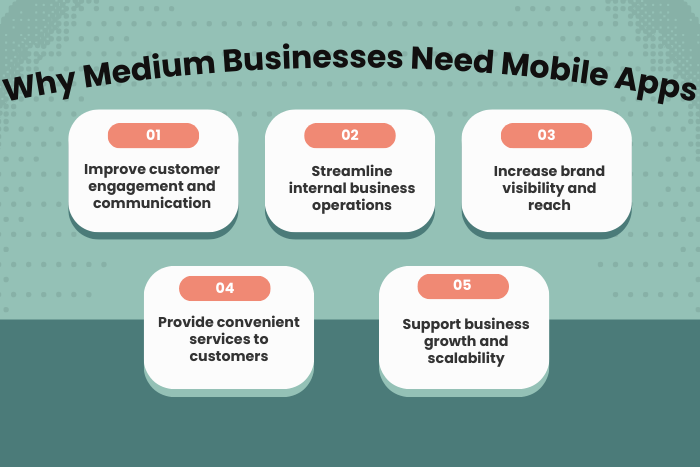
Medium-sized businesses operate in competitive markets where digital transformation plays a crucial role in growth. Mobile and web applications help businesses connect with customers, automate operations, and expand their reach.
Here are some reasons why investing in app development is important for medium businesses:
Improved Customer Engagement
Apps allow businesses to interact directly with customers through notifications, personalized content, and seamless user experiences.Operational Efficiency
Business applications can automate internal processes such as order management, customer support, and inventory tracking.Competitive Advantage
Companies with well-designed applications can offer better services and gain an edge over competitors.Scalable Business Solutions
Applications can scale with business growth and support larger customer bases.Better Data Insights
Apps collect valuable user data that can help businesses improve products, marketing strategies, and decision-making.
Developing a custom application enables medium businesses to build stronger customer relationships and improve operational productivity.
Types of App Development Solutions for Medium Businesses
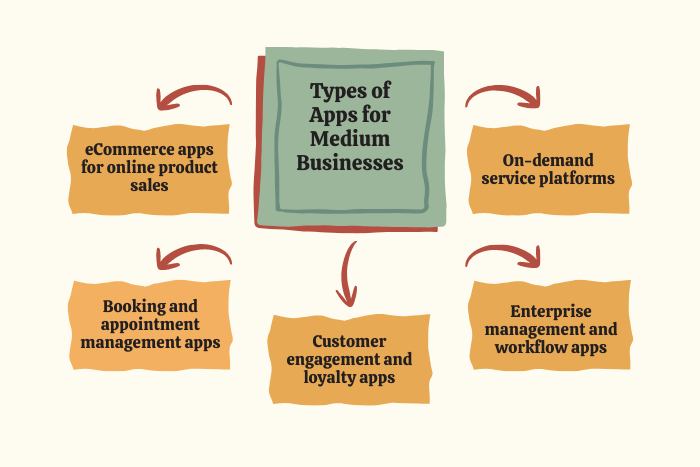
Medium businesses can develop different types of applications depending on their industry, business goals, and customer needs.
Customer Engagement Apps
Apps designed to interact with customers, provide services, and improve brand loyalty.eCommerce Applications
Mobile and web apps that enable businesses to sell products online with secure payment systems.Booking and Service Apps
Applications used for scheduling services, appointments, or reservations.Enterprise Business Apps
Internal applications used for employee management, workflow automation, and project collaboration.On-Demand Service Apps
Apps that connect users with service providers such as delivery, transportation, or home services.Educational and Training Apps
Applications used for employee training or customer learning platforms.Marketplace Platforms
Apps that connect buyers and sellers in a digital marketplace.
Choosing the right type of application helps businesses maximize their digital investment.
Key Features of Business Applications
Successful applications include features that improve user experience, ensure security, and support business operations.
Common features include:
User registration and authentication
Personalized user dashboards
Push notifications and alerts
Search and filtering options
Payment gateway integration
Real-time communication tools
Analytics and reporting dashboards
Admin panel for content and user management
Integration with third-party APIs
Secure data storage and encryption
Multi-device compatibility
Customer support tools such as chat or help centers
These features ensure that the application delivers value to both businesses and end users.
App Development Process for Medium Businesses
Developing a business application involves a structured process that ensures the product meets performance, usability, and scalability requirements.
Business Requirement Analysis
Identify the goals of the application, target users, and essential features.Market Research and Planning
Analyze competitors and identify opportunities to create unique solutions.UI/UX Design
Design intuitive user interfaces and user journeys that enhance usability.Technology Stack Selection
Choose the appropriate programming languages, frameworks, and infrastructure.Application Development
Develop frontend interfaces, backend systems, APIs, and databases.Testing and Quality Assurance
Conduct functional testing, security testing, and performance optimization.Deployment and Launch
Publish the application on mobile app stores or web platforms.Maintenance and Updates
Provide ongoing support, updates, and performance improvements.
Following a structured development process helps ensure successful project delivery and efficient resource utilization.
Technology Stack for App Development
A modern technology stack ensures that business applications remain scalable, secure, and high-performing.
Frontend Technologies: React.js, Angular, Vue.js, HTML5, CSS3, TypeScript
Mobile Development: Flutter, React Native, Swift, Kotlin
Backend Technologies: Node.js, Python, Java, PHP
Databases: PostgreSQL, MySQL, MongoDB, Firebase
Cloud Platforms: AWS, Google Cloud Platform, Microsoft Azure
DevOps Tools: Docker, Kubernetes, Jenkins, GitHub Actions
Security Tools: OAuth authentication, SSL encryption, secure APIs
Third-Party Integrations: Payment gateways, messaging services, analytics tools
Selecting the right technology stack helps businesses build reliable and scalable applications.
Cost Factors Affecting App Development for Medium Businesses
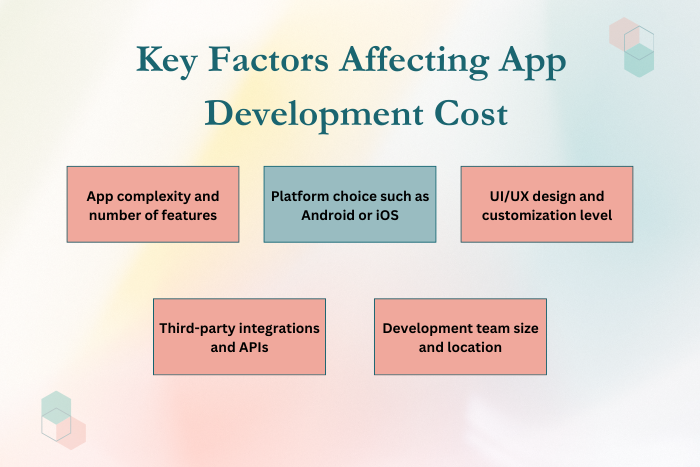
The app development costs for medium business depend on several factors related to complexity, functionality, and development resources.
Major cost factors include:
Application Complexity
Simple apps cost less, while advanced apps with complex features require larger budgets.Number of Features
More features such as real-time chat, AI integration, or payment systems increase development costs.Platform Selection
Developing apps for Android, iOS, or both platforms affects the total cost.UI/UX Design Complexity
Custom animations and advanced design elements require additional development effort.Third-Party Integrations
Integrating payment gateways, APIs, or analytics tools may add development costs.Development Team Location
Costs vary depending on whether the team is located in North America, Europe, or Asia.Maintenance and Support
Ongoing updates, bug fixes, and infrastructure management add long-term costs.
For medium businesses, app development costs typically range from moderate budgets for simple apps to higher investments for complex platforms.
Latest Trends in Business App Development
Technology continues to evolve, and businesses must adopt new trends to remain competitive.
Important trends shaping app development include:
AI-powered applications for automation and personalization
Cloud-native architecture for scalable infrastructure
Cross-platform development frameworks for faster development
IoT integration for connected devices
Advanced data analytics and dashboards
Enhanced cybersecurity and privacy measures
Voice-enabled interfaces and chatbots
Low-code and no-code development platforms
Adopting these technologies helps businesses build modern applications that meet user expectations.
Why Choose Us for App Development?
Choosing the right development partner can significantly impact the success of your application. Our team specializes in building scalable, secure, and high-performance business applications tailored to medium-sized companies.
Here’s why businesses trust our development services:
Experienced Development Team
Our developers specialize in modern technologies and scalable architectures.Cost-Effective Development Solutions
We help medium businesses build powerful applications within realistic budgets.Agile Development Approach
Transparent processes, milestone tracking, and continuous collaboration.Custom Application Development
Every app is tailored to meet specific business goals and user needs.Cross-Platform Expertise
We build apps optimized for Android, iOS, and web platforms.Secure and Scalable Infrastructure
Strong security practices and cloud-based scalability.End-to-End Development Services
From concept and design to deployment and maintenance.
Ready to build a powerful business application?
Let our experts estimate your app development cost and create a scalable solution.
Contact us today for a free consultation and project estimate.
Key Points :
- App development costs for medium businesses depend on complexity, features, platforms, and development team size.
- Typical business apps include eCommerce apps, booking apps, enterprise tools, and customer engagement platforms.
- The development process includes planning, UI/UX design, development, testing, deployment, and maintenance.
- Technology stacks often include React, Flutter, Node.js, Python, and cloud platforms like AWS or Azure.
- Cost factors include app features, third-party integrations, UI/UX design complexity, and infrastructure.
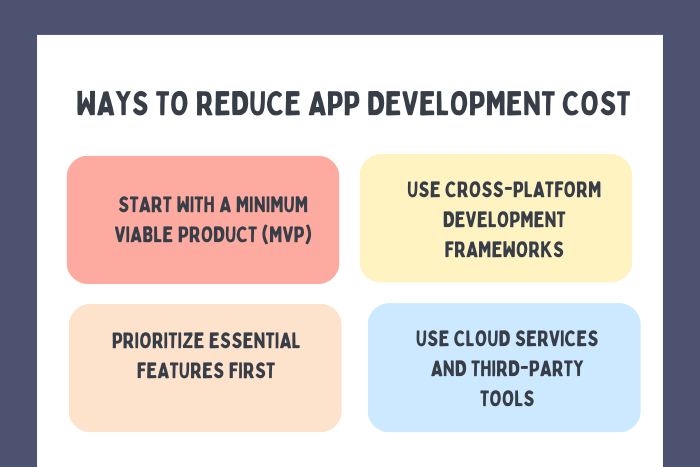
- Building an MVP first and using cross-platform frameworks can help medium businesses reduce development costs.
FAQ's
App development costs depend on complexity, features, and platforms. Medium business apps typically require a moderate to significant investment depending on requirements.
Development timelines vary depending on complexity, but most apps take between three and six months for an MVP.
Key factors include app complexity, features, platform selection, development team size, and third-party integrations.
Yes. Cross-platform frameworks allow businesses to develop apps for Android and iOS using a single codebase, reducing development costs.
Yes. Outsourcing development can reduce costs while providing access to experienced developers.
Yes. Modern cloud infrastructure and scalable architecture allow applications to support growing user bases.
Businesses can reduce costs by prioritizing essential features, building an MVP first, and using cross-platform development technologies.