Explore app development services for the education industry, including eLearning apps, LMS platforms, features, technology stacks, and development trends.
What Are the App Development Services for Education Industry?
Digital transformation has significantly reshaped the education sector, making technology-driven learning solutions more essential than ever. Educational institutions, training organizations, and EdTech startups are increasingly investing in mobile and web applications to enhance learning experiences, improve accessibility, and streamline administrative processes. As a result, many organizations are exploring what are the app development services for education industry to build innovative digital learning platforms.
Education app development services focus on creating interactive and scalable solutions that support online learning, virtual classrooms, course management, and student engagement. These applications help institutions deliver high-quality learning content to students anytime and anywhere. From eLearning apps and language learning platforms to corporate training systems and school management software, educational applications enable institutions to expand their reach and improve educational outcomes.
Modern education apps integrate advanced technologies such as artificial intelligence, cloud computing, gamification, and data analytics to provide personalized learning experiences. These digital tools also support features like video conferencing, progress tracking, quizzes, and collaborative learning environments.
In this guide, we will explore the various app development services available for the education industry, including types of solutions, essential features, development processes, technology stacks, cost considerations, and emerging trends shaping the future of digital education.
Why App Development Services for Education Industry Are Important
The adoption of mobile and web applications in education has created new opportunities for institutions, educators, and learners. Education apps make learning more accessible, interactive, and efficient.
Key reasons why education app development services are important include:
Improved Learning Accessibility
Students can access educational content anytime and from anywhere.Enhanced Student Engagement
Interactive learning tools such as quizzes, gamification, and multimedia content increase engagement.Efficient Learning Management
Institutions can manage courses, assignments, and student data through centralized platforms.Scalable Learning Platforms
Education apps allow institutions to reach global audiences.Personalized Learning Experiences
AI-powered tools help tailor learning content based on individual progress and preferences.
Education applications empower both educators and students by making learning flexible, data-driven, and technology-enabled.
Types of App Development Solutions for the Education Platform
Education app development services include various types of solutions tailored to different learning environments and educational goals.
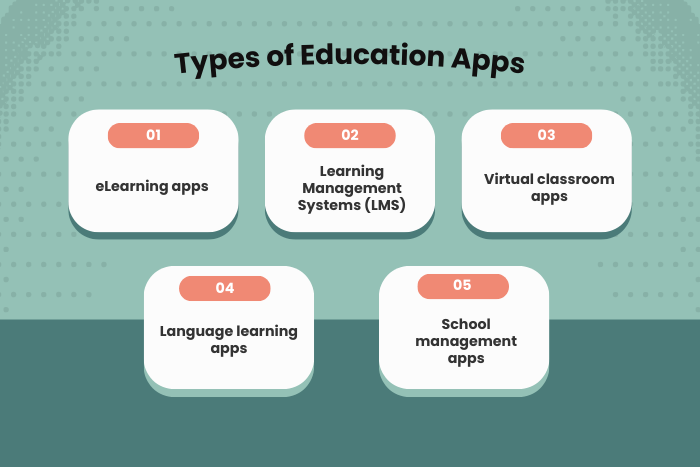
E-Learning Application Development
Platforms that deliver online courses, digital classrooms, and learning modules.Learning Management System (LMS) Development
Systems that manage course content, track student progress, and handle assessments.Virtual Classroom Applications
Apps enabling live lectures, video conferencing, and interactive discussions.Language Learning Applications
Apps designed to help users learn new languages through structured lessons.Corporate Training Applications
Platforms used by organizations to train employees and improve professional skills.School Management Applications
Apps for managing student records, attendance, schedules, and communication between parents and teachers.Educational Content Platforms
Apps that provide digital libraries, study materials, and academic resources.
These solutions support diverse educational needs across schools, universities, and training institutions.
Key Features of Modern Education Apps
Successful education applications require features that enhance both teaching and learning experiences.
User Registration and Profiles
Personalized user accounts for students, teachers, and administrators.Course Management System
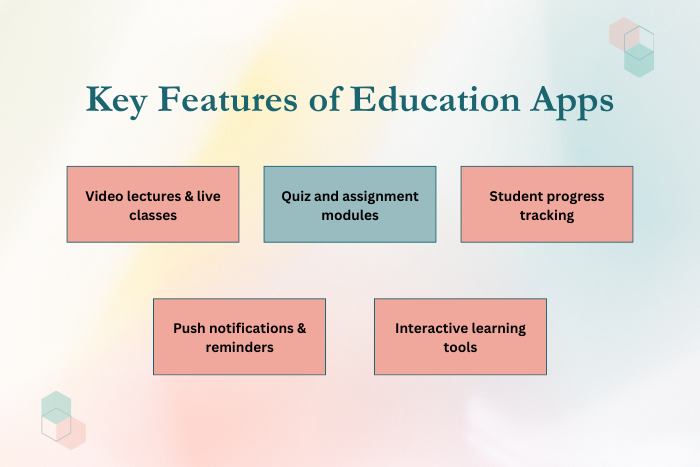
Organizing courses, modules, and educational content.Video Lectures and Live Classes
Real-time video streaming for interactive learning.Assignment and Quiz Management
Tools for creating and evaluating assessments.Progress Tracking and Analytics
Monitoring student performance and learning progress.Gamification and Rewards
Points, badges, and leaderboards to encourage engagement.Push Notifications and Reminders
Alerts for assignments, exams, and upcoming lectures.Multi-Device Accessibility
Support for smartphones, tablets, and web platforms.
These features create engaging learning environments and improve educational outcomes.
Education Application Development Process
Developing an education application requires a structured development process to ensure scalability and performance.
Requirement Analysis and Research
Identify target users, educational goals, and platform requirements.Planning and Architecture Design
Define app structure, features, and technical architecture.UI/UX Design for Learning Platforms
Design user-friendly interfaces suitable for students and educators.Application Development
Build frontend and backend systems using modern development technologies.Content and Feature Integration
Add learning materials, multimedia content, and interactive features.Testing and Quality Assurance
Perform performance testing, usability testing, and security checks.Deployment and Launch
Release the application on app stores or web platforms.Maintenance and Updates
Regular updates ensure platform stability and feature improvements.
This process ensures that education apps meet industry standards and user expectations.
Technology Stack for Education App Development
Education applications rely on modern technologies that support scalability and performance.
Mobile Development: Swift, Kotlin, Java, Dart
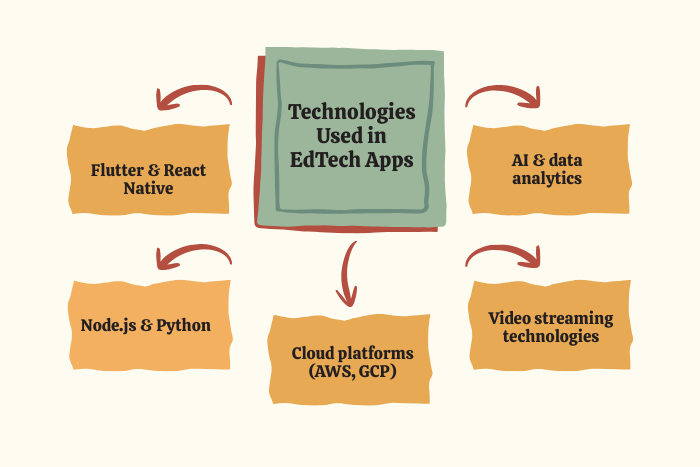
Cross-Platform Frameworks: Flutter, React Native
Frontend Technologies: HTML5, CSS3, JavaScript, TypeScript
Backend Technologies: Node.js, Python, Java, .NET
Databases: PostgreSQL, MongoDB, MySQL, Firebase
Cloud Platforms: AWS, Google Cloud Platform, Microsoft Azure
Video Streaming Technologies: WebRTC, Agora, Zoom SDK
Security Tools: OAuth 2.0, SSL encryption, secure authentication systems
These technologies help create reliable and scalable education platforms.
Cost Factors in Education App Development
The cost of developing education applications varies depending on several factors.
Application Complexity
Advanced features like AI-based learning increase development costs.Platform Support
Developing apps for Android, iOS, and web platforms affects overall cost.Content Integration
Educational materials, videos, and interactive tools require additional resources.Third-Party Integrations
Payment gateways, video conferencing tools, and analytics systems increase complexity.Design and User Experience
Interactive learning interfaces require specialized UI/UX design.Maintenance and Updates
Ongoing support is required to maintain learning platforms.
Understanding these factors helps institutions plan budgets effectively for their digital learning platforms.
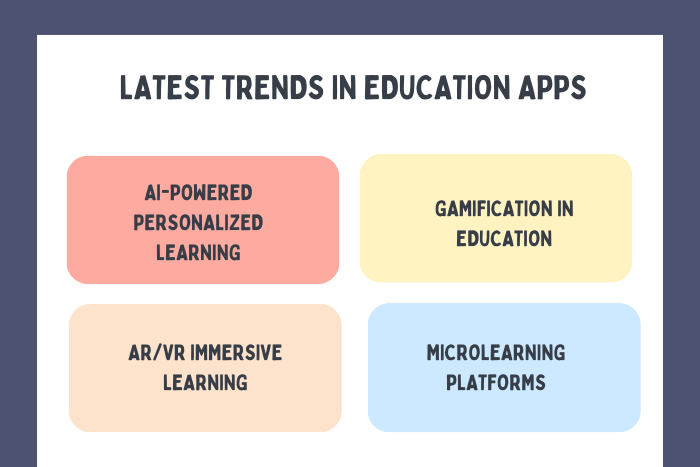
Latest Trends in Education Application Development
Education technology continues to evolve with innovations that improve digital learning experiences.
Artificial Intelligence in Education
AI-powered tutoring and personalized learning recommendations.Gamified Learning Platforms
Game-based elements that increase student motivation.AR and VR Learning Experiences
Immersive simulations for science, engineering, and medical training.Microlearning Platforms
Short educational modules designed for quick learning.Cloud-Based Education Platforms
Scalable solutions supporting remote learning environments.Data Analytics for Student Insights
Tracking student performance and engagement patterns.
These trends are transforming the future of digital education.
Why Choose Us for Education App Development?
Developing successful education applications requires deep expertise in EdTech platforms, user experience design, and scalable software architecture. Our team specializes in creating advanced learning applications tailored to the needs of modern educational institutions.
Here’s why organizations choose us:
Expertise in EdTech Solutions – Extensive experience building education platforms.
Scalable Learning Platforms – Apps designed to support thousands of students simultaneously.
Advanced Technology Integration – AI, cloud computing, analytics, and gamification.
Cross-Platform Development Expertise – Mobile and web apps developed using modern frameworks.
Secure and Reliable Systems – Implementation of secure authentication and data protection.
Agile Development Process – Transparent workflows and efficient project delivery.
End-to-End Development Support – From concept and design to deployment and long-term maintenance.
We help educational institutions and EdTech companies build powerful digital platforms that transform learning experiences.
Ready to build a modern education app?
Let our experts create an engaging digital learning platform for your institution.
Contact us today for a free consultation and project estimate.
Key Points :
- Education app development services help institutions build eLearning platforms, virtual classrooms, and learning management systems (LMS).
- Modern education apps include features like video lectures, quizzes, progress tracking, and interactive learning tools.
- These apps support online learning, remote education, and digital course management for schools and training organizations.
- Technologies like Flutter, React Native, cloud platforms, and video streaming tools are commonly used in EdTech development.
- Education apps improve student engagement, accessibility, and personalized learning experiences.
- Trends such as AI-powered learning, gamification, AR/VR education, and data-driven analytics are shaping the future of EdTech platforms.
FAQ's
Education app development services include building eLearning apps, LMS platforms, virtual classrooms, and school management systems.
Development time depends on complexity, features, and platform requirements.
Key features include course management, video lectures, quizzes, progress tracking, and interactive learning tools.
Technologies such as Flutter, React Native, Node.js, cloud platforms, and video streaming tools are commonly used.
Yes, video conferencing and live streaming technologies allow real-time virtual classrooms.
Yes, modern education apps use cloud infrastructure to support large user bases.
Yes, AI and analytics tools enable personalized learning experiences for students.
Yes, secure authentication, encryption, and data protection protocols ensure privacy and security.