
Discover fitness app development services including workout apps, wearable integrations, AI coaching, and custom fitness platforms for modern health apps.
What Are the App Development Services for Fitness Apps?
The global health and wellness industry has experienced tremendous growth in recent years, driven by increasing awareness about fitness, mental well-being, and healthy lifestyles. Mobile technology plays a major role in this transformation, allowing people to track workouts, monitor nutrition, follow training programs, and stay motivated through digital platforms. As a result, many businesses, startups, and health organizations are exploring what are the app development services for fitness apps and how they can build innovative solutions for modern users.
Fitness app development services focus on creating mobile and web applications that help users improve their health through guided workouts, activity tracking, nutrition planning, and personalized coaching. These applications often integrate with wearable devices, cloud platforms, and AI-driven analytics to provide data-rich experiences.
From personal trainer apps and workout tracking platforms to mindfulness and nutrition solutions, fitness apps are transforming how people approach health and wellness. Businesses can leverage these digital solutions to engage customers, create subscription-based services, and build communities around fitness.
In this guide, we explore the key fitness app development services available, the technologies used, development processes, cost considerations, and the latest trends shaping the future of digital fitness platforms.
Why Fitness App Development Services Are Important
Fitness applications have become essential tools for both users and businesses in the health and wellness ecosystem. They provide convenient ways to monitor progress, access professional guidance, and maintain consistent fitness routines.
Here are several reasons why fitness app development services are important:
Growing Demand for Digital Fitness Solutions
Millions of users rely on mobile apps to track workouts, monitor health data, and improve physical fitness.Improved User Engagement
Fitness apps motivate users with goal tracking, progress dashboards, and rewards systems.Personalized Health Experiences
Apps provide customized workout plans and nutrition guidance based on user preferences.Integration with Wearable Devices
Fitness platforms can sync with smartwatches and fitness trackers for real-time health monitoring.Scalable Business Opportunities
Companies can generate revenue through subscriptions, premium features, and online coaching.
Fitness app development services help organizations create engaging digital health platforms that support long-term wellness goals.
Types of Fitness Application Development Solutions
Fitness applications can be designed for different user needs and health goals.
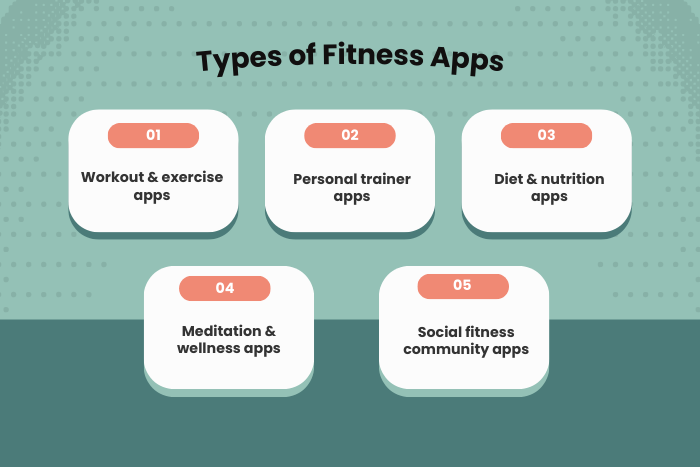
Workout and Exercise Apps
Applications that provide guided workouts, training routines, and activity tracking.Personal Trainer Apps
Platforms where trainers can create personalized programs and interact with clients.Diet and Nutrition Apps
Apps that track calorie intake, meal plans, and nutritional guidance.Wearable Fitness Apps
Applications integrated with devices such as smartwatches and fitness trackers.Mindfulness and Meditation Apps
Apps that focus on mental health, stress management, and guided meditation.Social Fitness Community Apps
Platforms where users share achievements, participate in challenges, and stay motivated.Corporate Wellness Apps
Fitness platforms designed for companies to promote employee health programs.
These solutions allow businesses to build diverse fitness platforms tailored to specific audiences.
Key Features of Fitness Apps
A successful fitness app includes advanced features that improve usability, engagement, and health tracking.
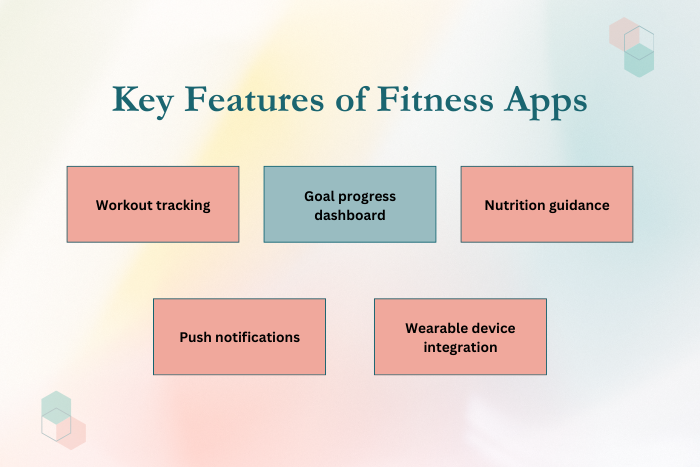
Custom Workout Plans
Personalized exercise routines tailored to user fitness levels and goals.Real-Time Activity Tracking
Monitoring of steps, calories burned, distance traveled, and workout duration.Goal-Based Progress Tracking
Visual dashboards that display user progress and achievements.Nutrition and Diet Planning
Tools for meal tracking, calorie counting, and nutritional recommendations.Push Notifications and Reminders
Alerts that encourage users to stay consistent with workouts.Gamification Features
Challenges, rewards, and leaderboards to motivate users.Integration with Wearables
Synchronization with devices like Apple Watch, Fitbit, and other fitness trackers.Video Training and Live Classes
Interactive workout sessions led by professional trainers.
These features help create engaging and data-driven fitness experiences.
Fitness App Development Process
Developing a fitness application involves several stages to ensure functionality, performance, and scalability.
Market Research and Idea Validation
Analyze the target audience, fitness trends, and competitor applications.Requirement Analysis and Planning
Define features, user roles, and technical architecture.UI/UX Design
Create intuitive interfaces that make fitness tracking simple and engaging.Application Development
Build frontend and backend systems for workout tracking, analytics, and integrations.Wearable and API Integration
Connect the app with fitness devices, health APIs, and third-party platforms.Testing and Quality Assurance
Perform functionality, security, and performance testing.Deployment and Launch
Publish the application on mobile platforms and configure cloud infrastructure.Maintenance and Updates
Continuously improve the app with new features and performance enhancements.
This development workflow ensures reliable and scalable fitness applications.
Technology Stack for Fitness App Development
Fitness platforms require modern technologies that support scalability, data analytics, and device integrations.
Mobile Development: Swift, Kotlin, Java, Dart
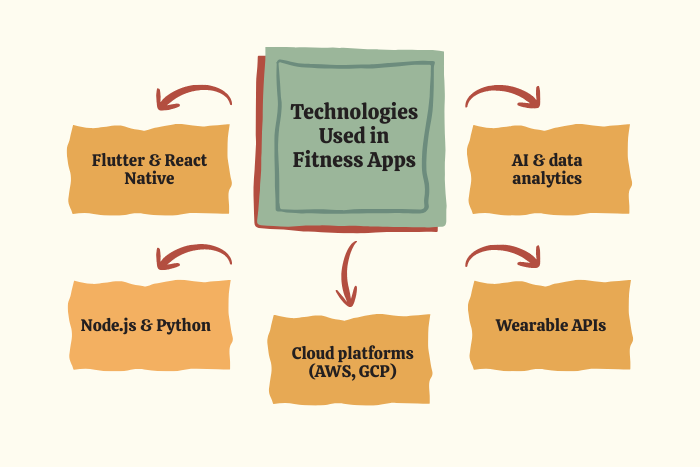
Cross-Platform Frameworks: Flutter, React Native
Frontend Technologies: HTML5, CSS3, JavaScript, TypeScript
Backend Technologies: Node.js, Python, Java, PHP
Databases: PostgreSQL, MongoDB, MySQL, Firebase
Cloud Platforms: AWS, Google Cloud Platform, Microsoft Azure
DevOps Tools: Docker, Kubernetes, GitHub Actions
Security Technologies: OAuth 2.0, JWT authentication, SSL encryption
A robust technology stack ensures secure and scalable health applications.
Cost Factors in Fitness App Development
The cost of building a fitness application depends on several factors.
Application complexity and number of features
Integration with wearable devices and health APIs
AI-based recommendations and analytics features
UI/UX design customization
Cloud infrastructure and database setup
Security and compliance requirements
Maintenance and updates after launch
Basic fitness apps may require smaller budgets, while advanced AI-powered fitness platforms can involve larger investments.
Latest Trends in Fitness App Development
The digital fitness industry continues to evolve with innovative technologies and user experiences.
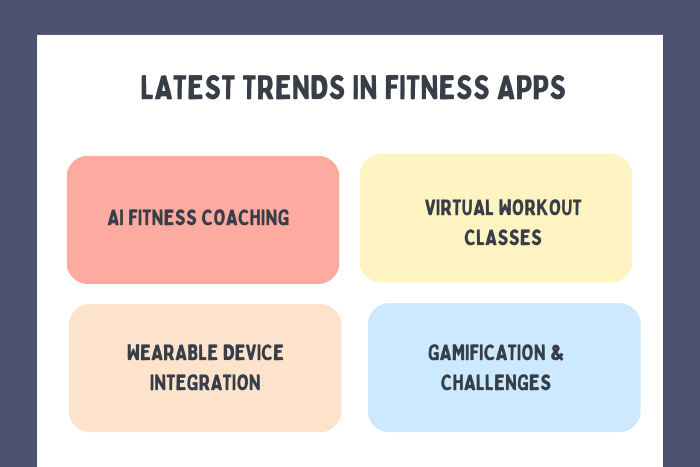
AI-Based Personal Fitness Coaching
AI algorithms provide personalized workout and nutrition recommendations.Wearable Device Integration
Apps connect with smartwatches and trackers to monitor health metrics.Virtual Fitness Classes
Live and on-demand workout sessions delivered through mobile apps.Gamification and Community Engagement
Social challenges and rewards increase user motivation.Augmented Reality Workouts
AR technology provides immersive fitness training experiences.Data-Driven Health Insights
Analytics tools help users track long-term health progress.
These trends are reshaping how people interact with digital fitness platforms.
Why Choose Us for Fitness App Development?
Choosing the right development partner is essential for building a high-quality fitness application that delivers measurable results.
Our team specializes in creating innovative digital fitness solutions designed for scalability, engagement, and performance.
Here’s why businesses trust us:
Expertise in Health and Fitness Technologies – Experience building workout tracking and wellness platforms.
AI-Powered Fitness Solutions – Integration of intelligent recommendations and analytics tools.
Wearable Device Integration – Seamless connectivity with fitness trackers and smart devices.
Cross-Platform Development Expertise – Apps built for both Android and iOS using efficient frameworks.
User-Centric Design Approach – Intuitive interfaces that encourage long-term engagement.
Secure and Scalable Architecture – Built with modern security standards and cloud infrastructure.
End-to-End Development Support – From idea validation to launch and long-term maintenance.
We help businesses transform innovative fitness ideas into powerful digital wellness platforms.
Ready to build a next-generation fitness application?
Let our experts create a scalable fitness app tailored to your audience.
Contact us today for a free consultation and development strategy.
Key Points :
- Fitness app development services help businesses build apps for workout tracking, nutrition planning, and personalized fitness coaching.
- Modern fitness apps often include features like real-time activity tracking, progress dashboards, and workout reminders.
- Fitness platforms can integrate with wearable devices such as smartwatches and fitness trackers for health monitoring.
- Businesses can create different types of apps such as workout apps, personal trainer apps, diet apps, and meditation apps.
- Technologies like Flutter, React Native, cloud platforms, and AI analytics are widely used in fitness app development.
- Trends like AI fitness coaching, virtual workout classes, and gamification features are shaping the future of digital fitness apps.
FAQ's
Fitness app development services involve designing and building mobile applications that help users track workouts, monitor health data, and improve fitness routines.
Essential features include workout tracking, nutrition planning, progress monitoring, wearable integration, and push notifications.
Development timelines typically range from three to six months depending on app complexity and features.
Yes, fitness apps can integrate with devices such as Fitbit, Apple Watch, and other health trackers.
The cost depends on features, integrations, design complexity, and development time.
Common technologies include Flutter, React Native, Node.js, cloud platforms, and wearable device APIs.
Yes, when built with proper encryption, authentication, and compliance with data protection standards.
Yes, many fitness apps include live classes, video workouts, and interactive coaching features.