Explore app development services for the gaming industry, including features, costs, tech stack, process, and trends for 2025 success.
What Are the App Development Services for Gaming Industry?
The gaming industry is one of the fastest-growing digital markets worldwide, driven by mobile adoption, cloud gaming, esports, and immersive technologies like AR/VR. Businesses, startups, and enterprises are increasingly investing in professional app development services for the gaming industry to create engaging, scalable, and revenue-driven gaming applications.
Whether you’re building a casual mobile game, multiplayer online experience, fantasy sports platform, or blockchain-based Web3 game, success depends on strong game design, optimized performance, advanced graphics, secure backend architecture, and a solid monetization strategy.
Gaming app development is more than coding—it involves storytelling, UI/UX design, animation, engine optimization, real-time networking, analytics integration, and continuous updates. From concept ideation to post-launch optimization, a structured approach ensures high retention rates, better user engagement, and maximum ROI.
In this guide, we’ll explore gaming app development services, types of solutions, essential features, development process, cost factors, technology stack, and the latest trends shaping the gaming ecosystem in 2025.
Why This Gaming App Development Service Is Important
The global gaming ecosystem continues to expand across mobile, console, web, AR/VR, and cloud platforms. Professional gaming app development services help businesses:
Build highly interactive and immersive gaming experiences
Improve player engagement and retention rates
Implement secure in-app purchases and monetization systems
Develop multiplayer and real-time gaming infrastructure
Ensure cross-platform compatibility
Scale applications for millions of concurrent users
With competition increasing daily, performance optimization, creative storytelling, and technical excellence are essential to stand out in app stores and gaming marketplaces.
Types of Gaming Application Development Solutions
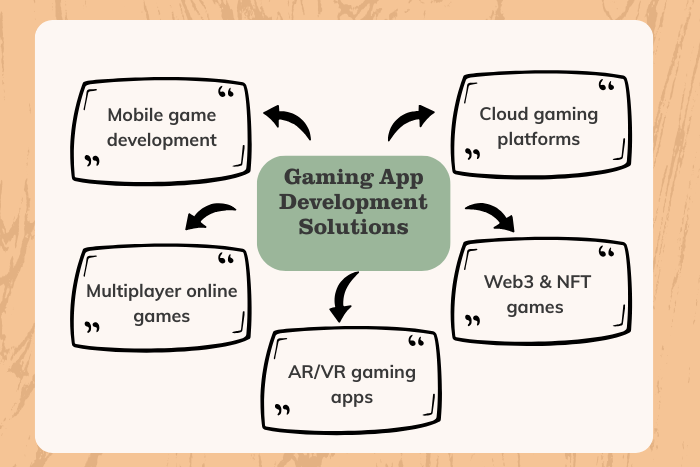
Our app development services for the gaming industry include:
Mobile Game Development – Android and iOS game applications with high-performance graphics and smooth gameplay.
Cross-Platform Game Development – Games built using engines like Unity and Unreal for multi-device compatibility.
Multiplayer Online Games – Real-time PvP, MMO, and competitive gaming platforms.
AR/VR Game Development – Immersive augmented and virtual reality gaming experiences.
Web3 & Blockchain Games – NFT-based gaming apps, token economies, and decentralized gameplay.
Fantasy Sports & Betting Apps – Real-time scoring, analytics, and user wallet integration.
Educational Gaming Apps – Gamified learning platforms for education and training.
Cloud Gaming Applications – Streaming-based gaming solutions with scalable backend infrastructure.
Key Features of a Successful Gaming App
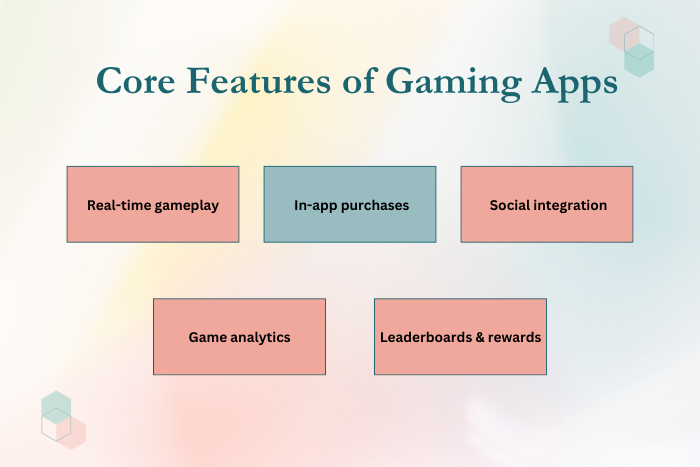
To ensure engagement, performance, and monetization, gaming apps must include:
Interactive UI/UX design
Real-time multiplayer functionality
Leaderboards and achievement systems
In-app purchases and subscription models
Social media integration
Push notifications
Secure payment gateways
Game analytics and user behavior tracking
Anti-cheat systems and security layers
Cross-device synchronization
Advanced features may include AI-driven opponents, real-time chat systems, live streaming integration, and dynamic content updates.
Gaming App Development Process
We follow a structured, agile-based development approach:
Concept & Market Research – Identify target audience, niche, monetization model, and competitors.
Game Design & Storyboarding – Define gameplay mechanics, UI flow, characters, and levels.
Tech Stack Finalization – Choose game engine, backend architecture, and platforms.
UI/UX & Asset Creation – Develop graphics, animations, sound design, and interface.
Game Development – Implement core gameplay, multiplayer systems, and monetization modules.
Testing & Optimization – Conduct functional testing, performance benchmarking, and bug fixing.
Deployment & Launch – Publish on app stores and optimize store listings.
Maintenance & Updates – Regular updates, feature expansion, and performance monitoring.
Technology Stack for Gaming Application Development
Choosing the right technology stack is critical for scalability and performance.
Game Engines: Unity, Unreal Engine, Godot
Programming Languages: C#, C++, Java, Swift, Kotlin
Backend Technologies: Node.js, Python, .NET
Databases: MongoDB, PostgreSQL, Firebase
Cloud Platforms: AWS, Google Cloud, Microsoft Azure
Multiplayer Frameworks: Photon, Mirror, PlayFab
Analytics Tools: Firebase Analytics, GameAnalytics
Payment Integration: Stripe, PayPal, Razorpay
The tech stack varies depending on game complexity, graphics requirements, and platform compatibility.


Cost Factors for Gaming App Development
The cost of gaming app development depends on multiple factors:
Game complexity (2D vs 3D vs AR/VR)
Multiplayer functionality
Custom graphics and animation quality
Platform selection (Android, iOS, Web, Console)
Integration of AI or blockchain
Backend infrastructure requirements
Monetization features
Development timeline
Team location and expertise
Estimated cost ranges:
Basic 2D Game: $20,000 – $50,000
Mid-Level Multiplayer Game: $50,000 – $120,000
Advanced 3D / AR / Web3 Game: $120,000+
Maintenance typically costs 15–20% of initial development annually.
Latest Trends in Gaming App Development (2025)
The gaming industry is rapidly evolving. Key trends include:
AI-powered game personalization
Cloud gaming and streaming services
AR/VR immersive experiences
Blockchain and NFT gaming models
Cross-platform multiplayer ecosystems
Hyper-casual game monetization models
Voice-controlled gameplay
Real-time data analytics for player engagement
Adopting these innovations ensures long-term competitiveness and scalability.
Why Choose Us for Gaming App Development Services?
We provide end-to-end gaming app development services designed for growth and scalability.
Experienced game designers and developers
Expertise in Unity, Unreal, and Web3 technologies
Scalable multiplayer architecture
Performance-optimized game builds
Transparent development process
Agile methodology with milestone tracking
Post-launch support and live updates
ROI-focused monetization strategies
We don’t just build games—we build engaging digital experiences that drive revenue and player loyalty.
Ready to turn your gaming idea into reality?
Contact us today for a free consultation and project estimate.
Let’s build the next big gaming experience together.
Key Points :
- Comprehensive gaming app development services covering mobile, multiplayer, AR/VR, Web3, and cloud gaming solutions.
- End-to-end game development process from concept design and storyboarding to deployment and post-launch maintenance.
- Scalable multiplayer architecture designed to handle high concurrent users with optimized backend performance.
- Monetization-focused gaming solutions using in-app purchases, subscriptions, ads, NFTs, and token-based economies.
- Custom feature integration such as leaderboards, real-time chat, AI opponents, analytics, and anti-cheat systems.
- Cost breakdown and budget planning guidance based on complexity, graphics quality, and platform requirements.
- Latest 2025 gaming trends integration including AI personalization, AR/VR experiences, cloud gaming, and blockchain ecosystems.
FAQ's
Development timelines range from 3–6 months for basic games to 9–18 months for complex multiplayer or AR/VR games.
Costs vary between $20,000 and $150,000+ depending on complexity, features, and technology stack.
Unity and Unreal Engine are the most popular engines due to cross-platform compatibility and performance.
Yes, we build real-time multiplayer gaming applications with scalable backend architecture.
Revenue models include in-app purchases, subscriptions, ads, sponsorships, and NFT/token economies.
Yes, we offer maintenance, updates, feature expansion, and performance optimization.
We conduct performance testing, load testing, memory optimization, and server scalability checks before launch.