
What Are the App Development Trends for 2024-2025? Complete Guide
Explore the top app development trends for 2024-2025 including AI, low-code, PWAs, IoT, and cloud-native apps shaping the future of mobile innovation.
What Are the App Development Trends for 2024-2025?
If you’re asking, “What are the app development trends for 2024-2025?”, you’re likely planning to future-proof your digital product strategy. The mobile and web application ecosystem is evolving rapidly, driven by artificial intelligence, cloud-native architectures, immersive experiences, and automation technologies. Businesses that adapt to emerging trends gain a competitive advantage in performance, scalability, and user engagement.
App development is no longer just about building functional software. It now involves intelligent automation, AI-driven personalization, cross-platform optimization, cybersecurity enhancements, and seamless integration with IoT and wearable devices. From startups launching MVPs to enterprises modernizing legacy systems, staying aligned with the latest app development trends ensures sustainable growth and higher ROI.
In this comprehensive guide, we explore the top app development trends for 2024-2025, their impact on business outcomes, the technologies behind them, and how you can leverage these innovations to build scalable, secure, and future-ready applications.
Why App Development Trends Matter in 2024-2025
Technology adoption cycles are shortening, and user expectations are rising. Businesses that fail to keep up with modern development trends risk losing market share and innovation potential.
Here’s why understanding app development trends is crucial:
Enhances competitive differentiation
Improves user engagement and personalization
Reduces development time through automation
Strengthens app security and compliance
Optimizes performance and scalability
Enables faster digital transformation
Future-proofs applications against market shifts
Aligning with emerging trends ensures your app remains relevant, efficient, and adaptable in a rapidly evolving digital landscape.
Types of Trend-Driven App Development Solutions
Emerging technologies are reshaping how applications are built and deployed. Key solution categories include:
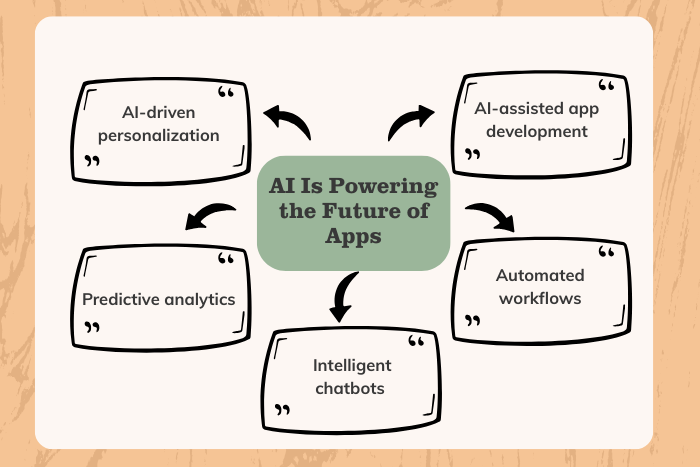
AI-Powered Applications
Intelligent apps with machine learning, chatbots, predictive analytics, and automation capabilities.Low-Code & No-Code Platforms
Rapid development solutions reducing time-to-market.Cross-Platform & Hybrid Apps
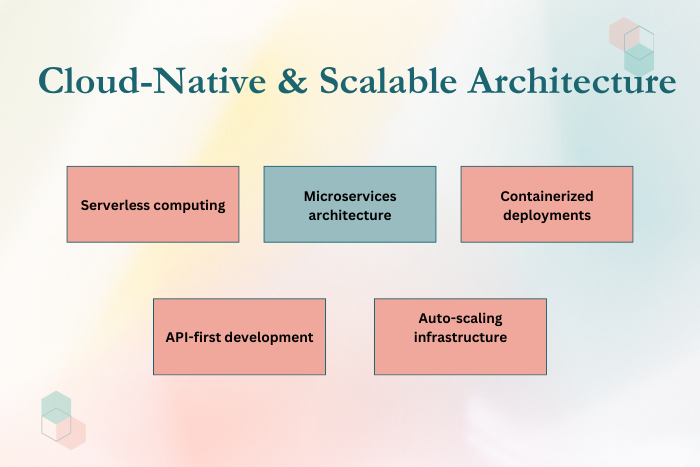
Single codebase apps optimized for iOS, Android, and web.Cloud-Native & Serverless Applications
Scalable, containerized apps deployed in cloud environments.IoT-Integrated Applications
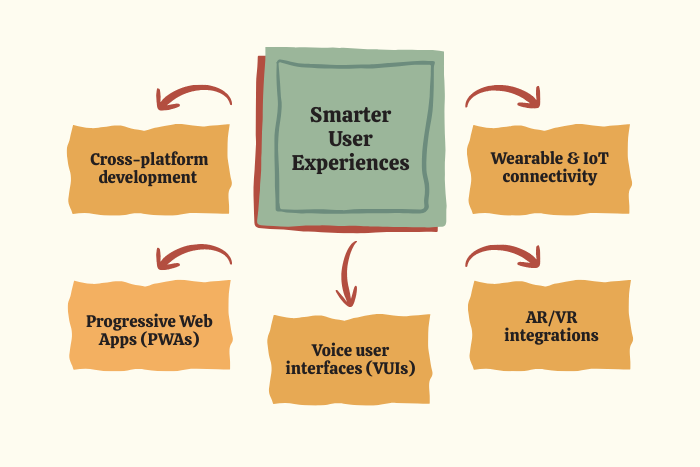
Apps connected to smart devices and wearable technologies.Progressive Web Applications (PWAs)
Web-based apps delivering native-like experiences.AR/VR-Enhanced Applications
Immersive apps for retail, gaming, education, and healthcare.
Each solution category supports specific business objectives and industry requirements.
Key Features of Modern App Development in 2024-2025
Applications built on current trends typically include:
AI-based personalization engines
Real-time data processing
Voice and gesture-based user interfaces
Cross-platform compatibility
Secure cloud-native infrastructure
Advanced cybersecurity layers
API-first architecture
Containerized deployments
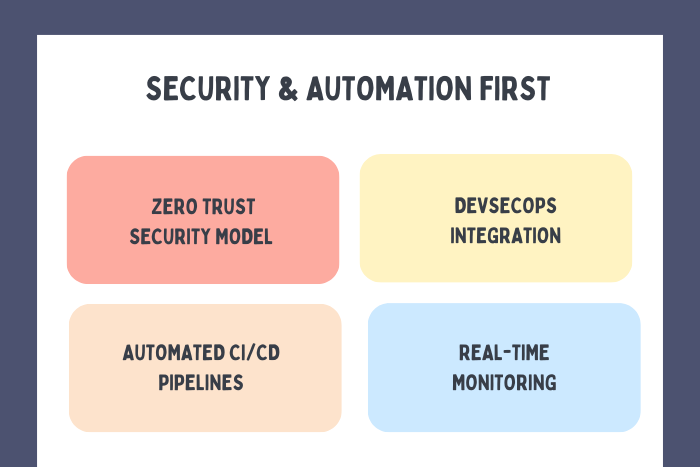
Automated DevOps pipelines
Predictive analytics dashboards
Modern applications prioritize speed, intelligence, and security.
Development Process for Trend-Driven Apps
To leverage app development trends effectively, a structured approach is essential:
Trend Analysis & Strategic Planning
Identify which technologies align with your business goals.Feasibility Assessment
Evaluate technical, financial, and scalability requirements.Architecture Design (Cloud-Native & API-First)
Plan modular and scalable backend systems.AI & Automation Integration
Implement machine learning models and intelligent workflows.Cross-Platform or Native Development
Select optimal framework for performance and reach.Security & Compliance Implementation
Integrate encryption, identity management, and monitoring tools.Testing & DevSecOps Integration
Automate testing and security validation in CI/CD pipelines.Deployment & Continuous Monitoring
Launch with cloud-based auto-scaling and analytics dashboards.
Adopting agile and DevSecOps methodologies accelerates innovation while maintaining security.
Technology Stack Supporting 2024-2025 Trends
Modern app development trends rely on advanced technologies:
Frontend: React Native, Flutter, Swift, Kotlin, React.js
Backend: Node.js, Python (Django/FastAPI), .NET Core
AI & ML: TensorFlow, PyTorch, OpenAI APIs
Cloud Platforms: AWS, Microsoft Azure, Google Cloud
Containerization: Docker, Kubernetes
DevOps: CI/CD pipelines, GitHub Actions
Databases: PostgreSQL, MongoDB, Firebase
IoT Integration: MQTT protocols
AR/VR Tools: Unity, ARKit, ARCore
Security: OAuth 2.0, JWT, Zero Trust Architecture
Selecting a scalable, cloud-native tech stack ensures adaptability to future innovations.
Cost Factors in Adopting App Development Trends
Implementing advanced technologies may influence development costs based on:
AI and machine learning complexity
Cloud infrastructure requirements
Cross-platform vs native development
AR/VR feature implementation
IoT integrations
DevSecOps automation tools
Cybersecurity compliance requirements
Maintenance and model retraining costs
While trend adoption may increase initial investment, it enhances long-term ROI and scalability.
Latest App Development Trends for 2024-2025
The following trends are shaping the future of mobile and web applications:
AI-powered app generation and intelligent assistants
Expansion of low-code/no-code platforms
Cloud-native and serverless computing
Progressive Web App (PWA) growth
Integration with wearable and IoT devices
Voice User Interfaces (VUIs)
AR/VR immersive experiences
Enhanced cybersecurity frameworks
Edge computing adoption
Sustainable and energy-efficient coding practices
Businesses that proactively adopt these trends gain a technological edge.
Why Choose Us to Build Future-Ready Applications?
Staying ahead of app development trends requires technical expertise, strategic foresight, and agile execution. We help businesses leverage emerging technologies to create scalable, intelligent, and secure applications.
Here’s why clients partner with us:
Trend-Focused Strategy Planning – Align innovation with business goals.
AI & Cloud Expertise – Implement cutting-edge technologies effectively.
Scalable Architecture Design – Built for future growth.
Security-First Development – Zero Trust and compliance-ready systems.
DevSecOps Automation – Faster releases with continuous testing.
Cross-Platform & Native Capabilities – Optimized for performance.
Post-Launch Optimization & Scaling – Continuous enhancement and monitoring.
We don’t just follow trends — we help you lead the future of digital innovation.
Ready to future-proof your application strategy?
Let’s build a trend-driven, scalable, and secure app for 2024-2025.
Contact us today for a strategic consultation and roadmap planning session.
Key Points :
- Comprehensive overview of top app development trends for 2024-2025, including AI, low-code platforms, PWAs, IoT, and cloud-native architecture.
- In-depth analysis of AI-powered applications with machine learning, predictive analytics, automation, and intelligent user personalization.
- Rise of low-code and no-code development platforms enabling faster time-to-market and reduced development costs.
- Expansion of Progressive Web Apps (PWAs) and cross-platform frameworks to improve reach and user experience.
- Enhanced cybersecurity and Zero Trust frameworks shaping secure app development practices.
- Strategic business impact insights showing how adopting emerging trends improves ROI, user engagement, and competitive advantage.
FAQ's
Major trends include AI integration, low-code platforms, cloud-native architecture, IoT connectivity, AR/VR experiences, and enhanced cybersecurity.
AI enables personalization, automation, predictive analytics, and improved user engagement.
Low-code accelerates development but does not fully replace custom development for complex enterprise apps.
A cloud-native app is designed for scalability and resilience using containerized and serverless architectures.
Progressive Web Apps run in browsers but provide native-like functionality without installation from app stores.
Yes. IoT-enabled apps support smart devices, wearables, and connected ecosystems.
Advanced technologies may increase upfront costs but reduce long-term maintenance and scalability expenses.
Yes. We offer strategic planning, architecture design, development, and long-term optimization services.