Discover the top app development trends in 2024 including AI, cross-platform apps, AR/VR, 5G, and super apps shaping the future of mobile technology.

What Are the App Development Trends in 2024?
The mobile app industry continues to evolve rapidly as new technologies reshape how businesses build and deliver digital experiences. If you’re wondering what are the app development trends in 2024, understanding these trends is essential for companies planning to launch or upgrade mobile applications.
Modern mobile apps are no longer just basic tools—they are intelligent, scalable platforms that integrate artificial intelligence, cloud computing, advanced security systems, and real-time connectivity. Businesses today must stay ahead of technological advancements to remain competitive in an increasingly digital world.
In 2024, app development trends are heavily influenced by innovations such as artificial intelligence, cross-platform frameworks, 5G connectivity, augmented reality, and personalized user experiences. These technologies are enabling developers to build faster, smarter, and more immersive applications.
For startups, enterprises, and digital product teams, keeping up with the latest app development trends can help create better user engagement, improve performance, and unlock new business opportunities. By leveraging modern development strategies and emerging technologies, organizations can deliver apps that meet the expectations of today’s tech-savvy users.
In this guide, we’ll explore the most important app development trends in 2024, their impact on the industry, and how businesses can leverage these innovations to build future-ready applications.
Why Understanding App Development Trends Is Important
Staying informed about emerging app development trends allows businesses to make better technology decisions and build applications that remain relevant for years.
Here’s why tracking these trends is important:
Competitive Advantage
Companies that adopt new technologies early gain an edge in the market.Improved User Experience
Modern features such as AI-driven personalization and voice interfaces enhance usability.Better Performance and Scalability
Advanced frameworks and cloud technologies improve application performance.Higher Security Standards
New security technologies protect sensitive user data and ensure compliance.Faster Development Cycles
Modern development tools and frameworks accelerate product launches.Future-Proof Applications
Following industry trends ensures apps remain adaptable to technological changes.
Understanding app development trends helps businesses build innovative applications that attract and retain users.
Types of Modern App Development Solutions
The latest trends are influencing how developers build different types of applications.
AI-Powered Applications
Apps that use artificial intelligence and machine learning to automate tasks, analyze data, and personalize user experiences.
Cross-Platform Applications
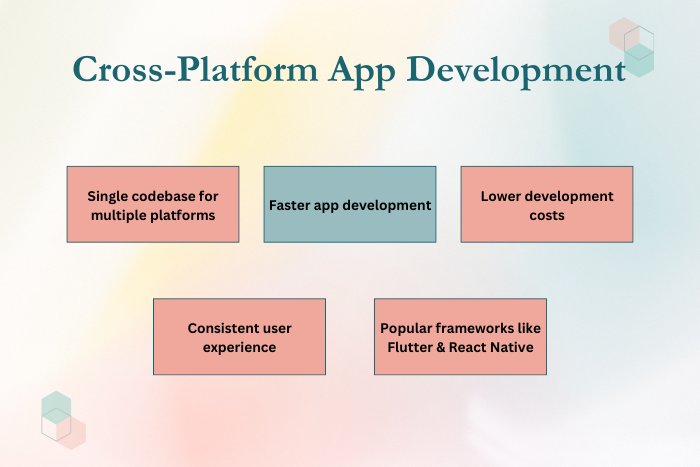
Applications built using a single codebase that works on both Android and iOS devices.
AR and VR Applications
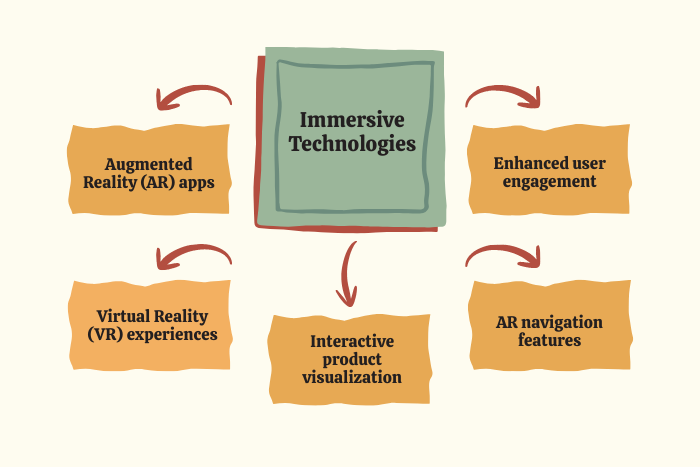
Apps that integrate augmented reality and virtual reality for immersive experiences.
IoT-Enabled Applications
Applications connected to smart devices such as wearables, home automation systems, and industrial sensors.
On-Demand Service Applications
Apps that provide real-time services such as transportation, food delivery, or home services.
Super Apps
Multi-service platforms that combine several services within a single application.
These solutions represent the new direction of mobile app development in modern digital ecosystems.
Key Features of Modern Mobile Applications
Apps built using the latest development trends include advanced features that improve functionality and user engagement.
Key features include:
AI-driven personalization and recommendations
Voice-enabled navigation and voice commands
Real-time data processing and analytics
Seamless integration with wearable devices
Advanced security features and biometric authentication
Cloud-based infrastructure and scalable architecture
High-speed connectivity powered by 5G networks
Cross-platform compatibility and responsive design
These features allow developers to build more intelligent and interactive mobile applications.
Development Process
Implementing modern app development trends requires a structured development process.
Market Research and Trend Analysis
Identify the latest technologies relevant to your app idea and industry.
Product Strategy and Planning
Define the app’s features, target audience, and development roadmap.
UI/UX Design and Prototyping
Create wireframes and interactive prototypes to design the user experience.
Technology Stack Selection
Choose frameworks and platforms that support modern app capabilities.
Application Development
Develop frontend and backend systems using scalable architecture.
Integration of Emerging Technologies
Implement AI, AR/VR, IoT, or other advanced features where applicable.
Testing and Optimization
Conduct performance testing, usability testing, and security checks.
Deployment and Continuous Improvement
Launch the app and continuously update it based on user feedback and new trends.
This process ensures the application remains competitive and future-ready.
Technology Stack for Modern App Development
Modern mobile apps use powerful technologies to support new features and capabilities.
- Mobile Development Languages: Swift, Kotlin, Java, Dart
- Cross-Platform Frameworks: Flutter, React Native, Xamarin
- Frontend Technologies: React.js, Vue.js, Angular
- Backend Technologies: Node.js, Python, Java, Ruby on Rails
- Databases: PostgreSQL, MongoDB, MySQL, Firebase
- Cloud Platforms: AWS, Google Cloud Platform, Microsoft Azure
- AI & ML Frameworks: TensorFlow, PyTorch, OpenAI APIs
- DevOps Tools: Docker, Kubernetes, GitHub Actions, Jenkins
- Security Technologies: OAuth 2.0, JWT authentication, SSL encryption
Using modern technologies helps developers build scalable, high-performance applications.
Cost Factors in Adopting New App Development Trends
The cost of building modern mobile apps depends on multiple factors related to technology and complexity.
Key cost factors include:
Complexity of app features and integrations
Implementation of advanced technologies such as AI or AR
Cross-platform vs native development approach
Backend infrastructure and cloud services
Security and compliance requirements
Third-party integrations and APIs
Development team size and expertise
Maintenance and future feature updates
Although advanced technologies may increase initial development costs, they often improve long-term scalability and user engagement.
Latest Trends in App Development in 2024
Several emerging technologies are shaping the future of mobile application development.
Artificial Intelligence and Machine Learning
AI-powered chatbots, predictive analytics, and smart recommendations are becoming standard in modern apps.
Cross-Platform Development
Frameworks like Flutter and React Native allow faster development for multiple platforms.
5G Technology Integration
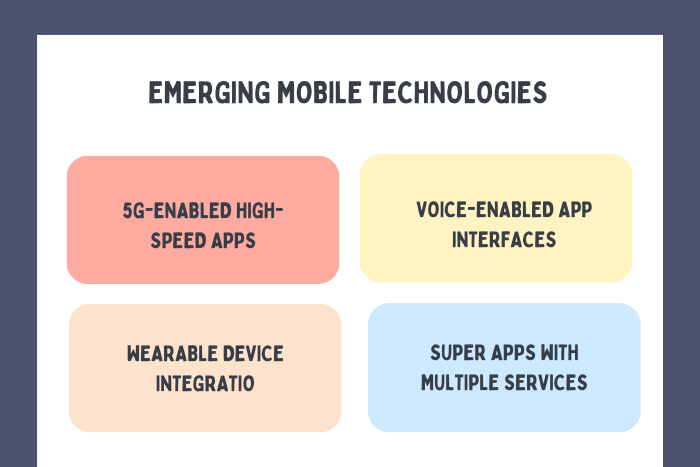
High-speed connectivity enables advanced real-time applications such as streaming and gaming.
Augmented Reality and Virtual Reality
AR and VR are transforming industries such as gaming, retail, education, and real estate.
Voice User Interfaces (VUI)
Voice commands and voice search are becoming popular in modern mobile apps.
Super Apps
Multi-service applications combining messaging, payments, shopping, and other services.
Wearable Device Integration
Mobile apps increasingly integrate with smartwatches and fitness trackers.
Enhanced App Security
Advanced encryption, biometric authentication, and privacy protection technologies.
These trends are redefining how businesses design and develop mobile applications.
Why Choose Us for App Development?
Choosing the right development partner is essential for implementing modern app development trends effectively. Our team specializes in building innovative, scalable, and high-performance applications using the latest technologies.
Here’s why businesses trust us:
Expertise in Modern App Technologies – Skilled in AI, cross-platform development, and cloud-based applications.
User-Centered Design Approach – Creating engaging experiences that attract and retain users.
Scalable Development Architecture – Applications designed to handle future growth.
Agile Development Methodology – Faster development cycles and continuous improvements.
Strong Security Implementation – Protecting user data with modern security standards.
End-to-End Development Services – From idea validation to launch and maintenance.
Transparent Communication and Collaboration – Keeping clients informed throughout the development process.
Future-Ready Solutions – Building applications aligned with the latest industry trends.
We help businesses transform innovative ideas into powerful mobile applications.
Ready to build a future-ready mobile app?
Let our experts implement the latest app development trends for your project.
Contact us today for a free consultation and development strategy.
Key Points :
- Artificial Intelligence (AI) is enhancing mobile apps with automation, chatbots, and personalized experiences.
- Cross-platform development frameworks like Flutter and React Native enable faster multi-platform apps.
- 5G technology improves app speed and real-time connectivity.
- Augmented Reality (AR) and Virtual Reality (VR) are creating immersive user experiences.
- Voice user interfaces (VUI) allow users to interact with apps using voice commands.
- Enhanced app security and biometric authentication protect sensitive user data.
FAQ's
Key trends include artificial intelligence integration, cross-platform development, AR/VR technology, wearable device integration, and enhanced app security.
AI enables personalized user experiences, chatbots, predictive analytics, and automated decision-making within mobile applications
Cross-platform development allows developers to build apps for multiple platforms using a single codebase.
5G enables faster data speeds, lower latency, and better performance for real-time applications.
Super apps combine multiple services—such as messaging, payments, shopping, and booking—into a single platform.
By working with experienced development teams and adopting modern technologies and frameworks.
Advanced technologies may increase initial costs but provide better scalability, performance, and user engagement.