
Discover the benefits of hybrid app development, including faster development, lower costs, cross-platform compatibility, and scalable mobile solutions.

What Are the Benefits of Hybrid App Development?
Mobile applications have become essential tools for businesses aiming to reach customers on smartphones and tablets. However, developing separate native apps for Android and iOS can be time-consuming and costly. This is where hybrid app development becomes a powerful solution. If you’re wondering what are the benefits of hybrid app development, the answer lies in its ability to combine efficiency, flexibility, and cost-effectiveness while delivering high-quality mobile experiences.
Hybrid apps are built using web technologies such as HTML, CSS, and JavaScript but run inside a native container that allows them to operate across multiple platforms. This means developers can create a single application that works on both Android and iOS devices without maintaining separate codebases.
For startups and enterprises alike, hybrid app development provides a faster route to market while maintaining performance and functionality. Modern frameworks like Flutter, React Native, and Ionic have significantly improved hybrid app performance, making them suitable for many types of business applications.
By leveraging hybrid development, organizations can build scalable mobile apps, reduce development costs, and deliver consistent user experiences across platforms. In this guide, we explore the benefits of hybrid app development, how it works, the technologies involved, and how businesses can leverage it for long-term growth.
Why Hybrid App Development is Important
Hybrid app development plays an important role in modern mobile strategies because it enables businesses to launch apps quickly while controlling costs and resources.
Here are several reasons why hybrid app development is important for companies today:
Faster Time to Market
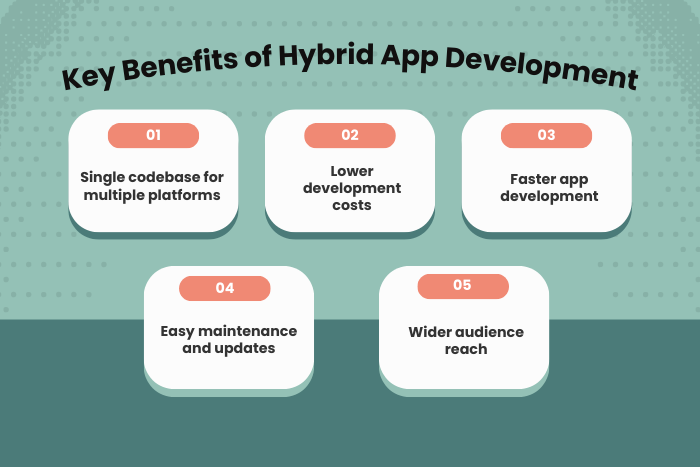
Hybrid apps allow developers to build applications more quickly because a single codebase works across multiple platforms.Reduced Development Costs
Businesses save money by avoiding the need to build separate native applications for Android and iOS.Consistent User Experience
Hybrid frameworks help maintain consistent design and functionality across different devices.Easy Maintenance and Updates
Updates can be applied once and reflected across all platforms.Wider Market Reach
A hybrid app ensures your application is available to users on multiple operating systems.
For many companies, hybrid app development offers the perfect balance between performance, scalability, and cost efficiency.
Types of Hybrid Application Development Solutions
Hybrid mobile apps can be developed for many different industries and use cases depending on business goals.
Business and Enterprise Applications
Internal company apps for workflow management, analytics, and collaboration.E-commerce Applications
Shopping apps that allow customers to browse products, make purchases, and track orders.On-Demand Service Apps
Platforms for ride-hailing, food delivery, home services, and booking solutions.Content and Media Applications
Apps designed for news, streaming services, and digital content platforms.Educational and Learning Apps
Mobile applications that support e-learning platforms and online training.Social Networking Applications
Platforms enabling users to communicate, share content, and interact online.
These hybrid app solutions help businesses serve diverse audiences with scalable mobile products.
Key Features of Hybrid App Development
Hybrid applications offer several features that make them attractive for businesses looking to launch mobile apps efficiently.
Single Codebase for Multiple Platforms
Developers can write code once and deploy it across Android and iOS devices.Cross-Platform Compatibility
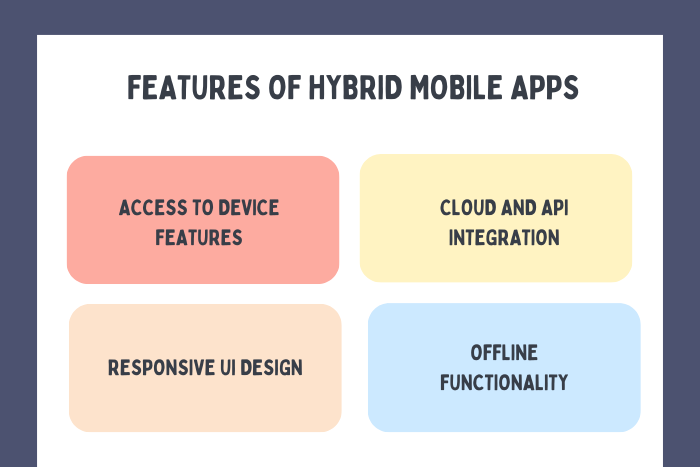
Hybrid apps work on different operating systems with minimal changes.Integration with Device Features
Access to smartphone capabilities such as camera, GPS, and notifications.Cloud Integration
Hybrid apps can connect easily with cloud services and APIs.Offline Support
Many hybrid applications can function partially even without internet connectivity.Responsive UI Design
Hybrid frameworks enable adaptive interfaces for different screen sizes.Easy Updates and Maintenance
Updates can be implemented quickly without requiring extensive app store submissions.
These features make hybrid app development a practical solution for many businesses.
Hybrid Application Development Process
Developing a hybrid mobile application involves several stages to ensure optimal functionality and user experience.
Requirement Analysis
Define business objectives, target users, and application features.Technology Selection
Choose suitable hybrid frameworks and development tools.UI/UX Design
Create intuitive designs optimized for multiple device platforms.Application Development
Build frontend and backend systems using cross-platform technologies.API and Third-Party Integration
Integrate payment gateways, analytics tools, and external services.Testing and Quality Assurance
Perform compatibility testing across different devices and operating systems.Deployment and App Store Submission
Publish the application on Google Play Store and Apple App Store.Maintenance and Updates
Provide ongoing updates, bug fixes, and feature enhancements.
This structured development approach ensures high-quality hybrid applications.
Technology Stack for Hybrid App Development
Hybrid app development uses modern frameworks and tools designed for cross-platform performance.
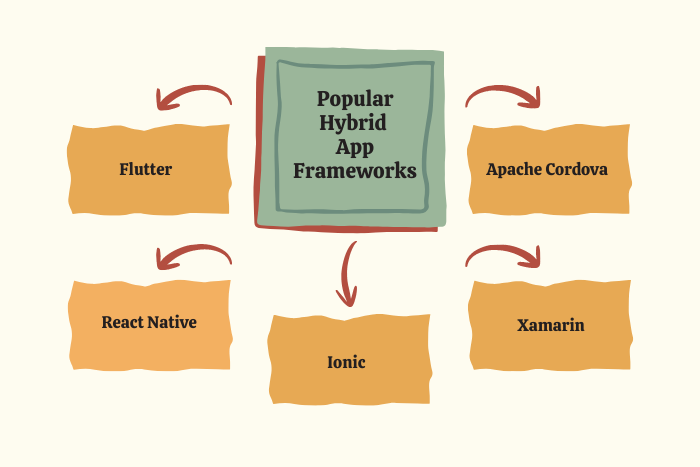
Hybrid Frameworks: Flutter, React Native, Ionic, Xamarin
Frontend Technologies: HTML5, CSS3, JavaScript, TypeScript
Backend Technologies: Node.js, Python, PHP, Java
Databases: MongoDB, MySQL, PostgreSQL, Firebase
Cloud Platforms: AWS, Google Cloud Platform, Microsoft Azure
DevOps Tools: Docker, Kubernetes, Jenkins, GitHub Actions
Security Technologies: OAuth 2.0, SSL encryption, JWT authentication
Using the right technology stack ensures scalability, performance, and security.
Cost Factors in Hybrid App Development
The cost of hybrid app development varies depending on several factors.
Application complexity and feature requirements
Choice of hybrid framework and development tools
UI/UX design customization
Integration with third-party services and APIs
Cloud infrastructure and hosting costs
Security and compliance requirements
Ongoing maintenance and updates
While hybrid apps generally cost less than native apps, advanced features and integrations can increase development budgets.
Latest Trends in Hybrid App Development
Hybrid app development continues to evolve with new technologies and frameworks improving performance and scalability.
Growth of Flutter and React Native Frameworks
These frameworks are widely used for building high-performance cross-platform apps.Integration with Artificial Intelligence
Hybrid apps increasingly include AI features like chatbots and personalized recommendations.Progressive Web Apps (PWA)
PWAs combine web and mobile features to create lightweight hybrid experiences.Cloud-Native Mobile Applications
Hybrid apps are being built with scalable cloud architectures.Improved UI Frameworks
Modern tools allow developers to create native-like user interfaces.Low-Code Development Platforms
Businesses are adopting low-code tools to accelerate hybrid app development.
These trends are shaping the future of mobile app development.
Why Choose Us for Hybrid App Development?
Choosing the right development partner is essential for building reliable and scalable hybrid mobile applications.
Our team specializes in creating high-performance hybrid apps tailored to your business goals.
Here’s why businesses choose us:
Expert Hybrid App Developers – Experienced in Flutter, React Native, and modern cross-platform frameworks.
Cost-Effective Development Solutions – Deliver high-quality apps while optimizing development budgets.
Fast Time to Market – Efficient development workflows ensure quicker product launches.
Scalable Architecture – Applications designed to grow with your business.
User-Centered Design Approach – Focus on delivering seamless mobile experiences.
Secure Development Practices – Implementation of modern authentication and data protection standards.
End-to-End Development Support – From concept and design to deployment and maintenance.
We help businesses transform their ideas into powerful mobile applications that work across multiple platforms.
Ready to build a cross-platform mobile app?
Let our experts develop a scalable hybrid application for your business.
Contact us today for a free consultation and project estimate.
Key Points :
- Hybrid app development allows businesses to build one app for both Android and iOS using a single codebase.
- It reduces development costs by eliminating the need to create separate native apps for each platform.
- Hybrid apps enable faster development and quicker time to market for mobile products.
- Frameworks like Flutter, React Native, and Ionic help deliver near-native performance and user experience.
- Updates and maintenance are easier because changes apply across all platforms simultaneously.
- Hybrid apps help businesses reach a wider audience while maintaining consistent functionality across devices.
FAQ's
Hybrid app development involves building mobile applications using web technologies that run across multiple platforms such as Android and iOS.
Hybrid apps offer faster development, reduced costs, cross-platform compatibility, and easier maintenance.
Modern hybrid frameworks like Flutter and React Native offer performance that is close to native apps for most use cases.
Popular frameworks include Flutter, React Native, Ionic, and Xamarin.
Yes, hybrid apps are ideal for startups because they reduce development costs and speed up product launches.
The timeline depends on app complexity but typically ranges from 8 to 16 weeks.
Yes, hybrid apps can be highly secure when built using proper encryption, authentication, and security practices.