

Discover the benefits of native app development including better performance, security, and user experience for iOS and Android apps.
What Are the Benefits of Native App Development?
Mobile applications have become essential for businesses looking to deliver high-quality digital experiences to their customers. One of the most reliable approaches for building mobile apps is native app development, where applications are developed specifically for a particular operating system such as iOS or Android. If you are wondering what are the benefits of native app development, the answer lies in its ability to deliver superior performance, enhanced security, and seamless integration with device features.
Native applications are built using platform-specific programming languages and tools. For example, Swift or Objective-C are commonly used for iOS development, while Kotlin and Java are widely used for Android development. Because these apps are optimized for their respective platforms, they can fully utilize the device’s hardware and operating system capabilities.
Businesses often choose native development when they want to deliver highly responsive applications with smooth user interfaces and advanced functionality. From gaming and fintech to healthcare and eCommerce apps, native development provides the reliability and scalability required for complex applications.
In this guide, we will explore the advantages of native app development, the types of native app solutions available, the development process, technologies involved, cost factors, and the latest trends shaping modern native mobile applications.
Why Native App Development Is Important
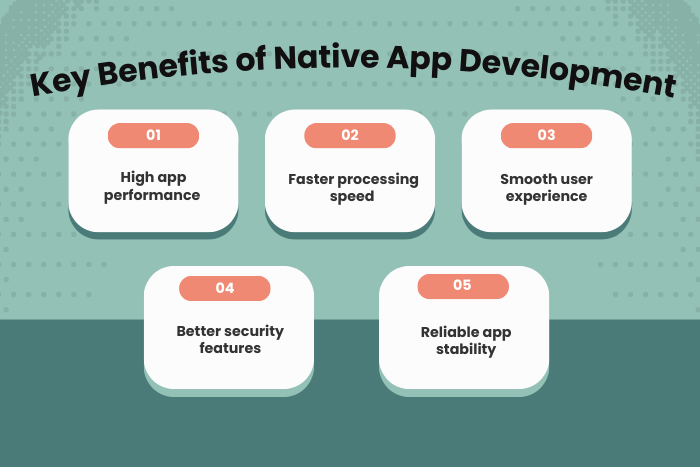
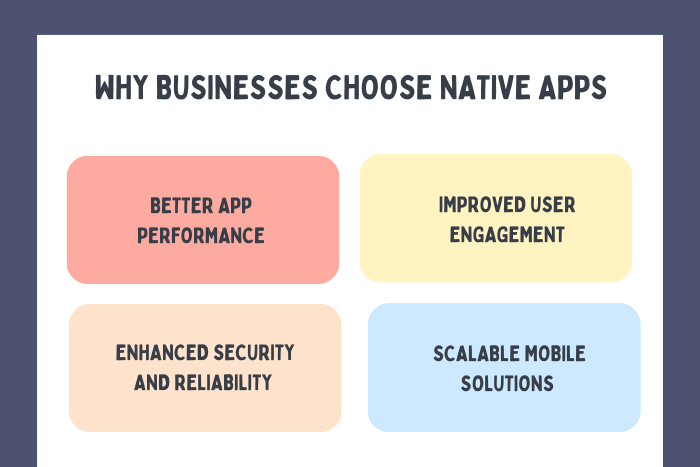
Native app development plays a crucial role in building high-performance mobile applications that provide the best user experience.
Here are several reasons why native development is important:
Superior App Performance
Native apps run directly on the device’s operating system, delivering faster performance.
Enhanced User Experience
Native apps follow platform-specific UI guidelines, ensuring intuitive user interfaces.
Access to Device Features
Developers can easily integrate device features such as camera, GPS, and sensors.
Higher Security Standards
Native apps provide better protection against vulnerabilities.
Offline Functionality
Many native apps can function without an internet connection.
Improved Stability
Native apps tend to be more stable and reliable.
These advantages make native development ideal for businesses seeking high-quality mobile solutions.
Types of Native Application Development Solutions
Native app development services can support various types of applications depending on business needs.
iOS Native App Development
Apps designed specifically for Apple devices such as iPhones and iPads.
Built using Swift or Objective-C
Optimized for Apple ecosystem
Strong security and performance
Android Native App Development
Apps developed for Android smartphones and tablets.
Built using Kotlin or Java
Highly customizable development environment
Broad device compatibility
Enterprise Native Applications
Applications designed for internal business operations.
Employee productivity apps
Secure business communication tools
High-Performance Mobile Apps
Apps requiring intensive performance such as gaming or real-time analytics.
Gaming applications
Video streaming platforms
Industry-Specific Native Apps
Custom apps built for industries like healthcare, fintech, logistics, and retail.
Each solution can be tailored to meet specific user and business requirements.
Key Features of Native App Development
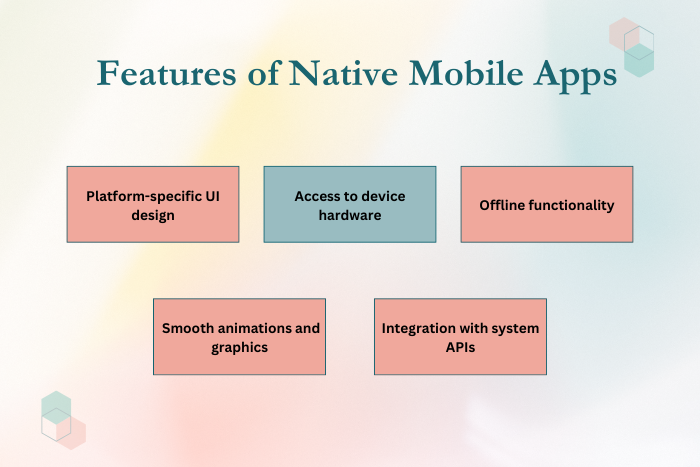
Native applications include several powerful features that enhance functionality and performance.
Important features include:
Platform-specific user interface design
High-speed performance and responsiveness
Full access to device hardware features
Strong data security and encryption support
Smooth animations and graphics rendering
Offline functionality and data storage
Integration with platform APIs and services
Reliable app performance under heavy workloads
These features allow native apps to deliver high-quality user experiences.
Native Application Development Process
Developing a native mobile application requires a structured development workflow.
Requirement Analysis
Identify business goals, target users, and app requirements.
Platform Selection
Decide whether the app will be developed for iOS, Android, or both.
UI/UX Design
Create user interfaces that follow platform design guidelines.
App Development
Implement features using platform-specific programming languages.
API Integration
Integrate backend services and third-party APIs.
Testing and Quality Assurance
Conduct performance, security, and usability testing.
App Deployment
Publish the app on the Apple App Store or Google Play Store.
Maintenance and Updates
Continuously improve the app with updates and new features.
This development process ensures efficient and scalable app creation.
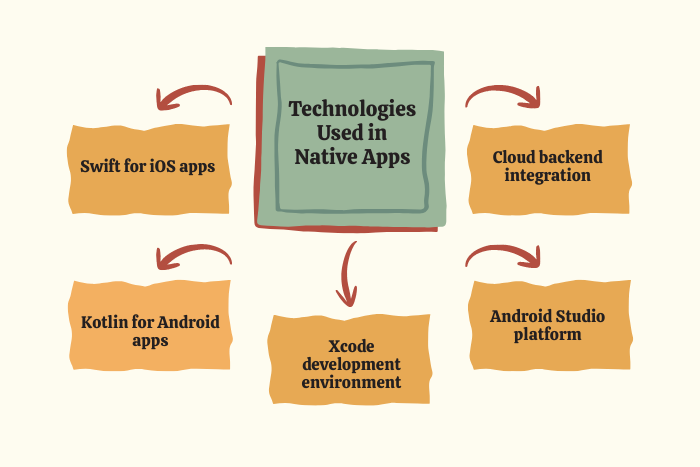
Technology Stack for Native App Development
Native apps rely on modern technologies optimized for mobile platforms.
- iOS Development: Swift, Objective-C, Xcode
- Android Development: Kotlin, Java, Android Studio
- Backend Technologies: Node.js, Python, Java, PHP
- Databases: PostgreSQL, MySQL, MongoDB, Firebase
- Cloud Platforms: AWS, Google Cloud Platform, Microsoft Azure
- APIs and Integrations: REST APIs, GraphQL
- DevOps Tools: Docker, Kubernetes, GitHub Actions
- Security Technologies: OAuth authentication, SSL encryption, biometric security
These technologies help developers build scalable and secure native applications.
Cost Factors in Native App Development
The cost of native app development varies depending on several factors.
Platform selection (iOS or Android)
App complexity and feature set
UI/UX design requirements
Backend infrastructure and APIs
Integration with third-party services
Development team expertise
Maintenance and support requirements
App store publishing costs
Although native development may require more resources compared to hybrid approaches, it often provides better long-term performance and reliability.
Latest Trends in Native App Development
The mobile app development industry continues to evolve with new technologies and innovations.
Key trends include:
AI-powered mobile applications
Augmented reality (AR) and virtual reality (VR) integration
Internet of Things (IoT) mobile connectivity
5G-enabled mobile applications
Advanced biometric authentication
Edge computing for mobile apps
Progressive Web App integration with native apps
Increased focus on privacy and data protection
These trends are shaping the future of mobile app development.
Why Choose Us for Native App Development?
Choosing the right development partner is critical for building successful native applications.
Here’s why businesses choose our native app development services:
Platform-Specific Expertise – Experienced developers for both iOS and Android platforms.
Performance-Focused Development – High-speed apps optimized for device performance.
User-Centered Design – Intuitive interfaces aligned with platform guidelines.
Secure Application Architecture – Advanced security protocols and encryption.
Scalable App Solutions – Applications designed for long-term growth.
Agile Development Methodology – Faster development cycles and continuous improvements.
Full-Cycle Development Services – From idea validation to post-launch support.
Proven Industry Experience – Successful delivery of apps across multiple industries.
We help businesses build powerful native mobile applications that deliver outstanding performance and user satisfaction.
Ready to build a high-performance native mobile app?
Let our experts develop a scalable and secure application for your business.
Contact us today for a free consultation and customized development plan.
Key Points :
- Native apps provide high performance and faster processing speed.
- They offer a better user experience with platform-specific design.
- Native apps have full access to device features like camera and GPS.
- They provide strong security and reliable performance.
- Native development supports smooth animations and graphics.
- Apps can work efficiently even with limited internet connectivity.
- They are ideal for high-performance and feature-rich applications.
FAQ's
Native app development involves building mobile apps specifically for a particular operating system such as iOS or Android.
Native apps offer better performance, improved user experience, stronger security, and full access to device features.
Swift and Objective-C are used for iOS apps, while Kotlin and Java are used for Android apps.
Native apps typically provide better performance and user experience compared to hybrid apps.
Development time depends on the app’s complexity, features, and platform requirements.
Yes, many native apps can store data locally and function without internet access.
Yes, startups often use native development when performance and user experience are critical.