




Discover the best tools for app development including frameworks, IDEs, backend, UI/UX, and DevOps tools. Build scalable apps with the right tech stack.
What Are the Best Tools for App Development?
If you’re asking, “What are the best tools for app development?”, you’re likely planning to build a mobile or web application and want to choose the right technology stack. The tools you select directly impact development speed, scalability, performance, maintenance costs, and overall user experience.
Modern app development involves more than just coding. It requires integrated tools for UI/UX design, frontend and backend development, API management, testing, deployment, analytics, and security. Whether you’re building a startup MVP, enterprise mobile solution, SaaS product, or on-demand marketplace, selecting the best app development tools ensures faster delivery and long-term scalability.
From native platforms like Swift and Kotlin to cross-platform frameworks like React Native and Flutter — and from backend tools like Node.js to AI-powered no-code builders — the ecosystem is vast. This guide breaks down the best tools for app development, helping you choose the right combination based on your business goals, budget, and technical requirements.
Why Choosing the Right App Development Tools Is Important
Using the right application development tools can significantly influence your project’s success.
Here’s why tool selection matters:
Reduces development time and cost
Improves code quality and maintainability
Ensures app scalability and performance
Enhances security and compliance
Enables seamless cross-platform compatibility
Simplifies testing and deployment
Supports faster updates and feature releases
The wrong tools can result in performance bottlenecks, expensive rework, and scalability issues. Strategic tool selection creates a strong foundation for sustainable app growth.
Types of Application Development Solutions
Different tools are suited for different development approaches.
Native Application Development Tools
Best for high-performance apps built specifically for iOS or Android platforms.Cross-Platform Development Tools
Ideal for building apps that run on both iOS and Android using a single codebase.No-Code / Low-Code App Builders
Rapid development solutions for startups and non-technical founders.AI-Powered Application Development Tools
Tools that automate coding, design, and testing processes.Backend & Cloud Development Tools
Infrastructure tools for APIs, databases, authentication, and hosting.DevOps & Testing Tools
Continuous integration, automated testing, and deployment platforms.
Selecting the right category depends on your app’s complexity, timeline, and scalability needs.
Key Features of the Best Application Development Tools
The best tools for app development typically offer:
Cross-platform compatibility
Robust documentation and community support
Scalable architecture
Strong security frameworks
Integrated testing capabilities
Performance optimization features
Cloud integration support
Modular and reusable components
Real-time debugging and monitoring
Tools that provide ecosystem integration reduce friction between design, development, and deployment.
Development Process
Requirement Analysis & Tool Selection
Identify project goals, platform requirements, scalability needs, and select suitable development tools.UI/UX Design with Modern Design Tools
Create wireframes and prototypes using collaborative design software.Frontend Development
Build responsive user interfaces using native or cross-platform frameworks.Backend & API Development
Implement server-side logic, database systems, and secure APIs.Integration & Testing
Use automated testing tools to ensure functionality, security, and performance.Deployment & CI/CD Setup
Deploy applications using cloud platforms with continuous integration pipelines.Monitoring & Optimization
Track app performance and user behavior for continuous improvements.
The right toolchain streamlines each stage of this process.
Technology Stack: Best Tools for App Development
We use modern, scalable, and performance-driven technologies to build reliable mobile and web applications. Below is a categorized overview of the best tools for app development:
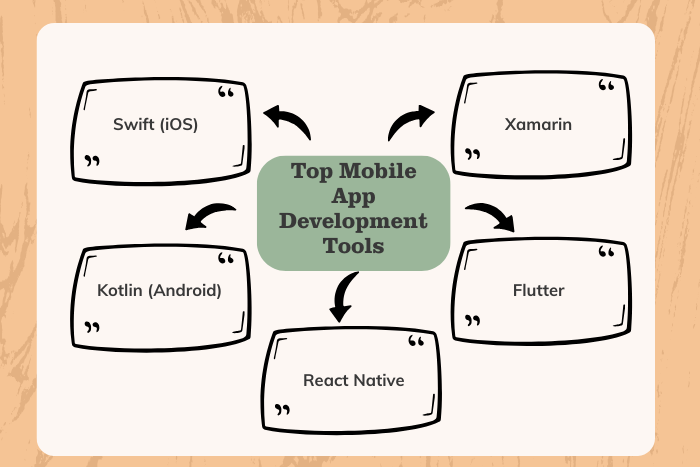
Mobile App Development Tools: Swift (iOS development), Kotlin (Android development), React Native, Flutter, Xamarin
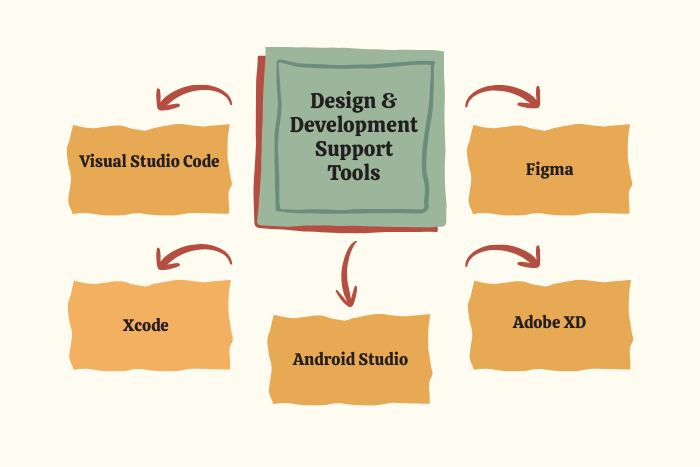
Integrated Development Environments (IDEs): Android Studio, Xcode, Visual Studio Code
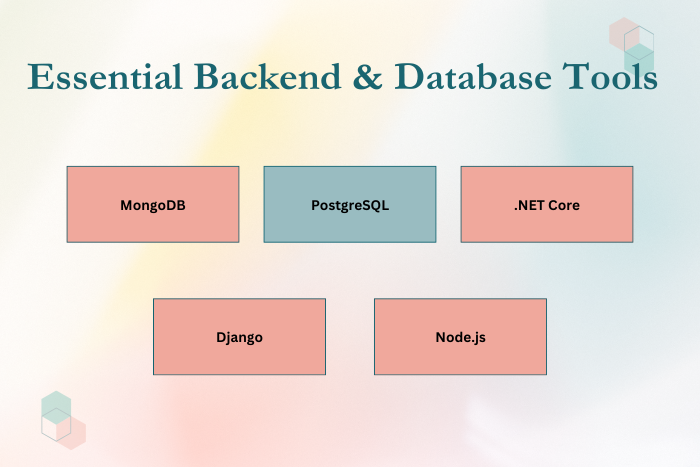
Backend Development Tools: Node.js, Django, Ruby on Rails, .NET Core
Database Solutions: PostgreSQL, MongoDB, MySQL, Firebase
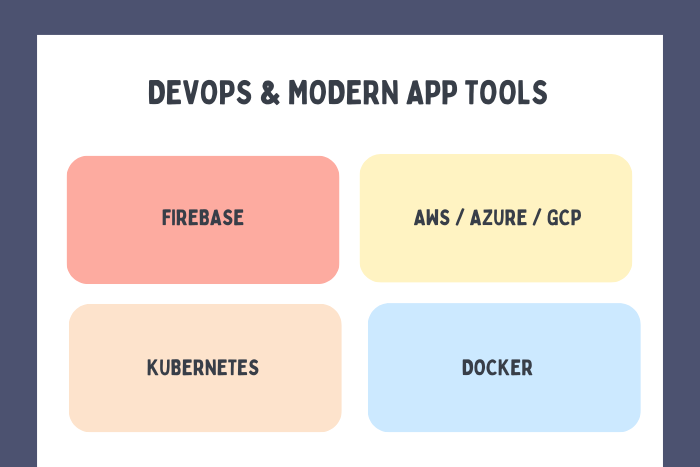
Cloud & Hosting Platforms: AWS, Microsoft Azure, Google Cloud Platform
UI/UX Design Tools: Figma, Adobe XD, Sketch
DevOps & Testing Tools: Docker, Kubernetes, Jenkins, GitHub Actions
AI & No-Code Tools: Bubble, Webflow, Retool, Microsoft Power Apps
Choosing the right technology stack depends on your app’s performance requirements, scalability goals, team expertise, and budget constraints.
Cost Factors in Choosing App Development Tools
The cost of application development tools depends on:
Licensing fees (open-source vs paid tools)
Cloud hosting and storage usage
Third-party API subscriptions
DevOps automation platforms
Enterprise support plans
Scalability infrastructure requirements
Security compliance solutions
Open-source tools often reduce upfront costs, but enterprise-grade support and hosting services add recurring expenses.
Latest Trends in App Development Tools
The app development ecosystem evolves rapidly. Current trends include:
AI-assisted coding and automation
Low-code/no-code app builders
Cross-platform frameworks gaining dominance
Cloud-native and serverless architectures
DevSecOps integration
Real-time collaboration in development tools
Modular microservices architecture
API-first development
Adopting modern tools enhances productivity and future-proofs your application.
Why Choose Us for App Development?
Selecting the best tools for app development requires technical insight and strategic foresight. We help businesses build optimized tech stacks tailored to their goals.
Here’s why clients work with us:
Expert Tool Selection Strategy – We match tools with business objectives.
Scalable Architecture Planning – Built for long-term growth.
Cost-Optimized Development Approach – Reduce unnecessary tool expenses.
Cross-Platform Expertise – Native and hybrid development proficiency.
Agile & Transparent Process – Milestone-driven execution.
End-to-End Support – From planning to deployment and optimization.
We don’t just use tools — we strategically combine them to build high-performance, scalable digital solutions.
Ready to choose the best tools for your app development project?
Let’s build a powerful, scalable application using the right technology stack.
Contact us today for a free consultation.
Key Points :
- Comprehensive guide covering the best tools for mobile, web, and cross-platform app development.
- Categorized breakdown of development tools including frontend, backend, database, cloud, UI/UX, and DevOps.
- Explains differences between native, cross-platform, and no-code app development tools.
- Highlights scalable technology stacks for startups and enterprise applications.
- Covers cost considerations for open-source vs paid application development tools
- Includes modern trends like AI-assisted coding, low-code platforms, and cloud-native development.
- Conversion-focused content helping businesses choose the right app development tools strategically.
FAQ's
Popular tools include React Native, Flutter, Swift, Kotlin, Node.js, AWS, and modern DevOps platforms.
Native tools provide higher performance; cross-platform tools reduce development time and cost.
Yes, for MVPs and simple applications. Complex apps may require custom development.
Node.js, Django, and .NET Core are widely used for scalable backend systems.
Yes. Framework choice, architecture design, and infrastructure tools directly impact speed and scalability.
Many open-source tools are highly reliable and widely adopted but may require expert implementation.
Costs vary from free open-source tools to enterprise-level subscription models.
Yes. We provide consultation, tool selection, development, deployment, and ongoing optimization services.