Discover the costs of app development for small business, including MVP pricing, features, tech stack, maintenance, and budget-saving strategies.
What Are the Costs of App Development for Small Business?
If you’re asking, “What are the costs of app development for small business?”, you’re likely planning a smart digital investment. Mobile apps are no longer limited to large enterprises. Today, small businesses use apps to improve customer engagement, streamline operations, increase sales, and build brand loyalty. However, understanding the true cost of app development is essential before starting your project.
App development costs vary widely depending on complexity, features, platform selection, development approach, and ongoing maintenance. A simple MVP (Minimum Viable Product) can cost significantly less than a fully customized, feature-rich application with advanced integrations like AI, real-time tracking, or payment systems.
This comprehensive guide breaks down small business app development costs, including pricing factors, development stages, technology choices, maintenance expenses, and budget optimization strategies — helping you make informed decisions without overspending.
Why Understanding App Development Costs Is Important
For small businesses, budgeting and ROI planning are critical. Knowing what influences development costs helps avoid unexpected expenses and delays.
Here’s why cost clarity matters:
Prevents budget overruns
Aligns project scope with business goals
Helps prioritize MVP features
Supports realistic timeline planning
Enables smart technology choices
Reduces long-term maintenance risks
Improves return on investment
A clear cost strategy ensures your app delivers value without unnecessary financial strain.
Types of App Development Solutions for Small Businesses
Different app types come with different cost implications:
Business Utility Apps
Internal tools for scheduling, CRM, or inventory management.eCommerce Apps
Product listings, payment gateways, and order tracking systems.On-Demand Service Apps
Booking, real-time tracking, and service management platforms.Customer Engagement Apps
Loyalty programs, push notifications, and promotions.Marketplace Apps
Multi-vendor systems with admin panels and payment processing.Progressive Web Apps (PWAs)
Cost-effective alternatives to native mobile apps.Cross-Platform Apps
Single codebase solutions for both Android and iOS.
Choosing the right solution significantly impacts overall costs.
Key Features That Affect App Development Cost
The more features you include, the higher the development cost. Common cost-driving features include:
User registration and authentication
Push notifications
Payment gateway integration
Real-time chat and messaging
GPS and geolocation tracking
Admin dashboard and analytics
Third-party API integrations
Cloud hosting and database management
Advanced UI/UX animations
AI-powered personalization
Small businesses should focus on core features first and expand gradually.
Development Process and Cost Breakdown
App development costs are typically divided into stages:
Discovery & Planning
Requirement gathering, competitor analysis, and roadmap creation.UI/UX Design
Wireframing, prototyping, and visual design development.MVP Development
Core feature implementation and backend setup.Full Development Phase
Advanced feature integration and optimization.Testing & Quality Assurance
Functional testing, security testing, and performance optimization.Deployment & App Store Launch
Publishing and compliance processes.Maintenance & Updates
Bug fixes, security patches, and feature upgrades.
For small businesses, MVP-first development reduces upfront investment while validating the idea.
Technology Stack and Its Cost Impact
Technology selection directly affects development cost and scalability.
Native Development (Swift, Kotlin): Higher cost, better performance.
Cross-Platform (Flutter, React Native): Cost-efficient for dual-platform launch.
Backend (Node.js, Django, .NET): Influences scalability and hosting expenses.
Cloud Hosting (AWS, Azure, GCP): Monthly operational costs.
Database (MongoDB, PostgreSQL): Impacts storage and performance.
Cross-platform development is often ideal for small businesses seeking cost efficiency.
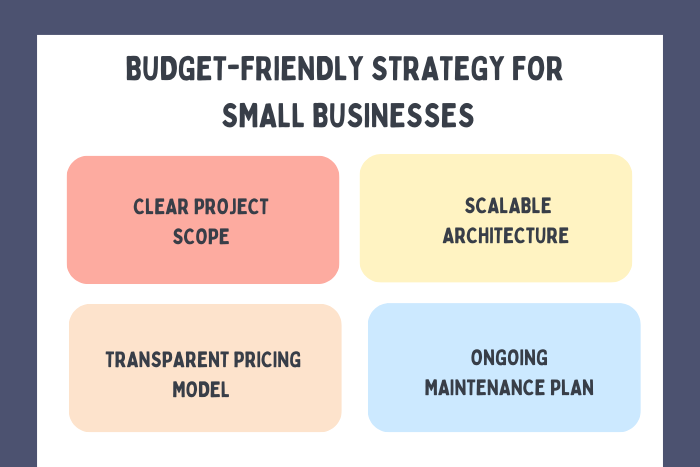
Cost Factors in Small Business App Development
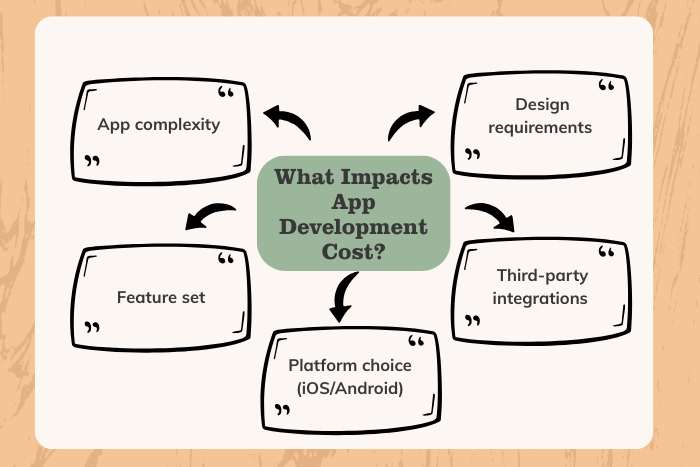
Several factors determine total development cost:
App complexity (basic, moderate, complex)
Platform choice (iOS, Android, or both)
Custom design vs template-based design
Third-party integrations
Developer location (onshore vs offshore)
Team size and expertise
Maintenance and support requirements
App store and licensing fees
Estimated Cost Ranges (General Overview)
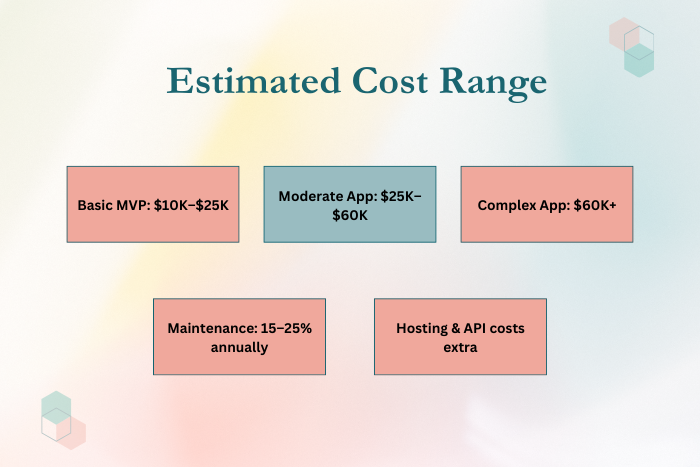
Basic App: $10,000 – $25,000
Moderate Complexity App: $25,000 – $60,000
Complex App: $60,000+
Actual costs vary based on scope and region.
Latest Trends Impacting Small Business App Costs (2024–2025)
Emerging technologies can increase or optimize costs:
AI-driven automation features
Low-code and no-code platforms
Cloud-native architecture
Subscription-based SaaS integrations
API-first development
DevOps automation for faster deployment
Low-code tools and reusable components help reduce development expenses for startups.
Why Choose Us for Cost-Effective App Development?
We understand that small businesses need affordable yet scalable solutions. Our approach balances quality, performance, and budget efficiency.
Here’s why clients trust us:
Transparent Cost Estimation – Clear pricing with no hidden fees.
MVP-Focused Development – Launch faster with optimized budgets.
Cross-Platform Expertise – Save costs with shared codebases.
Scalable Architecture – Grow without rebuilding your app.
Agile Development Process – Flexible scope adjustments.
Post-Launch Support – Affordable maintenance plans.
We help small businesses build powerful apps without exceeding budgets.
Ready to build your small business app?
Let’s create a cost-effective, scalable mobile solution tailored to your goals.
Contact us today for a free cost estimate and consultation.
Key Points :
- Detailed breakdown of small business app development costs, including MVP, moderate, and complex app pricing ranges.
- Clear explanation of cost-driving factors such as app complexity, features, platform choice, integrations, and design requirements.
- Comparison of native vs cross-platform development costs to help small businesses choose budget-friendly solutions.
- Comprehensive cost analysis by development stages including discovery, UI/UX design, development, testing, deployment, and maintenance.
- Insights into hidden and ongoing expenses like hosting, third-party APIs, security updates, and app store fees.
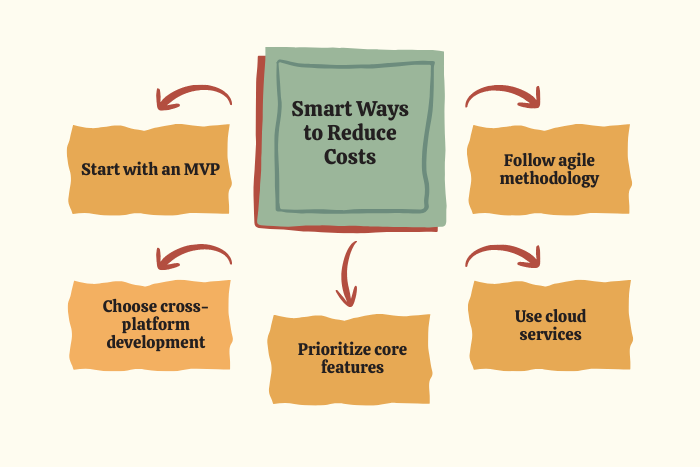
- Practical cost-reduction strategies such as MVP-first development, agile methodology, reusable frameworks, and cloud-based infrastructure.
FAQ's
Costs typically range from $10,000 to $60,000+, depending on complexity and features.
Start with an MVP, choose cross-platform development, and prioritize essential features.
Yes, it allows one codebase for multiple platforms, reducing development time and cost.
Maintenance may cost 15–25% of initial development cost annually.
An MVP may take 2–4 months, while complex apps may require 6+ months.
It depends on your target audience. Cross-platform solutions can cover both efficiently.
Yes, such as hosting, third-party APIs, security updates, and app store fees.
Yes, we provide scalable packages tailored to small business needs.