


Learn the costs of app development in Canada, including key factors, technologies, development process, and trends for building scalable mobile apps.
What Are the Costs of App Development in Canada?
Mobile applications have become essential tools for businesses looking to expand their digital presence and improve customer engagement. Companies across industries—from eCommerce and fintech to healthcare and logistics—are investing in mobile apps to provide seamless user experiences and automate business processes. A common question businesses ask before starting a project is: what are the costs of app development in Canada?
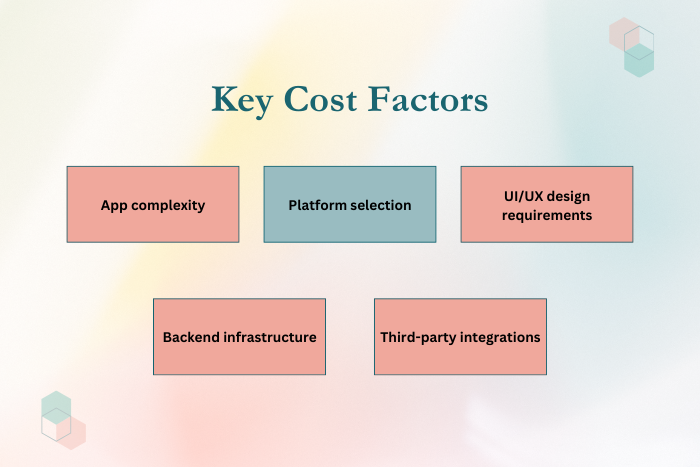
App development costs in Canada vary depending on several factors, including the complexity of the application, platform selection (iOS, Android, or cross-platform), design requirements, development team expertise, and integrations with third-party services. Businesses often choose Canada for app development because of its strong technology ecosystem, skilled developers, and innovative startup culture.
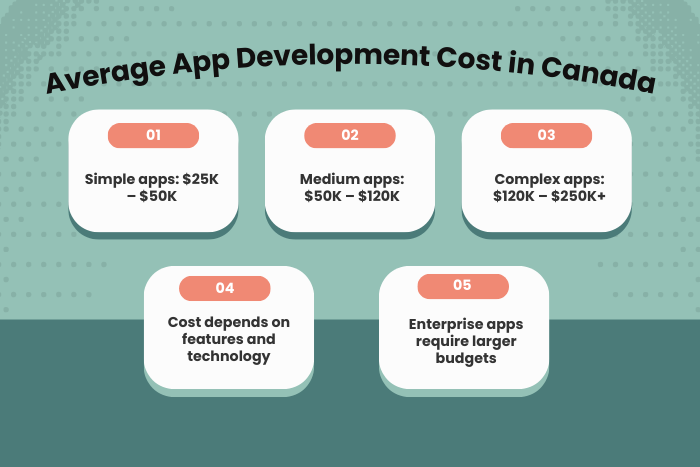
Typically, app development costs can range from $25,000 for simple apps to over $200,000 for complex enterprise-level applications. The final investment depends on features, security requirements, backend infrastructure, and scalability.
Understanding the various factors that influence development costs helps businesses plan budgets effectively and make informed decisions when building a mobile application. In this guide, we explore the costs of app development in Canada, the development process, key features, technologies used, and the latest trends shaping mobile applications.
Why Understanding the Costs of App Development in Canada Is Important
Before launching a mobile application project, businesses need to evaluate development costs carefully. Knowing the estimated investment helps organizations plan resources and avoid unexpected expenses during the development cycle.
Key reasons why cost planning is important include:
Budget Planning
Understanding costs allows businesses to allocate resources effectively.Feature Prioritization
Companies can identify essential features for the first version of the app.Technology Selection
Choosing the right technologies affects development cost and scalability.Efficient Project Management
Clear budgets help manage timelines and development milestones.Long-Term Sustainability
Proper planning ensures the app can be maintained and updated after launch.
A strategic approach to budgeting ensures successful mobile application development while maximizing return on investment.
Types of App Development Solutions
Businesses can choose different types of app development solutions depending on their goals, target audience, and budget.
Native Mobile App Development
Apps built specifically for iOS or Android using platform-specific languages.Cross-Platform App Development
Applications developed using frameworks like Flutter or React Native to run on multiple platforms.Enterprise Mobile Applications
Apps designed for internal business operations, workflow management, and automation.On-Demand Service Applications
Apps for services such as ride-hailing, food delivery, or home services.eCommerce Mobile Applications
Mobile platforms for online shopping and digital payments.Progressive Web Applications (PWAs)
Web-based applications that provide app-like experiences on mobile devices.
Each solution comes with different development costs depending on complexity and required functionality.
Key Features That Influence the Costs of App Development in Canada
Successful mobile apps include features that enhance usability, engagement, and performance.
User Registration and Authentication
Secure login through email, social media, or biometric authentication.User-Friendly Interface
Intuitive design that improves navigation and user experience.Push Notifications
Real-time alerts to engage users and provide updates.Search and Filter Options
Allows users to easily find products, services, or content.Secure Payment Integration
Support for digital payment gateways and mobile wallets.Data Analytics and Insights
Track user behavior and app performance.Cloud Data Synchronization
Enables real-time updates across multiple devices.Scalable Backend Architecture
Ensures the application can handle increasing traffic and data.
These features form the foundation of most modern mobile applications.
Mobile App Development Process
Developing a mobile application involves several stages to ensure quality and performance.
Market Research and Planning
Identify target users, market demand, and business goals.UI/UX Design
Create wireframes and prototypes to define the user experience.App Architecture and Backend Development
Build the infrastructure that supports application functionality.Frontend Development
Develop the user interface and app functionality.Integration with APIs and Services
Connect the app with payment systems, analytics tools, and third-party services.Testing and Quality Assurance
Ensure the app works smoothly across devices and platforms.Deployment and Launch
Publish the app on app stores such as Apple App Store and Google Play.Maintenance and Updates
Continuously improve the application based on user feedback.
A structured development process ensures the app is reliable and scalable.
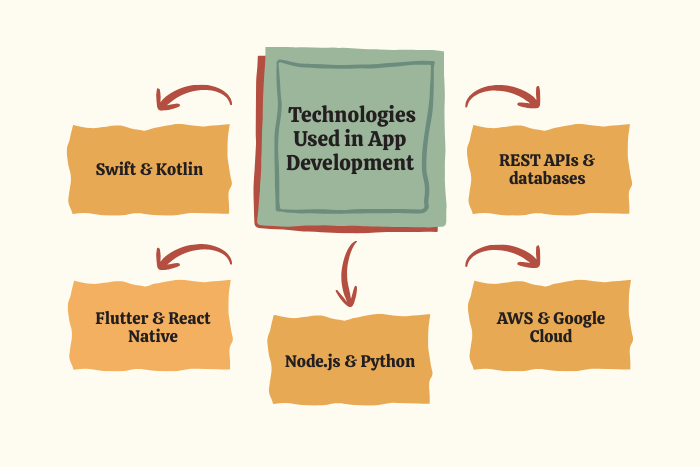
Technology Stack for Mobile App Development
The choice of technology plays a significant role in determining development cost and performance.
Mobile Development Languages: Swift, Kotlin, Java
Cross-Platform Frameworks: Flutter, React Native, Xamarin
Backend Technologies: Node.js, Python, Java, PHP
Databases: PostgreSQL, MongoDB, MySQL, Firebase
Cloud Services: AWS, Google Cloud Platform, Microsoft Azure
API Integration: REST APIs, GraphQL
DevOps Tools: Docker, Kubernetes, CI/CD pipelines
Selecting the right technology stack ensures the app remains scalable and secure.
Cost Factors for App Development in Canada
Several elements influence the final cost of app development in Canada.
App Complexity
The complexity of the application significantly affects development costs. Simple apps with basic functionality cost less, while complex apps with advanced features, integrations, and custom workflows require more development time and resources.Platform Selection
Choosing between iOS, Android, or cross-platform development influences the overall cost. Developing separate native apps for each platform usually costs more than building a single cross-platform solution.UI/UX Design Requirements
A visually appealing and user-friendly interface requires skilled designers, custom animations, and interactive elements, which can increase development costs.Backend Infrastructure
Apps that require complex backend systems, cloud infrastructure, databases, and real-time data synchronization typically involve higher development costs.Third-Party Integrations
Integrating payment gateways, APIs, analytics tools, and external services adds additional development time and cost.Security and Compliance
Applications handling sensitive data, especially in industries like healthcare or fintech, require advanced security measures and compliance standards, increasing development costs.Maintenance and Updates
After launch, apps require continuous updates, bug fixes, performance improvements, and feature upgrades, which add ongoing maintenance costs.
Understanding these factors helps businesses estimate the total investment needed for app development.
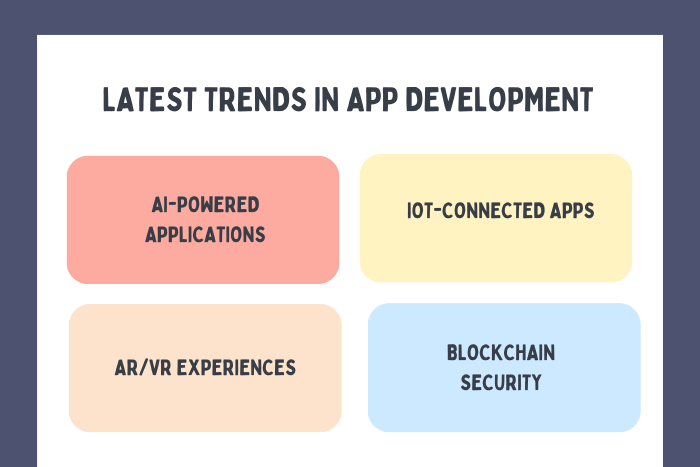
Latest Trends Affecting the Costs of App Development in Canada
The mobile app industry continues to evolve with new technologies and innovations.
Artificial Intelligence and Machine Learning
Personalized user experiences and predictive analytics.Internet of Things (IoT) Integration
Apps connected with smart devices and sensors.Augmented Reality (AR) Applications
Immersive experiences in gaming, retail, and education.Blockchain for Secure Transactions
Enhanced security for fintech and digital identity applications.5G Technology
Faster connectivity and improved mobile performance.Low-Code and No-Code Development
Accelerating app development timelines.
These trends are shaping the future of mobile applications globally.
Why Choose Us for Mobile App Development?
Choosing the right development partner is essential for building a successful mobile application. Our team specializes in designing and developing scalable mobile apps tailored to business needs.
Here’s why businesses trust us:
Experienced Development Team with expertise in modern mobile technologies.
Custom App Development Solutions tailored to different industries.
Agile Development Approach for faster project delivery.
Scalable and Secure Architecture for enterprise-level applications.
Transparent Cost Estimates with no hidden charges.
End-to-End Development Support from concept to launch.
We help businesses transform ideas into high-performance mobile applications.
Ready to build your mobile app in Canada?
Let our experts guide you through development and cost estimation.
Contact us today for a free consultation and project quote.
Key Points :
- App development costs in Canada typically range from $25,000 to $250,000+ depending on app complexity and features.
- Major cost factors include app complexity, platform selection, UI/UX design, backend development, and third-party integrations.
- Businesses can choose native, cross-platform, enterprise, eCommerce, or on-demand app development solutions.
- Modern apps require features like secure authentication, push notifications, payment integration, and cloud synchronization.
- Technologies used include Flutter, React Native, Swift, Kotlin, Node.js, and cloud platforms like AWS or Google Cloud.
- Emerging trends include AI-powered apps, IoT integration, AR/VR experiences, and 5G-enabled mobile applications.
FAQ's
The cost typically ranges from $25,000 to $250,000+, depending on app complexity and features.
Development timelines usually range from 3 to 9 months, depending on the project scope.
Key factors include app complexity, design requirements, platform selection, and integrations.
Yes, cross-platform frameworks allow developers to build apps for multiple platforms using a single codebase.
Annual maintenance costs are typically 15–20% of the initial development cost.
Yes, startups can begin with an MVP (Minimum Viable Product) to reduce initial costs.
Businesses can reduce costs by prioritizing essential features, using cross-platform frameworks, and adopting agile development methods.