Learn what are the stages of mobile app development lifecycle, including planning, design, development, testing, launch, and maintenance.
What Are the Stages of Mobile App Development Lifecycle?
Understanding what are the stages of mobile app development lifecycle is essential for businesses planning to build scalable, user-friendly, and high-performing mobile applications. Whether you’re launching a startup app or transforming enterprise operations, a structured development lifecycle ensures clarity, cost control, faster time-to-market, and long-term sustainability.
The mobile app development lifecycle is a step-by-step framework that guides an app from initial concept to deployment and continuous improvement. It combines strategic planning, UI/UX design, technical architecture, development, testing, launch, and post-launch optimization. Each stage plays a critical role in reducing risks, enhancing user satisfaction, and maximizing ROI.
In today’s competitive digital landscape, skipping or rushing through any phase can lead to performance issues, poor user adoption, or costly redevelopment. A well-defined lifecycle ensures your app aligns with business goals, technical feasibility, and market expectations — all while maintaining scalability and security.
Why This Service is Important in the Mobile App Development Lifecycle
A structured mobile app development lifecycle:
Minimizes development risks and unexpected costs
Improves product-market fit
Ensures technical feasibility before coding begins
Enhances UI/UX quality and user retention
Supports scalability and long-term growth
Enables efficient collaboration between stakeholders
Without a proper lifecycle strategy, businesses often face scope creep, missed deadlines, security vulnerabilities, and poor user experience.
Our mobile app lifecycle consulting and development services help you move from idea to launch with precision, clarity, and measurable results.
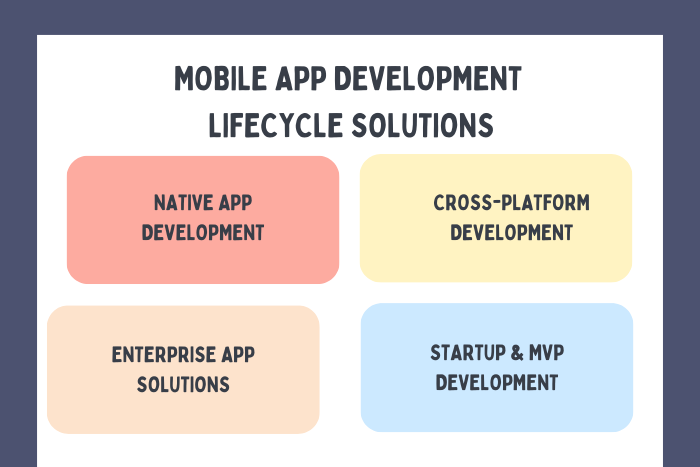
Types of Solutions in the Mobile App Development Lifecycle
We tailor lifecycle strategies based on business needs and target platforms:
Native App Development Lifecycle
iOS app development
Android app development
Platform-specific optimization
Cross-Platform Development Lifecycle
Shared codebase strategy
Faster time-to-market
Cost-effective scalability
Enterprise App Development Lifecycle
Internal process automation
Secure backend integration
Cloud-based infrastructure
Startup & MVP Development Lifecycle
Rapid prototyping
Lean development approach
Early market validation
E-commerce & On-Demand App Lifecycle
Payment gateway integration
Real-time tracking
High-traffic performance readiness
Each solution follows a structured lifecycle but is customized to match business objectives, user behavior, and technical requirements.
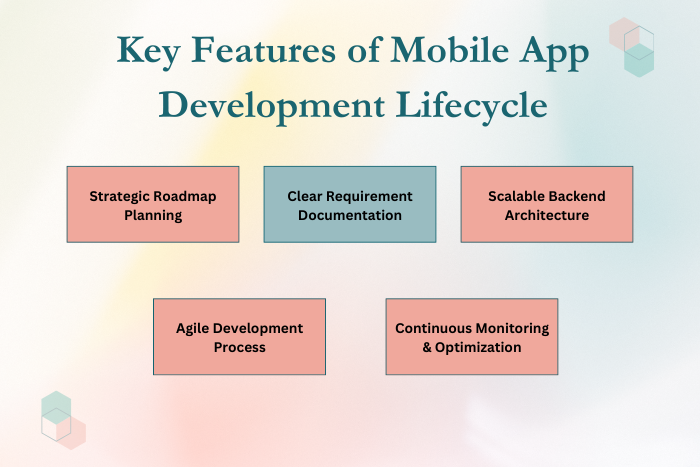
Key Features of a Structured Mobile App Development Lifecycle
The Mobile App Development Lifecycle ensures a structured approach that improves efficiency, reduces risks, and delivers high-quality, scalable applications.
Clear project roadmap and milestones
Market and competitor research
Wireframing and interactive prototyping
Scalable architecture planning
Agile development methodology
Comprehensive QA testing
Secure deployment processes
Continuous monitoring and updates
These features ensure your app evolves strategically rather than reactively.
Development Process
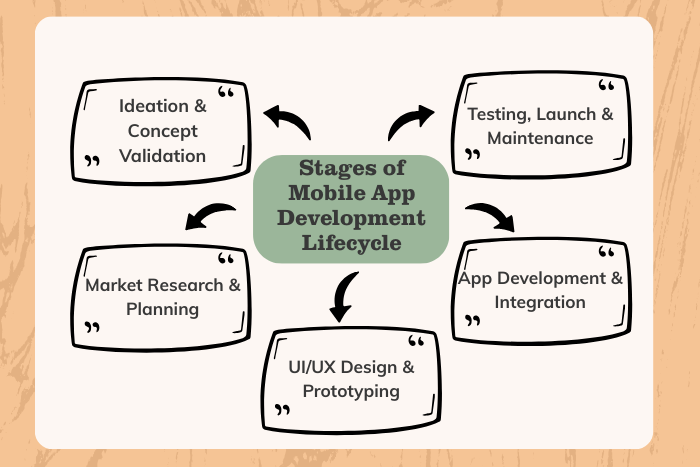
Here’s a detailed breakdown of the core stages in the mobile app development lifecycle:
Ideation & Concept Validation
Defining business objectives, identifying the target audience, analyzing competitors, and validating the app idea through strategic research and market insights.Market Research & Planning
Finalizing core features, creating a product roadmap, selecting the right monetization model, and choosing the most suitable development approach.Requirement Analysis & Technical Feasibility
Documenting functional and non-functional requirements, planning backend architecture, defining API integrations, and selecting the optimal technology stack.Wireframing & Prototyping
Designing low-fidelity wireframes, mapping user journeys, building interactive prototypes, and validating the overall user experience flow.UI/UX Design
Creating visual branding elements, designing responsive layouts, following platform-specific guidelines, and optimizing usability for enhanced engagement.App Development
Executing front-end and back-end development, setting up secure databases, and integrating third-party services for seamless functionality.Testing & Quality Assurance
Performing functional, performance, security, device compatibility, and beta testing to ensure reliability and stability.Deployment & Launch
Managing App Store and Google Play submission, ensuring compliance with platform policies, and supporting launch marketing strategies.Post-Launch Maintenance & Optimization
Monitoring performance metrics, fixing bugs, rolling out feature enhancements, and ensuring compatibility with ongoing OS updates.
Each stage ensures a seamless transition from concept to a fully functional, scalable, and high-performing mobile application.
Technology Stack for Mobile App Development Lifecycle
Our technology stack is carefully selected to support performance, security, and scalability throughout the Mobile App Development Lifecycle.
Front-End:
Swift, Kotlin, Flutter, React Native
Back-End:
Node.js, Python, Java, .NET
Databases:
MongoDB, PostgreSQL, MySQL, Firebase
Cloud Services:
AWS, Google Cloud, Microsoft Azure
APIs:
RESTful APIs, GraphQL, Payment APIs, Social Media APIs
DevOps:
Docker, Kubernetes, CI/CD Pipelines
Security:
OAuth 2.0, SSL Encryption, Biometric Authentication
Choosing the right stack ensures long-term maintainability and seamless upgrades.
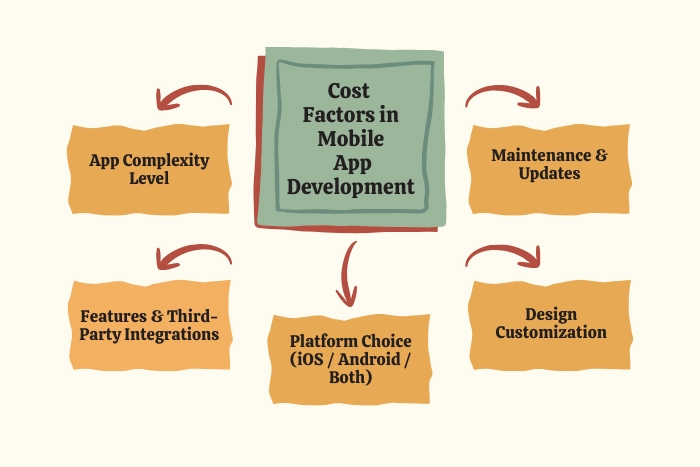
Cost Factors in the Mobile App Development Lifecycle
Several elements within the Mobile App Development Lifecycle influence the overall development cost.
App complexity (basic, medium, advanced)
Number of features and integrations
Platform (iOS, Android, or both)
UI/UX design complexity
Backend infrastructure requirements
Third-party service integrations
Security compliance requirements
Ongoing maintenance needs
A basic app may require limited investment, while enterprise-grade applications demand advanced architecture, security, and scalability planning.
We provide transparent cost estimation based on your business goals and technical scope.
Latest Trends
AI-powered personalization
Cloud-native mobile architecture
Low-code and no-code integrations
5G-optimized applications
IoT-enabled mobile apps
Blockchain-based app security
AR/VR mobile experiences
Progressive Web Apps (PWAs)
Staying aligned with modern trends ensures your app remains competitive and future-ready.
Why Choose Us for Mobile App Development Lifecycle Services?
End-to-end lifecycle management
Experienced mobile app strategists
Agile and transparent processes
Dedicated project managers
Scalable architecture planning
Focus on ROI-driven development
Long-term maintenance support
We don’t just build apps , we build scalable digital products aligned with your growth strategy.
Ready to transform your app idea into reality?
Let’s plan your mobile app development lifecycle today.
Contact us for a free consultation and tailored project roadmap.
Key Points :
- The mobile app development lifecycle includes ideation, planning, design, development, testing, deployment, and post-launch maintenance.
- A structured lifecycle reduces risks, controls costs, and ensures faster time-to-market.
- Proper requirement analysis and technical feasibility assessment prevent costly redevelopment.
- UI/UX design and prototyping are critical for improving user engagement and retention.
- Agile development methodology enhances flexibility, scalability, and collaboration.
- Comprehensive testing (functional, performance, security, compatibility) ensures app reliability
- Choosing the right technology stack (front-end, back-end, cloud, security) impacts long-term scalability.
- Post-launch maintenance and continuous optimization are essential for sustained app success.
FAQ's
The primary stages include ideation, planning, requirement analysis, design, development, testing, deployment, and post-launch maintenance.
It reduces risks, improves product quality, ensures technical feasibility, and enhances user satisfaction.
Timelines vary based on complexity, but most apps take 3–9 months from concept to launch.
Planning and requirement analysis are crucial because they define the foundation for all subsequent stages.
Costs depend on features, platform, design complexity, and backend infrastructure.
Post-launch activities include monitoring, updates, bug fixes, and performance optimization.
Yes. Startups often use an MVP-first lifecycle to validate ideas quickly and minimize investment risks.