


Learn what is the Android app development process, including planning, design, development, testing, tech stack, costs, and Google Play launch steps.
What Is the Android App Development Process?
If you’re planning to build a mobile application for Android users, you may be asking: what is the Android app development process? Developing a successful Android app involves a structured series of steps — from idea validation and UI/UX design to coding, testing, deployment, and ongoing maintenance.
Android app development is built around a flexible and open ecosystem powered by Google. With billions of active devices worldwide, Android provides businesses with massive market reach. However, success requires careful planning, technical expertise, performance optimization, and compliance with Google Play Store guidelines.
The Android development lifecycle ensures that your application is scalable, secure, and user-friendly. Whether you’re launching a startup MVP, an enterprise-grade solution, or a consumer-facing mobile product, understanding each stage of the Android app development process helps reduce risks, control costs, and accelerate time to market.
This comprehensive guide explains every phase involved in building and launching a high-performing Android application.
Why Understanding the Android App Development Process Is Important
Following a structured Android development process ensures:
Clear project scope and feature planning
Better UI/UX design aligned with user expectations
Efficient coding and architecture setup
Reduced development errors and rework
Compliance with Google Play policies
Faster and smoother app launch
Without a defined process, development can become disorganized, leading to delays, budget overruns, and poor app performance.
Types of Development Solutions
Different Android development approaches follow similar core processes but vary in execution.
Native Android App Development
Built specifically for Android devices
Uses Kotlin or Java
High performance and full hardware access
Cross-Platform Development
Single codebase for Android and iOS
Built with Flutter or React Native
Faster development cycle
Enterprise Android Applications
Internal company apps
Secure authentication systems
Advanced backend integration
MVP Android Development
Focused feature set
Rapid deployment
Market validation strategy
Each solution follows the same structured development lifecycle with varying complexity.
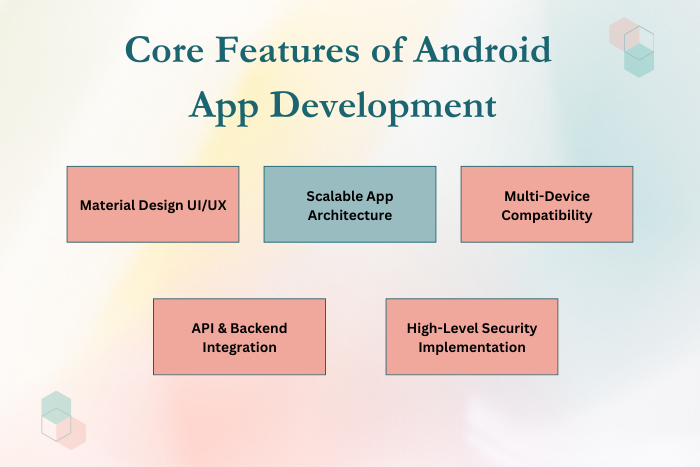
Key Features of the Android App Development Process
A professional Android development process includes:
Market research and requirement analysis
UI/UX design following Material Design guidelines
Scalable architecture planning
Backend integration and API connectivity
Cloud-based data storage
Security implementation
Performance optimization
Multi-device compatibility testing
Google Play Store readiness
These features ensure quality, security, and long-term scalability.
Android App Development Process (Step-by-Step)
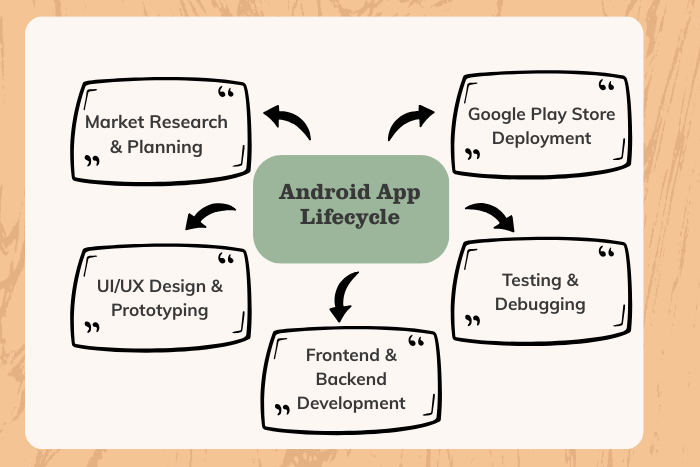
Our Android app development process follows a structured, step-by-step approach to ensure quality, scalability, and timely delivery:
Idea Validation & Market Research
Define target audience, analyze competitors, validate business goals, and identify market opportunities.Requirement Gathering & Strategic Planning
Finalize features, create technical documentation, set milestones, and define project timelines.UI/UX Design & Prototyping
Develop wireframes, interactive prototypes, and user interface designs aligned with Material Design principles.Architecture & Technology Setup
Select programming language (Kotlin/Java), define backend structure, choose APIs, and configure cloud services.Front-End & Back-End Development
Build user interface components, integrate APIs, develop server logic, and connect databases.Testing & Quality Assurance
Perform functional testing, device compatibility testing, performance optimization, and security validation.Deployment to Google Play Store
Prepare app bundle (AAB), create store listing assets, ensure compliance, and submit for review.Post-Launch Monitoring & Maintenance
Monitor performance, fix bugs, release updates, and scale features based on user feedback.
Technology Stack
A modern Android app development tech stack includes the following components:
Front-End Technologies:
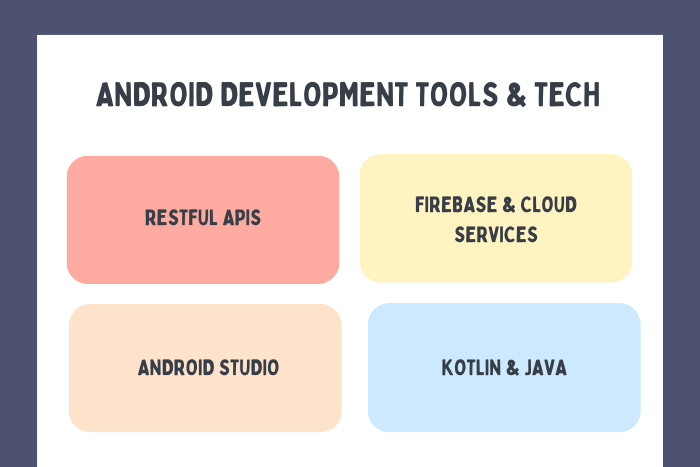
Kotlin (Android), Java (Android), XML (Layouts), Jetpack ComposeCross-Platform Technologies:
Flutter, React NativeBack-End Technologies:
Node.js, Python (Django/Flask), Java (Spring Boot), .NETDatabases:
SQLite, Room Database, Firebase Realtime Database, MongoDB, PostgreSQLCloud Services:
Google Cloud Platform (GCP), Amazon Web Services (AWS), FirebaseDevOps & Deployment:
Android Studio, Gradle, CI/CD PipelinesSecurity Technologies:
OAuth 2.0, SSL Encryption, Biometric Authentication, Google Play App Signing
Choosing the right stack ensures scalability, security, and performance optimization.
Cost Factors in Android App Development
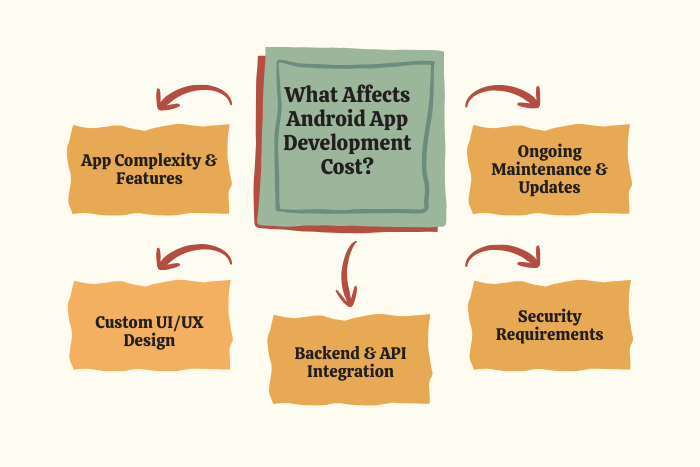
The cost of Android app development depends on:
App complexity and feature depth
UI/UX design customization
Backend integration requirements
Third-party APIs
Security implementation
Testing scope
Maintenance requirements
Estimated cost ranges:
Basic app: $15,000 – $40,000
Mid-level app: $40,000 – $90,000
Enterprise app: $100,000+
Additionally, Google Play Developer account costs a one-time $25 registration fee.
Latest Trends
Modern Android development is evolving with:
Kotlin-first development approach
Jetpack Compose UI framework
AI and machine learning integration
5G-optimized mobile applications
Cloud-native Android apps
IoT integration
Blockchain-enabled mobile apps
Enhanced app security protocols
Adopting these trends ensures competitive, future-ready applications.
Why Choose Us for Android App Development?
We follow a structured, transparent Android app development process to deliver secure, scalable, and high-performance applications.
Expert Android developers
Agile methodology
Material Design compliance
Robust backend architecture
End-to-end testing
Post-launch support and optimization
We transform your idea into a powerful Android application built for growth.
Ready to build your Android app?
Let’s turn your concept into a scalable digital product.
Contact us today for a free consultation and roadmap.
Key Points :
- The Android app development process begins with idea validation and market research.
- Requirement gathering and project planning define the app’s features and timeline.
- UI/UX design follows Material Design guidelines for better user experience.
- Development includes front-end coding, backend integration, and API implementation.
- Thorough testing ensures performance, security, and multi-device compatibility.
- Android Studio and Kotlin are the primary tools used in development.
- Apps must meet Google Play Store policies before submission.
- Post-launch maintenance and updates are essential for long-term success.
FAQ's
Android app development process is a structured lifecycle including planning, design, development, testing, deployment, and maintenance.
Kotlin is the preferred and officially recommended language.
Typically 3–6 months depending on complexity.
Costs range from $15,000 to $100,000+ depending on features.
With proper planning and tools, the process becomes structured and manageable.
Yes, if you want public distribution. A $25 one-time developer fee is required.
Yes, using cross-platform frameworks like Flutter or React Native.
Policy violations, security issues, performance problems, or incomplete documentation.