

Learn the cost of developing a mobile app, key pricing factors, development stages, and budgeting tips for Android, iOS, and cross-platform apps.

What Is the Cost of Developing a Mobile App?
One of the most common questions businesses ask when planning a digital product is “What is the cost of developing a mobile app?” Mobile applications have become essential tools for startups, enterprises, and growing businesses looking to improve customer engagement, streamline operations, and generate new revenue streams. However, app development costs can vary widely depending on multiple factors such as complexity, platform, features, and the development team involved.
A simple mobile application with basic functionality may require a relatively small investment, while a feature-rich enterprise application with advanced integrations can cost significantly more. Understanding the different cost components involved in mobile app development helps businesses plan realistic budgets and avoid unexpected expenses during the development process.
In addition to development costs, businesses must also consider factors such as design, testing, infrastructure, maintenance, and future scalability. The total investment depends on how sophisticated the application is and how many technologies are required to support it.
This guide explores mobile app development costs, the factors that influence pricing, the development process, technology choices, and the latest trends shaping modern app development budgets.
Why Mobile App Development Cost Planning Is Important
Budget planning is a critical step in any software development project. Understanding the cost of building a mobile application helps businesses allocate resources efficiently and ensure that the project delivers long-term value.
Here’s why cost planning is essential:
Better Financial Planning
Businesses can set realistic budgets and avoid unexpected development expenses.Efficient Resource Allocation
Knowing the estimated cost allows companies to prioritize features and development phases.Improved Project Scope Management
A clear cost structure helps teams avoid scope creep and maintain focus on essential features.Higher Return on Investment (ROI)
Strategic cost planning ensures the application delivers measurable business value.Scalable Development Approach
Businesses can start with a minimum viable product (MVP) and gradually expand functionality.
Understanding development costs enables organizations to build digital products that align with both their business objectives and financial capabilities.
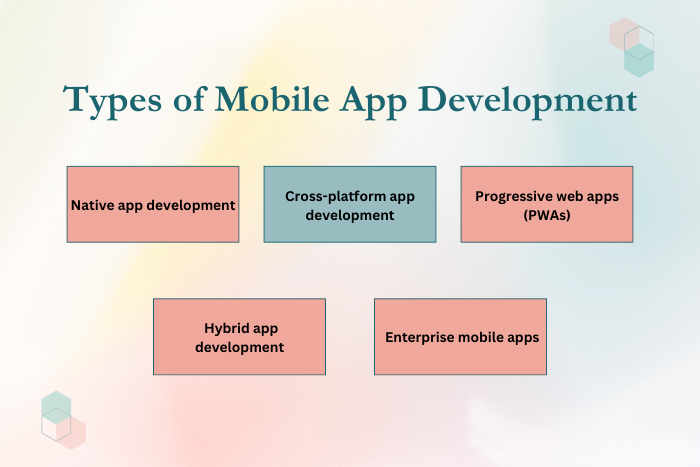
Types of Mobile Applications That Affect the Cost of Developing a Mobile App
Different types of applications require different levels of investment depending on complexity, platform, and technology stack.
Native Mobile App Development
Native apps are built specifically for Android or iOS using platform-specific technologies. These applications offer excellent performance and deep integration with device features.
Cross-Platform App Development
Cross-platform applications allow developers to create apps for both Android and iOS using a shared codebase. Frameworks like Flutter and React Native help reduce development time and cost.
Hybrid App Development
Hybrid apps combine web technologies with mobile frameworks, allowing faster development and simplified maintenance.
Progressive Web Applications (PWAs)
PWAs function like mobile apps but run inside web browsers, offering a cost-effective alternative for certain projects.
Enterprise Mobile Applications
Large organizations often require complex applications with advanced integrations, analytics, and security features.
Each development approach has its own cost structure depending on the complexity and scale of the application.
Key Features of Modern Mobile Applications
Modern mobile applications include advanced capabilities that influence development cost and overall functionality.
Intuitive and user-friendly interface design
Secure authentication and data protection systems
Integration with APIs and third-party services
Real-time data synchronization and notifications
Cloud-based infrastructure for scalability
Cross-device compatibility and responsiveness
Offline functionality and data caching
Analytics and performance monitoring tools
These features help create engaging and reliable applications that meet modern user expectations.
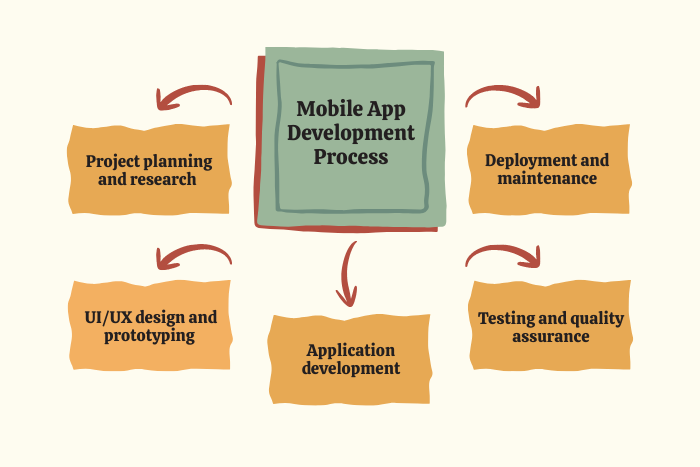
Mobile App Development Process
A structured development process helps control project costs and ensures efficient product delivery.
Project Discovery and Planning
Define business goals, target users, and functional requirements.Market Research and Competitive Analysis
Analyze competitors and industry trends to identify opportunities.UI/UX Design and Prototyping
Create wireframes and interactive prototypes to visualize the app.Application Development
Developers implement frontend interfaces, backend services, APIs, and databases.Testing and Quality Assurance
Conduct functional testing, performance testing, and security checks.Deployment and Launch
Publish the application on app stores or deploy it to cloud servers.Post-Launch Maintenance
Monitor performance, fix bugs, and release feature updates.
Following a structured development process helps ensure quality while managing development costs effectively.
Technology Stack Used in Mobile App Development
Modern mobile applications rely on multiple technologies to ensure performance, scalability, and security.
Mobile Development: Swift, Kotlin, Java, Dart
Cross-Platform Frameworks: Flutter, React Native, Xamarin
Frontend Technologies: HTML5, CSS3, JavaScript, TypeScript
Backend Technologies: Node.js, Python, Java, PHP
Databases: PostgreSQL, MySQL, MongoDB, Firebase
Cloud Platforms: AWS, Microsoft Azure, Google Cloud Platform
DevOps Tools: Docker, Kubernetes, GitHub Actions, Jenkins
Security Technologies: OAuth 2.0, JWT authentication, SSL encryption, RBAC
The technology stack chosen for a project can significantly influence development costs.
Major Factors That Determine the Cost of Developing a Mobile App
Several factors determine the total cost of building a mobile application.
Application Complexity
Simple apps cost less than feature-rich enterprise applications.Platform Selection
Developing separate apps for Android and iOS increases overall costs.UI/UX Design Complexity
Custom design elements and animations require additional development time.Third-Party Integrations
Integrations with payment gateways, maps, or analytics tools can increase costs.Development Team Location
Developer rates vary significantly depending on geographic region.Backend Infrastructure
Cloud servers, databases, and APIs require ongoing infrastructure costs.Maintenance and Updates
Regular updates, security patches, and performance improvements add to long-term costs.
In general, mobile app development costs can range widely depending on project requirements and complexity.
Latest Trends Affecting Mobile App Development Costs
New technologies and development practices are influencing how much it costs to build modern applications.
Some key trends include:
Growing adoption of cross-platform frameworks for cost efficiency
Integration of artificial intelligence and machine learning features
Development of progressive web applications (PWAs)
Increased use of cloud-native architectures
Expansion of Internet of Things (IoT) connected applications
Growth of AR and VR mobile experiences
Automation through DevOps and CI/CD pipelines
Stronger focus on security and data privacy
These innovations help developers build smarter applications while optimizing development resources.
Why Choose Us for Mobile App Development?
Choosing the right development partner plays a major role in controlling project costs and ensuring high-quality results. Our team specializes in building scalable and cost-efficient mobile applications tailored to business needs.
Here’s why companies choose our development services:
Experienced Mobile App Developers – Skilled engineers with expertise across multiple technologies.
Transparent Pricing Models – Clear cost structures with no hidden fees.
Scalable Development Architecture – Applications designed for future growth.
User-Focused Design Approach – Interfaces optimized for engagement and usability.
Secure Development Practices – Industry-standard security implementation.
Agile Development Methodology – Faster delivery through iterative development cycles.
Cloud-Optimized Infrastructure – Reliable and scalable deployment environments.
Long-Term Support and Maintenance – Continuous updates and performance monitoring.
We help businesses build high-performance applications that deliver strong ROI and long-term value.
Planning to build a mobile application for your business?
Let our experts estimate the cost and guide your development strategy.
Contact us today for a free consultation and project estimate.
Key Points :
- Mobile app development cost depends on app complexity, features, and platform.
- Simple apps cost less, while feature-rich apps require higher investment.
- Choosing Android, iOS, or cross-platform affects the total development cost.
- UI/UX design, integrations, and backend infrastructure impact pricing.
- The development process includes planning, design, development, testing, and launch.
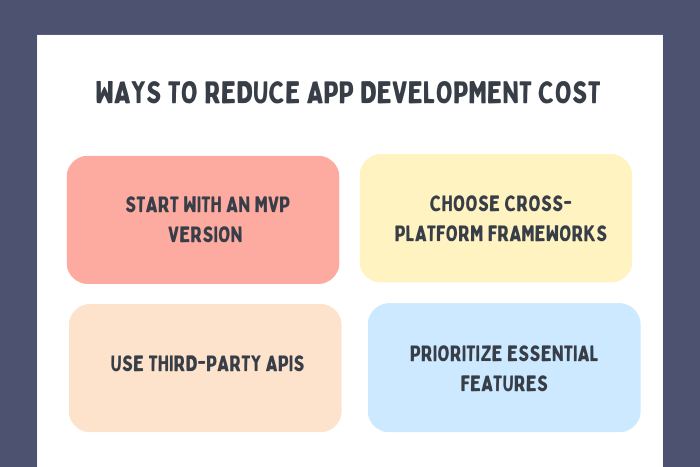
- Starting with an MVP can help reduce overall app development costs.
FAQ's
Mobile app development costs vary depending on complexity, features, and platform requirements. Simple apps cost less, while advanced apps require larger investments.
Factors include application complexity, design requirements, development platform, integrations, infrastructure, and maintenance needs.
Cross-platform apps often reduce development costs because a single codebase can be used for multiple platforms.
Development timelines depend on project scope. Simple apps may take weeks, while complex applications may require several months.
Costs are generally similar, but developing separate native apps for both platforms can increase the total project cost.
Yes. Regular updates, bug fixes, security improvements, and infrastructure management contribute to ongoing costs.
Yes. Starting with an MVP, using cross-platform frameworks, and prioritizing essential features can reduce costs.
The best approach is to consult a professional development team that can analyze your requirements and provide an accurate estimate.