Learn the complete process of app design and development, from idea validation and UI/UX design to coding, testing, and launching a successful app.
What Is the Process of App Design and Development?
Many businesses and startups ask the question: What is the process of app design and development? Understanding this process is essential before investing in a mobile or web application. App design and development is not just about writing code—it involves strategic planning, user experience design, technical architecture, development, testing, and continuous improvement.
Modern applications are built through a structured workflow that ensures the product meets business objectives while delivering a seamless user experience. From identifying a problem to launching a fully functional application, every stage in the app development lifecycle plays a critical role in building a successful product.
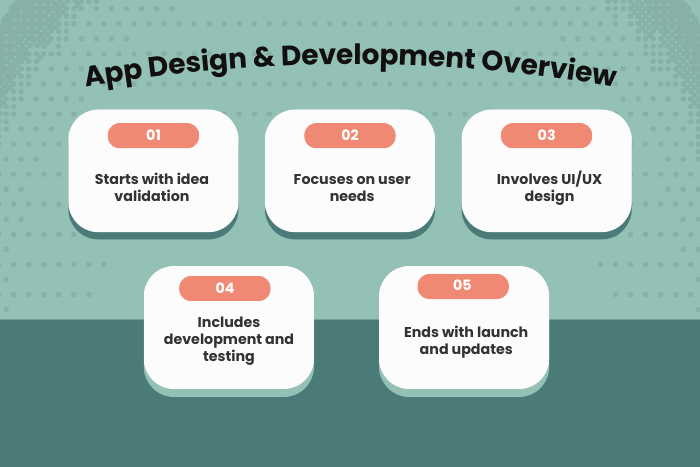
The process typically begins with idea validation and product planning, followed by UI/UX design, technical development, testing, and deployment. Each phase involves collaboration between product managers, designers, developers, and quality assurance specialists.
By following a structured development process, businesses can minimize risks, control development costs, and ensure their applications are scalable, secure, and user-friendly. In this guide, we’ll explain the complete process of app design and development, the technologies involved, key features of modern apps, and how businesses can successfully transform their ideas into digital products.
Why the App Design and Development Process Is Important
A well-defined app design and development process ensures that projects are delivered efficiently, on time, and within budget. Without a structured approach, projects may face delays, technical challenges, or misaligned expectations.
Here are the key reasons why the app development process is important:
Clear Product Vision
A structured process helps define business goals, target users, and the problem the app solves.Better User Experience
UI/UX design ensures the application is intuitive, engaging, and easy to use.Efficient Development Workflow
Organized development stages help teams work efficiently and reduce technical errors.Scalability and Performance
Proper architecture planning ensures the app can handle growth and increased users.Quality Assurance
Continuous testing improves reliability, security, and performance.Reduced Development Risks
Structured planning helps identify potential issues before they impact the final product.
Following a proven development process ensures that applications meet both business and user expectations.
Types of Solutions
Different types of application development solutions exist depending on the project goals and target platforms.
Native Mobile App Development
Applications built specifically for a single platform such as iOS or Android.
Cross-Platform App Development
Apps built using a single codebase that works across multiple platforms like Android and iOS.
Web Application Development
Browser-based applications accessible through web browsers.
Progressive Web Applications (PWA)
Web apps that offer mobile-like experiences including offline access and push notifications.
Enterprise Application Development
Custom software solutions designed for large organizations and complex workflows.
Minimum Viable Product (MVP) Development
A simplified version of the app designed to validate ideas before full-scale development.
Each type of solution is designed to address different business needs and technical requirements.
Key Features of Modern App Design and Development
Successful applications include several important features that ensure performance, usability, and scalability.
Key features include:
User-centered UI/UX design and intuitive navigation
High-performance backend architecture
Secure authentication and data protection
Scalable infrastructure for future growth
API integrations with third-party services
Real-time features such as notifications or messaging
Cross-device compatibility and responsive design
Analytics and performance monitoring tools
These features ensure that applications remain reliable, scalable, and competitive in modern digital markets.
Development Process
A structured development process helps transform an app idea into a fully functional product.
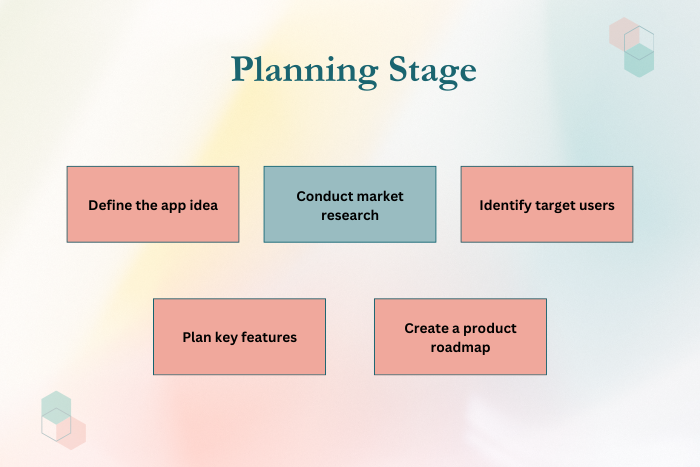
Idea Validation and Market Research
Identify the problem your app solves, analyze competitors, and define your target audience.
Product Planning and Roadmap Creation
Define the app’s features, development timeline, and product roadmap.
UI/UX Design
Create wireframes, user flows, and interactive prototypes to visualize the user experience.
Technical Architecture Planning
Select the technology stack and design system architecture for scalability.
App Development
Developers build the frontend and backend components of the application.
Testing and Quality Assurance
Conduct functional testing, usability testing, performance testing, and security checks.
Deployment and Launch
Release the app on platforms such as the Apple App Store, Google Play Store, or web servers.
Post-Launch Maintenance and Updates
Monitor performance, fix bugs, and introduce new features based on user feedback.
This step-by-step process ensures that the application is stable, scalable, and aligned with business goals.
Technology Stack for App Design and Development
Modern applications rely on a combination of technologies, frameworks, and development tools.
- Mobile Development Languages: Swift, Kotlin, Java, Dart
- Cross-Platform Frameworks: Flutter, React Native, Xamarin
- Frontend Technologies: React.js, Vue.js, Angular, HTML5, CSS3
- Backend Technologies: Node.js, Python, Ruby on Rails, PHP, Java
- Databases: PostgreSQL, MongoDB, MySQL, Firebase
- Cloud Platforms: AWS, Google Cloud Platform, Microsoft Azure
- DevOps Tools: Docker, Kubernetes, GitHub Actions, Jenkins
- Security Technologies: OAuth 2.0, JWT authentication, SSL encryption, RBAC
Using the right technology stack ensures better performance, scalability, and long-term maintainability.


Cost Factors in App Design and Development
The cost of developing an application varies depending on several factors.
Key cost factors include:
App complexity and feature requirements
Platform choice (iOS, Android, or cross-platform)
UI/UX design complexity
Backend infrastructure and APIs
Third-party integrations
Development team size and expertise
Testing and quality assurance requirements
Maintenance and long-term support
Simple apps with limited features may cost less, while enterprise-level applications with advanced functionality require larger development budgets.
Latest Trends in App Design and Development
The mobile app industry continues to evolve with new technologies and development approaches.
Key trends shaping modern app development include:
AI and machine learning integration
Low-code and no-code development platforms
Cross-platform frameworks like Flutter and React Native
Cloud-native and serverless architectures
Progressive Web Apps (PWA)
Advanced UI/UX design using motion and micro-interactions
IoT-enabled mobile applications
Enhanced app security and privacy compliance
These innovations help businesses build smarter, faster, and more scalable digital products.
Why Choose Us for App Design and Development?
Choosing the right development partner plays a critical role in the success of your application. Our team focuses on delivering high-performance, scalable, and user-friendly applications tailored to your business goals.
Here’s why businesses work with us:
End-to-End App Development Services – From idea validation to deployment and maintenance.
User-Centered Design Approach – Creating intuitive and engaging user experiences.
Agile Development Methodology – Faster delivery through iterative development cycles.
Scalable Technology Architecture – Apps designed for long-term growth and performance.
Expert Developers and Designers – Experienced teams across multiple technologies and platforms.
Transparent Project Communication – Regular updates and collaborative workflows.
Secure Development Practices – Implementation of modern security standards.
Post-Launch Support and Optimization – Continuous improvements and feature updates.
We help businesses transform innovative ideas into successful digital products.
Ready to turn your app idea into a powerful digital product?
Let our experts guide you through the complete app design and development process.
Contact us today for a free consultation and project estimate.
Key Points :
- App design and development follows a structured process from idea validation to launch and maintenance.
- The process begins with market research and product planning to define the app’s goals and target audience.
- UI/UX design creates wireframes, prototypes, and user flows for a better user experience.
- Developers build the frontend and backend architecture using modern programming languages and frameworks.
- Deployment involves launching the app on app stores or web platforms.
- Post-launch maintenance and updates help improve features and performance.
FAQ's
It is the structured process of creating an application, including planning, design, development, testing, and deployment.
Development timelines vary depending on complexity, but most apps take between 3–6 months.
The first step is idea validation and market research to understand user needs and business goals.
UI/UX design ensures that the app is visually appealing, intuitive, and easy for users to navigate.
Yes. Cross-platform frameworks such as Flutter and React Native allow developers to build apps for both platforms.
Common technologies include Swift, Kotlin, Flutter, React Native, Node.js, and cloud platforms like AWS.
Costs depend on features, design complexity, and development platforms.
Yes. Regular updates, security patches, and feature improvements are necessary to keep the app running smoothly.