
Discover the features of a good language learning app including speech recognition, gamification, adaptive learning, and progress tracking.
Features of a Good Language Learning App
Language learning apps have transformed how people acquire new languages in today’s digital world. With smartphones and internet access becoming widely available, learners can now practice vocabulary, pronunciation, and grammar anytime and anywhere. Businesses, educators, and startups are increasingly investing in educational technology solutions that deliver effective language learning experiences. Understanding the features of a good language learning app is essential for building engaging and successful digital learning platforms.
A well-designed language learning app helps users improve reading, writing, listening, and speaking skills through interactive lessons and exercises. These apps combine advanced technologies such as artificial intelligence, speech recognition, and adaptive learning algorithms to personalize learning journeys. Instead of traditional classroom-based methods, modern language apps deliver bite-sized lessons, gamified exercises, and conversational practice.
Successful platforms provide tools like pronunciation feedback, progress tracking, vocabulary builders, and interactive dialogues. By integrating multimedia content, quizzes, and real-time feedback, language learning apps can keep users motivated and help them achieve language proficiency faster.
Developing an effective language learning app requires a combination of smart technology, engaging content, and intuitive design that supports learners of different skill levels.
Why Features of a Good Language Learning App Are Important
Language learning applications must deliver engaging and personalized learning experiences. The right features ensure that learners stay motivated and continue practicing regularly.
Here’s why these features are important:
Improves Learning Efficiency
Structured lessons help users learn faster.Encourages Daily Practice
Gamification and reminders motivate consistent learning.Supports Personalized Learning
Adaptive algorithms tailor lessons based on progress.Enhances Pronunciation and Communication Skills
Speech recognition tools provide instant feedback.Tracks Learning Progress
Analytics help learners monitor improvement.Makes Language Learning Accessible
Mobile apps allow learning anytime and anywhere.
Implementing these features ensures effective and engaging language learning experiences.
Types of Language Learning Platform Solutions
Language learning platforms can be designed for different learning styles and audiences.
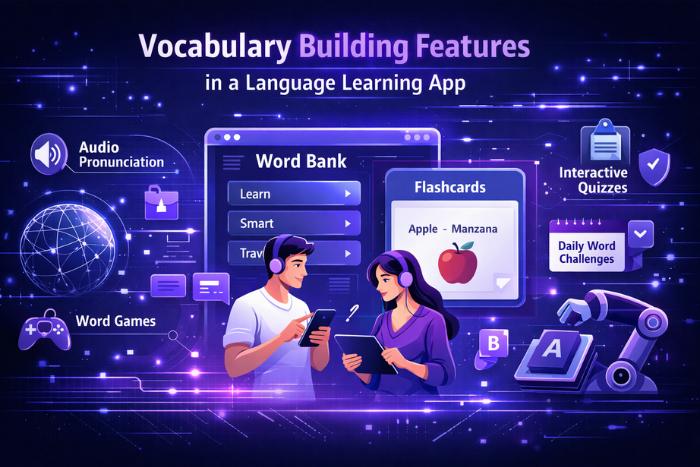
Vocabulary Learning Apps
Apps designed to improve vocabulary and word recognition.
Flashcards and vocabulary drills
Spaced repetition systems
Daily word challenges
Conversation Practice Apps
Platforms focusing on real-life communication skills.
Interactive dialogues
Voice recognition practice
AI conversation bots
Gamified Learning Apps
Apps that use gaming elements to encourage learning.
Level-based progression
Points and rewards
Leaderboards and achievements
Educational Language Platforms
Apps used by schools and universities.
Structured course modules
Assessment tools
Instructor dashboards
Corporate Language Training Platforms
Platforms designed for employee training.
Business language courses
Industry-specific vocabulary
Progress tracking for teams
These solutions provide flexible learning experiences for individuals, students, and organizations.
Key Features of a Good Language Learning App
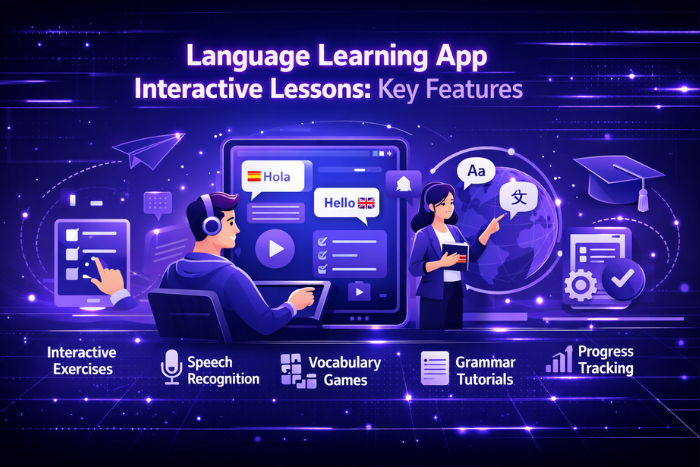
A successful language learning app should provide engaging tools that help users practice speaking, listening, reading, and writing.
User Registration and Personalized Profiles
Users should be able to create profiles and set language learning goals.
Personalized Learning Paths
Adaptive learning systems adjust lessons based on user skill levels and progress.
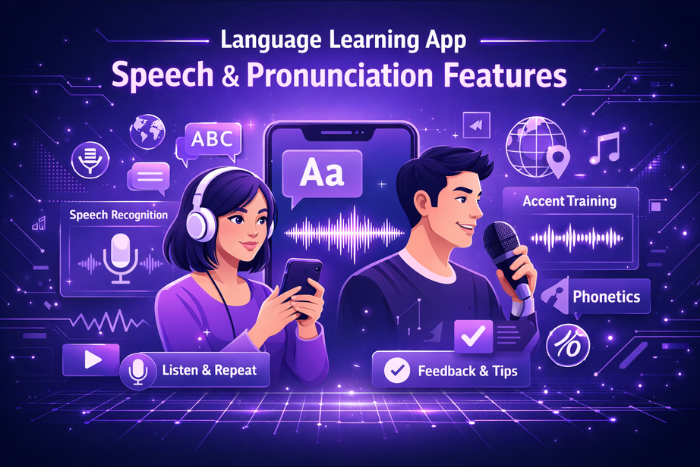
Speech Recognition and Pronunciation Feedback
Voice recognition technology evaluates pronunciation and provides corrective feedback.
Interactive Conversations
Simulated conversations help users practice real-life communication scenarios.
Gamified Learning Experience
Rewards, badges, and leaderboards motivate users to continue learning.
Spaced Repetition System
Vocabulary and phrases are repeated at optimal intervals to improve retention.
Multimedia Learning Content
Lessons can include videos, images, audio clips, and interactive exercises.
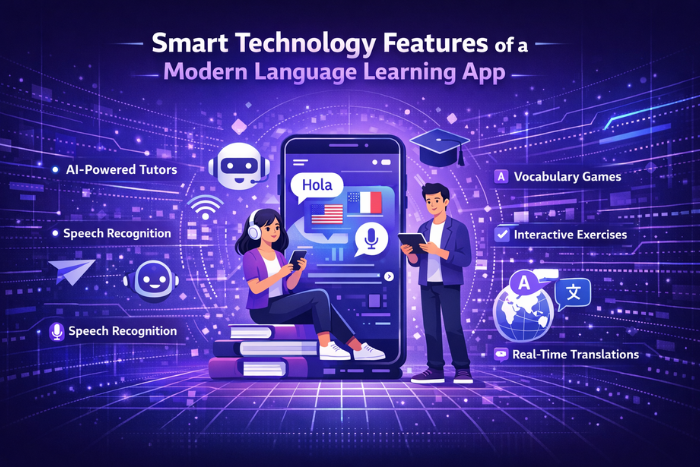
Real-Time Translation Tools
Translation features help learners understand new words and phrases.
Progress Tracking and Analytics
Users can monitor their learning achievements and performance.
Push Notifications and Learning Reminders
Reminders encourage users to complete lessons regularly.
Offline Learning Mode
Users can download lessons and practice without internet access.
Admin Dashboard and Course Management
Administrators can manage courses, users, and learning analytics.
These features ensure effective language acquisition and high user engagement.
Language Learning App Development Process
Developing a successful language learning platform requires careful planning and execution.
Market Research and Planning
Identify target learners and define course structure.
Learning Content Strategy
Design lesson plans, vocabulary modules, and practice exercises.
UI/UX Design
Create intuitive interfaces that make learning simple and engaging.
AI and Speech Recognition Integration
Implement pronunciation feedback and adaptive learning algorithms.
Frontend and Backend Development
Build learning modules, user dashboards, and analytics systems.
Testing and Quality Assurance
Ensure accuracy of speech recognition and learning content.
Deployment and Launch
Launch the app across mobile and web platforms.
Continuous Updates and Improvement
Add new languages, features, and learning content.
This development process ensures high-quality and scalable language learning platforms.
Technology Stack for Language Learning App Development
Modern language learning apps rely on advanced educational technologies.
Mobile Development: Flutter, React Native, Swift, Kotlin
Frontend Technologies: HTML5, CSS3, JavaScript, React
Backend Technologies: Node.js, Python, Java
Database Systems: PostgreSQL, MySQL, MongoDB
AI and Speech Recognition: Natural Language Processing (NLP), Machine Learning
Cloud Platforms: AWS, Google Cloud, Microsoft Azure
Multimedia Technologies: Video streaming and audio processing
Security Technologies: Encryption and secure authentication
These technologies ensure reliable, scalable, and interactive learning platforms
Cost Factors in Language Learning App Development
The cost of building a language learning app depends on several factors.
Key cost considerations include:
Number of languages supported
AI and speech recognition integration
Content creation and multimedia resources
UI/UX design complexity
Mobile and web platform compatibility
Cloud infrastructure and scalability
Maintenance and feature updates
Basic language learning apps require moderate investment, while advanced AI-powered platforms require larger budgets.
Latest Trends in Language Learning Apps
Educational technology continues to evolve with innovative learning solutions.
Important trends include:
AI-powered personalized learning
Real-time AI tutors
Augmented reality language learning
Voice-based language practice
Gamified learning environments
Microlearning lessons
Cultural context integration
Multilingual learning platforms
These trends are shaping the future of digital language education.
Why Choose Us for Language Learning App Development
Building a successful language learning app requires expertise in educational technology, AI integration, and user experience design.
Here’s why businesses choose our development services:
EdTech Development Expertise
We build scalable language learning platforms.Custom Learning Solutions
Our apps include all features of a good language learning app.AI and Speech Recognition Integration
We implement intelligent pronunciation and adaptive learning systems.Engaging Learning Experiences
Our designs improve learner engagement and retention.Secure and Scalable Platforms
We develop platforms capable of supporting global users.End-to-End Development Support
From concept and design to launch and maintenance.
Planning to launch a language learning app?
Our developers can create an engaging and scalable language learning platform for your business.
Contact us today for a free consultation and development estimate.
Key Points :
- Language learning apps help users practice vocabulary, pronunciation, grammar, and conversation through interactive digital lessons.
- Key features include personalized learning paths, speech recognition for pronunciation feedback, and gamified lessons.
- Interactive conversations, multimedia lessons, and spaced repetition systems improve language retention.
- Progress tracking and analytics help learners monitor performance and stay motivated.
- Development costs depend on AI integration, speech recognition technology, content creation, and UI/UX design.
- Trends include AI-powered tutors, real-time translation tools, AR-based language learning, and microlearning modules.
FAQ's
Key features include personalized lessons, speech recognition, gamification, progress tracking, and interactive conversations.
They deliver structured lessons, vocabulary exercises, and pronunciation practice through mobile platforms.
Yes, interactive learning tools and adaptive algorithms help users improve language skills efficiently.
Technologies include AI, natural language processing, speech recognition, and mobile development frameworks.
Costs depend on features, languages supported, AI integration, and development complexity.
Yes, many apps allow users to download lessons for offline learning.
Yes, modern apps can support multiple languages and learning paths.
Yes, AI can personalize lessons and provide real-time pronunciation feedback.