
Discover the key features of a successful online education platform including LMS tools, video learning, analytics, and interactive learning features.
Key Features of a Successful Online Education Platform
Online education platforms have transformed the way people learn, train, and develop professional skills. With the rise of digital learning, educational institutions, businesses, and training providers are investing in advanced e-learning systems to deliver knowledge efficiently. Understanding the key features of a successful online education platform is essential for organizations looking to build scalable and engaging digital learning environments.
An online education platform allows students, teachers, and organizations to access learning materials from anywhere in the world. These platforms provide tools for course creation, content delivery, assessments, collaboration, and progress tracking. By integrating modern technologies such as video learning, AI-powered analytics, and gamification, e-learning platforms create interactive and personalized learning experiences.
Successful education platforms focus on accessibility, usability, and engagement. They must support multimedia learning content, real-time communication between instructors and students, and performance analytics to track progress. A well-designed learning management system (LMS) also ensures smooth content management and administrative control.
By implementing the right features, businesses and educational institutions can create powerful online learning ecosystems that support skill development, training programs, and global knowledge sharing.
Why Key Features of a Successful Online Education Platform Are Important
Online learning platforms must deliver engaging and efficient learning experiences. The right features ensure that learners remain motivated while instructors can manage courses effectively.
Here’s why these features are essential:
Improves Learning Accessibility
Students can access educational content from anywhere.Enhances Student Engagement
Interactive features and gamification increase participation.Supports Personalized Learning
AI-driven recommendations adapt learning paths to each student.Simplifies Course Management
Instructors can easily create, manage, and update courses.Tracks Learning Progress
Analytics tools measure performance and improvement.Scales Education Globally
Platforms can serve thousands of learners simultaneously.
Implementing these features ensures that an online education platform delivers effective digital learning experiences.
Types of Successful Online Education Platform Solutions
Online education platforms can be designed for different learning environments and audiences.
Learning Management Systems (LMS)
Platforms used by schools, universities, and training organizations.
Course creation tools
Learning progress tracking
Student assessments
Massive Open Online Course Platforms (MOOCs)
Platforms that provide large-scale courses to global audiences.
Video-based learning
Certification programs
Global course accessibility
Corporate Training Platforms
Learning systems designed for employee training and development.
Skill development programs
Performance tracking
Compliance training
Marketplace Learning Platforms
Platforms where instructors can create and sell courses.
Course monetization tools
Instructor dashboards
Student feedback systems
Hybrid Learning Platforms
Systems combining online and offline education.
Virtual classrooms
Live learning sessions
Hybrid course delivery
Each platform type requires a combination of learning tools, content management systems, and analytics features.
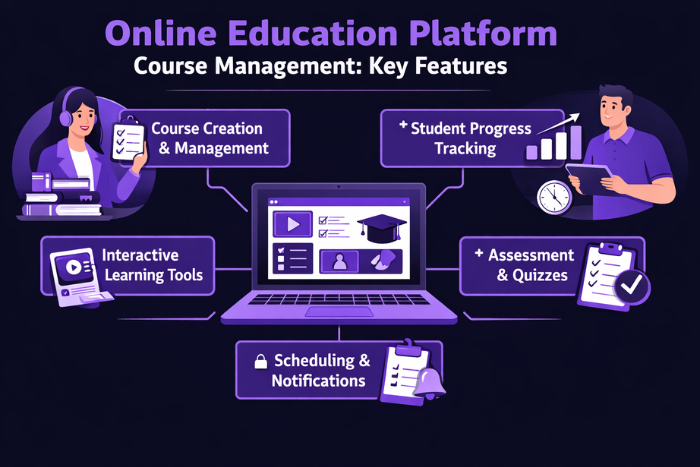
Key Features of a Successful Online Education Platform
A successful e-learning platform must provide powerful tools for learning, teaching, and course management.
User Registration and Profile Management
Students and instructors should be able to create profiles and manage their learning activities.
Course Creation and Content Management
Instructors must have tools to create courses, upload materials, and manage content efficiently.
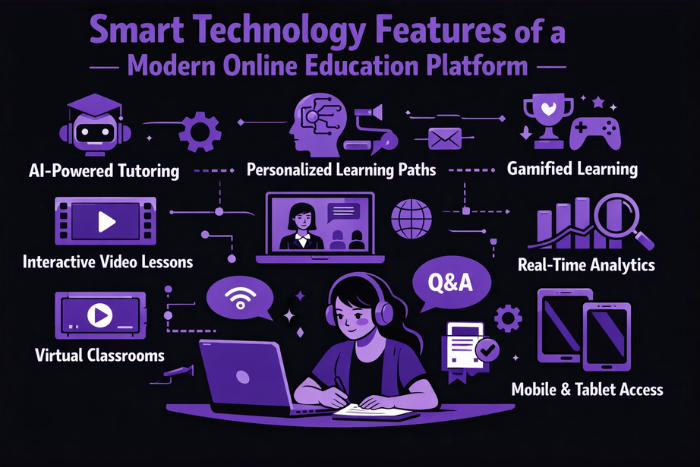
Video-Based Learning
High-quality video streaming enables engaging learning experiences.
Interactive Learning Modules
Interactive elements such as quizzes, assignments, and exercises improve student engagement.
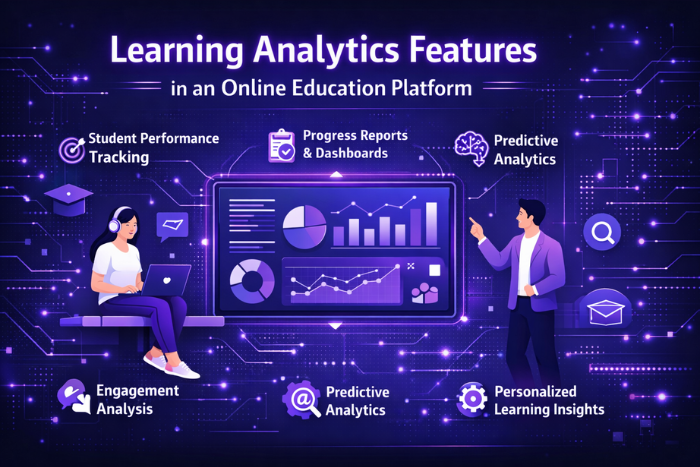
Learning Progress Tracking
Students and instructors can track course completion and performance metrics.
Assessment and Certification
Quizzes, exams, and certifications validate learners’ progress and achievements.
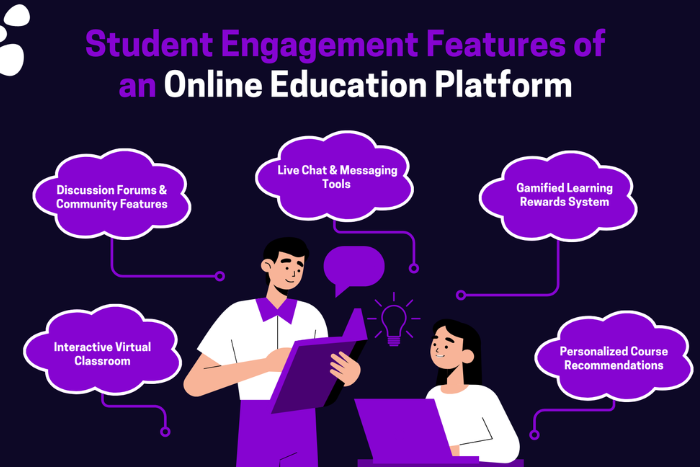
Gamification Features
Badges, leaderboards, and rewards motivate learners to complete courses.
Discussion Forums and Communication Tools
Students can interact with instructors and peers through messaging and discussion boards.
Mobile Accessibility
Learners can access courses through smartphones and tablets.
Analytics and Reporting Tools
Administrators can analyze learning behavior, engagement levels, and course performance.
Push Notifications and Reminders
Alerts notify students about deadlines, new lessons, and upcoming exams.
Admin Dashboard and Platform Management
Administrators can manage users, courses, payments, and platform activity.
These features ensure engaging learning experiences and efficient course management.
Online Education Platform Development Process
Building a successful e-learning platform requires a well-defined development strategy.
Market Research and Learning Strategy
Identify target learners and define educational objectives.
Platform Architecture Planning
Design scalable infrastructure for course management and content delivery.
UI/UX Design
Create intuitive interfaces for students and instructors.
Backend and Frontend Development
Develop course management systems, learning modules, and dashboards.
Multimedia Content Integration
Integrate video streaming, quizzes, and interactive learning tools.
Testing and Performance Optimization
Ensure smooth user experience and platform reliability.
Deployment and Launch
Launch the platform across web and mobile devices.
Maintenance and Feature Updates
Continuously improve platform features and learning tools.
This structured process ensures scalable and high-quality learning platforms.
Technology Stack for Online Education Platform Development
Modern e-learning platforms rely on advanced technologies to deliver high-performance learning experiences.
Frontend Technologies: HTML5, CSS3, JavaScript, React
Mobile Development: Flutter, React Native, Swift, Kotlin
Backend Technologies: Node.js, Python, Java
Database Systems: MySQL, PostgreSQL, MongoDB
Cloud Platforms: AWS, Google Cloud Platform, Microsoft Azure
Video Streaming Technologies: WebRTC, CDN networks
Analytics Tools: AI-powered learning analytics
Security Technologies: Encryption and secure authentication
These technologies ensure scalability, security, and efficient content delivery.
Cost Factors in Online Education Platform Development
The cost of building an online education platform depends on several factors.
Key cost considerations include:
Platform complexity and feature requirements
Video streaming and multimedia infrastructure
UI/UX design complexity
Mobile and web platform support
Cloud hosting and scalability
Security and data protection
AI-based analytics and personalization features
Basic e-learning platforms require moderate investment, while advanced platforms with AI and analytics require larger budgets.
Latest Trends in Online Education Platforms
The online learning industry continues to evolve with innovative technologies.
Key trends include:
AI-powered personalized learning
Gamified learning experiences
Microlearning modules
Virtual and augmented reality learning
Social learning communities
Mobile-first learning platforms
AI tutors and chatbots
Blockchain-based certification systems
These trends are transforming digital education and training environments.
Why Choose Us for Online Education Platform Development
Building a successful e-learning platform requires expertise in educational technology, user experience design, and scalable software architecture.
Here’s why businesses choose our development services:
Expertise in EdTech Development
We specialize in building scalable online education platforms.Custom Learning Platform Solutions
Our platforms include all key features of a successful online education platform.Advanced Learning Analytics
We integrate AI-powered analytics and progress tracking tools.Engaging User Experiences
Our designs enhance student engagement and learning outcomes.Secure and Scalable Infrastructure
We implement secure systems for content delivery and user management.End-to-End Development Support
From concept and design to deployment and maintenance.
Planning to launch an online education platform?
Our development team can build a powerful and scalable e-learning solution for your organization.
Contact us today for a free consultation and project estimate.
Key Points :
- Online education platforms enable students to access courses, training programs, and learning resources from anywhere.
- Key features include course management systems, video-based learning, interactive quizzes, and progress tracking tools.
- Communication tools such as discussion forums, messaging, and live classes improve student engagement.
- Gamification elements like badges, leaderboards, and rewards motivate learners to complete courses.
- Development costs depend on video streaming infrastructure, LMS features, UI/UX design, and cloud scalability.
- Trends include AI-powered personalized learning, microlearning modules, VR-based education, and mobile-first learning platforms.
FAQ's
Important features include course management, video learning, assessments, analytics, mobile accessibility, and communication tools.
They allow instructors to create courses and students to access learning materials through digital platforms.
Yes, cloud-based platforms can support thousands of learners simultaneously.
Technologies include cloud computing, video streaming tools, mobile frameworks, and AI-powered analytics.
Costs depend on features, video infrastructure, scalability requirements, and development complexity.
Yes, platforms can generate certificates after course completion.
Yes, most modern platforms are designed to support mobile devices.
Yes, AI can personalize learning paths and provide intelligent learning recommendations.