
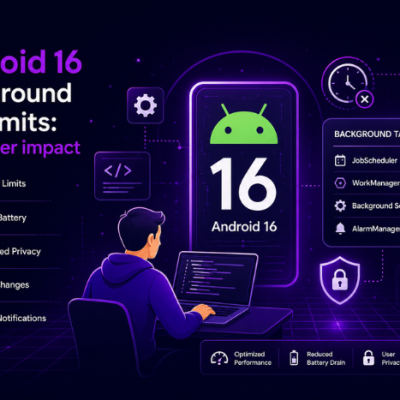
Understand Android 16 background task limits developer impact to optimize performance, battery usage, and app behavior.
Introduction
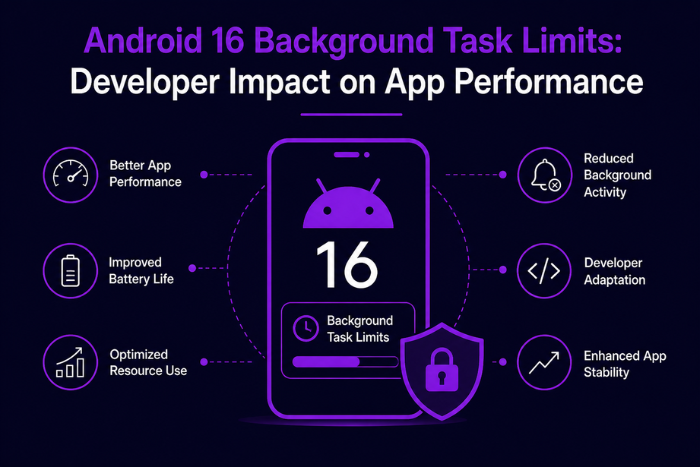
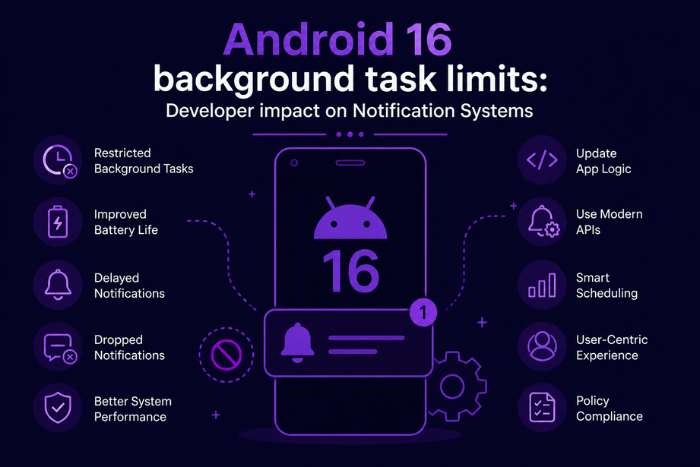
With each Android release, Google continues to refine how apps interact with system resources, and Android 16 introduces stricter background task limits that significantly affect how applications operate behind the scenes. These changes are designed to improve battery efficiency, enhance system performance, and provide a smoother user experience—but they also require developers to rethink app architecture and background processing strategies.
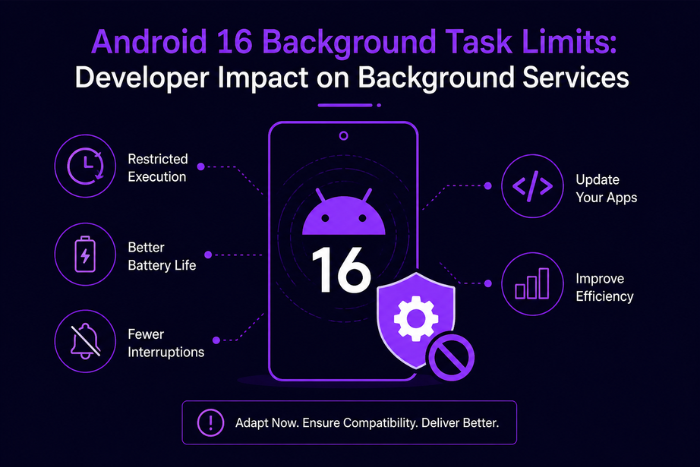
Understanding Android 16 background task limits: developer impact is essential for building modern, compliant, and high-performing Android applications in 2026. Apps that rely heavily on background services—such as messaging platforms, fitness trackers, or real-time data apps—must adapt to new restrictions on job scheduling, background execution, and system-triggered tasks.
Failing to comply with these changes can result in performance issues, delayed processes, or even app rejection on the Play Store. By adopting updated best practices, developers can ensure their apps remain efficient, responsive, and aligned with Android 16 requirements while maintaining seamless functionality for users.
Why Android 16 Background Task Limits: Developer Impact is Important
The new background task restrictions directly affect app performance and user experience.
- Improved Battery Efficiency
Limits unnecessary background activity. - Better System Performance
Reduces resource consumption across apps. - Enhanced User Experience
Faster and smoother app interactions. - Play Store Compliance
Ensures apps meet modern Android guidelines. - Optimized Resource Management
Efficient use of CPU, memory, and network. - Reduced App Crashes
Better handling of background processes. - Future-Proof Development
Aligns with evolving Android architecture. - Increased App Stability
Controlled execution improves reliability.
Types of Solutions for Android 16 Background Task Limits: Developer Impact
Developers can implement various solutions to adapt to new restrictions:
- WorkManager-Based Task Scheduling
Recommended for deferrable background tasks. - Foreground Services Optimization
Handling critical real-time processes. - JobScheduler Improvements
Efficient scheduling aligned with system constraints. - Event-Driven Architecture
Triggering tasks based on user or system events. - Push Notification Integration
Reducing background polling. - Data Sync Optimization
Smart syncing strategies for minimal resource use. - Battery-Aware Task Management
Adjusting behavior based on device state. - Lifecycle-Aware Components
Ensuring tasks align with app lifecycle.
Key Features of Android 16 Background Task Limits: Developer Impact
Android 16 introduces several key improvements:
- Stricter Background Execution Limits
Controls long-running background tasks. - Optimized Job Scheduling
Improved efficiency for scheduled work. - System-Triggered Profiling
Better insights into app performance. - Enhanced Job Introspection
Developers can monitor background tasks more effectively. - Foreground Service Restrictions
Encourages responsible usage. - Adaptive Resource Allocation
Dynamic system resource management. - Improved Battery Optimization
Reduced power consumption. - Better Debugging Tools
Enhanced visibility into task execution.
Development Process
Adapting to Android 16 requires a structured approach:
- App Behavior Analysis
Identify existing background tasks and dependencies. - Requirement Mapping
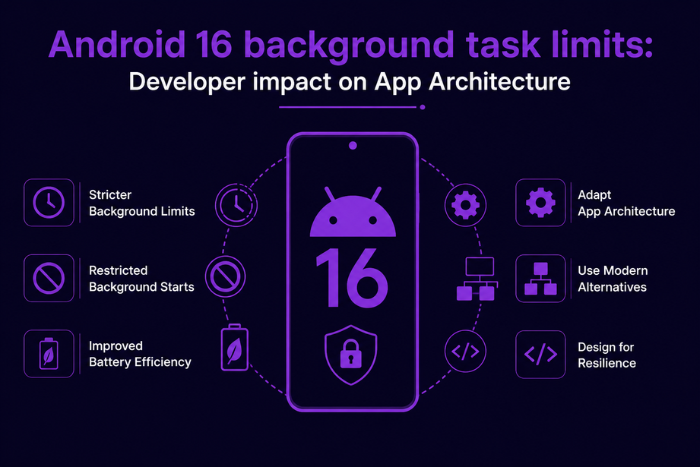
Align app functionality with Android 16 guidelines. - Architecture Redesign
Implement event-driven and lifecycle-aware systems. - WorkManager Integration
Replace legacy background services. - Foreground Service Optimization
Use only for critical tasks. - Testing & Debugging
Validate behavior under new restrictions. - Performance Optimization
Ensure minimal resource consumption. - Deployment & Monitoring
Track real-world performance and adjust accordingly.
Technology Stack for Android 16 Background Task Limits: Developer Impact
Modern Android development uses advanced tools:
Programming Languages: Kotlin, Java
Frameworks: Android SDK, Jetpack
Background Processing: WorkManager, JobScheduler
Lifecycle Tools: LiveData, ViewModel
Development Tools: Android Studio
Testing Tools: Android Emulator, Firebase Test Lab
Monitoring Tools: Firebase Performance Monitoring
CI/CD: Jenkins, GitHub Actions
Cost Factors for Android 16 Background Task Limits: Developer Impact
Several factors influence implementation costs:
- App Complexity
More background processes require more changes. - Legacy Code Refactoring
Updating outdated architectures adds effort. - Testing Requirements
Extensive testing for compliance. - Performance Optimization
Ensuring efficiency increases development time. - Integration Changes
Updating APIs and services. - Development Team Expertise
Skilled developers influence cost. - Maintenance & Updates
Continuous monitoring and improvements. - Time Constraints
Faster delivery may increase cost.
Latest Trends
Key trends shaping background task management in 2026:
- Event-Driven Architecture
Reducing reliance on continuous background tasks. - Battery-First Development
Prioritizing energy efficiency. - AI-Based Resource Optimization
Smart task scheduling. - Foreground Service Minimization
Limiting long-running processes. - Push-Based Data Updates
Replacing polling mechanisms. - Improved Developer Tooling
Better debugging and monitoring tools. - Cloud Offloading
Moving heavy processing to servers.
Why Choose Us for Android 16 Background Task Limits: Developer Impact
Adapting to new Android standards requires deep expertise in system architecture and performance optimization.
Android Expertise
Strong experience with modern Android development practices.
Performance Optimization
Focus on efficient and responsive app behavior.
Compliance Assurance
Ensure apps meet Android 16 requirements.
Scalable Architecture
Future-ready app structures.
Advanced Tool Integration
Use of modern frameworks and tools.
Custom Solutions
Tailored strategies based on app needs.
Transparent Workflow
Clear communication and reporting.
End-to-End Support
From analysis to deployment and monitoring.
We help businesses optimize Android apps for performance, compliance, and scalability under the latest platform changes.
Ready to optimize your app for Android 16 background task limits?
Let’s build efficient, compliant, and high-performance applications.
Contact us today for expert Android optimization services.
Key Points :
- Android 16 introduces stricter background task limits to improve battery and performance.
- Developers must shift to WorkManager and event-driven architectures.
- Reduces reliance on continuous background services and polling.
- Optimized job scheduling ensures efficient resource usage.
- Foreground services should be used only for critical tasks.
- Push-based updates replace frequent background syncing.
FAQ's
They are restrictions on how apps run tasks in the background to improve performance and battery life.
They ensure efficient resource usage and better user experience.
By using WorkManager, optimizing services, and adopting event-driven architecture.
Apps may face performance issues or Play Store rejection.
WorkManager, JobScheduler, and lifecycle-aware components.
Yes, but under stricter conditions and optimized scheduling.