

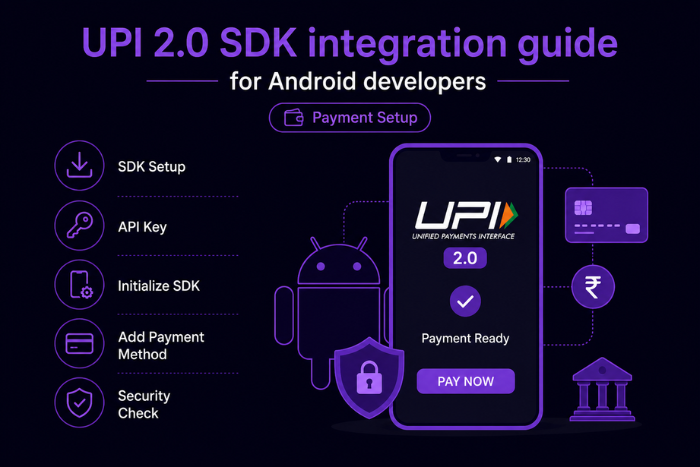
Learn UPI 2.0 SDK integration guide for Android developers to build secure, fast, and seamless mobile payment apps.
Introduction
Digital payments have transformed the way users transact, and UPI (Unified Payments Interface) has become one of the most widely adopted payment systems, especially in India. With the introduction of UPI 2.0, new features such as enhanced security, invoice verification, signed intent, and overdraft accounts have significantly improved the payment ecosystem. For businesses and developers, understanding the UPI 2.0 SDK integration guide for Android developers is essential to build seamless, secure, and scalable payment-enabled applications.
Android apps that support UPI payments offer users a frictionless checkout experience, faster transactions, and trusted payment mechanisms. Whether you’re developing an e-commerce app, fintech platform, or service-based application, integrating UPI 2.0 enables real-time payments with minimal user effort.
In 2026, mobile payment expectations are higher than ever. Users demand speed, security, and convenience. By leveraging UPI 2.0 SDK integration, developers can create modern payment solutions that improve conversion rates, enhance user trust, and support a wide range of financial use cases.
Why UPI 2.0 SDK Integration Guide for Android Developers is Important
UPI integration is critical for businesses targeting digital payment adoption and user convenience.
- Faster Transactions
Real-time payments improve user experience. - Enhanced Security
Features like signed intent and encryption protect transactions. - High User Adoption
UPI is widely used, especially in mobile-first markets. - Seamless Checkout Experience
Reduces friction during payment processes. - Cost-Effective Payments
Lower transaction fees compared to traditional gateways. - Supports Multiple Use Cases
E-commerce, bill payments, subscriptions, and more. - Improved Conversion Rates
Faster payments lead to higher success rates. - Scalable Payment Infrastructure
Handles large transaction volumes efficiently.
Types of Solutions for UPI 2.0 SDK Integration Guide for Android Developers
UPI 2.0 integration supports multiple payment solutions:
- Peer-to-Peer (P2P) Payments
Direct transfers between users. - Merchant Payment Solutions
Seamless checkout for e-commerce and services. - Recurring Payments & Subscriptions
Automated billing for services. - Invoice-Based Payments
Verified invoices for secure transactions. - QR Code Payments
Scan-and-pay functionality. - In-App Payment Systems
Embedded payment flows within apps. - Overdraft & Credit Payments
Support for credit-based transactions. - Bill Payments & Utility Services
Easy payment for recurring bills.
Key Features of UPI 2.0 SDK Integration Guide for Android Developers
UPI 2.0 introduces advanced capabilities:
- Signed Intent Payments
Secure transaction authorization. - Invoice Verification
Ensures authenticity of payment requests. - One-Click Payments
Simplified payment experience. - Real-Time Processing
Instant transaction confirmation. - Multi-Bank Support
Integration with multiple banks. - Secure Authentication
PIN-based and biometric verification. - Deep Linking Support
Smooth redirection to UPI apps. - High Reliability
Robust and scalable payment system.
Development Process
A structured integration process ensures smooth implementation:
- Requirement Analysis
Define payment use cases and business needs. - SDK Selection & Setup
Choose a UPI SDK provider and configure environment. - App Configuration
Add necessary permissions and dependencies. - Payment Flow Design
Create seamless user checkout experience. - UPI Intent Integration
Implement deep linking and payment initiation. - Security Implementation
Apply encryption and secure authentication. - Testing & Validation
Test across different UPI apps and scenarios. - Deployment & Monitoring
Launch and monitor transaction performance.
Technology Stack for UPI 2.0 SDK Integration Guide for Android Developers
Modern UPI integration uses advanced technologies:
Programming Languages: Kotlin, Java
Frameworks: Android SDK, Jetpack
Payment Integration: UPI SDKs, Intent APIs
Backend: Node.js, Java Spring Boot, Python
Security: SSL/TLS, encryption libraries
Database: Firebase, MySQL, PostgreSQL
Testing Tools: Postman, Android Emulator
Monitoring Tools: Firebase Analytics, logging tools
Cost Factors for UPI 2.0 SDK Integration Guide for Android Developers
Several factors influence integration costs:
- App Complexity
More features increase integration effort. - Payment Flow Design
Custom UI/UX adds development time. - Security Requirements
Advanced security increases cost. - Third-Party SDK Fees
Some providers may charge integration fees. - Testing Requirements
Multi-scenario testing adds effort. - Compliance Needs
Regulatory requirements impact cost. - Maintenance & Updates
Ongoing monitoring and updates. - Development Team Expertise
Skilled developers influence pricing.
Latest Trends
UPI and digital payment trends in 2026:
- UPI Autopay Expansion
Growth of subscription-based payments. - Voice-Based Payments
Payments initiated through voice commands. - AI Fraud Detection
Real-time transaction monitoring. - Cross-Border UPI Payments
Expanding international usage. - QR-Based Payments Growth
Increased adoption in retail. - Biometric Authentication
Enhanced security measures. - Super App Integration
UPI integrated into multi-service apps.
Why Choose Us for UPI 2.0 SDK Integration Guide for Android Developers
Integrating UPI requires expertise in payment systems, security, and user experience.
Payment Integration Expertise
Extensive experience in UPI and digital payment systems.
Secure Implementation
Focus on encryption, authentication, and compliance.
Seamless User Experience
Optimized payment flows for higher conversions.
Scalable Solutions
Designed to handle high transaction volumes.
Custom Development
Tailored solutions based on business needs.
Performance Optimization
Fast and reliable payment processing.
Transparent Workflow
Clear communication and milestone tracking.
End-to-End Support
From integration to deployment and maintenance.
We help businesses build secure, efficient, and scalable payment-enabled Android applications.
Ready to integrate UPI 2.0 into your Android app?
Let’s build fast, secure, and seamless payment experiences.
Contact us today for expert UPI integration services.
Key Points :
- UPI 2.0 SDK integration enables fast, real-time payments in Android apps.
- Enhances security with signed intent, encryption, and authentication.
- Supports multiple use cases like P2P, merchant payments, and subscriptions.
- Improves checkout experience and boosts conversion rates.
- Enables features like QR payments, invoice verification, and autopay.
- Widely adopted payment system, ideal for fintech and e-commerce apps.
FAQ's
UPI 2.0 is an upgraded version of the Unified Payments Interface with enhanced security and features.
It enables fast, secure, and widely accepted digital payments.
It uses intent-based APIs to initiate and process payments.
Yes, it uses encryption, authentication, and secure protocols.
Yes, through UPI Autopay features.
It depends on complexity but typically takes a few weeks.