



Learn fintech app development RBI compliance checklist 2026, key regulations, features, costs, and how to build secure fintech apps.
Introduction
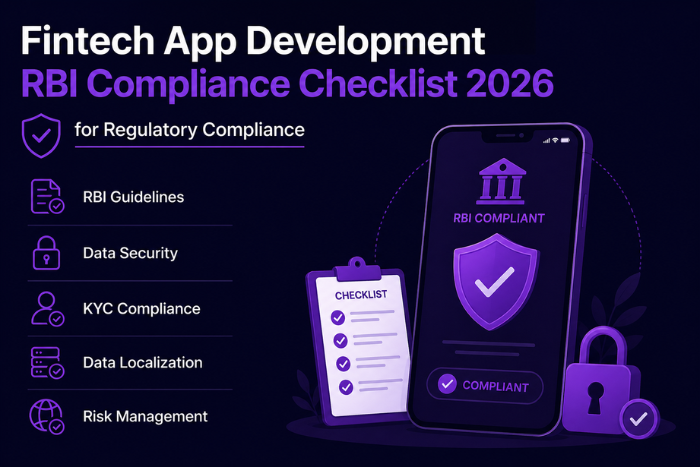
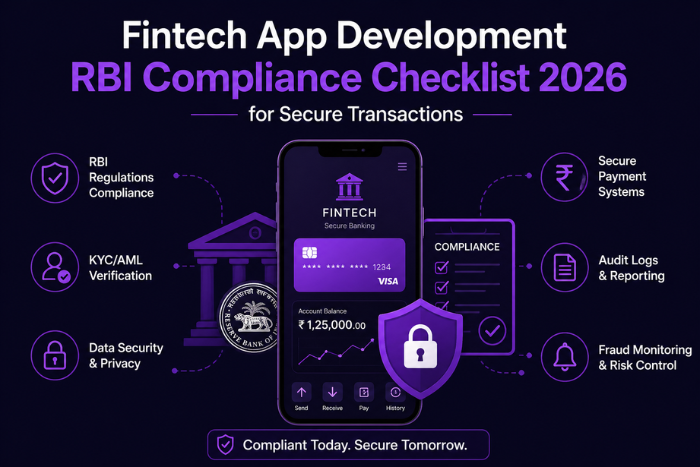
The fintech industry in India is entering a critical phase in 2026, where regulatory compliance is no longer optional but a core requirement for survival and growth. With stricter guidelines introduced by the Reserve Bank of India (RBI), businesses must ensure their applications meet evolving standards related to digital lending, payments, KYC, data security, and consumer protection. The fintech app development RBI compliance checklist 2026 has become essential for startups, NBFCs, payment aggregators, and financial platforms aiming to operate legally and build user trust.
Recent regulatory shifts highlight that compliance is now a “make-or-break” factor for fintech companies . From mandatory KYC processes to real-time monitoring, RBI expects fintech applications to maintain transparency, security, and accountability at every level.
For developers and businesses, this means building compliance-first applications with integrated regulatory frameworks, audit trails, and automated reporting systems. This service helps organizations design, develop, and deploy fintech apps that are fully aligned with RBI regulations—ensuring scalability, security, and long-term success in India’s financial ecosystem.
Why Fintech App Development RBI Compliance Checklist 2026 is Important
Compliance is the foundation of trust and sustainability in fintech applications.
- Legal & Regulatory Compliance
Ensures adherence to RBI guidelines and avoids penalties. - Enhanced User Trust
Secure and compliant apps build customer confidence. - Fraud Prevention & Risk Management
Strong compliance reduces financial risks. - Access to Banking Partnerships
Compliance is essential for collaborating with banks and NBFCs. - Operational Transparency
Clear processes and reporting improve accountability. - Long-Term Business Sustainability
Avoid disruptions caused by regulatory violations.
Types of Solutions in Fintech App Development RBI Compliance Checklist 2026
Different fintech solutions require tailored compliance strategies:
- Digital Lending Apps
Apps with RBI-compliant lending practices and disclosures. - Payment Gateway & Wallet Apps
Secure payment processing and transaction monitoring. - NBFC & Microfinance Applications
Compliance with financial regulations and reporting standards. - Investment & Wealth Management Apps
Regulatory adherence for financial advisory services. - KYC & Identity Verification Systems
Automated onboarding and verification solutions. - RegTech Solutions
Platforms for managing compliance and reporting. - Banking & Neo-Banking Apps
Full-stack digital banking solutions. - Fraud Detection & Risk Management Systems
AI-driven monitoring and alerts.
Key Features of Fintech App Development RBI Compliance Checklist 2026
A compliance-first fintech app must include critical features:
- KYC & eKYC Integration
Identity verification as per RBI guidelines. - AML (Anti-Money Laundering) Systems
Monitoring suspicious transactions. - Data Encryption & Security Protocols
Protection of sensitive financial data. - Audit Trails & Reporting
Detailed logs for regulatory compliance. - Consent Management Systems
Transparent data usage and permissions. - Real-Time Transaction Monitoring
Instant detection of anomalies. - Regulatory Reporting Automation
Simplified compliance reporting. - User Data Privacy Controls
Compliance with data protection laws.
Development Process
- Compliance Requirement Analysis
Identify applicable RBI regulations and business requirements. - Regulatory Architecture Design
Design systems with built-in compliance mechanisms. - UI/UX Design for Secure User Experience
Create user-friendly and secure interfaces. - Core Fintech Application Development
Build payment, lending, or financial modules. - Integration with KYC, AML & Banking APIs
Connect with compliance and financial systems. - Testing & Compliance Validation
Ensure adherence to regulatory standards. - Deployment & Continuous Monitoring
Launch and maintain compliance with ongoing updates.
Technology Stack for Fintech App Development RBI Compliance Checklist 2026
Programming Languages: Java, Kotlin, Swift, Python, JavaScript
Frameworks: Flutter, React Native, Angular, Node.js
Backend Technologies: Spring Boot, Django, Express.js
Databases: PostgreSQL, MongoDB, MySQL
Cloud Platforms: AWS, Google Cloud, Microsoft Azure
Security Tools: Encryption, Tokenization, Identity Verification APIs
Compliance Tools: RegTech Platforms, AML Monitoring Systems
Analytics Tools: Power BI, Tableau
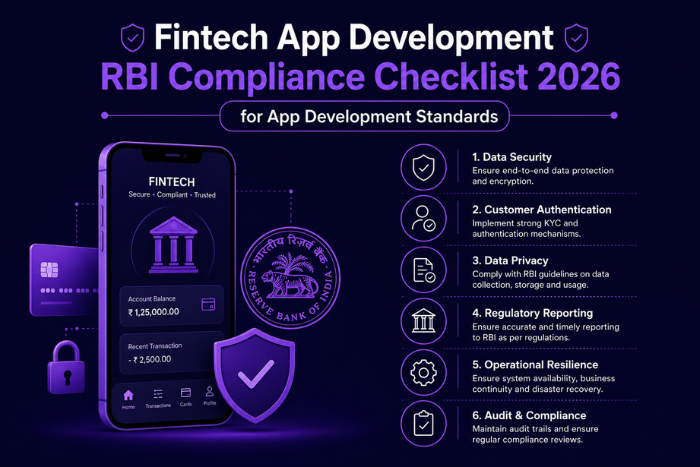
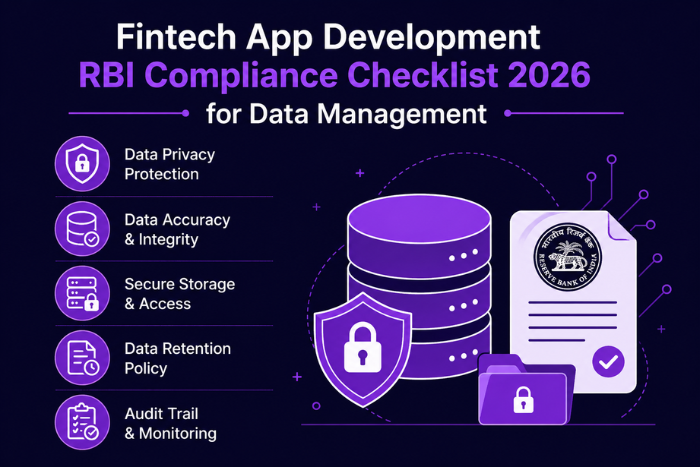
Cost Factors for Fintech App Development RBI Compliance Checklist 2026
Several factors influence the cost of compliance-driven fintech apps:
- Regulatory Complexity
More compliance requirements increase development effort. - App Type & Features
Lending apps cost more than simple payment apps. - Security & Compliance Integration
Advanced security systems add to cost. - Third-Party API Integration
KYC, AML, and banking APIs increase expenses. - Scalability Requirements
Infrastructure for handling large transactions. - Development Timeline
Faster delivery requires more resources. - Maintenance & Compliance Updates
Ongoing updates for regulatory changes. - Expertise of Development Team
Skilled fintech developers impact pricing.
Latest Trends
- Real-Time Compliance Monitoring
Continuous tracking of transactions and risks. - AI-Powered Fraud Detection
Advanced systems for preventing fraud. - RegTech Integration
Automation of compliance processes. - Open Banking & API Ecosystems
Seamless integration with financial institutions. - Stronger Data Privacy Regulations
Increased focus on user data protection. - Digital Lending Regulations Evolution
More transparency in lending practices. - Biometric Authentication Adoption
Enhanced security for user access.
Why Choose Us for Fintech App Development RBI Compliance Checklist 2026
Fintech Compliance Expertise
Deep understanding of RBI regulations and fintech standards.
Compliance-First Development
Built-in regulatory frameworks from the start.
Secure & Scalable Solutions
High-performance apps with strong security measures.
End-to-End Development
From strategy to deployment and compliance monitoring.
Advanced Technology Integration
AI, RegTech, and modern frameworks.
Cost-Effective Solutions
Optimized development strategies.
Continuous Compliance Support
Regular updates to meet evolving regulations.
Looking to build an RBI-compliant fintech app?
Let’s create a secure and scalable financial solution for your business.
Contact us today for expert fintech development and compliance support.
Key Points :
- Key compliance areas include KYC, AML, data privacy, and real-time transaction monitoring
- Compliance-first architecture helps build secure, scalable, and trustworthy fintech applications
- Integration with RegTech, banking APIs, and identity verification systems is essential
- Non-compliance can lead to penalties, operational risks, and loss of user trust
- AI-powered fraud detection and real-time monitoring are shaping modern fintech security
FAQ's
It refers to adhering to regulations set by RBI for financial applications.
It ensures legal operation, security, and user trust.
KYC, AML, data privacy, and real-time monitoring.
Typically 3–6 months depending on complexity.
Yes, to align with changing regulations.
APIs, cloud platforms, encryption, and monitoring tools.