
How to Develop a Website for Education?
Learn how to develop a website for education with LMS integration, responsive design, SEO optimization, and eLearning features.
Introduction
Understanding how to develop a website for education is essential for schools, universities, training institutes, eLearning startups, and online educators looking to provide modern digital learning experiences. Educational websites help institutions deliver online courses, manage students, improve communication, and provide accessible learning resources through secure and scalable online platforms.
Modern education websites go beyond simple informational pages. They include learning management systems (LMS), video streaming, virtual classrooms, online assessments, student dashboards, payment gateways, AI-powered learning tools, and mobile-friendly user experiences. Businesses and institutions exploring how to develop a website for education often focus on improving accessibility, engagement, personalized learning, and academic management.
Educational websites support online learning, hybrid classrooms, remote collaboration, certification programs, and student performance tracking. They also improve brand credibility and help educational organizations expand their reach globally through digital transformation.
As the demand for online learning continues to grow, understanding how to develop a website for education helps organizations build scalable, interactive, and future-ready educational platforms that improve learning experiences, streamline operations, and support long-term educational growth.
Why This Service is Important
- Improves Learning Accessibility
Educational websites allow students to access learning materials anytime and anywhere. - Supports Online & Hybrid Learning
Institutions can deliver virtual classrooms and remote learning experiences efficiently. - Enhances Student Engagement
Interactive features improve participation and collaboration among students. - Streamlines Academic Management
Educational platforms automate course management, attendance, and assessments. - Expands Global Reach
Schools and educators can connect with learners worldwide through online education. - Improves Communication
Websites help teachers, students, and parents stay connected through centralized platforms. - Supports Digital Transformation
Modern educational websites help institutions adopt advanced learning technologies. - Increases Revenue Opportunities
Online courses, subscriptions, and certifications create additional income streams.
Types of Solutions for How to Develop a Website for Education
eLearning Website Development
- Online course management
- Video-based learning systems
- Certification platforms
School & University Websites
- Student information portals
- Admission management systems
- Academic scheduling tools
Learning Management System (LMS) Solutions
- Course creation and tracking
- Assignment management
- Student performance analytics
Online Tutoring Platforms
- One-on-one virtual classrooms
- Live video sessions
- Tutor and student dashboards
Educational Marketplace Platforms
- Multi-instructor course systems
- Subscription-based learning
- Educational content monetization
Corporate Training Platforms
- Employee learning management
- Skill development programs
- Internal certification systems
Kids Learning Website Solutions
- Gamified educational content
- Interactive quizzes and animations
- Child-friendly learning interfaces
Exam & Assessment Platforms
- Online test management
- Automated grading systems
- Performance reporting tools
Key Features of How to Develop a Website for Education
- Responsive Website Design
Educational websites function smoothly across mobile, tablet, and desktop devices. - Learning Management System Integration
LMS platforms simplify course creation, student tracking, and lesson management. - User Registration & Role Management
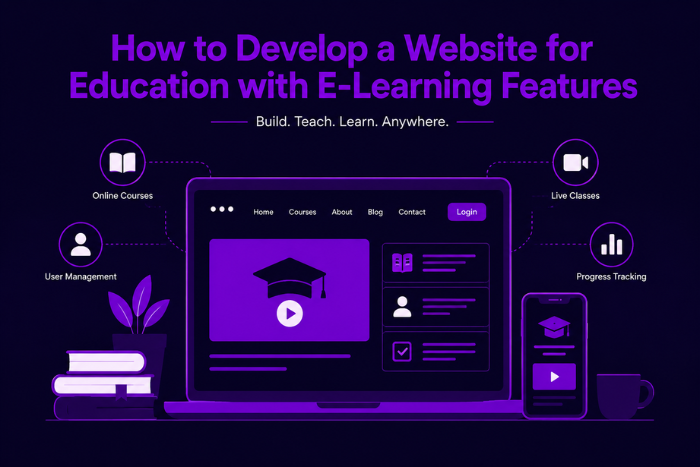
Manage students, teachers, administrators, and instructors securely. - Video Streaming & Virtual Classrooms
Support live classes and recorded educational content. - Online Assessments & Quizzes
Conduct tests, assignments, and performance evaluations digitally. - Student Progress Tracking
Monitor learning progress and course completion rates. - Secure Payment Integration
Enable online course purchases and subscription management. - Content Management System
Simplify updates for courses, blogs, and educational resources. - AI-Powered Personalized Learning
Improve recommendations and adaptive learning experiences. - Push Notifications & Communication Tools
Send updates, reminders, and announcements to students. - Cloud-Based Infrastructure
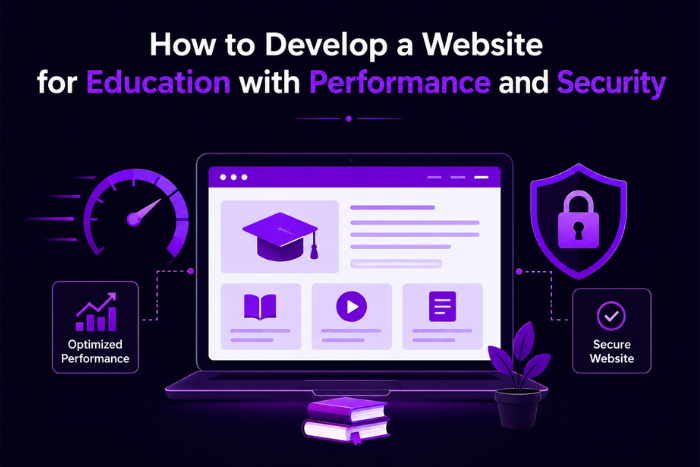
Improve scalability, security, and performance reliability. - SEO & Mobile Optimization
Improve visibility and accessibility across search engines and devices.
Development Process
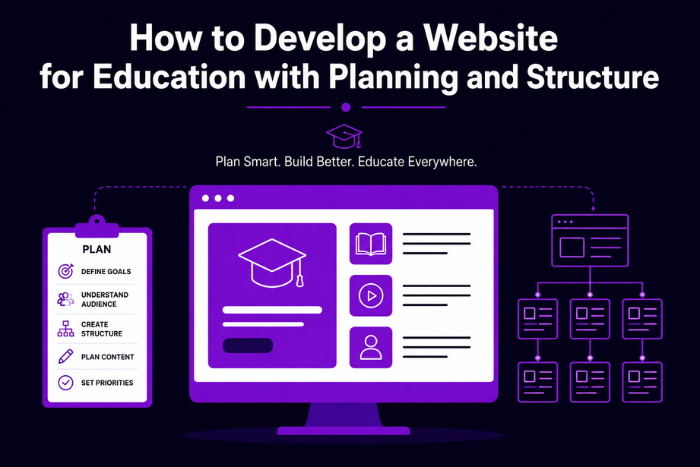
Requirement Analysis & Planning
- Understand educational goals and target audience
- Define website features and learning workflows
- Plan LMS and third-party integrations
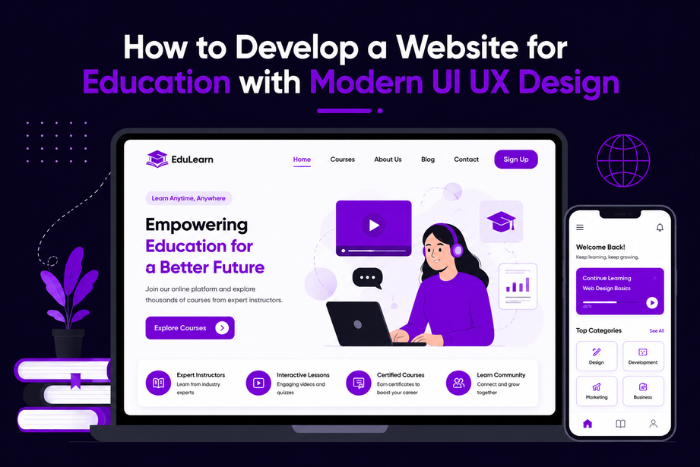
UI/UX Design
- Create intuitive educational interfaces
- Design responsive layouts and dashboards
- Optimize accessibility and user navigation
Website Architecture & LMS Planning
- Build scalable learning infrastructure
- Configure course management systems
- Define user roles and permission structures
Frontend & Backend Development
- Develop educational website interfaces
- Build APIs and backend systems
- Implement authentication and database management
Third-Party Integration
- Integrate payment gateways and video streaming tools
- Connect CRM and communication platforms
- Add analytics and automation systems
Content & Course Integration
- Upload courses, lessons, and multimedia content
- Configure assessments and certifications
- Optimize educational resources for accessibility
Testing & Quality Assurance
- Conduct usability and performance testing
- Verify cross-device compatibility
- Test security and scalability
Deployment & Maintenance
- Launch the educational platform
- Monitor website performance and uptime
- Provide ongoing technical support and updates
Technology Stack for How to Develop a Website for Education
Frontend Technologies
- HTML5
- CSS3
- JavaScript
- React
Backend Technologies
- Node.js
- Laravel
- Django
- Spring Boot
LMS & CMS Platforms
- Moodle
- WordPress LMS
- LearnDash
- Blackboard
Database Solutions
- MySQL
- PostgreSQL
- MongoDB
- Firebase
Cloud Platforms
- AWS
- Google Cloud Platform
- Microsoft Azure
- DigitalOcean
Video & Communication Tools
- Zoom API
- WebRTC
- Twilio
- Live Streaming Platforms
Analytics & Reporting Tools
- Google Analytics
- Power BI
- Firebase Analytics
- Tableau
Security & DevOps Tools
- SSL Encryption
- OAuth Authentication
- Docker
- Kubernetes
Cost Factors for How to Develop a Website for Education
- Website Complexity
Advanced educational features and LMS systems increase development costs. - Custom UI/UX Design
Interactive and responsive educational interfaces impact pricing. - Third-Party Integrations
Payment systems, video platforms, and CRM integrations affect project scope. - Cloud Hosting Infrastructure
High-performance hosting and streaming services contribute to operational expenses. - Content & Course Development
Educational content creation and multimedia production increase costs. - Security & Compliance
Data protection and secure student management systems require additional implementation. - Scalability Requirements
Supporting large numbers of students impacts backend infrastructure costs. - Maintenance & Technical Support
Ongoing updates and optimization contribute to long-term expenses.
Latest Trends
- AI-Powered Learning Platforms
AI tools personalize educational experiences and improve student engagement. - Gamification in Education
Interactive rewards and quizzes improve learning participation. - Microlearning Platforms
Short-form educational content is becoming increasingly popular. - Virtual & Augmented Reality Learning
Immersive technologies enhance interactive learning experiences. - Mobile-First Educational Platforms
Institutions prioritize responsive and mobile-friendly learning environments. - Cloud-Based Learning Systems
Cloud infrastructure improves scalability and remote accessibility. - Blockchain-Based Certifications
Blockchain technology improves academic credential verification. - Data-Driven Learning Analytics
Educational platforms use analytics to improve learning outcomes and performance tracking.
Why Choose Us
Experienced Education Website Developers
- Expertise in educational platform development
- Strong understanding of LMS and eLearning systems
- Industry-focused development strategies
Customized Educational Solutions
- Tailored platforms for schools and training institutes
- Flexible and scalable website architecture
- Personalized learning feature development
Advanced Technology Integration
- AI-powered and cloud-based educational systems
- Secure payment and communication integrations
- High-performance learning infrastructure
User-Centric Learning Experiences
- Responsive and intuitive educational interfaces
- Improved student and teacher engagement
- Optimized accessibility and navigation
End-to-End Development Support
- Strategy planning and consultation
- Website deployment and optimization
- Ongoing maintenance and technical support
Secure & Scalable Platforms
- Enterprise-grade security implementation
- Reliable cloud hosting infrastructure
- Future-ready educational systems
Cost-Effective Development Services
- Affordable education website development packages
- Transparent pricing structure
- High-quality project delivery
We help schools, universities, and eLearning businesses understand how to develop a website for education by building secure, scalable, and interactive educational platforms that improve learning experiences and digital growth.
Ready to build a modern educational website for your institution or eLearning business?
Contact us today for customized education website development services.
Let’s create a scalable and engaging learning platform that supports long-term educational success.
Key Points :
- Educational website development includes LMS integration, virtual classrooms, online assessments, and student management systems.
- Modern education websites improve accessibility, student engagement, and remote learning experiences across devices.
- Schools, universities, and eLearning businesses use educational websites to manage courses, certifications, and communication.
- Responsive educational platforms support video streaming, cloud-based learning, AI-powered personalization, and secure payments.
- SEO-friendly and mobile-optimized education websites help institutions improve online visibility and student reach.
- Educational website development supports digital transformation through automation, analytics, and personalized learning systems.
FAQ's
Developing an educational website involves planning, UI/UX design, LMS integration, content management, testing, and deployment.
Educational websites improve online learning accessibility, student engagement, and academic management.
Important features include LMS integration, virtual classrooms, assessments, student dashboards, and secure payment systems.
Yes, educational platforms can manage video lessons, assignments, certifications, and online learning programs.
Yes, modern educational websites are optimized for smartphones, tablets, and desktop devices.
Yes, educational websites can support subscriptions, online course payments, and secure transaction systems.