


How to Develop an Ecommerce Website?
Learn how to develop an ecommerce website with secure payment systems, responsive design, SEO, and scalable online store solutions.


Introduction
The rapid growth of online shopping has made ecommerce websites essential for businesses looking to sell products and services digitally. Many entrepreneurs and companies often ask, how to develop an ecommerce website that is secure, scalable, user-friendly, and optimized for conversions. A professionally developed ecommerce website helps businesses create a strong online presence, improve customer engagement, and generate revenue through seamless digital shopping experiences.
Modern ecommerce websites require more than just product listings. Businesses now need responsive web design, secure payment gateways, inventory management systems, SEO optimization, analytics tools, customer management systems, and fast-loading performance. A well-developed ecommerce platform improves customer trust, simplifies online transactions, and enhances overall shopping experiences across desktop and mobile devices.
Developing an ecommerce website involves multiple stages, including planning, UI/UX design, frontend and backend development, payment integration, testing, and deployment. Businesses must also choose the right ecommerce platform and technology stack based on scalability, product catalog size, and operational requirements. Investing in professional ecommerce website development services helps businesses improve online sales, streamline operations, and build a future-ready digital commerce ecosystem.
Why This Service is Important
- Expands Online Business Reach
Ecommerce websites allow businesses to sell products globally. - Improves Customer Convenience
Customers can shop anytime from any device and location. - Boosts Sales & Revenue
Online stores increase conversion opportunities and digital sales. - Enhances Brand Visibility
Ecommerce platforms strengthen digital presence and customer engagement. - Supports Secure Transactions
Payment gateways and encryption improve transaction safety. - Provides Inventory Management
Ecommerce systems simplify product and order management. - Improves Customer Experience
Responsive design and personalized shopping improve satisfaction. - Supports Business Scalability
Ecommerce platforms can expand with growing business requirements.
Types of Solutions for Ecommerce Website Development
B2C Ecommerce Websites
- Online retail stores
- Customer-focused shopping experiences
- Product catalog management
B2B Ecommerce Platforms
- Wholesale ordering systems
- Bulk pricing management
- Business account integrations
Multi-Vendor Marketplace Development
- Vendor management systems
- Commission-based marketplaces
- Multi-seller product listings
Subscription-Based Ecommerce Platforms
- Recurring payment systems
- Membership-based services
- Automated billing management
Mobile Ecommerce Solutions
- Mobile-responsive ecommerce websites
- Progressive web applications (PWAs)
- Mobile shopping optimization
Custom Ecommerce Development
- Tailored shopping experiences
- Advanced feature implementation
- Scalable business architecture
Headless Ecommerce Solutions
- API-driven ecommerce architecture
- Flexible frontend experiences
- Faster website performance
Key Features of How to Develop an Ecommerce Website
- Responsive Ecommerce Design
Websites adapt smoothly across desktops, tablets, and smartphones. - Secure Payment Gateway Integration
Enable safe online transactions and multiple payment options. - SEO-Friendly Website Architecture
Optimized structure improves search engine rankings and visibility. - Product & Inventory Management
Easily manage products, stock levels, and categories. - Shopping Cart & Checkout Systems
Streamlined checkout processes improve conversions. - Customer Account Management
Users can manage profiles, orders, and wishlists. - Advanced Search & Filtering
Improve product discovery and shopping experiences. - Order Tracking & Notifications
Real-time order updates improve customer satisfaction. - Third-Party API Integrations
Connect CRM systems, analytics tools, and shipping providers. - Cloud Hosting & Scalability
Support growing traffic and business expansion. - Analytics & Reporting Tools
Monitor sales, customer behavior, and website performance. - Data Security & SSL Encryption
Protect customer information and transaction data.
Development Process
Requirement Analysis & Planning
- Understand business goals and target audience
- Define ecommerce functionality and workflows
- Analyze competitors and market trends
Ecommerce Platform Selection
- Choose the right ecommerce framework or CMS
- Evaluate scalability and feature requirements
- Plan cloud hosting and infrastructure
UI/UX Design
- Create responsive ecommerce layouts
- Improve navigation and user experiences
- Design conversion-focused shopping journeys
Website Architecture Planning
- Develop scalable backend infrastructure
- Optimize database and server architecture
- Configure product and inventory systems
Frontend & Backend Development
- Build responsive ecommerce interfaces
- Develop APIs and backend functionalities
- Integrate CMS and admin management systems
Payment & Third-Party Integration
- Connect payment gateways and shipping systems
- Integrate CRM and analytics platforms
- Add automation and marketing tools
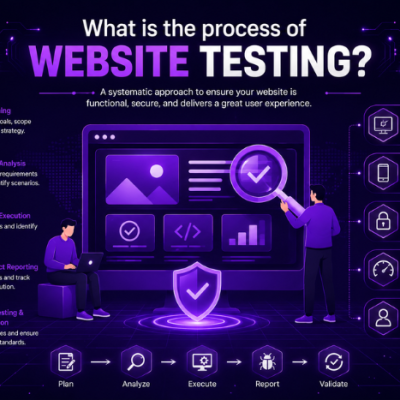
Testing & Quality Assurance
- Conduct functionality and security testing
- Test checkout processes and payment systems
- Identify and resolve bugs and vulnerabilities
Deployment & Launch
- Deploy ecommerce website on live servers
- Configure CDN and cloud optimization
- Monitor performance after launch
Maintenance & Optimization
- Regular feature updates and backups
- Security monitoring and optimization
- Ongoing technical support and scalability improvements
Technology Stack for How to Develop an Ecommerce Website
Frontend Technologies
- HTML5
- CSS3
- JavaScript
- React.js
- Vue.js
- Angular
Backend Technologies
- Node.js
- PHP
- Python
- Laravel
- Java Spring Boot
- .NET
Ecommerce Platforms
- Shopify
- WooCommerce
- Magento
- BigCommerce
Database Solutions
- MySQL
- PostgreSQL
- MongoDB
- Firebase
Cloud Platforms
- AWS
- Google Cloud Platform
- Microsoft Azure
Payment & API Integrations
- Stripe API
- PayPal API
- Razorpay API
- REST APIs
- GraphQL
DevOps & Security Tools
- Docker
- Kubernetes
- SSL Encryption
- OAuth Authentication
- CI/CD Pipelines


Cost Factors for How to Develop an Ecommerce Website
- Website Complexity
Advanced ecommerce functionality increases development effort and pricing. - Custom Design Requirements
Unique UI/UX designs require additional resources. - Product Catalog Size
Large inventories increase database and management complexity. - Payment Gateway Integration
Secure transaction systems impact development scope. - Third-Party Integrations
CRM, shipping, and marketing integrations increase project costs. - SEO & Performance Optimization
Advanced SEO implementation affects development timelines. - Security & Compliance
Enhanced protection and compliance standards increase implementation costs. - Maintenance & Support
Ongoing updates and monitoring contribute to long-term expenses.
Latest Trends
- AI-Powered Ecommerce Experiences
AI chatbots and personalized recommendations improve customer engagement. - Headless Ecommerce Development
API-driven architectures improve flexibility and scalability. - Progressive Web Applications (PWAs)
PWAs improve mobile shopping experiences and performance. - Voice Commerce Optimization
Ecommerce websites are adapting to voice-based search and shopping. - AR & VR Shopping Experiences
Interactive product visualization improves customer engagement. - Cloud-Native Ecommerce Platforms
Cloud infrastructure improves scalability and reliability. - One-Click Checkout Systems
Simplified checkout processes improve conversion rates. - Blockchain-Based Payment Security
Advanced security technologies improve transaction transparency and safety.
Why Choose Us
Experienced Ecommerce Development Team
- Skilled ecommerce developers and UI/UX designers
- Expertise across multiple industries
- Scalable and modern development practices
Customized Ecommerce Solutions
- Tailored online store development strategies
- Business-focused functionality implementation
- Flexible and scalable ecommerce architecture
SEO & Performance Optimization
- Search-engine-friendly ecommerce structures
- Fast-loading and responsive online stores
- Improved digital visibility and conversions
Advanced Technology Integration
- Secure cloud-based infrastructure
- API and third-party software integration
- High-performance backend systems
User-Centric Shopping Experiences
- Easy navigation and product discovery
- Conversion-focused ecommerce design
- Mobile-first responsive development
End-to-End Development Support
- Consultation and project planning
- Ecommerce development and deployment
- Ongoing maintenance and optimization
Cost-Effective Ecommerce Services
- Transparent pricing models
- Affordable ecommerce development solutions
- High-quality coding standards
We help businesses create secure, scalable, and SEO-friendly ecommerce websites that improve online sales, customer engagement, and long-term digital growth.
Ready to develop a professional ecommerce website for your business?
Contact us today for customized ecommerce website development solutions and expert consultation.
Let’s build a scalable online store that drives sales and business growth.
Key Points :
- Ecommerce website development helps businesses sell products and services online efficiently.
- Responsive ecommerce websites improve shopping experiences across mobile and desktop devices.
- Secure payment gateway integration protects online transactions and customer data.
- SEO-friendly ecommerce website architecture improves Google rankings and organic traffic.
- Product management and inventory systems streamline ecommerce operations.
- Cloud-based ecommerce platforms support scalability and high website performance.
FAQ's
Ecommerce website development involves planning, UI/UX design, frontend and backend development, payment integration, testing, and deployment.
Popular ecommerce platforms include Shopify, WooCommerce, Magento, and BigCommerce.
Costs depend on design complexity, features, integrations, and product catalog size.
Yes, modern ecommerce websites use SSL encryption, secure payment gateways, and cybersecurity measures.
Yes, ecommerce platforms integrate with multiple payment gateways and digital wallets.
Yes, SEO helps ecommerce websites improve visibility, organic traffic, and product discoverability.