
What Is the Best App Development Framework?
Discover what is the best app development framework for scalable, cross-platform, and high-performance mobile app solutions.


Introduction
Choosing the right framework is one of the most important decisions in mobile and web application development. Understanding what is the best app development framework helps businesses and developers build scalable, secure, and high-performing applications that deliver seamless user experiences across multiple platforms. Modern app development frameworks simplify coding processes, accelerate deployment, improve scalability, and reduce development costs while supporting advanced features such as AI integration, cloud synchronization, and real-time communication.
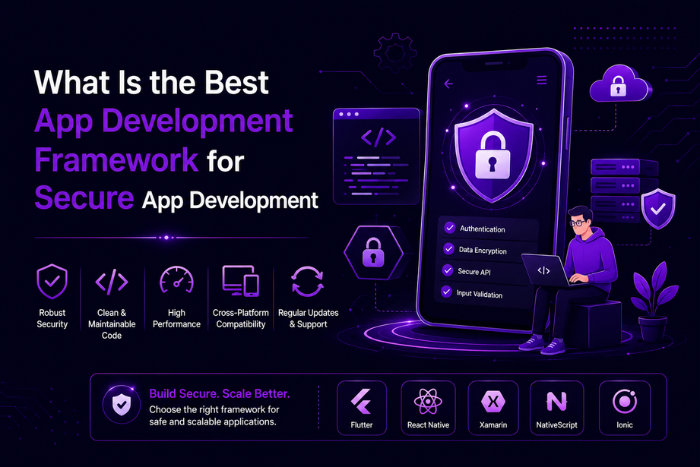
Popular frameworks such as React Native, Flutter, Ionic, Xamarin, Kotlin Multiplatform, and SwiftUI are widely used because they support cross-platform development, reusable components, responsive interfaces, and native-like performance. The best app development framework depends on project goals, target platforms, scalability requirements, development speed, and long-term maintenance needs.
Businesses developing eCommerce apps, healthcare platforms, fintech solutions, enterprise applications, and on-demand service apps require frameworks that support secure APIs, cloud infrastructure, fast performance, and responsive UI/UX design. Selecting the right app development framework helps organizations reduce operational costs, accelerate time-to-market, and create future-ready applications that support long-term digital growth.
Why This Service is Important
- Accelerates App Development
Modern frameworks simplify coding and reduce development timelines. - Supports Cross-Platform Compatibility
Build applications for Android and iOS using shared codebases. - Improves App Performance
Optimized frameworks provide responsive and native-like user experiences. - Reduces Development Costs
Reusable components and shared architectures lower overall expenses. - Enhances Scalability
Flexible frameworks support future feature expansion and user growth. - Simplifies Maintenance & Updates
Centralized codebases streamline updates and bug fixes. - Supports Modern Technologies
Frameworks integrate AI, cloud services, APIs, and analytics tools. - Improves User Engagement
Responsive UI/UX design enhances customer satisfaction and retention.
Types of Solutions for What Is the Best App Development Framework
Cross-Platform Mobile App Development
- Shared Android and iOS codebases
- Faster deployment cycles
- Consistent user experiences
Native Mobile App Development
- High-performance native applications
- Platform-specific optimization
- Advanced device functionality support
Enterprise App Development Solutions
- Workflow automation systems
- CRM and ERP mobile applications
- Business analytics dashboards
eCommerce Mobile Applications
- Secure payment integrations
- Product catalog management
- Customer engagement systems
Healthcare & Telemedicine Applications
- Patient portal systems
- Appointment booking applications
- Secure healthcare data management
FinTech & Banking App Development
- Digital wallet applications
- Real-time transaction systems
- Fraud detection integration
IoT & Smart Device Applications
- Connected device management
- Real-time monitoring systems
- Smart automation platforms
Progressive Web App (PWA) Solutions
- Browser-based app experiences
- Offline functionality support
- Faster web app performance
Key Features of What Is the Best App Development Framework
- Cross-Platform Development Support
Build Android and iOS apps using a single codebase. - Reusable UI Components
Accelerate development with modular app structures. - Native-Like Performance
Modern frameworks deliver fast and responsive user experiences. - Cloud & API Integration
Easily connect applications with cloud services and third-party APIs. - Scalable Architecture
Support growing user bases and feature expansion. - Fast Development Cycles
Hot reload and real-time updates improve development efficiency. - Responsive UI/UX Design
Maintain consistency across devices and screen sizes. - Security & Authentication Features
Implement secure login systems and data protection protocols. - Real-Time Data Synchronization
Enable instant updates and communication functionality. - AI & Machine Learning Compatibility
Integrate intelligent automation and predictive analytics. - Offline Accessibility Support
Ensure application functionality without continuous internet access. - Community & Ecosystem Support
Large developer communities provide libraries, plugins, and updates.
Development Process
Requirement Analysis & Planning
- Understand business goals and target audience
- Define app functionality and platform requirements
- Identify scalability and integration needs
Framework Selection
- Compare framework performance and compatibility
- Analyze development speed and maintenance needs
- Choose suitable frontend and backend technologies
UI/UX Design
- Create intuitive and responsive app interfaces
- Develop wireframes and interactive prototypes
- Optimize user navigation and engagement
Frontend & Backend Development
- Build scalable frontend applications
- Develop secure backend systems and APIs
- Implement database and cloud integrations
Third-Party Integration
- Integrate payment gateways and analytics tools
- Connect cloud infrastructure and APIs
- Configure push notifications and real-time systems
Testing & Quality Assurance
- Conduct functional and usability testing
- Validate app performance across devices
- Perform security and compatibility testing
Deployment & Launch
- Publish applications on app stores and cloud platforms
- Configure monitoring and analytics systems
- Optimize app performance post-launch
Maintenance & Continuous Improvement
- Release updates and security patches
- Monitor user behavior and app analytics
- Provide long-term technical support
Technology Stack for What Is the Best App Development Framework
Cross-Platform Frameworks
- React Native
- Flutter
- Ionic
- Xamarin
- Kotlin Multiplatform
Native Development Technologies
- SwiftUI
- Kotlin
- Jetpack Compose
- Objective-C
Frontend Technologies
- JavaScript
- TypeScript
- Dart
- HTML5
- CSS3
Backend Technologies
- Node.js
- Python
- Java
- .NET
- PHP
Database Solutions
- MongoDB
- PostgreSQL
- Firebase
- MySQL
Cloud Platforms
- AWS
- Google Cloud Platform
- Microsoft Azure
DevOps & Deployment Tools
- Docker
- Kubernetes
- Jenkins
- GitHub Actions
Analytics & Security Tools
- Firebase Analytics
- Crashlytics
- OAuth Authentication
- SSL Encryption

Cost Factors for What Is the Best App Development Framework
- Framework Selection
Different frameworks require varying levels of expertise and implementation effort. - Application Complexity
Advanced features and custom workflows increase development costs. - Cross-Platform vs Native Development
Platform requirements affect development timelines and pricing. - Third-Party Integrations
APIs, payment gateways, and cloud services impact project scope. - UI/UX Customization
Interactive and highly customized interfaces require additional resources. - Backend Infrastructure Requirements
Real-time systems and scalable cloud architecture contribute to operational costs. - Security & Compliance Implementation
Advanced security measures increase development complexity. - Maintenance & Feature Updates
Ongoing optimization and support affect long-term budgets.
Latest Trends for What Is the Best App Development Framework
- AI-Integrated App Development Framework Trends
Frameworks are increasingly supporting AI-powered automation and personalization. - Cross-Platform App Development Framework Trends
Businesses are adopting frameworks like Flutter and React Native for faster deployment. - Cloud-Native App Development Framework Trends
Cloud integration is improving scalability, flexibility, and app performance. - Low-Code & No-Code Framework Trends
Development platforms are simplifying application creation and deployment. - 5G-Optimized App Development Framework Trends
Faster connectivity is enhancing streaming, gaming, and real-time app experiences. - IoT-Compatible App Development Framework Trends
Frameworks are supporting connected devices and smart ecosystems. - AR & VR Integration in App Development Framework Trends
Immersive app experiences are becoming more common across industries. - Cybersecurity-Focused App Development Framework Trends
Secure authentication and data protection are becoming essential development priorities.
Why Choose Us
Experienced App Development Professionals
- Expertise across modern app development frameworks
- Skilled cross-platform and native app developers
- Industry-focused application development solutions
Customized App Development Solutions
- Tailored framework selection for business goals
- Scalable and future-ready application architecture
- Flexible development and deployment strategies
Advanced Technology Integration
- AI, cloud, IoT, and analytics integration expertise
- Secure API and payment gateway implementation
- Real-time synchronization and automation systems
User-Centric Mobile Experiences
- Responsive and intuitive UI/UX design
- High-performance and scalable applications
- Improved customer engagement and retention
End-to-End App Development Support
- Consultation, design, and development services
- Testing, deployment, and maintenance support
- Long-term app optimization and scalability planning
Cost-Effective Development Services
- Faster development cycles with modern frameworks
- Transparent project pricing and management
- High-quality and scalable app solutions
Security & Scalability Expertise
- Enterprise-grade security implementation
- Scalable cloud-native infrastructure
- Long-term app performance optimization
We help businesses select and implement the best app development framework to create scalable, secure, and high-performing digital applications.
Ready to choose the best app development framework for your next project?
Let’s build a future-ready, scalable, and high-performance application for your business.
Key Points :
- Choosing the best app development framework improves scalability, performance, and development speed.
- Cross-platform frameworks like React Native and Flutter reduce development costs and deployment time.
- Modern app development frameworks support AI integration, cloud services, and real-time synchronization.
- Native and cross-platform frameworks provide responsive UI/UX and high-performance mobile experiences.
- Popular frameworks include React Native, Flutter, Ionic, Xamarin, and Kotlin Multiplatform.
- Secure APIs, cloud-native architecture, and reusable components improve application scalability and maintenance.
FAQ's
Popular cross-platform frameworks include React Native, Flutter, Ionic, and Xamarin based on project requirements.
Frameworks simplify coding, accelerate development, improve scalability, and support reusable components.
Both are widely used; Flutter offers strong UI customization while React Native provides JavaScript-based flexibility.
Native frameworks are platform-specific, while cross-platform frameworks support Android and iOS using shared codebases.
Yes, frameworks integrate with AI tools, cloud platforms, analytics systems, and APIs.
Framework selection depends on project complexity, scalability needs, performance requirements, and development budget.