
How to Create a Mobile App with Flutter?
Learn how to create a mobile app with Flutter using modern UI, cross-platform development, APIs, and scalable app architecture.
Introduction
Understanding how to create a mobile app with Flutter is essential for businesses and startups looking to build high-performance, cross-platform mobile applications efficiently. Flutter is an open-source UI framework developed by Google that enables developers to create visually appealing and scalable mobile apps for Android, iOS, web, and desktop using a single codebase.
Flutter has become one of the most popular mobile app development frameworks because of its fast development process, customizable widgets, smooth performance, and reduced development costs. Businesses can use Flutter to create eCommerce apps, healthcare platforms, fintech applications, social media apps, educational solutions, and enterprise-grade mobile applications with native-like performance.
Modern Flutter app development includes responsive UI design, API integration, cloud connectivity, AI-powered features, push notifications, secure authentication, and scalable backend infrastructure. By using Flutter, businesses can accelerate time-to-market while maintaining consistent performance across multiple devices and operating systems.
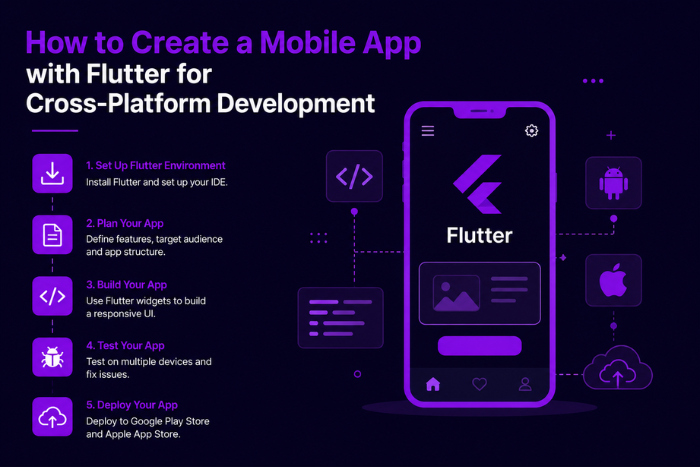
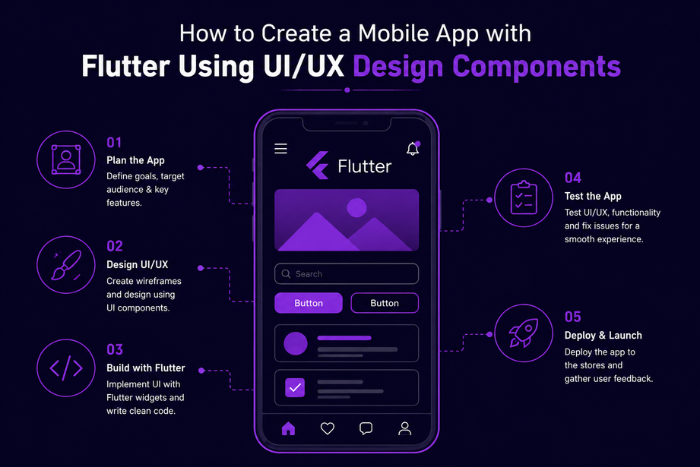
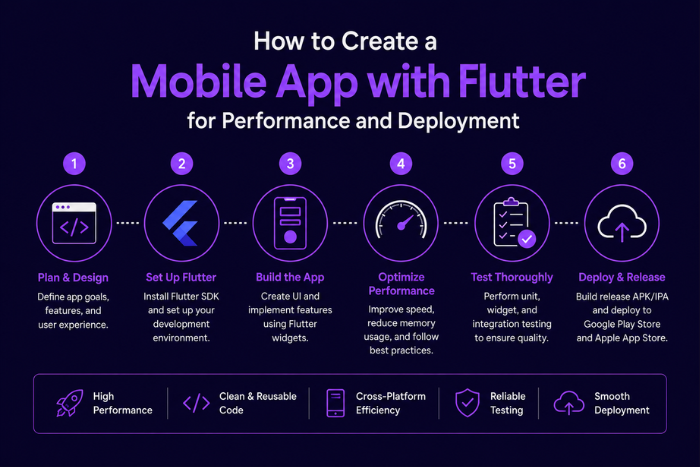
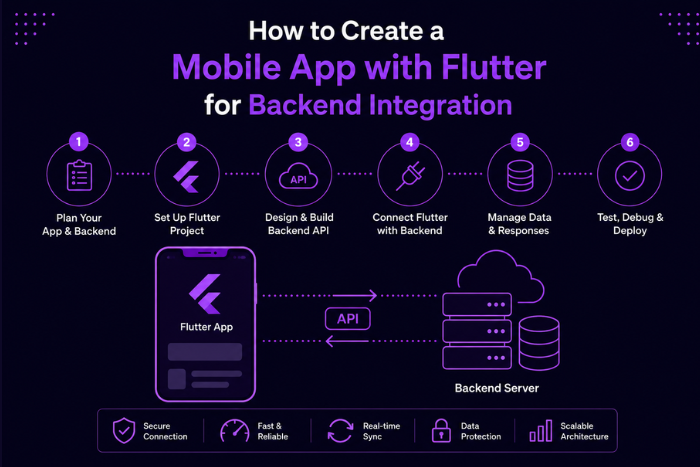
If you want to know how to create a mobile app with Flutter, the process involves planning app requirements, setting up the Flutter environment, designing UI/UX, developing features, integrating APIs, testing applications, and deploying apps on Android and iOS platforms.
Why This Service is Important
- Cross-Platform Development
Flutter allows developers to build Android and iOS apps using a single codebase. - Faster Development Process
Hot reload and reusable widgets speed up app development and testing. - Cost-Effective App Development
Businesses reduce development and maintenance costs with one framework. - Native-Like Performance
Flutter delivers smooth animations and fast app performance. - Customizable UI Design
Developers can create highly interactive and visually appealing user interfaces. - Scalable Mobile Applications
Flutter supports enterprise-grade and scalable app architecture. - Reduced Time-to-Market
Businesses can launch applications more quickly compared to separate native development. - Strong Community & Ecosystem
Flutter offers extensive libraries, plugins, and developer support.
Types of Solutions for Flutter Mobile App Development
eCommerce Mobile Apps
- Online shopping platforms
- Secure payment integrations
- Product and inventory management
Healthcare Mobile Applications
- Telemedicine solutions
- Patient management systems
- Appointment booking apps
FinTech & Banking Apps
- Digital wallet integration
- Secure payment systems
- Real-time transaction monitoring
Educational Apps
- Online learning platforms
- Video streaming integration
- Student performance tracking
Social Networking Apps
- Messaging and communication systems
- Media sharing functionality
- Real-time notifications
Enterprise Mobile Solutions
- Employee management apps
- Workflow automation systems
- Business analytics dashboards
On-Demand Service Apps
- Food delivery applications
- Taxi booking systems
- Service marketplace platforms
IoT & Smart Device Applications
- Smart home management
- Device monitoring systems
- Real-time IoT analytics
Key Features of How to Create a Mobile App with Flutter
- Single Codebase Development
Build applications for multiple platforms using one codebase. - Custom Flutter Widgets
Create responsive and visually rich user interfaces. - Hot Reload Functionality
Developers can instantly preview code changes during development. - API Integration Support
Connect apps with third-party services and backend systems. - Cloud Integration
Integrate with scalable cloud infrastructure and databases. - Secure User Authentication
Support biometric login, OTP verification, and multi-factor authentication. - Push Notifications
Deliver real-time alerts and customer engagement updates. - Offline Mode Support
Enable app functionality even without internet connectivity. - State Management Systems
Manage app data and workflows efficiently. - Cross-Platform Compatibility
Ensure consistent experiences across Android and iOS devices. - High-Performance Rendering Engine
Deliver smooth animations and responsive interactions. - Analytics & Monitoring
Track app performance and user engagement in real time.
Development Process
Requirement Analysis & Planning
- Understand business goals and target audience
- Define app features and technical requirements
- Create development roadmaps and workflows
Flutter Environment Setup
- Install Flutter SDK and development tools
- Configure Android and iOS environments
- Set up project architecture and dependencies
UI/UX Design
- Design responsive and user-friendly interfaces
- Create wireframes and interactive prototypes
- Optimize mobile navigation and usability
Frontend & Backend Development
- Develop app screens and business logic
- Build APIs and backend infrastructure
- Implement authentication and database systems
Third-Party Integration
- Integrate payment gateways and APIs
- Connect cloud services and analytics tools
- Add push notifications and communication systems
Testing & Quality Assurance
- Conduct functional and usability testing
- Test performance across devices and screen sizes
- Identify and fix bugs and security vulnerabilities
Deployment & App Store Submission
- Build Android and iOS app packages
- Configure app store listings and metadata
- Publish apps on Google Play Store and Apple App Store
Maintenance & Updates
- Monitor app performance and analytics
- Release feature updates and improvements
- Provide ongoing technical support
Technology Stack for How to Create a Mobile App with Flutter
Frontend Technologies
- Flutter
- Dart
- Material Design
- Cupertino Widgets
Backend Technologies
- Node.js
- Laravel
- Django
- Firebase Functions
Database Solutions
- Firebase Firestore
- MySQL
- PostgreSQL
- MongoDB
Cloud Platforms
- Firebase
- AWS
- Google Cloud Platform
- Microsoft Azure
API & Integration Tools
- REST APIs
- GraphQL
- Payment Gateway APIs
- Google Maps API
DevOps & Deployment Tools
- Docker
- GitHub Actions
- CI/CD Pipelines
- Fastlane
Security Tools
- OAuth Authentication
- SSL Encryption
- Firebase Authentication
- Biometric Security
Analytics & Monitoring Tools
- Firebase Analytics
- Crashlytics
- Google Analytics
- App Performance Monitoring Tools
Cost Factors for How to Create a Mobile App with Flutter
- Application Complexity
Advanced app features and workflows increase development effort and pricing. - UI/UX Design Requirements
Custom animations and premium interfaces impact development costs. - Backend Infrastructure
Cloud hosting, APIs, and databases contribute to overall expenses. - Third-Party Integrations
Payment gateways, analytics tools, and external APIs affect project scope. - Cross-Platform Optimization
Supporting multiple devices and operating systems requires additional testing. - Security & Compliance
Secure authentication and data protection systems increase technical complexity. - Real-Time Features
Chat systems, notifications, and live tracking increase development effort. - Maintenance & Updates
Ongoing support and feature enhancements contribute to long-term costs.
Latest Trends
- AI-Powered Flutter Apps
Businesses are integrating AI chatbots and recommendation engines into mobile apps. - Flutter for Web & Desktop
Flutter is expanding beyond mobile to support web and desktop applications. - Super Apps Development
Multi-service applications are becoming popular using scalable Flutter architecture. - Voice & Gesture-Based Interfaces
Mobile apps are adopting advanced interaction methods for better accessibility. - IoT & Smart Device Integration
Flutter is increasingly used for IoT and smart device applications. - Cloud-Native Mobile Apps
Cloud integration improves scalability and real-time app synchronization. - AR & VR Integration
Flutter apps are supporting immersive augmented and virtual reality experiences. - Low-Code Development Support
Businesses are combining Flutter with rapid development solutions for faster delivery.
Why Choose Us
Experienced Flutter App Developers
- Expertise in Flutter and Dart development
- Strong understanding of scalable mobile architecture
- Industry-standard coding practices
Customized Mobile App Solutions
- Tailored applications for startups and enterprises
- Flexible and scalable app architecture
- Personalized feature development
Advanced Technology Integration
- AI-powered and cloud-based mobile solutions
- API and third-party integration expertise
- High-performance cross-platform development
User-Centric Mobile Experiences
- Modern and responsive app interfaces
- Seamless navigation and usability
- Enhanced customer engagement
End-to-End Development Support
- Consultation and project planning
- App deployment and optimization
- Ongoing maintenance and technical support
Secure & Scalable Applications
- Enterprise-grade security systems
- Scalable cloud infrastructure
- Reliable app performance monitoring
Cost-Effective Development Services
- Affordable Flutter app development packages
- Transparent pricing structure
- High-quality project delivery
We help businesses create scalable, secure, and feature-rich Flutter mobile applications that improve customer engagement and accelerate digital growth.
Ready to build a powerful cross-platform mobile app with Flutter?
Contact us today for customized Flutter app development services.
Let’s create a modern mobile application that delivers performance, scalability, and user satisfaction.
Key Points :
- Flutter enables cross-platform mobile app development using a single codebase for Android and iOS.
- Businesses use Flutter to build scalable, high-performance, and visually rich mobile applications.
- Flutter app development supports features like API integration, cloud connectivity, push notifications, and secure authentication.
- Hot reload functionality and reusable widgets help accelerate the mobile app development process.
- Modern Flutter apps integrate AI, IoT, cloud services, and real-time analytics for advanced functionality.
- Flutter app development reduces time-to-market and long-term maintenance costs for businesses.
FAQ's
Creating a Flutter app involves planning, setting up the Flutter SDK, designing the UI, developing features, testing, and deploying the app.
Flutter enables cross-platform development with a single codebase, reducing development time and costs.
Flutter uses the Dart programming language for application development.
Yes, Flutter supports Android and iOS app development from a single codebase.
Development costs depend on app complexity, features, integrations, and customization requirements.
Development timelines vary based on project scope, app features, and business requirements.