
What Is the Process of Website Design?
Learn what is the process of website design, including planning, UI/UX design, development, SEO, testing, and website launch steps.
Introduction
Understanding what is the process of website design is essential for businesses looking to build modern, user-friendly, and high-performing websites. A professional website design process involves strategic planning, user experience optimization, responsive layouts, branding, content structure, and technical development to create websites that attract visitors and generate conversions.
Website design is not only about visual appearance. It combines creativity, functionality, SEO optimization, mobile responsiveness, and user behavior analysis to deliver a seamless digital experience. A structured website design process helps businesses create websites that align with their brand identity, improve customer engagement, and support long-term digital growth.
Modern website design processes include discovery and planning, wireframing, UI/UX design, frontend and backend development, content integration, testing, optimization, and post-launch maintenance. Businesses investing in professional website design services can improve website performance, search engine rankings, loading speed, accessibility, and customer satisfaction.
If you want to understand what is the process of website design, it begins with analyzing business goals and user expectations, followed by creating intuitive interfaces, optimizing technical architecture, and continuously improving website functionality for better online performance.
Why This Service is Important
- Improves User Experience
A structured website design process creates intuitive and engaging user journeys. - Enhances Brand Identity
Professional website design strengthens brand credibility and online presence. - Supports SEO Optimization
SEO-friendly website architecture improves search engine visibility and rankings. - Increases Customer Engagement
Interactive and responsive designs encourage users to spend more time on websites. - Boosts Conversion Rates
Optimized layouts and CTAs improve lead generation and sales opportunities. - Ensures Mobile Responsiveness
Modern websites function smoothly across smartphones, tablets, and desktops. - Improves Website Performance
Optimized design processes enhance loading speed and functionality. - Supports Long-Term Scalability
Well-planned websites can grow with business needs and future technologies.
Types of Solutions for Website Design
Corporate Website Design
- Professional business websites
- Brand-focused layouts
- Service and portfolio pages
eCommerce Website Design
- Online store interfaces
- Product showcase pages
- Secure checkout experiences
Portfolio Website Design
- Creative portfolio galleries
- Personal branding websites
- Interactive visual presentations
Real Estate Website Design
- Property listing interfaces
- Search and filtering systems
- Lead generation forms
Educational Website Design
- Online learning platforms
- Student portals
- Course management systems
Healthcare Website Design
- Appointment booking systems
- Patient information portals
- Secure healthcare interfaces
SaaS & Web Application Design
- Dashboard UI/UX design
- User account systems
- Subscription management interfaces
Landing Page Design
- Conversion-focused layouts
- Marketing campaign pages
- Lead capture optimization
Key Features of What Is the Process of Website Design
- Responsive Web Design
Websites adapt smoothly across all devices and screen sizes. - User-Centric UI/UX
Intuitive interfaces improve usability and customer interaction. - SEO-Friendly Structure
Clean code and optimized layouts improve search engine performance. - Fast Loading Speed
Optimized resources and performance enhancements improve page speed. - Custom Visual Design
Unique layouts align with business branding and objectives. - Content Management Integration
Simplify content updates and website administration. - Interactive Navigation
Clear menus and navigation improve browsing experiences. - Secure Website Architecture
SSL certificates and security systems protect user data. - Cross-Browser Compatibility
Websites function consistently across different browsers. - Scalable Website Structure
Easily expand features and content as business needs grow. - Analytics & Tracking Integration
Monitor website traffic and user behavior effectively. - Accessibility Optimization
Improve website usability for all users, including accessibility compliance.
Development Process
Discovery & Requirement Analysis
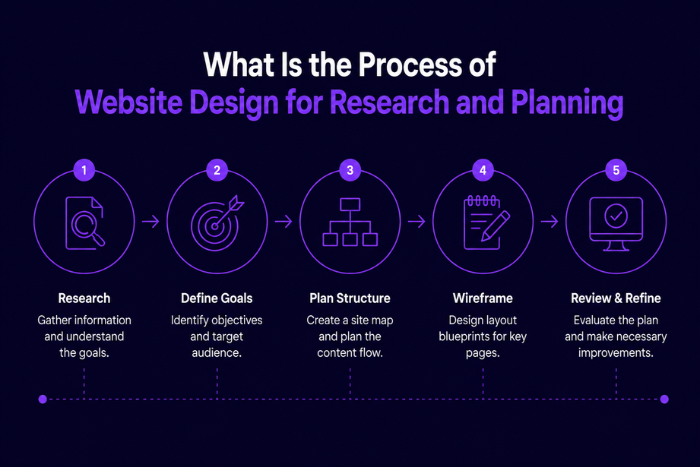
- Understand business goals and target audience
- Identify website functionality and design expectations
- Analyze competitor websites and industry trends
Planning & Sitemap Creation
- Define website structure and page hierarchy
- Create user flows and navigation systems
- Plan content organization and SEO structure
Wireframing & Prototyping
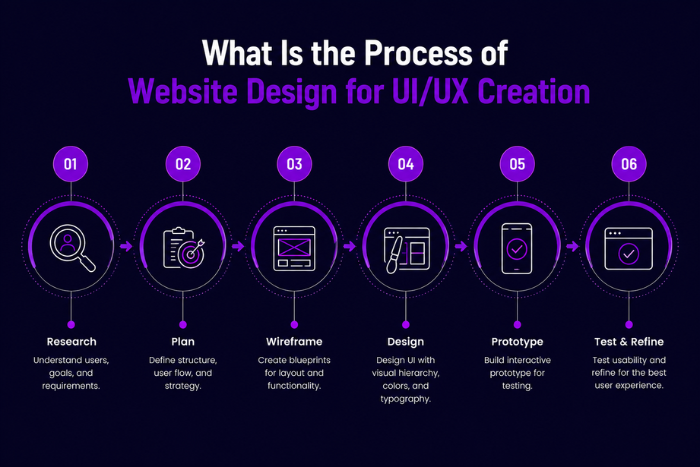
- Design wireframes for website pages
- Create interactive prototypes and layouts
- Finalize user experience workflows
UI/UX Design
- Develop custom website visuals and branding
- Design responsive and engaging interfaces
- Optimize user interaction and accessibility
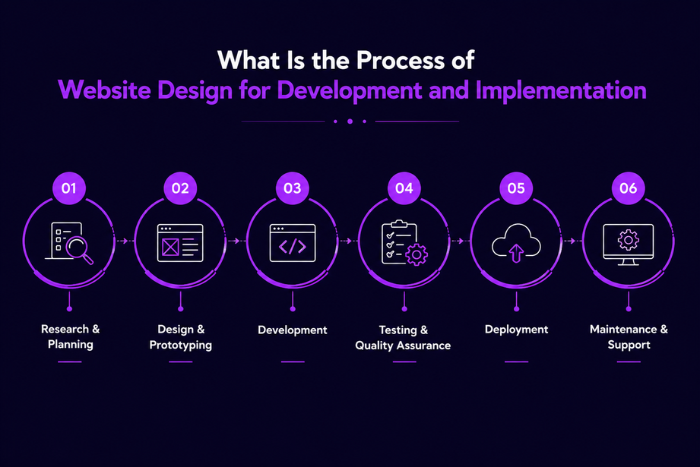
Frontend & Backend Development
- Build responsive frontend interfaces
- Develop backend functionality and databases
- Integrate APIs and third-party tools
Content Integration & SEO Optimization
- Add website content and multimedia
- Optimize metadata and technical SEO
- Improve page speed and mobile performance
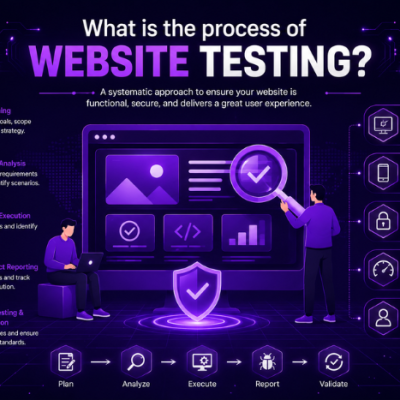
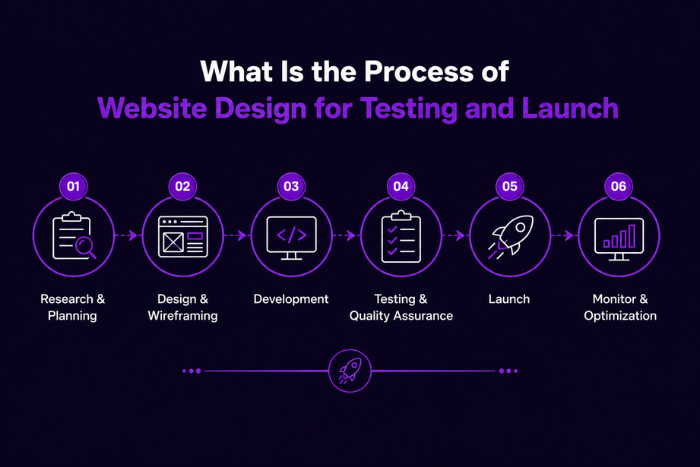
Testing & Quality Assurance
- Conduct usability and functionality testing
- Verify compatibility across devices and browsers
- Fix bugs and optimize performance
Website Launch & Maintenance
- Deploy website on secure hosting infrastructure
- Monitor website performance and uptime
- Provide ongoing updates and support
Technology Stack for What Is the Process of Website Design
Frontend Technologies
- HTML5
- CSS3
- JavaScript
- React
Backend Technologies
- Node.js
- PHP
- Laravel
- Django
CMS Platforms
- WordPress
- Drupal
- Webflow
- Shopify
Database Solutions
- MySQL
- PostgreSQL
- MongoDB
UI/UX Design Tools
- Figma
- Adobe XD
- Sketch
- InVision
Cloud & Hosting Platforms
- AWS
- Google Cloud Platform
- Microsoft Azure
- DigitalOcean
SEO & Analytics Tools
- Google Analytics
- SEMrush
- Ahrefs
- Search Console
Security & DevOps Tools
- SSL Certificates
- Cloudflare
- Docker
- GitHub Actions
Cost Factors for What Is the Process of Website Design
- Website Complexity
Advanced functionality and custom features increase design and development costs. - Custom UI/UX Requirements
Personalized branding and premium layouts affect project scope. - Responsive Design Implementation
Mobile-first optimization requires additional testing and development. - Content Creation & SEO
Professional content writing and SEO optimization contribute to overall pricing. - Third-Party Integrations
CRM systems, APIs, and payment gateways increase development effort. - Backend Development Needs
Complex databases and custom admin panels affect project costs. - Security & Compliance
Secure authentication and data protection systems increase implementation requirements. - Maintenance & Updates
Ongoing support and optimization contribute to long-term operational expenses.
Latest Trends
- AI-Powered Website Design
AI tools help automate layouts, personalization, and content recommendations. - Minimalist UI/UX Design
Clean and simple interfaces improve user engagement and readability. - Dark Mode & Adaptive Themes
Websites now support dynamic viewing experiences across devices. - Voice Search Optimization
Website structures are adapting for voice-based search queries. - Motion UI & Microinteractions
Interactive animations improve user engagement and navigation. - No-Code & Low-Code Development
Businesses are adopting rapid website development platforms. - Core Web Vitals Optimization
Website performance and speed optimization remain critical ranking factors. - Accessibility-First Design
Websites are focusing on inclusive and accessibility-compliant experiences.
Why Choose Us
Experienced Website Design Team
- Expertise in UI/UX and responsive website design
- Strong understanding of user behavior and branding
- Industry-focused website strategies
Customized Website Solutions
- Tailored designs for businesses and startups
- Flexible and scalable website architecture
- Personalized user experience optimization
Advanced Technology Integration
- SEO-friendly and high-performance websites
- Secure cloud-based infrastructure
- API and third-party integration expertise
Conversion-Focused Design Approach
- Optimized layouts for lead generation
- User-friendly navigation systems
- Improved customer engagement strategies
End-to-End Website Development Support
- Planning and consultation services
- Website deployment and optimization
- Ongoing maintenance and updates
Cost-Effective Design Services
- Affordable website design packages
- Transparent pricing structure
- High-quality project delivery
Long-Term Digital Growth Support
- Continuous optimization and improvements
- Scalable website infrastructure
- Future-ready development solutions
We help businesses design professional, scalable, and SEO-optimized websites that improve customer engagement and support long-term digital growth.
Ready to create a modern and high-performing website for your business?
Contact us today for professional website design and development services.
Let’s build a responsive and conversion-focused website that strengthens your online presence.
Key Points :
- The website design process includes planning, wireframing, UI/UX design, development, testing, and deployment.
- Professional website design improves user experience, brand credibility, and online visibility.
- Responsive and SEO-friendly website structures help businesses improve search engine rankings and customer engagement.
- Modern website design focuses on mobile responsiveness, fast loading speed, and intuitive navigation.
- Businesses use website design processes to create scalable, secure, and conversion-focused digital platforms.
- AI-powered design tools, accessibility-first layouts, and motion UI are shaping modern website design trends.
FAQ's
The website design process includes planning, wireframing, UI/UX design, development, testing, launch, and ongoing maintenance.
Professional website design improves branding, user experience, SEO performance, and customer engagement.
Website design timelines depend on project complexity, features, and customization requirements.
Popular tools include Figma, Adobe XD, HTML5, CSS3, JavaScript, and modern CMS platforms.
Yes, modern website design includes SEO-friendly architecture, performance optimization, and mobile responsiveness.
Yes, ongoing maintenance helps improve security, performance, updates, and long-term website functionality.