
Key Features of a Successful E-commerce Website Discover the key features of a successful e-commerce website including product management, secure checkout, mobile optimization, and scalable design. Key Features of a Successful E-commerce Website E-commerce has revolutionized the way businesses sell products and services. From small startups to global brands, companies rely on online stores to reach customers worldwide and generate consistent revenue. However, building a successful online store requires more than just listing products. Understanding the key features of a successful e-commerce website is essential for creating a platform that attracts visitors, converts them into customers, and provides a seamless shopping experience. A modern e-commerce website must combine intuitive design, efficient product management, secure payment systems, and fast performance. Customers expect smooth navigation, high-quality product displays, easy checkout processes, and responsive mobile experiences. At the same time, business owners need powerful backend tools to manage inventory, orders, promotions, and analytics. Successful e-commerce platforms also integrate advanced technologies such as AI-driven recommendations, automated marketing tools, and scalable cloud infrastructure. These capabilities help businesses improve customer engagement, increase conversion rates, and grow online revenue. In this guide, we explore the key features of a successful e-commerce website, the development process, and the technologies required to build a high-performing online store. Why Key Features of a Successful E-commerce Website Are Important An e-commerce website is more than just an online catalog—it is a complete digital storefront that represents your brand and drives sales. Without the right features, an online store may struggle with slow performance, poor user experience, and low conversion rates. Here’s why the key features of a successful e-commerce website are important: Improved Customer ExperienceIntuitive navigation, fast loading speeds, and easy checkout create a smooth shopping journey. Higher Conversion RatesOptimized product pages and secure payment systems encourage visitors to complete purchases. Efficient Store ManagementBackend tools help businesses manage inventory, orders, pricing, and promotions efficiently. Mobile Shopping OptimizationMobile-friendly design ensures customers can shop seamlessly on smartphones and tablets. Secure Transactions and Data ProtectionSecure payment gateways and encryption build trust and protect sensitive customer information. Scalable Online Business GrowthFeature-rich e-commerce platforms can support expanding product catalogs and increasing traffic. Implementing these features ensures that your e-commerce website remains competitive and capable of delivering excellent customer experiences. Types of Successful E-commerce Website Solutions Different types of e-commerce platforms serve different business models and customer segments. B2C (Business-to-Consumer) E-commerce Platforms Businesses sell products directly to customers through online stores. B2B (Business-to-Business) E-commerce Platforms Businesses sell products or services to other businesses, often with bulk pricing and account-based purchasing. Marketplace E-commerce Platforms Platforms that allow multiple vendors to sell products to customers on a shared marketplace. Subscription-Based E-commerce Platforms Businesses offer recurring product deliveries through subscription models. Dropshipping E-commerce Websites Online stores that sell products without holding inventory, with suppliers handling fulfillment. Each type of e-commerce solution requires different features and integrations to meet specific business needs. Get Free Quotation Now..!! Key Features of a Successful E-commerce Website A successful e-commerce platform includes several features designed to enhance customer experience, streamline operations, and increase sales. User-Friendly Navigation Clear menus, search functionality, and category organization help customers find products quickly. Advanced Product Management Businesses should be able to manage product listings, descriptions, images, pricing, and inventory easily. High-Quality Product Images and Descriptions Detailed product visuals and descriptions improve customer confidence and purchasing decisions. Secure Shopping Cart and Checkout System A simple and secure checkout process reduces cart abandonment and improves conversions. Multiple Payment Options Support for credit cards, digital wallets, bank transfers, and alternative payment methods increases flexibility. Mobile-Responsive Design A responsive design ensures customers can browse and purchase products seamlessly on mobile devices. Customer Accounts and Profiles Users can create accounts, track orders, save preferences, and manage shipping addresses. Order Management System Businesses can monitor orders, shipments, returns, and delivery status from a centralized dashboard. Customer Reviews and Ratings Product reviews increase credibility and influence purchasing decisions. Search and Filter Functionality Advanced filtering options help customers quickly locate products based on price, category, brand, or rating. Discount and Promotion Tools Coupon codes, seasonal discounts, and promotional offers help increase sales. Analytics and Reporting Business owners can track sales performance, customer behavior, and product demand. These features work together to create a powerful and conversion-focused e-commerce platform. Development Process for an E-commerce Website Building a high-performing e-commerce website requires careful planning and structured development. Requirement Analysis Identify business goals, target audience, product categories, and platform requirements. Platform Architecture Design Design scalable infrastructure including product catalogs, payment systems, and order management modules. UI/UX Design Create visually appealing interfaces that improve usability and customer engagement. Frontend and Backend Development Implement features such as product listings, search filters, shopping carts, and payment integration. Integration with Payment and Logistics Systems Connect the platform with payment gateways, shipping providers, and inventory systems. Testing and Quality Assurance Conduct performance testing, security checks, and usability testing. Deployment and Cloud Setup Launch the e-commerce website on reliable cloud infrastructure. Maintenance and Continuous Optimization Monitor performance and introduce feature updates to enhance user experience. Following a structured development process ensures the online store performs efficiently and scales as the business grows. Technology Stack for E-commerce Website Development Modern e-commerce websites rely on advanced technologies to ensure performance, security, and scalability. Frontend Technologies: React.js, Angular, Vue.js, Next.js Backend Technologies: Node.js, Python, PHP, Java E-commerce Platforms: Shopify, WooCommerce, Magento, BigCommerce Databases: PostgreSQL, MySQL, MongoDB Payment Gateways: Stripe, PayPal, Razorpay, Square Cloud Platforms: AWS, Google Cloud Platform, Microsoft Azure Security Technologies: SSL encryption, OAuth authentication, PCI DSS compliance DevOps Tools: Docker, Kubernetes, GitHub Actions, CI/CD pipelines This technology stack enables businesses to build scalable and secure online stores. Cost Factors in E-commerce Website Development The cost of developing an e-commerce website depends on various factors including platform complexity and feature requirements. Key cost factors include: Number of products and categories Custom design and branding requirements Payment gateway integration Inventory and order management systems Third-party integrations (CRM, ERP, marketing tools) Mobile optimization and app development Security and compliance requirements
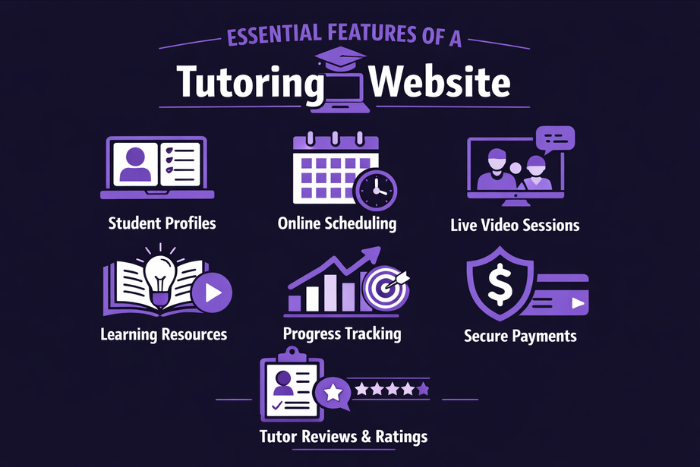
Essential Features of a Tutoring Website
Essential Features of a Tutoring Website Discover the essential features of a tutoring website including virtual classrooms, tutor dashboards, booking systems, payments, and learning analytics. Essential Features of a Tutoring Website Online tutoring has rapidly transformed the education landscape, making learning accessible to students anytime and anywhere. Schools, educators, coaching institutes, and independent tutors are increasingly building digital platforms to deliver personalized learning experiences. To create a successful platform, understanding the essential features of a tutoring website is crucial. A well-developed tutoring website should not only connect tutors with learners but also provide seamless communication, scheduling, payments, and interactive teaching tools. Modern tutoring platforms go beyond simple video calls. They incorporate advanced features such as virtual classrooms, tutor and student dashboards, real-time collaboration tools, automated scheduling, secure payment gateways, and learning analytics. These features help tutors manage their sessions efficiently while enabling students to track their progress and stay engaged with learning. Whether you are building a tutoring marketplace, a private tutoring website, or a full-scale eLearning platform, integrating the right features ensures smooth operations and high user satisfaction. A robust tutoring platform also helps educators expand their reach globally, attract more students, and create scalable education businesses. In this guide, we explore the essential features of a tutoring website, the development process, and the technologies needed to build a powerful online tutoring platform. Why Essential Features of a Tutoring Website Are Important A tutoring website serves as a digital learning environment where tutors and students interact, schedule sessions, and track educational progress. Without the right features, managing tutoring sessions, communication, and payments can become complicated. Here’s why implementing the essential features of a tutoring website is important: Improved Learning ExperienceInteractive tools such as video classrooms and whiteboards make online learning more engaging. Efficient Tutor ManagementTutor dashboards allow instructors to manage schedules, sessions, and student communication easily. Seamless Student InteractionStudents can browse tutors, book sessions, track progress, and access learning materials. Automated Scheduling and PaymentsIntegrated booking systems and payment gateways simplify session management. Scalable Online Education PlatformsWith the right infrastructure, tutoring websites can support thousands of learners and tutors simultaneously. Better Performance TrackingAnalytics and progress tracking help students and tutors measure learning outcomes. A feature-rich tutoring platform helps educational organizations deliver high-quality learning experiences while streamlining operations and improving user engagement. Types of Essential Tutoring Website Solutions Tutoring platforms can be designed for different educational models depending on the target audience and teaching approach. Online Tutoring Marketplace Platforms These platforms connect multiple tutors with students, allowing learners to choose tutors based on expertise, ratings, and pricing. Private Tutor Websites Individual tutors or coaching institutes use these websites to offer personalized tutoring services. Subject-Specific Tutoring Platforms Platforms focused on specific subjects such as mathematics, language learning, science, or test preparation. Corporate Training Tutoring Platforms Businesses use tutoring platforms to provide employee training, skill development, and professional certification. Live Classroom-Based Tutoring Platforms These platforms simulate classroom environments with video conferencing, collaboration tools, and interactive whiteboards. Each tutoring solution requires a combination of communication, scheduling, and learning management features to ensure smooth operations. Get Free Quotation Now..!! Key Features of a Tutoring Website A successful tutoring website includes features that support tutors, students, and administrators while providing an interactive learning experience. User-Friendly Interface A clean and intuitive design ensures that students can easily find tutors, schedule lessons, and access learning resources. Tutor Profiles and Expertise Listings Detailed tutor profiles should include qualifications, teaching experience, subject expertise, hourly rates, and reviews. Advanced Search and Filtering Students should be able to search tutors based on subjects, availability, ratings, and price range. Online Booking and Scheduling System Integrated booking tools allow students to schedule tutoring sessions according to tutor availability. Virtual Classroom Integration Live video sessions, screen sharing, chat tools, and virtual whiteboards make remote tutoring interactive. Student and Tutor Dashboards Separate dashboards allow tutors and students to manage schedules, sessions, assignments, and communication. Secure Payment Gateway Payment systems enable students to pay for tutoring sessions securely through credit cards, digital wallets, or subscriptions. Ratings and Review System Student feedback helps maintain tutor quality and improves trust on the platform. Learning Progress Tracking Analytics dashboards allow students and tutors to track learning progress and course completion. Mobile Compatibility A responsive design or mobile app ensures students can attend sessions from smartphones and tablets. Notifications and Reminders Automated reminders help students and tutors stay informed about upcoming sessions. Admin Management Panel Administrators can manage users, courses, payments, and platform analytics from a centralized dashboard. These features ensure the tutoring website delivers a complete learning ecosystem for students, tutors, and platform administrators. Development Process Developing a tutoring website involves careful planning and the integration of multiple technologies to create a seamless learning platform. Requirement Analysis Define the platform’s target audience, business model, and feature requirements. Platform Architecture Planning Design the system architecture including user roles, scheduling systems, and communication tools. UI/UX Design Create intuitive interfaces for tutors, students, and administrators. Backend and Frontend Development Implement features such as tutor profiles, booking systems, virtual classrooms, and payment gateways. Integration with Communication Tools Integrate video conferencing, chat systems, and collaborative learning tools. Testing and Quality Assurance Perform usability testing, performance optimization, and security checks. Deployment and Cloud Setup Deploy the tutoring platform on scalable cloud infrastructure. Maintenance and Feature Upgrades Continuous improvements ensure the platform adapts to evolving educational needs. Following a structured development process ensures the tutoring platform operates efficiently and supports future growth. Technology Stack for Tutoring Website Development Building a reliable tutoring platform requires a robust and scalable technology stack. Frontend Technologies: React.js, Angular, Vue.js, Next.js Backend Technologies: Node.js, Python, PHP, Java Databases: PostgreSQL, MySQL, MongoDB Video Communication Tools: WebRTC, Zoom API, Twilio Video Cloud Infrastructure: AWS, Google Cloud Platform, Microsoft Azure Payment Gateways: Stripe, PayPal, Razorpay Security Technologies: OAuth authentication, SSL encryption, role-based access control (RBAC) DevOps Tools: Docker, Kubernetes, GitHub Actions, CI/CD pipelines These technologies help create secure, scalable, and high-performance tutoring platforms. Cost Factors in Tutoring Website Development The cost of developing a

Features of a Successful Online Course Website
Features of a Successful Online Course Website Discover the essential features of a successful online course website including course management, secure payments, analytics, and engaging learning tools. Features of a Successful Online Course Website Online education has experienced tremendous growth as learners increasingly seek flexible ways to gain knowledge and develop new skills. A successful online course website enables instructors, institutions, and organizations to deliver structured learning experiences through digital platforms. These websites allow users to enroll in courses, watch video lectures, complete assignments, and track their learning progress—all from a single platform. Whether you are launching an educational startup, creating a training platform for your organization, or offering professional courses online, having the right set of features is essential. A well-designed course website must provide seamless course management, secure payment systems, engaging learning tools, and analytics that help instructors monitor student performance. Modern online course platforms combine learning management systems (LMS), multimedia content delivery, interactive assessments, and marketing tools to create a complete learning ecosystem. By integrating these capabilities, businesses can deliver scalable and engaging learning experiences to thousands of students worldwide. In this guide, we will explore the features of a successful online course website, along with development processes, technologies, cost considerations, and the latest trends shaping digital education. Why an Online Course Website is Important Online course websites play a vital role in expanding access to education and professional training. They allow organizations to deliver knowledge efficiently while enabling learners to study at their own pace. Key benefits include: Global reach: Instructors can teach students from anywhere in the world. Flexible learning: Students can access courses anytime and from any device. Scalable education models: Businesses can train thousands of learners simultaneously. Cost-effective learning: Digital courses reduce the need for physical classrooms. Data-driven learning insights: Analytics help improve course effectiveness and student engagement. With the right features and architecture, an online course website becomes a powerful platform for delivering education and generating sustainable revenue. Types of Online Course Website Solutions Different organizations require different types of online learning platforms depending on their goals. Instructor-Led Course Platforms Designed for individual educators or coaches who want to sell courses online. Includes video lessons, downloadable resources, and certification programs. Corporate Training Platforms Used by companies to train employees in technical skills, compliance, or leadership. Includes reporting dashboards and employee progress tracking. Educational Institution Platforms Universities and schools use these platforms to deliver digital learning programs. Supports structured curriculum and academic assessments. Marketplace Course Platforms Allows multiple instructors to publish and sell courses. Includes course discovery systems, reviews, and ratings. Membership-Based Learning Platforms Users subscribe to access a library of courses and learning materials. Get Free Quotation Now..!! Key Features of a Successful Online Course Website To create a highly engaging and scalable learning platform, several features must be included. User Registration and Profiles Users should be able to sign up, manage their profiles, track enrolled courses, and monitor learning progress. Course Creation and Management Instructors need tools to upload videos, organize lessons, create modules, and update course materials. Video-Based Learning System High-quality video streaming is essential for delivering lectures, tutorials, and demonstrations. Interactive Assessments and Quizzes Assessments help measure learner understanding and reinforce knowledge retention. Secure Payment Integration Payment gateways allow students to purchase courses using credit cards, digital wallets, or subscription plans. Progress Tracking Dashboard Students and instructors should be able to view learning progress, completion rates, and performance statistics. Certification System Digital certificates motivate learners and validate skill acquisition. Mobile-Friendly Design Responsive design ensures the platform works seamlessly on smartphones and tablets. Community and Discussion Forums Discussion boards enable interaction between students and instructors. Marketing and Promotion Tools Features such as landing pages, email integrations, and discount coupons help promote courses. Development Process Building a successful online course website involves several key stages. Market Research and StrategyIdentify target learners, analyze competitors, and define the platform’s goals. Feature Planning and ArchitectureDecide on core features such as course management, payment integration, and analytics. UI/UX DesignCreate intuitive interfaces that make course navigation simple and engaging. Platform DevelopmentDevelop both the frontend and backend infrastructure. Testing and Quality AssuranceConduct functional and performance testing to ensure reliability. Deployment and LaunchLaunch the website and optimize it for performance and security. Maintenance and UpdatesContinuously update the platform with new features and improvements. Technology Stack Selecting the right technologies ensures scalability, security, and performance. Frontend: React.js, Angular, Vue.js Backend: Node.js, Django, Laravel Mobile Compatibility: React Native, Flutter Database: MySQL, PostgreSQL, MongoDB Cloud Hosting: AWS, Google Cloud, Microsoft Azure Video Streaming: Vimeo API, AWS Media Services Payment Gateways: Stripe, PayPal, Razorpay Analytics Tools: Google Analytics, Mixpanel Cost Factors The cost of developing an online course website varies depending on several factors. Platform Complexity Advanced features such as AI personalization and live classes increase development costs. Number of Features More features require additional development time and resources. UI/UX Design Quality Premium designs improve user engagement but add to development cost. Content Creation Producing professional course materials requires investment in production and instructional design. Third-Party Integrations Payment systems, email tools, and analytics platforms may require integration costs. Maintenance and Updates Continuous updates and support are essential for long-term success. Latest Trends in Online Course Websites Digital learning technologies continue to evolve rapidly. AI-Powered Learning Personalization Artificial intelligence can recommend courses and lessons based on user behavior. Microlearning Modules Short, focused lessons improve retention and engagement. Gamified Learning Badges, leaderboards, and rewards encourage course completion. Live Interactive Classes Real-time virtual classrooms enable direct interaction with instructors. Mobile-First Learning Most learners now access courses via smartphones. Virtual and Augmented Reality Learning Immersive experiences help learners understand complex concepts. Why Choose Us Building a high-performing online course website requires expertise in technology, design, and digital education. Experienced Development Team Our developers have extensive experience creating scalable learning platforms. Custom Platform Solutions We design tailored platforms that align with your business goals. User-Centric Design Approach We focus on intuitive interfaces that maximize learner engagement. Advanced Technology Integration Our solutions incorporate AI, analytics, and cloud

Must-Have Features of a Certification Website
Must-Have Features of a Certification Website Discover the must-have features of a certification website including verification, badges, analytics, LMS integration, and secure credential management. Must-Have Features of a Certification Website Certification websites have become essential platforms for educational institutions, professional training organizations, and businesses that want to validate skills and issue recognized credentials. A well-designed certification website allows organizations to manage courses, assess learners, issue certificates, and verify achievements digitally. As online learning and digital credentials continue to grow, understanding the must-have features of a certification website is critical for building a scalable and trustworthy platform. Modern certification platforms go far beyond simply generating downloadable certificates. They integrate learning management systems (LMS), digital badge frameworks, credential verification tools, analytics dashboards, and secure authentication systems. These features ensure that certificates are authentic, shareable, and valuable for learners and employers alike. Whether you are developing a certification portal for corporate training, professional certification programs, educational institutions, or online courses, your platform must provide a seamless user experience while maintaining strong security and verification mechanisms. Organizations that implement robust certification platforms can improve learner engagement, increase credibility, and streamline credential management. In this guide, we explore the must-have features of a certification website, how they improve learning ecosystems, and what technologies are used to build secure and scalable certification platforms. Why Must-Have Features of a Certification Website Are Important Certification websites play a crucial role in validating knowledge, skills, and professional achievements. Without the right platform features, managing certifications, assessments, and credentials can become inefficient and difficult to scale. Here are key reasons why a feature-rich certification platform is essential: Credential Authenticity and VerificationVerification systems ensure certificates are genuine and prevent fraud. Efficient Credential ManagementAutomated systems help organizations issue, update, and manage thousands of certificates. Improved Learner ExperienceA modern platform enables easy course access, certificate downloads, and progress tracking. Professional RecognitionDigital certificates and badges help learners showcase achievements to employers and professional networks. Scalable Learning InfrastructureCertification websites allow institutions and organizations to deliver training programs globally. Data Insights and AnalyticsAnalytics tools provide insights into learner engagement, course performance, and certification outcomes. A certification website equipped with the right features helps organizations create trusted learning ecosystems while improving operational efficiency and learner satisfaction. Types of Certification Platform Solutions Different organizations require different types of certification platforms depending on their audience, industry, and training requirements. Online Course Certification PlatformsWebsites designed to provide online courses and automatically issue certificates after course completion. Professional Certification PlatformsPlatforms used by professional organizations to certify individuals based on exams, assessments, or training programs. Corporate Training Certification SystemsInternal platforms used by companies to certify employees in compliance training, technical skills, and leadership development. Digital Credential and Badge PlatformsSystems that issue verifiable digital credentials and badges that can be shared across professional networks. Educational Institution Certification PortalsPlatforms used by universities, colleges, and training institutes to manage certifications for students and alumni. Skill Assessment and Testing PlatformsWebsites focused on testing skills through online exams and issuing certificates based on performance. Each solution requires a robust set of features to manage learning content, assessments, credential issuance, and verification processes effectively. Get Free Quotation Now..!! Key Features of a Certification Website A successful certification platform includes multiple functional components that enhance usability, security, and credential value. User-Friendly Interface A clean and intuitive interface ensures learners, administrators, and instructors can navigate the platform easily. Simple dashboards improve usability and increase course engagement. Automated Certificate Generation The platform should automatically generate certificates once learners complete courses or pass assessments. Custom templates allow organizations to design branded certificates. Instant Certificate Verification Verification features allow employers and institutions to validate credentials through unique IDs, QR codes, or verification links. Digital Badges and Credential Sharing Digital badges allow learners to showcase their achievements on professional platforms such as LinkedIn, resumes, and personal websites. Assessment and Testing Tools Integrated testing systems enable quizzes, exams, and assignments that determine certification eligibility. Learning Management System (LMS) Integration LMS integration enables seamless course management, learner tracking, and automated certification processes. Advanced Security and Data Protection Secure authentication, encrypted data storage, and anti-fraud mechanisms protect certificates from duplication or tampering. Analytics and Reporting Dashboard Detailed analytics help administrators track learner progress, certification rates, and platform performance. Custom Branding and White Labeling Certification websites should allow organizations to customize branding, logos, themes, and certificate designs. Mobile Compatibility Mobile-friendly platforms enable learners to access courses and certificates from smartphones and tablets. Third-Party Integrations Integration with HR systems, CRM platforms, payment gateways, and learning tools improves operational efficiency. These features help organizations deliver reliable certification programs while maintaining credibility and security. Development Process for a Certification Platform Building a robust certification website with key features requires careful planning, technology selection, and systematic development. Requirement Analysis Identify the platform’s purpose, certification workflow, user roles, and technical requirements. Platform Architecture Design Design scalable architecture including course management systems, certificate generation modules, and verification services. UI/UX Design Create intuitive interfaces for learners, instructors, and administrators to ensure seamless platform navigation. Certification System Development Implement features such as course modules, assessments, automated certificate issuance, and credential verification. Integration with Learning Tools Connect the platform with LMS systems, payment gateways, email services, and analytics tools. Testing and Quality Assurance Perform functional testing, security testing, and performance optimization to ensure reliability. Deployment and Launch Deploy the certification platform on cloud infrastructure for scalability and accessibility. Maintenance and Feature Updates Continuous improvements ensure the platform stays secure and adapts to evolving learning needs. A structured development process ensures that the certification website remains scalable, secure, and user-friendly. Technology Stack for Certification Website Development Modern certification platforms rely on a combination of technologies that support performance, security, and scalability. Frontend Technologies: React.js, Angular, Vue.js, Next.js Backend Technologies: Node.js, Python, PHP, Java Databases: PostgreSQL, MySQL, MongoDB Learning Management Systems: Moodle, LearnDash, custom LMS platforms Cloud Platforms: AWS, Google Cloud Platform, Microsoft Azure Security Technologies: OAuth 2.0, SSL encryption, role-based access control (RBAC) Credential Verification Tools: Blockchain verification, QR codes, digital signatures DevOps Tools: Docker, Kubernetes, GitHub
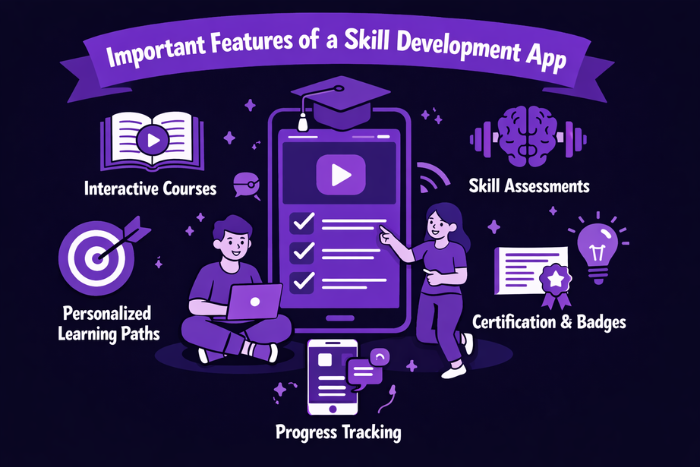
Important Features of a Skill Development App
Important Features of a Skill Development App Discover the important features of a skill development app including course management, progress tracking, gamification, and AI-powered learning tools. Important Features of a Skill Development App Digital learning has transformed how individuals acquire new skills and advance their careers. A skill development app enables learners to access structured training programs, practical exercises, and expert guidance directly from their smartphones or computers. Whether the goal is to learn coding, improve professional abilities, or develop creative skills, these apps provide flexible and personalized learning experiences. Businesses, educational institutions, and training organizations are increasingly investing in skill development app development to deliver scalable and engaging learning solutions. These platforms combine interactive lessons, multimedia content, assessments, and progress tracking to help users develop practical skills effectively. The success of a modern skill development platform depends on its features, usability, and ability to keep learners motivated. From course management systems and personalized learning paths to gamification and analytics, the right set of features can significantly improve engagement and learning outcomes. In this guide, we will explore the important features of a skill development app, development processes, technologies, cost factors, and emerging trends that help businesses build a powerful digital learning platform. Why Skill Development App Features Are Important Skill development apps are designed to deliver training programs that help individuals gain practical knowledge and improve their employability. Having the right features ensures the platform is engaging, efficient, and scalable. Key reasons why skill development apps are essential include: Flexible learning opportunities allowing users to learn anytime and anywhere. Scalable training solutions for organizations and educational institutions. Interactive learning experiences with multimedia content and real-time feedback. Performance tracking tools that help learners monitor their progress. Personalized learning journeys based on user preferences and skill levels. A well-designed skill development app with advanced features can significantly improve knowledge retention, learner engagement, and course completion rates. Types of Skill Development App Solutions Different organizations require different types of skill development platforms depending on their goals and target audience. Corporate Training Platforms Used by companies to train employees and improve workplace productivity. Includes modules for leadership, technical skills, and compliance training. Professional Skill Development Apps Focus on career advancement and industry-specific learning. Examples include coding, digital marketing, finance, and design skills. Academic Skill Learning Platforms Designed for students to build additional skills beyond school or university education. Includes interactive lessons, assessments, and certification programs. Creative Skill Development Apps Focus on creative fields such as photography, writing, music, and graphic design. Offers video tutorials, practical projects, and portfolio development tools. Microlearning Platforms Provide short, focused lessons that users can complete quickly. Ideal for busy professionals seeking continuous learning. Get Free Quotation Now..!! Key Features of a Skill Development App A successful skill development platform must combine engaging learning tools with efficient management systems. User Registration and Profiles Users should be able to create personalized accounts where they can track progress, manage courses, and receive recommendations. Course Management System A powerful course management system allows instructors to upload lessons, manage modules, and organize learning materials efficiently. Interactive Learning Content Multimedia content such as videos, infographics, quizzes, and simulations helps improve learner engagement. Personalized Learning Paths AI-powered recommendations help users choose courses and lessons based on their goals and performance. Progress Tracking and Analytics Learners and administrators should be able to monitor progress through dashboards and reports. Assessments and Certifications Quizzes, assignments, and certification systems allow learners to test their knowledge and validate their skills. Gamification Features Leaderboards, badges, and reward systems motivate learners to complete courses and achieve milestones. Communication and Collaboration Tools Features like discussion forums, chat systems, and live classes enable learners to interact with instructors and peers. Offline Learning Mode Allowing users to download lessons ensures they can learn without an internet connection. Push Notifications and Reminders Automated reminders encourage users to continue learning and complete their courses. Development Process for a Skill Development App Developing a successful skill development platform requires a structured and strategic approach. Market Research and PlanningIdentify the target audience, analyze competitors, and define platform goals. Feature Planning and StrategySelect core features and decide how the learning experience will be structured. UI/UX DesignCreate a user-friendly interface that ensures easy navigation and an engaging experience. App DevelopmentBuild the frontend and backend infrastructure while integrating required technologies. Testing and Quality AssuranceConduct thorough testing to ensure functionality, performance, and security. Deployment and LaunchLaunch the application on mobile app stores and web platforms. Maintenance and UpdatesRegular updates ensure the platform stays secure and competitive. Technology Stack Choosing the right technologies is essential for building a scalable and efficient skill development app. Frontend: React, Angular, Vue.js, Flutter Backend: Node.js, Django, Laravel Mobile Development: React Native, Flutter, Swift, Kotlin Database: PostgreSQL, MongoDB, MySQL Cloud Services: AWS, Google Cloud, Microsoft Azure Video Streaming: WebRTC, Vimeo API, YouTube API AI Integration: TensorFlow, OpenAI APIs Analytics Tools: Google Analytics, Mixpanel Cost Factors The cost of developing a skill development app depends on several factors. Feature Complexity Apps with advanced features like AI personalization or VR learning require higher development investment. Platform Choice Developing for both Android and iOS increases the overall cost. UI/UX Design High-quality user interface design improves engagement but adds to development time. Content Development Creating high-quality educational content requires additional resources. Integration Requirements Third-party integrations such as payment gateways, video streaming, and analytics tools affect costs. Maintenance and Updates Regular improvements, bug fixes, and feature updates contribute to long-term expenses. Latest Trends in Skill Development Apps The eLearning industry is rapidly evolving with new technologies and learning approaches. AI-Powered Personalized Learning Artificial intelligence helps deliver customized learning experiences based on user performance. Microlearning Short lessons designed for quick learning sessions are becoming increasingly popular. Gamified Learning Experiences Gamification techniques increase engagement and motivation. Virtual Reality (VR) and Augmented Reality (AR) Immersive learning experiences improve practical training in fields like healthcare and engineering. Social Learning Platforms Community-based learning encourages collaboration and peer interaction. Mobile-First Learning Mobile apps are becoming the primary medium for

Features of a Good Language Learning App
Features of a Good Language Learning App Discover the features of a good language learning app including speech recognition, gamification, adaptive learning, and progress tracking. Features of a Good Language Learning App Language learning apps have transformed how people acquire new languages in today’s digital world. With smartphones and internet access becoming widely available, learners can now practice vocabulary, pronunciation, and grammar anytime and anywhere. Businesses, educators, and startups are increasingly investing in educational technology solutions that deliver effective language learning experiences. Understanding the features of a good language learning app is essential for building engaging and successful digital learning platforms. A well-designed language learning app helps users improve reading, writing, listening, and speaking skills through interactive lessons and exercises. These apps combine advanced technologies such as artificial intelligence, speech recognition, and adaptive learning algorithms to personalize learning journeys. Instead of traditional classroom-based methods, modern language apps deliver bite-sized lessons, gamified exercises, and conversational practice. Successful platforms provide tools like pronunciation feedback, progress tracking, vocabulary builders, and interactive dialogues. By integrating multimedia content, quizzes, and real-time feedback, language learning apps can keep users motivated and help them achieve language proficiency faster. Developing an effective language learning app requires a combination of smart technology, engaging content, and intuitive design that supports learners of different skill levels. Why Features of a Good Language Learning App Are Important Language learning applications must deliver engaging and personalized learning experiences. The right features ensure that learners stay motivated and continue practicing regularly. Here’s why these features are important: Improves Learning EfficiencyStructured lessons help users learn faster. Encourages Daily PracticeGamification and reminders motivate consistent learning. Supports Personalized LearningAdaptive algorithms tailor lessons based on progress. Enhances Pronunciation and Communication SkillsSpeech recognition tools provide instant feedback. Tracks Learning ProgressAnalytics help learners monitor improvement. Makes Language Learning AccessibleMobile apps allow learning anytime and anywhere. Implementing these features ensures effective and engaging language learning experiences. Types of Language Learning Platform Solutions Language learning platforms can be designed for different learning styles and audiences. Vocabulary Learning Apps Apps designed to improve vocabulary and word recognition. Flashcards and vocabulary drills Spaced repetition systems Daily word challenges Conversation Practice Apps Platforms focusing on real-life communication skills. Interactive dialogues Voice recognition practice AI conversation bots Gamified Learning Apps Apps that use gaming elements to encourage learning. Level-based progression Points and rewards Leaderboards and achievements Educational Language Platforms Apps used by schools and universities. Structured course modules Assessment tools Instructor dashboards Corporate Language Training Platforms Platforms designed for employee training. Business language courses Industry-specific vocabulary Progress tracking for teams These solutions provide flexible learning experiences for individuals, students, and organizations. Get Free Quotation Now..!! Key Features of a Good Language Learning App A successful language learning app should provide engaging tools that help users practice speaking, listening, reading, and writing. User Registration and Personalized Profiles Users should be able to create profiles and set language learning goals. Personalized Learning Paths Adaptive learning systems adjust lessons based on user skill levels and progress. Speech Recognition and Pronunciation Feedback Voice recognition technology evaluates pronunciation and provides corrective feedback. Interactive Conversations Simulated conversations help users practice real-life communication scenarios. Gamified Learning Experience Rewards, badges, and leaderboards motivate users to continue learning. Spaced Repetition System Vocabulary and phrases are repeated at optimal intervals to improve retention. Multimedia Learning Content Lessons can include videos, images, audio clips, and interactive exercises. Real-Time Translation Tools Translation features help learners understand new words and phrases. Progress Tracking and Analytics Users can monitor their learning achievements and performance. Push Notifications and Learning Reminders Reminders encourage users to complete lessons regularly. Offline Learning Mode Users can download lessons and practice without internet access. Admin Dashboard and Course Management Administrators can manage courses, users, and learning analytics. These features ensure effective language acquisition and high user engagement. Language Learning App Development Process Developing a successful language learning platform requires careful planning and execution. Market Research and Planning Identify target learners and define course structure. Learning Content Strategy Design lesson plans, vocabulary modules, and practice exercises. UI/UX Design Create intuitive interfaces that make learning simple and engaging. AI and Speech Recognition Integration Implement pronunciation feedback and adaptive learning algorithms. Frontend and Backend Development Build learning modules, user dashboards, and analytics systems. Testing and Quality Assurance Ensure accuracy of speech recognition and learning content. Deployment and Launch Launch the app across mobile and web platforms. Continuous Updates and Improvement Add new languages, features, and learning content. This development process ensures high-quality and scalable language learning platforms. Technology Stack for Language Learning App Development Modern language learning apps rely on advanced educational technologies. Mobile Development: Flutter, React Native, Swift, Kotlin Frontend Technologies: HTML5, CSS3, JavaScript, React Backend Technologies: Node.js, Python, Java Database Systems: PostgreSQL, MySQL, MongoDB AI and Speech Recognition: Natural Language Processing (NLP), Machine Learning Cloud Platforms: AWS, Google Cloud, Microsoft Azure Multimedia Technologies: Video streaming and audio processing Security Technologies: Encryption and secure authentication These technologies ensure reliable, scalable, and interactive learning platforms Cost Factors in Language Learning App Development The cost of building a language learning app depends on several factors. Key cost considerations include: Number of languages supported AI and speech recognition integration Content creation and multimedia resources UI/UX design complexity Mobile and web platform compatibility Cloud infrastructure and scalability Maintenance and feature updates Basic language learning apps require moderate investment, while advanced AI-powered platforms require larger budgets. Latest Trends in Language Learning Apps Educational technology continues to evolve with innovative learning solutions. Important trends include: AI-powered personalized learning Real-time AI tutors Augmented reality language learning Voice-based language practice Gamified learning environments Microlearning lessons Cultural context integration Multilingual learning platforms These trends are shaping the future of digital language education. Why Choose Us for Language Learning App Development Building a successful language learning app requires expertise in educational technology, AI integration, and user experience design. Here’s why businesses choose our development services: EdTech Development ExpertiseWe build scalable language learning platforms. Custom Learning SolutionsOur apps include all features of a good language learning app. AI

Key Features of a Successful Online Education Platform
Key Features of a Successful Online Education Platform Discover the key features of a successful online education platform including LMS tools, video learning, analytics, and interactive learning features. Key Features of a Successful Online Education Platform Online education platforms have transformed the way people learn, train, and develop professional skills. With the rise of digital learning, educational institutions, businesses, and training providers are investing in advanced e-learning systems to deliver knowledge efficiently. Understanding the key features of a successful online education platform is essential for organizations looking to build scalable and engaging digital learning environments. An online education platform allows students, teachers, and organizations to access learning materials from anywhere in the world. These platforms provide tools for course creation, content delivery, assessments, collaboration, and progress tracking. By integrating modern technologies such as video learning, AI-powered analytics, and gamification, e-learning platforms create interactive and personalized learning experiences. Successful education platforms focus on accessibility, usability, and engagement. They must support multimedia learning content, real-time communication between instructors and students, and performance analytics to track progress. A well-designed learning management system (LMS) also ensures smooth content management and administrative control. By implementing the right features, businesses and educational institutions can create powerful online learning ecosystems that support skill development, training programs, and global knowledge sharing. Why Key Features of a Successful Online Education Platform Are Important Online learning platforms must deliver engaging and efficient learning experiences. The right features ensure that learners remain motivated while instructors can manage courses effectively. Here’s why these features are essential: Improves Learning AccessibilityStudents can access educational content from anywhere. Enhances Student EngagementInteractive features and gamification increase participation. Supports Personalized LearningAI-driven recommendations adapt learning paths to each student. Simplifies Course ManagementInstructors can easily create, manage, and update courses. Tracks Learning ProgressAnalytics tools measure performance and improvement. Scales Education GloballyPlatforms can serve thousands of learners simultaneously. Implementing these features ensures that an online education platform delivers effective digital learning experiences. Types of Successful Online Education Platform Solutions Online education platforms can be designed for different learning environments and audiences. Learning Management Systems (LMS) Platforms used by schools, universities, and training organizations. Course creation tools Learning progress tracking Student assessments Massive Open Online Course Platforms (MOOCs) Platforms that provide large-scale courses to global audiences. Video-based learning Certification programs Global course accessibility Corporate Training Platforms Learning systems designed for employee training and development. Skill development programs Performance tracking Compliance training Marketplace Learning Platforms Platforms where instructors can create and sell courses. Course monetization tools Instructor dashboards Student feedback systems Hybrid Learning Platforms Systems combining online and offline education. Virtual classrooms Live learning sessions Hybrid course delivery Each platform type requires a combination of learning tools, content management systems, and analytics features. Get Free Quotation Now..!! Key Features of a Successful Online Education Platform A successful e-learning platform must provide powerful tools for learning, teaching, and course management. User Registration and Profile Management Students and instructors should be able to create profiles and manage their learning activities. Course Creation and Content Management Instructors must have tools to create courses, upload materials, and manage content efficiently. Video-Based Learning High-quality video streaming enables engaging learning experiences. Interactive Learning Modules Interactive elements such as quizzes, assignments, and exercises improve student engagement. Learning Progress Tracking Students and instructors can track course completion and performance metrics. Assessment and Certification Quizzes, exams, and certifications validate learners’ progress and achievements. Gamification Features Badges, leaderboards, and rewards motivate learners to complete courses. Discussion Forums and Communication Tools Students can interact with instructors and peers through messaging and discussion boards. Mobile Accessibility Learners can access courses through smartphones and tablets. Analytics and Reporting Tools Administrators can analyze learning behavior, engagement levels, and course performance. Push Notifications and Reminders Alerts notify students about deadlines, new lessons, and upcoming exams. Admin Dashboard and Platform Management Administrators can manage users, courses, payments, and platform activity. These features ensure engaging learning experiences and efficient course management. Online Education Platform Development Process Building a successful e-learning platform requires a well-defined development strategy. Market Research and Learning Strategy Identify target learners and define educational objectives. Platform Architecture Planning Design scalable infrastructure for course management and content delivery. UI/UX Design Create intuitive interfaces for students and instructors. Backend and Frontend Development Develop course management systems, learning modules, and dashboards. Multimedia Content Integration Integrate video streaming, quizzes, and interactive learning tools. Testing and Performance Optimization Ensure smooth user experience and platform reliability. Deployment and Launch Launch the platform across web and mobile devices. Maintenance and Feature Updates Continuously improve platform features and learning tools. This structured process ensures scalable and high-quality learning platforms. Technology Stack for Online Education Platform Development Modern e-learning platforms rely on advanced technologies to deliver high-performance learning experiences. Frontend Technologies: HTML5, CSS3, JavaScript, React Mobile Development: Flutter, React Native, Swift, Kotlin Backend Technologies: Node.js, Python, Java Database Systems: MySQL, PostgreSQL, MongoDB Cloud Platforms: AWS, Google Cloud Platform, Microsoft Azure Video Streaming Technologies: WebRTC, CDN networks Analytics Tools: AI-powered learning analytics Security Technologies: Encryption and secure authentication These technologies ensure scalability, security, and efficient content delivery. Cost Factors in Online Education Platform Development The cost of building an online education platform depends on several factors. Key cost considerations include: Platform complexity and feature requirements Video streaming and multimedia infrastructure UI/UX design complexity Mobile and web platform support Cloud hosting and scalability Security and data protection AI-based analytics and personalization features Basic e-learning platforms require moderate investment, while advanced platforms with AI and analytics require larger budgets. Latest Trends in Online Education Platforms The online learning industry continues to evolve with innovative technologies. Key trends include: AI-powered personalized learning Gamified learning experiences Microlearning modules Virtual and augmented reality learning Social learning communities Mobile-first learning platforms AI tutors and chatbots Blockchain-based certification systems These trends are transforming digital education and training environments. Why Choose Us for Online Education Platform Development Building a successful e-learning platform requires expertise in educational technology, user experience design, and scalable software architecture. Here’s why businesses choose our development services: Expertise in

Essential Features of a Cryptocurrency Trading Platform
Essential Features of a Cryptocurrency Trading Platform Explore the essential features of a cryptocurrency trading platform including secure wallets, liquidity, advanced trading tools, and real-time analytics. Essential Features of a Cryptocurrency Trading Platform Cryptocurrency trading platforms have become a crucial part of the global fintech ecosystem. As digital currencies like Bitcoin, Ethereum, and other altcoins gain popularity, businesses and investors increasingly rely on secure and efficient platforms to trade crypto assets. Understanding the essential features of a cryptocurrency trading platform is important for startups, fintech companies, and enterprises planning to launch crypto exchange solutions. A cryptocurrency trading platform acts as a digital marketplace where users can buy, sell, and exchange cryptocurrencies. These platforms provide access to real-time market data, trading tools, secure digital wallets, and liquidity pools that enable seamless crypto transactions. To compete in the rapidly growing blockchain market, crypto exchanges must offer high performance, robust security, and user-friendly interfaces. Modern cryptocurrency platforms also integrate advanced features such as automated trading tools, analytics dashboards, multi-currency support, and blockchain security systems. These capabilities help traders analyze markets, manage digital assets, and execute trades quickly. By implementing essential crypto exchange features such as secure wallet integration, real-time trading engines, and compliance tools, businesses can build scalable cryptocurrency platforms that meet user expectations and industry standards. Why Essential Features of a Cryptocurrency Trading Platform Are Important A cryptocurrency trading platform must deliver reliability, security, and efficient trading capabilities. The right features ensure smooth transactions and user trust. Here’s why implementing these features is essential: Secure Crypto TransactionsAdvanced security measures protect digital assets and user accounts. Real-Time Market AccessUsers can monitor cryptocurrency prices and market trends instantly. Fast and Reliable Trading ExecutionHigh-performance trading engines enable instant buy and sell orders. Multi-Currency Trading SupportPlatforms allow users to trade multiple cryptocurrencies. Improved User ExperienceIntuitive interfaces make crypto trading accessible to beginners. Compliance with Financial RegulationsKYC and AML systems ensure regulatory compliance. A well-designed cryptocurrency trading platform ensures safe, transparent, and efficient digital asset trading. Types of Cryptocurrency Trading App Solutions Cryptocurrency exchanges can be developed in various formats depending on business goals and market requirements. Centralized Crypto Exchanges (CEX) Platforms where transactions are managed by a central authority. High liquidity Fast transaction processing Advanced trading tools Decentralized Exchanges (DEX) Platforms where users trade directly without intermediaries. Peer-to-peer trading Smart contract automation Blockchain-based security Hybrid Crypto Exchanges Platforms combining centralized and decentralized features. Improved security Faster transactions Enhanced liquidity Crypto Brokerage Platforms Apps allowing users to buy and sell cryptocurrency at fixed prices. Simple trading interface Easy fiat integration Beginner-friendly features Crypto Derivatives Platforms Platforms supporting futures, options, and margin trading. Advanced trading strategies Leverage trading tools Risk management features Each platform type requires strong security, liquidity management, and scalable infrastructure. Get Free Quotation Now..!! Key Features of a Cryptocurrency Trading Platform A successful crypto exchange must provide advanced trading tools, strong security systems, and seamless user experiences. User Registration and Identity Verification Secure onboarding with KYC verification ensures compliance with financial regulations and prevents fraudulent activities. Robust Security Measures Security systems such as two-factor authentication, encryption, and cold wallet storage protect user funds and sensitive data. Integrated Cryptocurrency Wallet A built-in wallet allows users to store, send, and receive cryptocurrencies securely. Real-Time Market Data Live cryptocurrency prices, charts, and order book data help traders monitor market conditions. High-Performance Trading Engine A powerful trading engine ensures fast trade execution and efficient order matching. Multi-Currency Support The platform should support multiple cryptocurrencies and trading pairs. Advanced Trading Tools Features such as limit orders, stop-loss orders, and margin trading enable professional trading strategies. Liquidity Management Liquidity pools ensure smooth transactions and reduce price volatility. Fiat On-Ramp and Off-Ramp Users should be able to convert fiat currencies to crypto and withdraw funds easily. Push Notifications and Alerts Price alerts and market notifications help traders react quickly to market changes. Analytics and Trading Charts Technical indicators and analytics tools assist traders in making data-driven decisions. Admin Dashboard and Platform Monitoring Administrators can monitor transactions, liquidity, user activity, and platform performance. These features ensure efficient trading experiences and secure cryptocurrency management. Development Process Building a secure crypto trading platform requires a structured development approach. Market Research and Planning Identify the target market and define crypto trading features. Platform Architecture Design Design scalable infrastructure for trading and blockchain operations. UI/UX Design Create intuitive dashboards and trading interfaces. Blockchain and Backend Development Implement wallets, trading engines, and transaction systems. API Integration Connect with payment gateways, liquidity providers, and market data sources. Security Implementation Integrate encryption, multi-signature wallets, and compliance tools. Testing and Quality Assurance Conduct security audits and performance testing. Deployment and Maintenance Launch the platform and continuously update features. This process ensures high performance and regulatory compliance. Technology Stack for Cryptocurrency Trading Platform Development Modern crypto exchanges rely on advanced blockchain and fintech technologies. Mobile Development: Flutter, React Native, Swift, Kotlin Frontend Technologies: React, Angular, HTML5, CSS3 Backend Technologies: Node.js, Python, Java Blockchain Platforms: Ethereum, Binance Smart Chain, Solana Database Systems: PostgreSQL, MongoDB, MySQL Cloud Platforms: AWS, Google Cloud, Microsoft Azure Security Technologies: Encryption, multi-signature wallets, cold storage Analytics Tools: AI-based market analytics and trading insights These technologies ensure secure and scalable cryptocurrency platforms. Cost Factors in Cryptocurrency Trading Platform Development The cost of developing a crypto exchange platform depends on several factors. Key cost considerations include: Trading engine development Blockchain integration Cryptocurrency wallet development Security infrastructure Liquidity provider integrations Regulatory compliance features UI/UX design complexity Cloud infrastructure and scalability Basic trading platforms require moderate investment, while advanced exchanges with high liquidity and analytics tools require larger budgets. Latest Trends in Cryptocurrency Trading Platforms The blockchain industry continues to evolve with new innovations. Important trends include: AI-powered crypto trading bots Decentralized finance (DeFi) integration Multi-chain trading platforms NFT marketplace integration Automated liquidity pools Blockchain-based identity verification Social crypto trading platforms Tokenized financial assets These innovations are shaping the future of cryptocurrency exchanges. Why Choose Us for Cryptocurrency Trading Platform Development Developing a successful crypto exchange requires expertise in blockchain technology, fintech
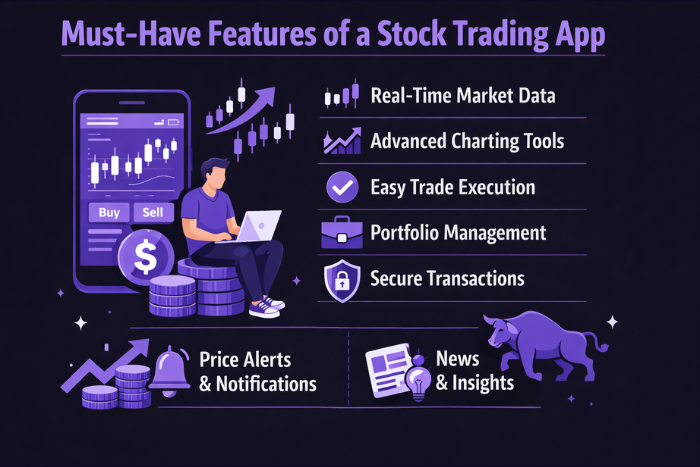
Must-Have Features of a Stock Trading App
Must-Have Features of a Stock Trading App Explore the must-have features of a stock trading app including real-time market data, secure trading, analytics tools, and portfolio tracking. Must-Have Features of a Stock Trading App Stock trading apps have revolutionized the financial industry by allowing investors to buy and sell stocks instantly from their smartphones. With the rapid growth of fintech platforms and online trading, mobile trading applications have become essential tools for both beginner and professional investors. Understanding the must-have features of a stock trading app is critical for businesses and fintech startups aiming to develop reliable digital trading platforms. A modern stock trading app provides real-time market data, fast trade execution, secure transactions, and powerful analytics tools that help investors make informed decisions. Users expect seamless interfaces, secure login systems, instant notifications, and advanced trading features that allow them to manage their investments efficiently. In addition to core trading functionality, today’s stock trading apps integrate AI-powered insights, financial news feeds, and portfolio management tools. These capabilities enable investors to monitor market movements, analyze stocks, and execute trades quickly. By implementing the right combination of trading features, security systems, and user-friendly interfaces, businesses can build high-performance stock trading platforms that meet the growing demand for digital investing solutions. Why Must-Have Features of a Stock Trading App Are Important A stock trading app must provide accurate financial data, fast trading capabilities, and secure infrastructure. The right features ensure efficiency and trust for investors. Here’s why these features are important: Real-Time Market AccessInvestors can track stock prices and market movements instantly. Improved Investment DecisionsMarket analytics and research tools help users analyze stocks. Fast Trade ExecutionSeamless order placement ensures quick buying and selling of assets. Enhanced Financial SecuritySecure authentication and encryption protect user data and funds. Better Portfolio ManagementUsers can monitor investment performance in real time. Greater User EngagementAlerts, notifications, and analytics keep users active on the platform. Implementing these features ensures a reliable and competitive trading platform. Types of Stock Trading Platform Solutions Different stock trading platforms serve different types of investors and trading strategies. Retail Trading Apps Designed for individual investors. Stock buying and selling Portfolio tracking Market insights Professional Trading Platforms Apps designed for experienced traders. Advanced analytics tools Technical chart indicators Algorithmic trading support Robo-Trading Platforms AI-powered automated trading systems. Automated investment strategies Risk analysis tools AI-driven portfolio management Social Trading Platforms Platforms allowing investors to follow and copy successful traders. Community trading insights Social investment feeds Shared investment strategies Multi-Asset Trading Platforms Apps supporting various financial instruments. Stocks ETFs Mutual funds Cryptocurrencies Commodities These solutions provide flexible investment opportunities for users with different financial goals. Get Free Quotation Now..!! Key Features of a Stock Trading App A successful trading platform must include essential tools for investing, market analysis, and financial management. User Registration and Secure Authentication Secure onboarding with biometric login, two-factor authentication, and identity verification protects accounts and ensures compliance with financial regulations. Real-Time Market Data Live stock prices, charts, and market trends allow users to monitor financial markets continuously. Portfolio Tracking and Management Investors can track their holdings, asset allocations, and performance through detailed dashboards. Fast Trade Execution The app must support quick order placement and trade confirmations to avoid delays during market fluctuations. Market Analytics and Research Tools Technical charts, financial indicators, and stock analysis tools help investors evaluate market opportunities. Smart Notifications and Alerts Price alerts and market updates notify users about trading opportunities. Financial News Feed Integrated financial news provides insights into market developments and company performance. Multiple Payment and Withdrawal Options Users should be able to deposit funds and withdraw earnings easily. Order Types and Trading Tools Support for multiple order types such as market orders, limit orders, and stop-loss orders enhances trading flexibility. Cross-Platform Accessibility Users can access trading accounts across mobile, tablet, and web platforms. Customer Support System Chat support and help centers assist users with trading issues and platform queries. Admin Dashboard and Monitoring Administrators can monitor transactions, user activity, and system performance. These features ensure smooth trading experiences and strong investor engagement. Stock Trading Platform Development Process Developing a secure and scalable trading platform requires a structured development process. Market Research and Planning Identify user needs, trading features, and compliance requirements. UI/UX Design Create intuitive dashboards and trading interfaces. Technology Stack Selection Choose scalable and secure technologies. Backend and Frontend Development Develop trading engines, databases, and financial analytics systems. Financial API Integration Connect with stock exchanges and market data providers. Security Implementation Integrate encryption, authentication, and compliance tools. Testing and Performance Optimization Ensure platform stability and trading accuracy. Deployment and Maintenance Launch the platform and continuously update features. This process ensures a reliable and high-performance trading platform. Technology Stack for Stock Trading App Development Modern stock trading platforms rely on powerful fintech technologies. Mobile Development: Flutter, React Native, Swift, Kotlin Frontend Technologies: HTML5, CSS3, JavaScript, React Backend Technologies: Node.js, Python, Java Database Systems: PostgreSQL, MySQL, MongoDB Cloud Platforms: AWS, Google Cloud, Microsoft Azure Financial APIs: Stock market APIs and trading platforms Security Technologies: Encryption, biometric authentication, fraud detection Analytics Tools: AI, machine learning, financial analytics engines These technologies ensure scalable, secure, and high-performance trading platforms. Cost Factors in Stock Trading App Development The cost of developing a stock trading app depends on several factors. Key cost considerations include: Real-time market data infrastructure Trading API integrations Security and regulatory compliance Advanced analytics and charting tools UI/UX design complexity Cloud infrastructure and scalability Maintenance and updates Basic trading apps require moderate budgets, while advanced trading platforms with analytics and automation require higher investment. Latest Trends in Stock Trading App Development The fintech industry continues to evolve rapidly with new trading technologies. Key trends include: AI-powered trading assistants Social trading communities Fractional stock investing Blockchain-based financial security Predictive market analytics Voice-enabled trading platforms Gamified trading experiences Integration with digital wallets These trends are shaping the future of online stock trading platforms. Why Choose Us for Stock Trading App Development Building a successful stock trading platform requires fintech expertise, strong security

Features of a Good Investment App
Features of a Good Investment App Explore the features of a good investment app including real-time analytics, secure trading, portfolio tracking, and smart investment tools. Features of a Good Investment App Investment apps have transformed how individuals manage wealth, trade assets, and grow their portfolios. With the rise of digital finance and fintech innovation, mobile investment platforms allow users to invest in stocks, cryptocurrencies, mutual funds, ETFs, and other financial instruments directly from their smartphones. Understanding the features of a good investment app is essential for fintech startups, financial institutions, and businesses looking to develop modern investment platforms. A good investment app combines powerful financial tools with a simple, user-friendly interface. Investors expect features such as real-time market data, secure trading systems, portfolio tracking, and advanced analytics. These features help users make informed financial decisions while maintaining full control of their investments. Modern investment apps also integrate artificial intelligence, financial insights, and automated advisory tools to simplify the investment process. Whether the app is designed for beginner investors or experienced traders, the right feature set can significantly improve user engagement and financial outcomes. By implementing essential investment app features such as secure authentication, real-time trading, market analytics, and personalized investment insights, developers can build scalable platforms that meet the growing demand for digital investing solutions. Why the Features of a Good Investment App Are Important Investment platforms must deliver reliable financial tools and seamless user experiences. The right features ensure trust, efficiency, and accessibility for investors. Here’s why implementing strong investment app features is essential: Improves Investment Decision-MakingReal-time market data and analytics help users make informed choices. Enhances User ExperienceSimple interfaces make trading accessible to both beginners and professionals. Provides Financial TransparencyPortfolio tracking and reporting tools give users clear insights into their investments. Ensures Secure TransactionsEncryption and authentication protect financial data and assets. Encourages Long-Term InvestingAutomated investment tools support consistent financial growth. Supports Multiple Asset TypesUsers can invest in stocks, crypto, ETFs, and more from one platform. A well-designed investment app empowers users to manage wealth effectively and confidently. Types of Investment Platform Solutions Investment platforms vary depending on financial goals and investment strategies. Stock Trading Apps Platforms designed for buying and selling stocks. Real-time stock trading Portfolio monitoring Market analytics tools Cryptocurrency Investment Apps Apps that allow users to trade digital assets. Crypto trading features Wallet integrations Blockchain security Robo-Advisory Investment Apps Automated investment platforms powered by AI. AI-based portfolio management Risk analysis tools Automated investment strategies Hybrid Investment Platforms Platforms combining automated and human financial advisory. Investment recommendations Financial planning tools Human advisor integration Multi-Asset Investment Platforms Apps supporting various investment options. Stocks Mutual funds ETFs Commodities Cryptocurrencies These solutions provide flexibility for different types of investors. Get Free Quotation Now..!! Key Features of a Good Investment App A successful investment platform must provide essential tools for trading, analysis, and financial planning. User Registration and Secure Authentication Secure onboarding and identity verification protect users and ensure compliance with financial regulations. User Profile and Investment Preferences Personal profiles allow users to set risk tolerance levels, financial goals, and investment preferences. Real-Time Market Data Live stock prices, market trends, and financial news help investors stay informed. Portfolio Tracking and Management Users can track investment performance and monitor their asset allocations. Trading and Transaction Management The app should support quick and reliable buying and selling of assets. Market Analytics and Research Tools Charts, indicators, and financial reports help investors analyze market conditions. Investment Calculators Tools that estimate returns, risks, and future investment growth. Push Notifications and Alerts Users receive updates about market changes, price movements, and investment opportunities. News Feed and Financial Insights Financial news and market updates help users stay informed. Secure Payment and Withdrawal Systems Users should be able to deposit and withdraw funds easily. Customer Support and Chat Assistance Support features help resolve user queries quickly. Admin Dashboard and Analytics Administrators can manage transactions, monitor activity, and track platform performance. These features ensure that investment apps provide efficient and reliable financial services. Investment Platform Development Process Building a modern investment app with key features requires expertise in fintech development and financial compliance. Market Research and Planning Identify target investors and define financial features. UI/UX Design Design a simple, intuitive interface for easy navigation. Technology Stack Selection Choose secure frameworks, APIs, and cloud services. Backend and Frontend Development Build trading systems, data analytics modules, and dashboards. Financial API Integration Connect with stock exchanges, payment gateways, and financial data providers. Testing and Compliance Verification Ensure security, reliability, and regulatory compliance. Deployment and Launch Release the platform across mobile and web platforms. Maintenance and Feature Updates Regular updates improve performance and introduce new features. This process ensures stable, secure, and scalable fintech platforms. Technology Stack for Investment App Development Investment platforms rely on advanced technologies to manage financial data securely. Mobile Development: Flutter, React Native, Swift, Kotlin Frontend Technologies: HTML5, CSS3, JavaScript, React Backend Technologies: Node.js, Python, Java Database Systems: PostgreSQL, MySQL, MongoDB Cloud Platforms: AWS, Google Cloud, Microsoft Azure Financial APIs: Stock market APIs, open banking APIs Security Technologies: Encryption, biometric authentication, fraud detection Analytics Tools: AI, machine learning, predictive analytics These technologies ensure scalability, security, and high performance. Cost Factors in Investment App Development The cost of developing an investment app with essential features depends on several factors. Key cost considerations include: Trading and financial API integrations Security and regulatory compliance features UI/UX design complexity Real-time market data infrastructure Cloud hosting and scalability AI-powered analytics tools Maintenance and system updates Basic investment apps require moderate budgets, while advanced trading platforms with AI and analytics features require higher investments. Latest Trends in Investment App Development Fintech innovation continues to reshape digital investing. Important trends include: AI-powered investment advisors Automated robo-investment tools Social trading platforms Blockchain-based financial security Predictive market analytics Voice-enabled financial assistants Fractional investment options Gamified investing experiences These innovations are shaping the future of digital wealth management. Why Choose Us for Investment App Development Building a reliable investment platform requires fintech expertise and strong security infrastructure. Here’s