

AI Website Builders vs Custom Development: ROI Comparison 2026 AI website builders vs custom development: ROI comparison 2026 reveals costs, SEO, scalability, and conversion insights. Introduction As businesses accelerate digital transformation, choosing between AI website builders and custom web development has become a major strategic decision. In 2026, organizations are not just evaluating upfront website creation costs—they are analyzing long-term return on investment (ROI), scalability, lead generation, SEO performance, and competitive differentiation. Understanding AI website builders vs custom development: ROI comparison 2026 is essential for startups, enterprises, and growing brands seeking the best digital investment. AI website builders offer speed, affordability, and convenience, making them attractive for businesses needing rapid deployment. Meanwhile, custom development provides superior flexibility, branding, security, and long-term growth potential. The right choice depends on your business objectives, conversion goals, and operational complexity. While AI builders can reduce initial expenses, custom websites often generate stronger ROI through improved search rankings, better user experiences, and advanced functionality. This guide explores the advantages, challenges, and financial considerations to help businesses make smarter website investment decisions in 2026. Why AI Website Builders vs Custom Development: ROI Comparison 2026 is Important Choosing the right web development approach directly impacts profitability, marketing success, and business growth. Cost EfficiencyCompare short-term affordability with long-term business returns. Lead Conversion PotentialWebsite performance affects customer acquisition and sales. SEO PerformanceSearch visibility influences traffic and revenue opportunities. ScalabilityBusiness growth requires adaptable infrastructure. Brand IdentityUnique design strengthens credibility and market differentiation. Security & ComplianceCustom solutions often provide stronger protection for sensitive data. Operational FlexibilityAdvanced integrations may require custom development. Competitive AdvantageStrategic website investments outperform generic digital experiences. Types of Solutions for AI Website Builders vs Custom Development ROI Businesses can choose from multiple web development solutions based on budget and objectives: AI Website BuildersAutomated design platforms offering fast deployment and low upfront costs. Template-Based BuildersDrag-and-drop systems with pre-built structures. Semi-Custom PlatformsHybrid solutions like Webflow or WordPress with moderate flexibility. Fully Custom Website DevelopmentTailored websites built from scratch for maximum performance. E-Commerce DevelopmentAdvanced online stores with custom sales funnels. Enterprise Web PlatformsLarge-scale systems with CRM, ERP, and automation integrations. Progressive Web Apps (PWAs)App-like experiences for enhanced mobile performance. Headless CMS DevelopmentFlexible content management with custom front-end delivery. Get Free Quotation Now..!! Key Features of AI Website Builders vs Custom Development: ROI Comparison 2026 The ROI difference is often determined by critical features and business outcomes: Speed of DeploymentAI builders launch faster than custom development. CustomizationCustom websites provide unlimited design and functionality. SEO OptimizationAdvanced technical SEO capabilities improve rankings. Performance & Load SpeedCustom websites often deliver faster, optimized performance. ScalabilityCustom platforms support future growth more effectively. Third-Party IntegrationsCustom solutions enable deeper software connections. Data OwnershipCustom development offers greater control over infrastructure. Conversion OptimizationTailored UX/UI improves customer journeys and ROI. SecurityEnhanced security architecture protects business assets. Development Process A strategic approach ensures maximum ROI regardless of platform choice: Business Goal AnalysisDefine website objectives, audience, and conversion priorities. Platform SelectionEvaluate AI builders, hybrid solutions, or custom development. UX/UI PlanningDesign customer-focused user experiences. SEO Strategy DevelopmentBuild content architecture for search visibility. Technical DevelopmentImplement features, integrations, and performance enhancements. Testing & Quality AssuranceOptimize speed, responsiveness, and security. Launch & DeploymentDeploy with monitoring and analytics tracking. Continuous OptimizationImprove ROI through data-driven refinements. Technology Stack Modern web development uses diverse technologies depending on project complexity: AI Builders: Wix ADI, Shopify Magic, Squarespace AI, DurableFrontend: React, Next.js, Vue.js, AngularBackend: Node.js, Python, PHP, LaravelCMS Platforms: WordPress, Webflow, Headless CMSDatabases: MySQL, PostgreSQL, MongoDBCloud Hosting: AWS, Google Cloud, AzureSEO Tools: Ahrefs, SEMrush, Google Search ConsoleAnalytics: GA4, Hotjar, MixpanelSecurity: SSL, CDN, WAF, Zero Trust Architecture Cost Factors for AI Website Builders vs Custom Development: ROI Comparison 2026 Several financial variables affect overall ROI: Initial Setup CostsAI builders are typically lower cost upfront. Subscription FeesOngoing builder costs may accumulate over time. Custom Development InvestmentHigher initial spending but greater long-term returns. SEO & Marketing CostsPoor technical SEO may increase acquisition expenses. Maintenance CostsCustom websites may require dedicated support. Scalability ExpensesPlatform limitations may require costly migrations. Conversion Rate ImpactBetter-performing websites increase revenue. Security Compliance CostsEnterprise-grade security may add investment requirements. Operational EfficiencyCustom automations can reduce business expenses. Latest Trends in AI Website Builders vs Custom Development ROI 2026 Web development continues evolving with new technologies and business strategies: AI-Assisted Web DesignFaster prototyping and content generation. Headless Architecture GrowthGreater flexibility for omnichannel experiences. Conversion-Driven DevelopmentFocus on measurable lead generation. Voice Search OptimizationWebsites adapting for AI assistants. Hyper-PersonalizationCustom experiences powered by machine learning. No-Code / Low-Code ExpansionMore businesses experimenting with builder platforms. Advanced Cybersecurity IntegrationStronger protection becoming essential. Sustainable Web DevelopmentPerformance optimization reducing energy consumption. Why Choose Us for AI Website Builders vs Custom Development: ROI Comparison 2026 Selecting the right development partner is critical for maximizing digital ROI. Strategic ROI Expertise We help businesses evaluate true long-term website investment returns. Custom & AI Platform Experience Deep expertise in both AI builders and advanced custom development. SEO-First Development Websites designed for visibility, rankings, and lead generation. Conversion Optimization Focus We prioritize revenue-driving user experiences. Scalable Future-Ready Solutions Our websites grow alongside your business. Transparent Cost Planning Clear budgeting with no hidden surprises. Advanced Security Standards Protecting your business and customer data. Performance-Driven Results Fast, secure, and highly optimized websites built for measurable success. We empower businesses to make smarter web development decisions that maximize profitability, strengthen brand authority, and deliver sustainable growth. Ready to maximize your website ROI in 2026?Let’s build a digital strategy that drives long-term business growth.Contact us today for expert consultation and customized solutions. Get Free Quotation Now..!! Key Points : Compare AI website builders vs custom development ROI for long-term business growth in 2026. Evaluate cost differences between AI builders and fully custom web development solutions. Understand how SEO performance impacts website ROI and lead generation. Analyze scalability benefits of custom development for future business expansion. Discover conversion optimization advantages of tailored website experiences. FAQ’s Are AI website builders cheaper than custom development? Yes, AI builders generally have lower upfront costs, but custom development often provides stronger long-term ROI. Which option is
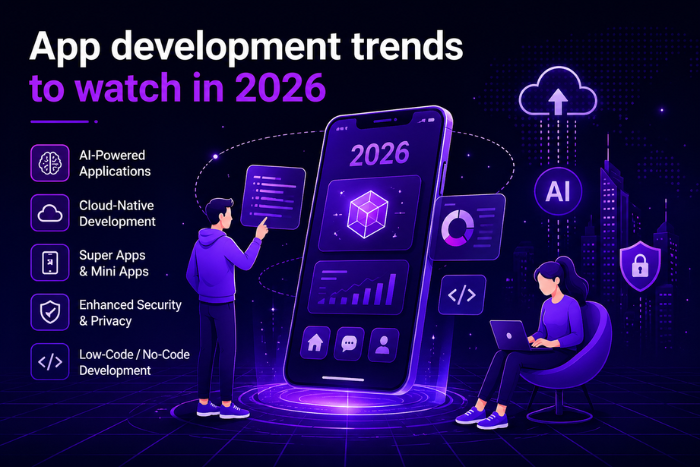
App Development Trends to Watch in 2026
App Development Trends to Watch in 2026 Explore app development trends to watch in 2026 including AI, AR/VR, 5G, super apps, cloud-native apps, and future mobile innovations. Introduction The mobile and digital ecosystem is evolving faster than ever, and understanding app development trends to watch in 2026 is essential for businesses aiming to stay competitive. Modern applications are no longer just functional tools—they are intelligent, personalized, and deeply integrated into users’ daily lives. In 2026, app development is being shaped by advanced technologies such as artificial intelligence, machine learning, augmented reality, 5G connectivity, and cloud-native architectures. These innovations are redefining how apps are built, deployed, and experienced across industries like healthcare, fintech, e-commerce, education, and entertainment. Businesses are increasingly focusing on building scalable, secure, and user-centric applications that deliver real-time experiences and predictive functionality. From super apps that combine multiple services into one platform to AI-powered personalization engines, the future of mobile apps is highly dynamic. Understanding app development trends to watch in 2026 helps companies invest in the right technologies, reduce development risks, and create future-ready digital products that improve customer engagement and business performance. Why App Development Trends to Watch in 2026 is Important Keeping track of app development trends to watch in 2026 allows businesses to remain competitive in a rapidly changing digital landscape. Faster Digital TransformationBusinesses can adopt modern technologies early for better growth. Improved User ExperienceNew technologies enable faster, smarter, and more personalized apps. Higher ROI on DevelopmentInvesting in the right trends reduces long-term costs and inefficiencies. Competitive AdvantageEarly adopters outperform competitors in user engagement and innovation. Better ScalabilityModern architectures support growing user demands seamlessly. Stronger Security ModelsEmerging trends focus heavily on data protection and privacy. Types of Solutions in App Development Trends to Watch in 2026 AI-Powered Mobile Applications Smart assistants and chatbots Predictive analytics and recommendations Personalized user experiences AR/VR Immersive Applications Virtual shopping experiences AR-based navigation and filters VR training simulations Super Apps Ecosystems Multi-service integrated platforms Unified payment, chat, and service systems Cross-industry functionality apps Cloud-Native Applications Scalable backend architectures Real-time data synchronization Serverless computing solutions IoT-Enabled Applications Smart home automation apps Connected healthcare devices Industrial IoT dashboards On-Demand Service Apps Real-time delivery and booking systems Hyperlocal service platforms AI-driven logistics optimization Blockchain-Integrated Apps Secure transaction systems Identity verification platforms Transparent data management solutions 5G-Optimized Applications Ultra-fast streaming apps Low-latency gaming platforms Real-time collaboration tools Get Free Quotation Now..!! Key Features of App Development Trends to Watch in 2026 AI-Driven FunctionalityIntelligent automation and decision-making systems. Real-Time ProcessingInstant data updates and responsiveness. Cross-Platform CompatibilitySeamless performance across devices and OS. Enhanced App SecurityBiometric authentication and encrypted data flow. Cloud IntegrationScalable and flexible backend infrastructure. Personalized User ExperienceBehavior-based recommendations and interfaces. Offline FunctionalityApps working smoothly even without internet. Voice & Gesture ControlHands-free interaction for better accessibility. Development Process Requirement GatheringIdentify business goals and target user needs. Market & Trend AnalysisStudy emerging technologies and competitor strategies. UI/UX DesignCreate user-friendly and modern app interfaces. Architecture PlanningDefine scalable backend and frontend systems. App DevelopmentBuild features using modern frameworks and tools. Testing & QAEnsure performance, security, and usability. DeploymentLaunch on app stores and cloud platforms. Maintenance & UpdatesContinuous optimization and feature upgrades. Technology Stack for App Development Trends to Watch in 2026 Frontend: React Native, Flutter, Swift, KotlinBackend: Node.js, Python, Java, GoAI/ML: TensorFlow, PyTorch, OpenAI APIsCloud: AWS, Google Cloud, Microsoft AzureDatabase: MongoDB, PostgreSQL, FirebaseDevOps: Docker, Kubernetes, JenkinsAR/VR Tools: Unity, Unreal Engine, ARKit, ARCoreBlockchain: Solidity, Web3.js Cost Factors in App Development Trends to Watch in 2026 App ComplexityAdvanced AI and AR/VR features increase cost. Technology IntegrationMultiple integrations require higher development effort. Platform CoverageiOS, Android, and web support impacts budget. UI/UX Design RequirementsHigh-quality designs increase development time. Backend InfrastructureCloud and scalable systems affect cost structure. Security ImplementationAdvanced encryption and compliance add expenses. Development Team ExpertiseSkilled developers influence overall pricing. Maintenance & ScalingContinuous updates increase long-term cost. Latest Trends AI-First ApplicationsApps built around artificial intelligence at the core. Super App EcosystemsOne app offering multiple services in a single platform. Edge Computing AppsFaster processing closer to the user. AR/VR Integration GrowthImmersive user experiences becoming mainstream. Voice-First InterfacesIncreasing adoption of voice-based navigation. Hyper-PersonalizationAI-driven content tailored to individual users. 5G-Powered AppsReal-time performance with ultra-low latency. No-Code / Low-Code DevelopmentFaster app creation with minimal coding effort. Why Choose Us for App Development Trends to Watch in 2026 We help businesses stay ahead by building future-ready mobile and web applications aligned with the latest digital trends. Expert Development TeamSkilled professionals in AI, mobile, and cloud technologies. Future-Ready SolutionsApps designed using the latest 2026 technologies. Scalable ArchitectureBuilt to grow with your business needs. Custom App DevelopmentTailored solutions for unique business challenges. Advanced Technology IntegrationAI, blockchain, AR/VR, and IoT integration expertise. End-to-End SupportFrom ideation to deployment and maintenance. Performance-Driven ApproachFocus on speed, usability, and engagement. Ready to build future-ready applications aligned with 2026 trends?Contact us today to turn your idea into a powerful digital product.Let’s build scalable, intelligent apps that lead the future of innovation. Get Free Quotation Now..!! Key Points : AI-powered apps are leading the future of mobile application development in 2026. Super apps combining multiple services are becoming a major global trend. AR/VR integration is transforming user experience across industries. 5G technology is enabling faster, real-time and low-latency applications. Cloud-native and scalable architectures are standard for modern apps. FAQ’s What are the top app development trends in 2026? AI apps, super apps, AR/VR, 5G apps, and cloud-native development are leading trends. Why is AI important in app development? AI enables personalization, automation, and smarter decision-making in apps. How will 5G impact mobile apps? 5G enables faster speed, lower latency, and real-time app experiences. Are AR/VR apps becoming popular in 2026? Yes, AR/VR is widely used in gaming, retail, healthcare, and training applications. What is cloud-native app development? It refers to building apps designed specifically for cloud environments. How can businesses prepare for future app trends? By adopting scalable architectures and investing in emerging technologies early. Get Free Quotation Now..!!
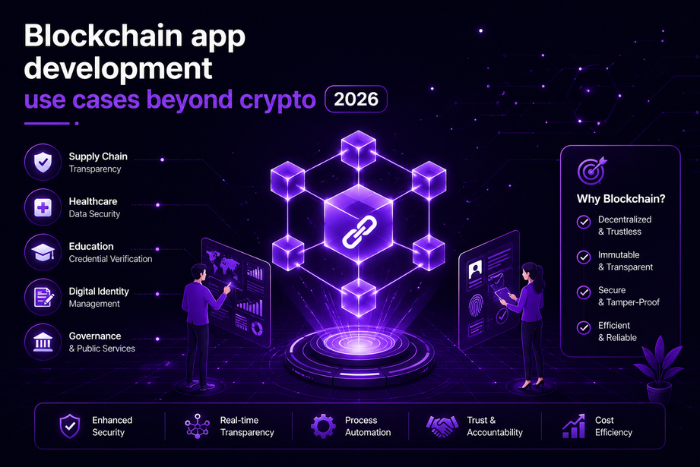
Blockchain App Development Use Cases Beyond Crypto 2026
Blockchain App Development Use Cases Beyond Crypto 2026 Explore blockchain app development use cases beyond crypto 2026, including supply chain, healthcare, identity, and enterprise solutions. Introduction The evolution of blockchain technology has moved far beyond its original association with cryptocurrencies. In 2026, enterprises are increasingly adopting blockchain app development use cases beyond crypto 2026 to solve real-world business challenges such as transparency, security, automation, and data integrity. Blockchain is now a foundational technology powering industries like healthcare, logistics, finance, government, education, and supply chain management. Unlike traditional centralized systems, blockchain enables decentralized, tamper-proof, and transparent data exchanges that significantly reduce fraud, operational inefficiencies, and dependency on intermediaries. Businesses are now leveraging blockchain applications for identity verification, smart contracts, asset tokenization, secure data sharing, and decentralized applications (dApps). These innovations are not only improving operational efficiency but also creating entirely new business models. As organizations focus on digital transformation, blockchain is becoming a critical enabler of trust-based systems. Understanding blockchain app development use cases beyond crypto 2026 helps businesses identify opportunities to innovate, reduce costs, and enhance security in their digital ecosystems. This service page explores key use cases, development processes, technology stacks, trends, and strategic benefits of blockchain beyond cryptocurrency applications. Why Blockchain App Development Use Cases Beyond Crypto 2026 is Important Understanding blockchain app development use cases beyond crypto 2026 is essential for businesses aiming to build secure, scalable, and future-ready digital systems. Enhanced Data SecurityBlockchain ensures immutable and tamper-proof data storage. Improved TransparencyEvery transaction is traceable and verifiable in real time. Reduced Operational CostsEliminates intermediaries and manual verification processes. Trust in Digital SystemsDecentralization increases trust among users and stakeholders. Automation Through Smart ContractsSelf-executing contracts reduce delays and human errors. Cross-Industry AdoptionApplicable across healthcare, finance, logistics, and governance. Types of Solutions in Blockchain App Development Use Cases Beyond Crypto 2026 Supply Chain Management Solutions End-to-end product traceability Fraud prevention in logistics networks Real-time shipment tracking systems Healthcare Blockchain Applications Secure patient data management Interoperable electronic health records Drug traceability and verification Digital Identity Verification Systems Decentralized identity (DID) platforms Secure KYC and onboarding processes Identity fraud prevention systems Smart Contract Automation Solutions Automated payment processing systems Legal contract execution platforms Insurance claim automation tools Financial & Banking Applications (Beyond Crypto) Secure cross-border transactions Fraud detection systems Digital asset management platforms Government & Public Sector Systems Transparent voting systems Land registry management Public record verification systems Real Estate Blockchain Applications Property ownership verification Tokenized real estate assets Smart rental agreements Education & Certification Systems Verified digital certificates Academic record management Credential authentication platforms Get Free Quotation Now..!! Key Features of Blockchain App Development Use Cases Beyond Crypto 2026 Decentralized ArchitectureEliminates single points of failure in systems. Immutable Data StorageEnsures records cannot be altered or deleted. Smart Contract AutomationAutomates business logic execution securely. High-Level SecurityCryptographic protection for all transactions. Transparency & TraceabilityFull visibility of data history and changes. InteroperabilityIntegration with existing enterprise systems. Scalability SupportDesigned for enterprise-level performance. AuditabilityEasy tracking and compliance verification. Development Process Requirement AnalysisDefine business objectives and blockchain use cases. Platform SelectionChoose blockchain networks like Ethereum, Hyperledger, or Solana. Architecture DesignPlan on-chain and off-chain system structure. Smart Contract DevelopmentBuild secure and automated business logic. Frontend & Backend IntegrationConnect blockchain with user-facing applications. Testing & Security AuditsEnsure vulnerability-free and high-performance systems. DeploymentLaunch on mainnet or enterprise blockchain networks. Maintenance & ScalingContinuous upgrades and performance optimization. Technology Stack for Blockchain App Development Use Cases Beyond Crypto 2026 Blockchain Platforms: Ethereum, Hyperledger, Solana, PolygonSmart Contracts: Solidity, Rust, VyperBackend Technologies: Node.js, Python, GoFrontend Frameworks: React.js, Angular, Vue.jsDatabases: MongoDB, PostgreSQL, IPFSDevOps Tools: Docker, Kubernetes, JenkinsSecurity Tools: OpenZeppelin, Truffle, HardhatCloud Platforms: AWS, Azure, Google Cloud Cost Factors in Blockchain App Development Use Cases Beyond Crypto 2026 Project ComplexityAdvanced enterprise systems require higher investment. Blockchain Platform ChoicePublic vs private blockchain affects cost structure. Smart Contract ComplexityMore logic increases development time and cost. Integration RequirementsConnecting with legacy systems adds complexity. Security AuditsMandatory audits increase initial project cost. Scalability RequirementsEnterprise-scale apps require robust infrastructure. Development Team ExpertiseSkilled blockchain developers influence pricing. Maintenance & UpgradesContinuous updates add long-term cost. Latest Trends Tokenization of Real-World AssetsDigital representation of physical assets. Enterprise Blockchain AdoptionLarge-scale business integration of blockchain systems. AI + Blockchain IntegrationSmart automation with secure data ecosystems. Decentralized Identity (DID) GrowthUser-controlled identity systems. Blockchain as a Service (BaaS)Cloud-based blockchain infrastructure solutions. Cross-Chain InteroperabilitySeamless communication between blockchain networks. Regulatory Blockchain SolutionsCompliance-focused blockchain systems. Why Choose Us for Blockchain App Development Use Cases Beyond Crypto 2026 We help businesses build secure, scalable, and future-ready blockchain solutions designed for real-world enterprise challenges. Expert Blockchain Development Team Skilled professionals delivering secure and high-performance decentralized applications. Custom Blockchain Solutions Tailored development aligned with your industry needs and business goals. Strong Security Standards End-to-end encryption, audits, and compliance-focused development approach. Scalable Architecture Blockchain systems designed to grow with your business demands. Advanced Technology Integration Seamless integration with AI, IoT, cloud, and enterprise systems. End-to-End Development Support Complete support from ideation, development, deployment to maintenance. Industry-Focused Experience Proven expertise across healthcare, finance, logistics, and government sectors. We empower enterprises to adopt blockchain beyond crypto with innovation, trust, and scalability. Ready to transform your business with blockchain innovation beyond crypto? Let’s build secure and scalable decentralized applications for your future.Contact us today to get started with expert blockchain consulting. Get Free Quotation Now..!! Key Points : Blockchain in 2026 is widely used beyond crypto for enterprise and real-world applications. Key use cases include supply chain, healthcare, identity verification, and smart contracts. Businesses reduce operational costs by removing intermediaries and automating processes. Industries like finance, logistics, government, and education are rapidly adopting blockchain. Blockchain supports decentralized identity and secure data management systems. FAQ’s What are blockchain use cases beyond crypto? They include supply chain, healthcare, identity management, smart contracts, and enterprise systems. Is blockchain still relevant without cryptocurrency? Yes, blockchain is widely used in non-financial industries for security and transparency. Which industries benefit most from blockchain apps? Healthcare, finance, logistics, government, and education benefit the most. What are smart contracts in blockchain? They are self-executing agreements coded

AR/VR App Development Market Size 2026
AR/VR App Development Market Size 2026: Growth, Trends & Future Scope Explore AR/VR app development market size 2026, trends, growth drivers, cost factors, and future opportunities for immersive mobile apps. Introduction The AR/VR app development market size 2026 is expected to witness rapid expansion as immersive technologies become mainstream across industries such as gaming, healthcare, retail, education, real estate, and manufacturing. Augmented Reality (AR) and Virtual Reality (VR) are no longer experimental technologies—they are now core drivers of digital transformation and user engagement strategies for global businesses. With the rise of powerful smartphones, 5G connectivity, and advanced graphics processing, AR/VR mobile applications are becoming more accessible and scalable. Companies are investing heavily in immersive experiences that blend physical and digital environments to improve customer interaction, training, visualization, and decision-making. By 2026, the AR/VR ecosystem is projected to grow significantly due to increasing demand for interactive applications, rising enterprise adoption, and advancements in spatial computing and AI integration. Businesses that invest early in AR/VR app development will gain a strong competitive advantage in customer engagement and operational efficiency. This service page explores market insights, development approaches, cost factors, technology stacks, and future trends shaping the AR/VR app development landscape in 2026. Why AR/VR App Development Market Size 2026 is Important Understanding the AR/VR app development market size 2026 is essential for businesses aiming to stay competitive in a rapidly evolving digital ecosystem. Immersive technology is no longer optional—it is becoming a core part of customer experience strategies. Key reasons why this market matters: Explosive Market GrowthAR/VR adoption is accelerating across enterprise and consumer applications. Enhanced User EngagementImmersive experiences increase user interaction and retention rates. Digital Transformation DriverAR/VR is reshaping how industries train, sell, and communicate. Revenue Expansion OpportunitiesBusinesses can create new monetization models using immersive apps. Competitive DifferentiationEarly adopters gain strong positioning in their industries. Cross-Industry AdoptionFrom healthcare simulations to virtual shopping, use cases are expanding rapidly. Types of Solutions in AR/VR App Development Market Size 2026 Augmented Reality (AR) Mobile Apps Real-world object overlay experiences AR-based shopping and virtual try-on solutions Location-based navigation and interactive maps Virtual Reality (VR) Applications Fully immersive training simulations Virtual property tours and walkthroughs VR gaming and entertainment environments Mixed Reality (MR) Solutions Combined AR + VR interactive environments Real-time collaboration in virtual workspaces Industrial simulation and design visualization Enterprise AR/VR Solutions Employee training and onboarding platforms Remote assistance and maintenance support tools Product visualization for sales and marketing teams Healthcare AR/VR Applications Surgical simulation and medical training systems Rehabilitation and therapy-based VR environments 3D medical imaging and diagnostics visualization Education & E-Learning Solutions Immersive virtual classrooms Interactive STEM learning modules Virtual lab experiments and simulations Retail & E-Commerce AR Solutions Virtual product try-before-you-buy features 3D interactive product catalogs Personalized shopping experiences using AR filters Get Free Quotation Now..!! Key Features of AR/VR App Development Market Size 2026 Solutions Modern AR/VR applications are powered by advanced technologies that deliver highly immersive and interactive experiences: Real-Time RenderingHigh-quality graphics with minimal latency for smooth experiences. Spatial AwarenessAbility to map and interact with real-world environments. Cross-Platform CompatibilityApps designed for mobile, headset, and web platforms. AI IntegrationSmart personalization and object recognition capabilities. 3D Modeling & VisualizationHigh-definition immersive environments. Gesture & Motion TrackingNatural interaction using body movements and gestures. Cloud-Based ProcessingOffloading heavy computation for better performance. Multi-User InteractionShared virtual environments for collaboration and training. Development Process Requirement AnalysisUnderstanding project goals, target users, and AR/VR use cases. Concept Design & PrototypingCreating interactive wireframes and immersive experience mockups. 3D Asset CreationDesigning realistic models, environments, and animations. Application DevelopmentBuilding AR/VR functionalities using Unity, Unreal Engine, and SDKs. Backend IntegrationConnecting APIs, databases, and cloud services for real-time functionality. Testing & OptimizationEnsuring performance, responsiveness, and device compatibility. DeploymentLaunching applications on mobile stores, headsets, or web platforms. Maintenance & UpgradesContinuous updates, performance tuning, and feature enhancements. Technology Stack for AR/VR App Development Market Size 2026 Modern AR/VR development relies on advanced tools and frameworks: Programming Languages: C#, C++, JavaScript, PythonAR/VR Engines: Unity, Unreal EngineAR SDKs: ARKit, ARCore, VuforiaVR Platforms: Oculus SDK, SteamVR3D Modeling Tools: Blender, Maya, 3ds MaxCloud Platforms: AWS, Google Cloud, AzureAI Integration: TensorFlow, PyTorchMobile Frameworks: Flutter, React Native Cost Factors in AR/VR App Development Market Size 2026 The cost of AR/VR app development depends on several technical and business factors: Complexity of the ApplicationAdvanced immersive features increase development cost. 3D Asset RequirementsHigh-quality models and animations require additional resources. Platform CompatibilityMulti-platform support increases development effort. AI and Real-Time FeaturesIntegration of AI increases computational and development costs. Hardware RequirementsVR headset compatibility and device optimization affect cost. Development Team ExpertiseSkilled AR/VR developers and designers impact budget. Maintenance & UpdatesContinuous improvements and performance optimization. Cloud Infrastructure UsageHosting and real-time processing expenses. Latest Trends in AR/VR App Development Market Size 2026 The AR/VR industry is evolving rapidly with new innovations shaping its future: Metaverse ExpansionGrowth of interconnected virtual worlds. AI-Powered Immersive ExperiencesSmarter and more adaptive AR/VR environments. WebAR & WebVR AdoptionBrowser-based immersive experiences without downloads. 5G-Powered AR/VR AppsUltra-low latency immersive applications. Enterprise Metaverse SolutionsVirtual workplaces and training environments. Spatial Computing GrowthBlending digital and physical environments seamlessly. Lightweight VR HeadsetsMore accessible and affordable immersive hardware. Why Choose Us We help businesses unlock the full potential of immersive technologies with scalable and future-ready AR/VR solutions designed for real-world impact. Custom AR/VR Development We build tailored immersive solutions aligned with your business goals and user needs. Scalable Architecture Our solutions are designed to grow with increasing users, data, and complexity. Advanced Technology Integration We integrate AI, cloud computing, and spatial technologies for next-gen performance. High-Quality Immersive Experiences We deliver realistic 3D environments and smooth interactive experiences. Industry-Specific Expertise We create AR/VR solutions for healthcare, retail, education, gaming, and enterprise use cases. End-to-End Development Support From ideation to deployment, we handle the complete development lifecycle. Performance Optimization We ensure low-latency, high-speed, and device-friendly AR/VR applications. We help healthcare organizations transform digital care delivery through innovative, compliant, and scalable healthcare app solutions. Ready to build next-gen AR/VR experiences for your business?Contact us today for expert consultation on immersive app development.Let’s transform your ideas
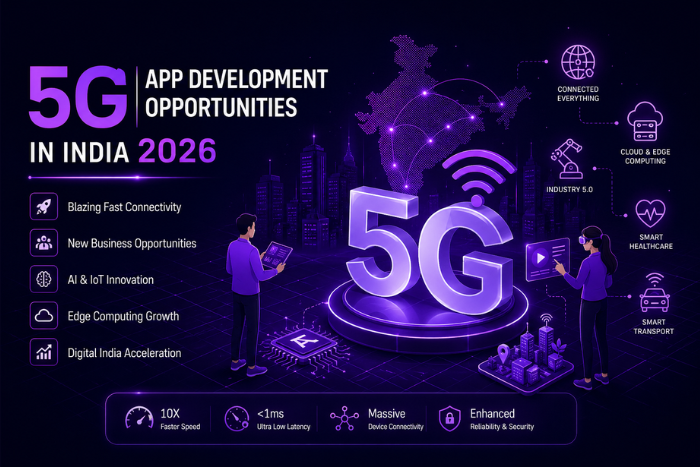
5G App Development Opportunities in India 2026
5G App Development Opportunities in India 2026 Explore 5G app development opportunities in India 2026 with faster apps, IoT, AR/VR, edge computing, and scalable digital innovation. Introduction India’s rapid 5G expansion is transforming the digital economy, opening unprecedented possibilities for businesses, startups, and enterprises seeking to build next-generation mobile applications. In 2026, 5G app development opportunities in India are reshaping industries by enabling ultra-fast connectivity, near-zero latency, enhanced edge computing, and real-time user experiences. With increasing 5G penetration across urban and semi-urban markets, mobile applications can now deliver advanced services that were previously constrained by bandwidth limitations. From healthcare and fintech to logistics, education, ecommerce, gaming, and smart cities, 5G-powered applications are driving innovation through AR/VR experiences, IoT ecosystems, cloud gaming, autonomous systems, and AI-enhanced services. Businesses that strategically invest in 5G-native app development can capitalize on India’s expanding digital infrastructure while gaining a strong competitive advantage. As consumer expectations rise and network capabilities improve, leveraging 5G technologies is essential for organizations aiming to future-proof products, scale digital transformation, and unlock high-growth opportunities in India’s evolving mobile landscape. Why 5G App Development Opportunities in India 2026 is Important 5G is redefining app capabilities, business scalability, and digital transformation across sectors. Ultra-Low LatencyReal-time interactions improve app responsiveness. Higher Data SpeedsFaster user experiences enable advanced services. Expanded IoT EcosystemsSmart device integration becomes more reliable. Enhanced AR/VR ExperiencesImmersive applications gain commercial viability. Business InnovationNew service models emerge across industries. Competitive AdvantageEarly 5G adoption strengthens market leadership. Scalable InfrastructureSupports long-term enterprise growth. Types of Solutions for 5G App Development Opportunities in India 2026 5G app development supports multiple high-growth business models: Healthcare & Telemedicine AppsReal-time remote diagnostics and connected care. Smart Logistics PlatformsFleet tracking, IoT, and predictive delivery systems. Ecommerce & Retail AppsAR shopping, real-time personalization, and immersive commerce. Edtech PlatformsInteractive virtual learning environments. Gaming & Entertainment AppsCloud gaming and immersive media experiences. Smart City ApplicationsPublic infrastructure, mobility, and civic systems. Industrial IoT AppsManufacturing automation and enterprise monitoring. Fintech & Banking SolutionsFaster secure transactions and digital finance innovation. Get Free Quotation Now..!! Key Features of 5G App Development Opportunities in India 2026 Modern 5G-native apps require advanced technological capabilities: Ultra-Fast ConnectivityHigh-speed data transfer and performance. Edge Computing IntegrationLocalized data processing for faster responses. Real-Time Data StreamingEnhanced live services and interactions. IoT Device ConnectivitySmart ecosystem compatibility. AR/VR FunctionalityImmersive user experiences. AI-Powered AutomationPredictive and intelligent app capabilities. Cloud SynchronizationSeamless multi-device experiences. Scalable Enterprise InfrastructureFuture-ready digital architecture. Enhanced Security ProtocolsSecure 5G network optimization. Cross-Platform AccessibilityUnified mobile, web, and device experiences. Development Process Building successful 5G apps in India requires strategic technical planning: Market Research & Opportunity AnalysisIdentify industry-specific 5G opportunities. Feature Planning & Product StrategyPrioritize latency-sensitive and real-time capabilities. UI/UX DesignCreate high-performance user experiences. Architecture DesignBuild scalable cloud-edge hybrid systems. 5G & Edge IntegrationImplement network optimization and infrastructure. App DevelopmentFrontend, backend, AI, and IoT integration. Testing & Performance OptimizationValidate speed, scalability, and reliability. Deployment & LaunchRelease across India’s growing 5G markets. Continuous InnovationScale based on network and market evolution. Technology Stack for 5G App Development Opportunities in India 2026 Modern 5G applications rely on advanced technologies: Programming Languages: Python, JavaScript, Kotlin, SwiftMobile Frameworks: Flutter, React NativeBackend Technologies: Node.js, Django, LaravelCloud Platforms: AWS, Google Cloud, Microsoft AzureEdge Computing Tools: AWS Wavelength, Azure Edge ZonesAI/ML Frameworks: TensorFlow, PyTorchIoT Protocols: MQTT, NB-IoT, 5G APIsAR/VR Tools: Unity, Unreal Engine, ARKit, ARCoreDevOps Tools: Docker, Kubernetes Cost Factors for 5G App Development Opportunities in India 2026 Investment depends on multiple strategic factors: Feature ComplexityAR, IoT, AI, and edge systems increase costs. Infrastructure ScopeCloud and edge deployment impact budgets. Industry RequirementsCompliance and specialized use cases vary. UI/UX SophisticationPremium user experiences require investment. Third-Party IntegrationsAPIs, IoT systems, and network partnerships. Testing RequirementsPerformance validation across network conditions. Maintenance & ScalingContinuous updates for evolving infrastructure. Development ExpertiseSpecialized 5G engineers and strategists. Latest Trends in 5G App Development Opportunities in India 2026 India’s 5G ecosystem is accelerating with transformative trends: Edge-Powered Mobile ApplicationsFaster decentralized processing. AR/VR Commercial ExpansionRetail, healthcare, and education growth. Mass IoT DeploymentConnected smart devices at scale. Autonomous Logistics SystemsReal-time transportation innovation. 5G-Driven Cloud GamingLow-latency entertainment growth. Smart City Digital InfrastructurePublic service transformation. AI + 5G SynergyIntelligent automation ecosystems. Cross-Industry Digital TransformationEnterprise modernization acceleration. Why Choose Us Building successful 5G applications in India requires more than mobile development—it demands future-focused engineering, network optimization expertise, and scalable innovation strategy. Our team helps businesses unlock 5G opportunities through intelligent, high-performance digital ecosystems. 5G-Native Development Expertise Deep experience in building advanced next-generation applications. Edge & Cloud Integration Specialists Scalable hybrid infrastructures for superior performance. AI, IoT & AR/VR Innovation Future-ready digital ecosystems powered by advanced technologies. Enterprise Scalability Solutions designed for long-term growth across industries. Conversion-Focused User Experience High-performance apps optimized for user engagement. Security & Compliance Excellence Reliable digital systems built for trust. End-to-End Product Development From strategy through launch and scaling. Transparent Collaboration Clear communication and measurable business outcomes. We help businesses transform digital innovation through scalable, high-performance, and future-ready 5G app development solutions. Ready to capitalize on 5G app development opportunities in India in 2026?Let’s build next-generation digital products tailored to your growth.Contact us today for expert 5G app development services. Get Free Quotation Now..!! Key Points : India’s expanding 5G infrastructure is creating major app development opportunities across industries in 2026. Ultra-low latency and faster data speeds enable real-time, high-performance mobile experiences. 5G supports advanced technologies like IoT, AR/VR, AI, and edge computing. Industries such as healthcare, logistics, fintech, ecommerce, and gaming benefit significantly from 5G-native apps. Edge computing improves speed, scalability, and localized data processing for next-generation applications. Businesses investing early in 5G app development gain competitive advantages and future-ready scalability. FAQ’s Why is 5G app development important in India? India’s expanding 5G infrastructure enables faster, smarter, and more scalable digital products. Which industries benefit most from 5G app development? Healthcare, logistics, fintech, ecommerce, gaming, education, and smart cities. What features make 5G apps different? Ultra-low latency, IoT integration, AR/VR support, edge computing, and real-time capabilities. Is edge computing necessary for 5G apps? Yes, edge computing significantly improves real-time performance. Can startups benefit

App Security Checklist 2026: OWASP Mobile Top 10
App Security Checklist 2026: OWASP Mobile Top 10 Protect apps with the App Security Checklist 2026: OWASP Mobile Top 10, covering risks, compliance, testing, and secure development. Introduction As mobile applications continue to power critical industries such as fintech, healthcare, ecommerce, logistics, and enterprise services, security has become a non-negotiable priority. In 2026, cyber threats targeting mobile ecosystems are more sophisticated than ever, making adherence to the App Security Checklist 2026: OWASP Mobile Top 10 essential for businesses, developers, and product leaders. The OWASP Mobile Top 10 framework provides globally recognized standards for identifying, mitigating, and preventing the most critical mobile security vulnerabilities. From insecure authentication and weak cryptography to data leakage, reverse engineering, API vulnerabilities, and insufficient supply chain controls, businesses must implement comprehensive security frameworks across the entire mobile development lifecycle. Ignoring these standards can result in data breaches, regulatory penalties, financial losses, and severe reputational damage. By adopting OWASP-aligned security practices, integrating secure DevSecOps workflows, and proactively managing vulnerabilities, organizations can protect user data, ensure compliance, and future-proof mobile applications in an increasingly threat-driven environment. Why App Security Checklist 2026: OWASP Mobile Top 10 is Important Mobile security is now fundamental to business continuity, customer trust, and regulatory compliance. Protect Sensitive User DataPrevent unauthorized access and data breaches. Reduce Cybersecurity RisksMitigate common mobile attack vectors. Ensure Regulatory ComplianceSupport GDPR, HIPAA, PCI DSS, and industry-specific standards. Strengthen Brand ReputationSecurity builds user confidence and loyalty. Prevent Financial LossesReduce fraud, penalties, and remediation costs. Secure Development LifecyclesIntegrate security from design to deployment. Future-Proof Digital ProductsAdapt to evolving mobile security threats. Types of Solutions for App Security Checklist 2026: OWASP Mobile Top 10 Businesses can deploy multiple security-focused mobile solutions: Enterprise Mobile Security AuditsFull security posture assessments. Secure App Development ServicesSecurity-first mobile architecture. Penetration Testing SolutionsVulnerability identification and remediation. DevSecOps IntegrationContinuous security automation. Compliance Management PlatformsRegulatory readiness and audit support. API Security SolutionsBackend and mobile API hardening. Fraud Detection SystemsBehavioral and anomaly monitoring. Mobile Threat Defense PlatformsRuntime security and endpoint protection. Get Free Quotation Now..!! Key Features of App Security Checklist 2026: OWASP Mobile Top 10 A modern app security framework requires comprehensive protection measures: Secure Authentication & AuthorizationMFA, biometric security, and identity controls. Data EncryptionEnd-to-end encryption for storage and transmission. Code Obfuscation & Anti-TamperingReverse engineering prevention. API SecuritySecure backend communication and validation. Secure Session ManagementToken protection and lifecycle controls. Supply Chain SecurityDependency and SDK risk management. Continuous Vulnerability ScanningAutomated threat detection. Compliance MonitoringRegulatory alignment and policy enforcement. Runtime Application Self-Protection (RASP)Live attack mitigation. Threat Intelligence IntegrationProactive security monitoring. Development Process Implementing OWASP Mobile Top 10 standards requires a structured security lifecycle: Security Risk AssessmentIdentify business-specific threats and compliance needs. Architecture Security PlanningDesign secure app infrastructure. Secure Coding ImplementationBuild apps aligned with OWASP best practices. Third-Party Dependency ReviewValidate SDKs, APIs, and integrations. Penetration Testing & Security AuditsSimulate attack scenarios. DevSecOps Pipeline IntegrationAutomate continuous security validation. Compliance VerificationEnsure legal and regulatory standards. Deployment Security HardeningProtect production environments. Ongoing Monitoring & Threat ResponseContinuously adapt to new vulnerabilities. Technology Stack for App Security Checklist 2026: OWASP Mobile Top 10 Modern mobile security relies on advanced technologies: Programming Languages: Swift, Kotlin, Java, JavaScript, PythonSecurity Frameworks: OWASP MASVS, MASTG, MASWEAuthentication Systems: OAuth 2.0, OpenID Connect, MFAEncryption Tools: AES-256, RSA, TLS 1.3CI/CD Security Tools: GitHub Advanced Security, Snyk, CheckmarxCloud Security Platforms: AWS Security Hub, Azure Defender, Google Security Command CenterPenetration Testing Tools: Burp Suite, MobSF, FridaMonitoring Tools: SIEM, endpoint detection systems Cost Factors for App Security Checklist 2026: OWASP Mobile Top 10 Security investment depends on multiple factors: Application ComplexityMore features require broader security controls. Compliance ScopeIndustry regulations increase security requirements. Testing & Audit DepthPenetration testing and certification impact costs. DevSecOps IntegrationSecurity automation adds infrastructure complexity. Third-Party Security ValidationExternal integrations require additional reviews. Threat Monitoring SystemsOngoing security operations affect budgets. Security Team ExpertiseSpecialized security engineers increase investment. Maintenance & Incident ResponseLong-term security readiness. Latest Trends in App Security Checklist 2026: OWASP Mobile Top 10 Mobile security is rapidly evolving with advanced defense technologies: Zero Trust Mobile SecurityIdentity-first access control models. AI-Powered Threat DetectionMachine learning for anomaly detection. Supply Chain Security ExpansionSDK and open-source dependency hardening. RASP AdoptionRuntime threat prevention. Biometric Security GrowthEnhanced identity verification. API Security PrioritizationStronger backend defense. Automated Compliance MonitoringContinuous policy validation. Quantum-Resistant Cryptography ResearchPreparing for future encryption challenges. Why Choose Us Protecting mobile applications in 2026 requires more than standard development practices—it demands advanced security expertise, compliance readiness, and proactive risk management. Our team helps businesses build secure mobile ecosystems aligned with OWASP Mobile Top 10 standards for long-term resilience. Mobile Security Expertise Deep experience in OWASP, DevSecOps, and enterprise-grade app protection. Security-First Development Apps architected with security at every stage. Advanced Compliance Solutions Support for GDPR, HIPAA, PCI DSS, and industry-specific regulations. Continuous Threat Monitoring Proactive vulnerability management and rapid incident response. Secure DevOps Integration Automated security pipelines for faster, safer releases. Enterprise Scalability Security solutions built for growing digital ecosystems. Penetration Testing Excellence Comprehensive risk assessments and remediation. Transparent Security Strategy Clear reporting, collaboration, and measurable outcomes. We help businesses transform mobile security into a strategic advantage through scalable, compliant, and future-ready protection frameworks. Ready to secure your mobile app against evolving threats in 2026?Let’s build stronger, safer digital products aligned with OWASP Mobile Top 10.Contact us today for expert mobile app security solutions. Get Free Quotation Now..!! Key Points : OWASP Mobile Top 10 provides essential security standards for mobile app protection in 2026. Secure authentication, encryption, and API protection are critical for preventing data breaches. DevSecOps integration ensures continuous security throughout the app development lifecycle. Penetration testing and vulnerability scanning help identify and mitigate mobile threats proactively. Compliance with GDPR, HIPAA, PCI DSS, and industry regulations strengthens business resilience. Code obfuscation, anti-tampering, and runtime protection reduce reverse engineering risks. FAQ’s What is the OWASP Mobile Top 10? It is a globally recognized framework identifying the top mobile app security risks. Why is mobile app security important in 2026? Increasing cyber threats make proactive security essential for compliance and user trust. What are common mobile security risks? Risks include insecure
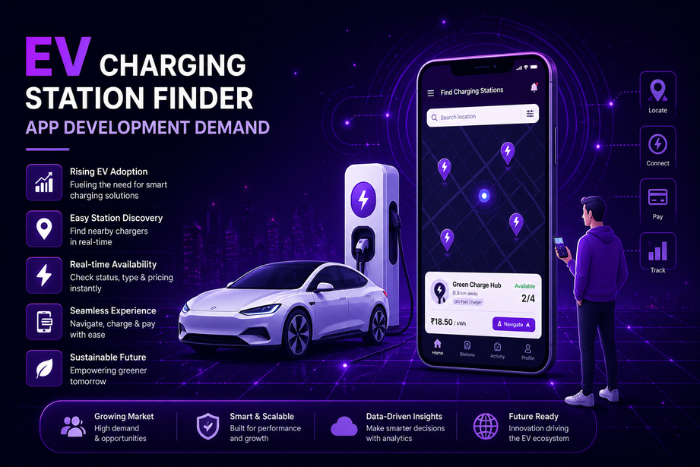
EV Charging Station Finder App Development Demand
EV Charging Station Finder App Development Demand Meet EV charging station finder app development demand with smart locators, payments, route planning, and scalable EV solutions. Introduction The global electric vehicle revolution is accelerating rapidly, creating unprecedented demand for digital infrastructure that supports EV adoption. As EV ownership rises across consumer, commercial, and fleet sectors, EV charging station finder app development demand is becoming one of the fastest-growing opportunities in mobility technology. EV drivers now require seamless access to charging networks, real-time station availability, route optimization, payment integration, charger compatibility, and intelligent energy management through mobile applications. Modern EV charging station finder apps are no longer simple location tools—they serve as critical mobility ecosystems that connect drivers, charging providers, energy networks, fleet operators, and smart city systems. Businesses investing in EV charging app development can capitalize on growing infrastructure expansion, government sustainability initiatives, and increasing EV user expectations. By integrating AI-powered route planning, IoT charger connectivity, dynamic pricing, fleet management, and scalable cloud systems, companies can build future-ready EV platforms that support long-term market growth. This guide explores the rising demand, business opportunities, and strategic development requirements shaping EV charging station finder app development in 2026. Why EV Charging Station Finder App Development Demand is Important The growth of EV adoption is driving urgent need for intelligent charging infrastructure solutions. Rapid EV Market ExpansionIncreasing EV ownership creates sustained app demand. Improved Driver ConvenienceReal-time charging discovery enhances user experiences. Infrastructure AccessibilityCharging apps bridge network visibility gaps. Fleet & Commercial Mobility SupportBusinesses require scalable charging solutions. Sustainability GoalsDigital EV infrastructure supports environmental initiatives. Revenue OpportunitiesCharging marketplaces create monetization channels. Future Mobility ScalabilityApps become essential components of smart transportation ecosystems. Types of Solutions for EV Charging Station Finder App Development Demand Businesses can develop multiple EV mobility solutions: Public Charging Station Finder AppsConsumer-facing charging network discovery platforms. Fleet Charging Management AppsCommercial EV logistics and route optimization systems. Charging Marketplace PlatformsAggregated charging provider ecosystems. White-Label EV Charging AppsCustom branded charging infrastructure platforms. On-Demand Mobile Charging AppsPortable charging service ecosystems. Automotive OEM EV AppsManufacturer-integrated charging platforms. Smart City EV Mobility AppsPublic infrastructure and sustainability systems. Energy Management PlatformsGrid optimization and charging analytics solutions. Get Free Quotation Now..!! Key Features of EV Charging Station Finder App Development Demand Modern EV charging apps require advanced mobility capabilities: Real-Time Charging Station LocatorLive availability and charging station status. Smart Route PlanningAI-powered navigation with charger optimization. Vehicle & Connector CompatibilityCharger matching based on EV specifications. Booking & Reservation SystemsCharging slot scheduling. Integrated Payment SystemsSecure digital billing and subscriptions. Dynamic Pricing ModelsReal-time charging cost optimization. IoT Charger CommunicationDirect charger integration and status monitoring. Fleet Management FeaturesCommercial EV operational support. User Reviews & RatingsCommunity-driven station reliability. Energy Usage AnalyticsCharging history and optimization insights. Development Process Building scalable EV charging apps requires strategic infrastructure planning: Market Research & Business StrategyIdentify EV market segments and mobility opportunities. Feature Planning & MVP DefinitionPrioritize charging, navigation, and monetization features. UI/UX DesignCreate intuitive EV driver and operator experiences. Technology Architecture DesignDevelop scalable cloud and IoT infrastructure. Charging Network IntegrationConnect with charging providers and APIs. App DevelopmentBuild frontend, backend, payment, and analytics systems. Testing & Quality AssuranceValidate performance, data accuracy, and security. Deployment & LaunchRelease across target regions and platforms. Continuous OptimizationExpand infrastructure and improve user experiences. Technology Stack Future-ready EV platforms rely on modern technologies: Programming Languages: Python, JavaScript, Kotlin, SwiftMobile Frameworks: Flutter, React NativeBackend Technologies: Node.js, Django, LaravelCloud Platforms: AWS, Google Cloud, Microsoft AzureMaps & Navigation APIs: Google Maps, Mapbox, OpenChargeMapIoT Integrations: OCPP, charger APIs, smart grid systemsPayment Gateways: Stripe, Razorpay, PayPalDatabases: PostgreSQL, MongoDB, FirebaseAI/ML Tools: TensorFlow, predictive analytics systemsDevOps Tools: Docker, Kubernetes Cost Factors for EV Charging Station Finder App Development Demand Several factors influence project investment: Charging Network Integration ComplexityMultiple providers and APIs increase costs. Feature ScopeAI, IoT, fleet, and payment capabilities impact budgets. Platform ScaleRegional, national, or global deployments. UI/UX DesignMobility-focused interfaces require investment. Real-Time Data InfrastructureScalability affects operational costs. Security & CompliancePayment and user data protection requirements. Maintenance & ExpansionOngoing network updates and scaling. Development Team ExpertiseSpecialized EV mobility engineers and strategists. Latest Trends in EV Charging Station Finder App Development Demand EV infrastructure innovation is accelerating with advanced technologies: AI-Based Route OptimizationSmarter charging and trip efficiency. Predictive Charger AvailabilityForecasting charging demand. AR Charging Station VisualizationEnhanced location experiences. Smart Grid IntegrationEnergy optimization ecosystems. Vehicle OEM IntegrationNative charging discovery systems. Subscription Charging ModelsMembership-based EV charging access. Fleet Electrification PlatformsEnterprise EV logistics expansion. Government & Smart City IntegrationPublic infrastructure partnerships. Why Choose Us Meeting EV charging station finder app development demand requires more than app creation—it demands deep mobility expertise, scalable infrastructure, and future-focused EV ecosystem strategy. Our team builds intelligent EV mobility platforms that maximize user adoption, infrastructure efficiency, and business growth. EV Mobility Expertise Extensive experience in charging infrastructure and smart mobility systems. Scalable Platform Development Future-ready solutions for consumer, enterprise, and smart city ecosystems. AI & IoT Integration Specialists Advanced route optimization, predictive analytics, and charger connectivity. Conversion-Focused User Experience High-retention platforms designed for EV driver convenience. Secure Payment & Data Systems Reliable charging commerce and compliance infrastructure. White-Label & Custom Development Flexible EV platform solutions tailored to business goals. Continuous Innovation Support Long-term product optimization and scalability. Transparent Collaboration Clear communication and measurable project outcomes. We help businesses transform EV infrastructure through innovative, scalable, and conversion-focused charging platform solutions. Ready to capitalize on EV charging station finder app demand in 2026?Let’s build future-ready EV mobility platforms tailored to your business vision.Contact us today for expert EV charging app development solutions. Get Free Quotation Now..!! Key Points : Rising EV adoption is driving strong demand for charging station finder app development. Real-time charging station locators improve driver convenience and charging accessibility. Integrated payments, booking systems, and dynamic pricing enhance user experiences. IoT charger connectivity supports live status updates and infrastructure management. Fleet management features create major opportunities for commercial EV ecosystems. Smart city and government sustainability initiatives are accelerating EV app demand. FAQ’s Why is EV charging station finder app demand growing? Rising EV adoption and charging infrastructure expansion are increasing
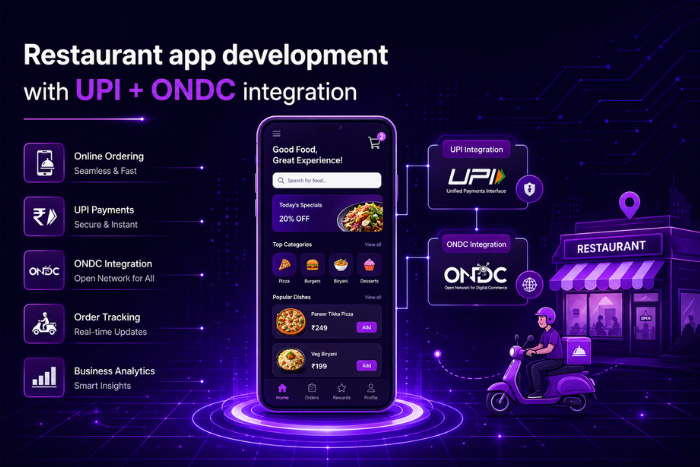
Restaurant App Development with UPI + ONDC Integration
Restaurant App Development with UPI + ONDC Integration Build restaurant apps with UPI + ONDC integration for seamless payments, wider reach, order automation, and scalable digital growth. Introduction The restaurant and food delivery industry in India is rapidly evolving as digital public infrastructure reshapes commerce, payments, and customer experiences. In 2026, restaurant app development with UPI + ONDC integration has become a powerful strategy for restaurants, cloud kitchens, QSR brands, aggregators, and hospitality businesses seeking to expand reach, improve operational efficiency, and reduce dependency on closed marketplace ecosystems. By integrating Unified Payments Interface (UPI) for seamless transactions and Open Network for Digital Commerce (ONDC) for decentralized digital commerce access, restaurant apps can unlock wider customer access while lowering platform commission burdens. Modern restaurant applications are no longer limited to food ordering—they now function as comprehensive digital business ecosystems supporting direct ordering, digital payments, loyalty programs, real-time delivery, inventory management, and open commerce participation. UPI simplifies secure payment experiences, while ONDC enables restaurants to connect with broader commerce networks across India. Businesses adopting UPI and ONDC-powered restaurant app development can future-proof operations, increase profitability, improve customer retention, and scale more efficiently in India’s competitive food commerce landscape. Why Restaurant App Development with UPI + ONDC Integration is Important Digital transformation through UPI and ONDC is reshaping how restaurants compete and grow. Lower Commission CostsONDC reduces dependence on high-fee aggregators. Seamless Digital PaymentsUPI enables fast, secure, and frictionless transactions. Expanded Customer ReachONDC opens access to broader buyer ecosystems. Operational EfficiencyUnified order, payment, and logistics systems improve performance. Brand IndependenceDirect customer relationships strengthen retention. Scalable Commerce GrowthOpen network integration supports long-term expansion. Regulatory AlignmentIndia’s digital infrastructure enhances business resilience. Types of Solutions for Restaurant App Development with UPI + ONDC Integration Restaurants can build diverse digital commerce platforms: Direct Ordering AppsRestaurant-owned customer ordering platforms. Cloud Kitchen AppsDelivery-first food business ecosystems. Multi-Outlet Restaurant AppsEnterprise restaurant chain solutions. QSR & Fast Food PlatformsHigh-volume quick-service systems. Marketplace Restaurant PlatformsONDC-connected food commerce applications. Subscription Meal AppsRecurring meal delivery systems. Loyalty & Rewards AppsRetention-focused customer engagement. Hospitality Commerce PlatformsFull-service digital dining ecosystems. Get Free Quotation Now..!! Key Features of Restaurant App Development with UPI + ONDC Integration Modern restaurant apps require robust digital commerce capabilities: UPI Payment IntegrationInstant, secure, and low-cost payment processing. ONDC Marketplace ConnectivityOpen digital commerce participation. Real-Time Menu & Inventory ManagementDynamic availability updates. Order Management SystemAutomated kitchen and delivery workflows. Delivery TrackingLive customer order visibility. Customer Loyalty ProgramsRewards, discounts, and retention systems. AI-Based RecommendationsPersonalized food discovery. CRM & Customer AnalyticsBehavioral insights and marketing automation. Multi-Location SupportFranchise and enterprise restaurant management. Cloud-Based DashboardOperational control and scalability. Development Process Building future-ready restaurant apps requires strategic commerce planning: Business Analysis & Market StrategyDefine restaurant model, audience, and commerce objectives. Feature Planning & MVP DevelopmentPrioritize ordering, payments, and ONDC essentials. UI/UX DesignBuild intuitive customer and operational experiences. UPI & ONDC IntegrationImplement payments and network protocols. Backend DevelopmentBuild scalable order, logistics, and inventory systems. Third-Party IntegrationsCRM, POS, ERP, delivery, and analytics tools. Testing & Compliance ValidationEnsure payment security, scalability, and commerce compatibility. Deployment & LaunchRelease across Android, iOS, and web. Continuous OptimizationImprove performance, customer engagement, and growth. Technology Stack for Restaurant App Development with UPI + ONDC Integration Modern restaurant commerce platforms rely on advanced technologies: Programming Languages: Python, JavaScript, Kotlin, SwiftMobile Frameworks: Flutter, React NativeBackend Technologies: Node.js, Django, LaravelPayment Systems: UPI APIs, Razorpay, Paytm, PhonePeONDC Protocol Integrations: Beckn Protocol, ONDC APIsCloud Platforms: AWS, Google Cloud, Microsoft AzureDatabases: PostgreSQL, MongoDB, FirebasePOS/ERP Integrations: Zoho, SAP, OracleDevOps Tools: Docker, Kubernetes Cost Factors for Restaurant App Development with UPI + ONDC Integration Project investment depends on several variables: UPI & ONDC Integration ComplexityOpen network and payment architecture impact costs. Platform ScopeSingle outlet, multi-chain, or enterprise deployments. Custom FeaturesLoyalty systems, AI recommendations, and analytics. Third-Party IntegrationsPOS, ERP, CRM, and logistics systems. UI/UX DesignCustomer-facing experiences affect budgets. Cloud InfrastructureScalable restaurant ecosystem hosting. Compliance & SecurityPayment and commerce regulation requirements. Maintenance & Feature ExpansionOngoing digital growth and updates. Latest Trends in Restaurant App Development with UPI + ONDC Integration Restaurant technology is evolving rapidly with India’s digital infrastructure: ONDC-Based Food Commerce ExpansionDecentralized food delivery ecosystems. UPI-Led Cashless DiningSeamless mobile payment adoption. AI-Powered Customer PersonalizationSmart menu recommendations and retention. Cloud Kitchen GrowthDelivery-first restaurant models. Hyperlocal Delivery OptimizationFaster logistics through digital ecosystems. Voice & Conversational OrderingSmart food ordering interfaces. Loyalty-Driven CommerceCustomer retention through digital rewards. Data-Driven Restaurant OperationsPredictive analytics for business efficiency. Why Choose Us Building successful restaurant apps with UPI + ONDC integration requires more than app development—it demands commerce expertise, digital infrastructure knowledge, and scalable business strategy. Our team helps restaurants build future-ready digital ecosystems that maximize reach, profitability, and operational efficiency. Restaurant Commerce Expertise Deep experience in foodtech, digital ordering, and hospitality systems. UPI & ONDC Integration Specialists Advanced payment and open commerce ecosystem development. Scalable Restaurant Platforms Future-ready architecture for independent brands and enterprises. Customer-Centric UX Design High-conversion digital dining experiences. Secure Digital Infrastructure Reliable payments, compliance, and operational systems. AI & Loyalty Innovation Retention-focused customer growth strategies. End-to-End Development Support From strategy and development to deployment and scaling. Transparent Collaboration Clear communication and measurable business success. We help restaurant businesses transform food commerce through innovative, scalable, and conversion-focused digital platforms powered by India’s digital ecosystem. Ready to modernize your restaurant business with UPI + ONDC integration in 2026?Let’s build smarter, scalable restaurant apps tailored to your growth.Contact us today for expert restaurant app development solutions. Get Free Quotation Now..!! Key Points : UPI integration enables fast, secure, and low-cost digital payments for restaurant apps. ONDC integration expands restaurant reach while reducing dependency on high-commission aggregators. Direct ordering platforms improve brand independence and customer retention. Real-time order management, inventory tracking, and delivery systems streamline operations. AI-powered recommendations and loyalty programs increase customer engagement and repeat sales. Cloud kitchen and multi-outlet restaurant apps benefit from scalable digital infrastructure. FAQ’s Why is UPI integration important for restaurant apps? UPI provides fast, secure, and low-cost digital payment experiences for customers. What is ONDC and how does it help restaurants? ONDC is an open commerce network that

Logistics App Development After GST E-Way Bill Changes
Logistics App Development After GST E-Way Bill Changes Optimize logistics app development after GST e-way bill changes with compliance automation, tracking, and scalable supply chain solutions. Introduction The logistics and transportation industry in India is undergoing significant transformation due to evolving GST regulations and e-way bill system updates. For logistics companies, transport aggregators, fleet operators, ecommerce distributors, and supply chain enterprises, understanding logistics app development after GST e-way bill changes is essential for maintaining compliance, improving operational efficiency, and reducing business disruptions. As GST frameworks evolve, logistics applications must adapt to support automated e-way bill generation, real-time documentation, route optimization, vehicle verification, ERP synchronization, and regulatory reporting. Modern logistics apps are no longer limited to shipment tracking—they must serve as intelligent compliance and operational platforms capable of handling tax requirements, digital documentation, inventory coordination, and interstate transportation complexities. Businesses that invest in GST-ready logistics app development can reduce manual errors, improve tax compliance, optimize fleet management, and strengthen supply chain resilience. By integrating automation, cloud technology, real-time analytics, and compliance-focused workflows, organizations can future-proof logistics operations while staying aligned with changing GST regulations in 2026 and beyond. Why Logistics App Development After GST E-Way Bill Changes is Important GST e-way bill changes have made compliance-focused logistics technology essential for business continuity and growth. Regulatory ComplianceAutomated e-way bill workflows reduce legal and operational risks. Operational EfficiencyDigital logistics systems streamline transportation processes. Reduced Manual ErrorsAutomation improves documentation accuracy. Faster Shipment MovementReal-time compliance minimizes transport delays. ERP & Supply Chain IntegrationUnified systems improve business operations. Enhanced Fleet VisibilityReal-time tracking improves transparency. Scalable Logistics GrowthModern apps support expanding transport networks. Types of Solutions for Logistics App Development After GST E-Way Bill Changes Businesses can deploy various compliance-ready logistics solutions: Fleet Management AppsVehicle tracking, route planning, and driver coordination. GST Compliance PlatformsAutomated e-way bill generation and tax reporting. Transport Aggregator AppsMulti-vendor freight coordination systems. Warehouse & Inventory AppsLogistics synchronization with supply chain operations. Last-Mile Delivery AppsDelivery tracking and customer communication tools. ERP-Integrated Logistics SystemsBusiness-wide compliance and operational management. Cross-Border & Interstate Logistics AppsAdvanced tax and transportation regulation management. Enterprise Supply Chain PlatformsFull logistics ecosystem automation. Get Free Quotation Now..!! Key Features of Logistics App Development After GST E-Way Bill Changes Modern logistics apps require robust compliance and operational capabilities: Automated E-Way Bill GenerationReal-time GST-compliant documentation. ERP & Accounting IntegrationSeamless tax and business data synchronization. Fleet Tracking & Route OptimizationGPS-enabled shipment management. Digital Document ManagementInvoice, challan, and tax document storage. Real-Time Compliance MonitoringRegulatory alerts and workflow validation. Driver & Vehicle VerificationSecure transport management. Analytics & Reporting DashboardsGST, fleet, and operational insights. Cloud-Based AccessibilityMulti-location logistics management. Mobile Driver ApplicationsOn-road compliance and communication tools. API IntegrationsGovernment portals, ERP systems, and logistics partners. Development Process Building GST-ready logistics apps requires strategic planning and regulatory alignment: Regulatory Research & Compliance PlanningAnalyze GST updates and logistics business requirements. Business Workflow MappingDefine transportation, taxation, and operational processes. Feature Planning & MVP DevelopmentPrioritize compliance and logistics essentials. UI/UX DesignBuild intuitive interfaces for operators, drivers, and managers. Backend & Compliance Engine DevelopmentDevelop tax, automation, and logistics infrastructure. Third-Party IntegrationsConnect ERP, GST portals, payments, and APIs. Testing & ValidationEnsure compliance, scalability, and performance. Deployment & LaunchRoll out across logistics ecosystems. Continuous Monitoring & UpdatesAdapt to evolving tax regulations and operational demands. Technology Stack for Logistics App Development After GST E-Way Bill Changes Modern logistics platforms use enterprise-grade technologies: Programming Languages: Python, Java, JavaScript, KotlinMobile Frameworks: Flutter, React NativeBackend Technologies: Node.js, Django, LaravelCloud Platforms: AWS, Google Cloud, Microsoft AzureDatabase Systems: PostgreSQL, MongoDBERP Integrations: SAP, Oracle, Microsoft DynamicsGPS & Mapping APIs: Google Maps, MapboxCompliance APIs: GSTN integrations, e-way bill APIsDevOps Tools: Docker, Kubernetes Cost Factors for Logistics App Development After GST E-Way Bill Changes Several factors determine project investment: Compliance ComplexityGST automation and API integrations affect pricing. Fleet Management ScopeAdvanced tracking and logistics features increase costs. ERP IntegrationsEnterprise system compatibility impacts budgets. Platform ScaleMulti-region or enterprise deployments require higher investment. Security RequirementsTax data protection and secure documentation. Cloud InfrastructureScalable logistics hosting systems. Maintenance & Regulatory UpdatesContinuous compliance changes require ongoing support. Development Team ExpertiseSpecialized logistics and compliance developers. Latest Trends in Logistics App Development After GST E-Way Bill Changes Logistics technology is evolving rapidly with digital compliance innovation: AI-Powered Route OptimizationSmarter transportation efficiency. Blockchain for Logistics DocumentationSecure and transparent freight records. Predictive Supply Chain AnalyticsData-driven logistics forecasting. IoT Fleet MonitoringConnected vehicles and asset tracking. Automated Tax Compliance EnginesReal-time GST adaptation. Cloud-Based Logistics EcosystemsScalable enterprise operations. Digital Freight MarketplacesAggregated logistics platforms. Smart Warehouse IntegrationFull supply chain digitization. Why Choose Us Building logistics apps after GST e-way bill changes requires more than basic software development—it demands regulatory expertise, enterprise-grade infrastructure, and operational efficiency. Our team creates compliance-ready logistics ecosystems designed for scalability, automation, and long-term business growth. Logistics & Compliance Expertise Deep experience in GST, e-way bill systems, and transport technology. Automation-First Development Advanced compliance workflows that reduce operational friction. Scalable Enterprise Solutions Future-ready logistics ecosystems for growing businesses. ERP & Supply Chain Integration Seamless operational synchronization. Real-Time Operational Visibility Tracking, compliance, and analytics built for performance. Secure Data Infrastructure Reliable, compliant tax and logistics systems. Continuous Regulatory Adaptation Solutions built to evolve with policy changes. Transparent Collaboration Clear communication and measurable business outcomes. We help logistics businesses transform supply chain operations through innovative, scalable, and compliance-driven digital platforms. Ready to modernize your logistics business after GST e-way bill changes?Let’s build smarter, compliant logistics applications tailored to your operations.Contact us today for expert logistics app development solutions. Get Free Quotation Now..!! Key Points : GST e-way bill changes require logistics apps to automate compliance and digital documentation Automated e-way bill generation reduces manual errors and regulatory risks. ERP integration streamlines logistics, accounting, and tax management workflows. Real-time fleet tracking and route optimization improve delivery efficiency. Cloud-based logistics platforms support scalable supply chain operations. FAQ’s Why are GST e-way bill changes important for logistics apps? They require businesses to automate compliance, documentation, and transportation workflows. What features should logistics apps include after GST updates? Key features include e-way bill automation, ERP integration, fleet tracking, compliance monitoring, and digital documentation.
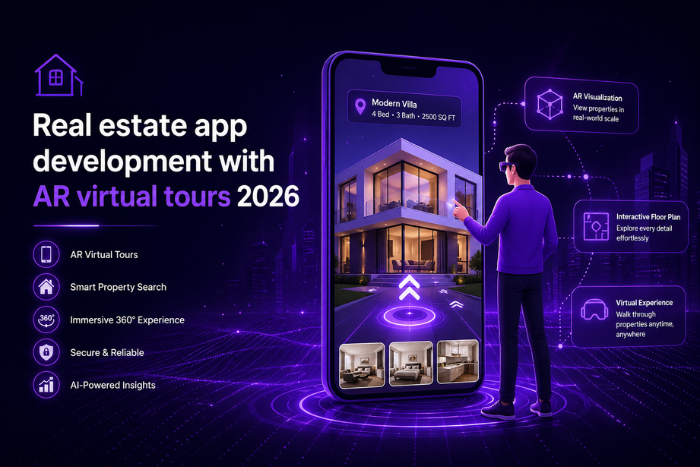
Real Estate App Development with AR Virtual Tours 2026
Real Estate App Development with AR Virtual Tours 2026 Build smarter property platforms with real estate app development with AR virtual tours 2026, AI search, and immersive buyer experiences. Introduction The real estate industry is rapidly transforming as digital innovation reshapes how buyers, sellers, investors, and property managers interact with property markets. In 2026, real estate app development with AR virtual tours is emerging as a game-changing solution for businesses seeking to provide immersive, data-driven, and highly engaging property experiences. Traditional property browsing is evolving into interactive digital exploration, where users can view homes, commercial spaces, and developments through augmented reality (AR), virtual tours, AI-powered recommendations, and real-time property insights. Modern real estate applications now combine advanced technologies such as AR/VR, artificial intelligence, blockchain security, geolocation, and predictive analytics to improve property discovery, streamline transactions, and enhance customer trust. AR virtual tours allow potential buyers or renters to explore properties remotely, significantly increasing engagement while reducing decision-making friction. For real estate agencies, brokers, developers, and proptech startups, adopting AR-focused app development strategies offers a powerful competitive advantage. This guide explores how real estate app development with AR virtual tours is shaping the future of property technology in 2026. Why Real Estate App Development with AR Virtual Tours 2026 is Important Digital transformation in real estate is no longer optional—it is essential for market competitiveness and customer engagement. Enhanced Property VisualizationAR tours provide immersive, realistic property experiences. Faster Buyer Decision-MakingVirtual exploration reduces purchase hesitation. Expanded Market ReachRemote property access supports global buyers. Higher User EngagementInteractive experiences improve retention. Reduced Operational CostsVirtual showings lower physical viewing expenses. Improved Lead ConversionBetter property experiences generate qualified leads. Future-Proof Business GrowthAdvanced technology adoption strengthens long-term scalability. Types of Solutions for Real Estate App Development with AR Virtual Tours 2026 Real estate applications can serve diverse business models: Property Listing AppsResidential, commercial, and rental marketplaces. Brokerage AppsAgent-led property discovery and transaction systems. AR Virtual Tour PlatformsImmersive remote property walkthroughs. Property Management AppsRental management, tenant communication, and maintenance. Investment & Analytics AppsMarket forecasting and property valuation tools. Luxury Real Estate AppsPremium virtual showcasing and personalized experiences. Construction & Development PlatformsPre-construction visualization and project sales. Smart Property EcosystemsIoT-enabled real estate management. Get Free Quotation Now..!! Key Features of Real Estate App Development with AR Virtual Tours 2026 Modern proptech apps require innovative, customer-focused features: AR Virtual Property ToursImmersive 3D walkthrough experiences. AI-Powered Property RecommendationsPersonalized property discovery. Advanced Search & FilteringLocation, pricing, amenities, and lifestyle matching. Interactive Maps & GeolocationReal-time location insights. Blockchain Transaction SecuritySecure digital contracts and verification. Mortgage & Financial CalculatorsIn-app financing tools. Live Agent CommunicationChat, video calls, and instant consultations. Property Comparison ToolsData-driven buyer decision support. Push NotificationsReal-time property alerts. Analytics DashboardsPerformance insights for agents and investors. Development Process Building a future-ready real estate app requires strategic planning and advanced technology integration: Market Research & Business AnalysisDefine audience, goals, and competitive strategy. Feature Planning & MVP DevelopmentPrioritize core real estate and AR capabilities. UI/UX DesignBuild intuitive, visually rich property experiences. Architecture DesignDevelop scalable, secure cloud infrastructure. AR/VR IntegrationImplement immersive property visualization technologies. AI & Smart Search DevelopmentPersonalization and predictive recommendations. App DevelopmentFrontend, backend, payments, and CRM integrations. Testing & Quality AssuranceValidate usability, performance, and security. Deployment & OptimizationLaunch and continuously refine user experiences. Technology Stack for Real Estate App Development with AR Virtual Tours 2026 Modern real estate platforms leverage advanced technologies: Programming Languages: Python, JavaScript, Swift, KotlinMobile Frameworks: Flutter, React NativeAR/VR Tools: ARKit, ARCore, Unity, Unreal EngineAI/ML Frameworks: TensorFlow, PyTorchCloud Platforms: AWS, Google Cloud, Microsoft AzureDatabase Systems: PostgreSQL, MongoDB, FirebaseBlockchain Solutions: Ethereum, HyperledgerMapping APIs: Google Maps, MapboxDevOps Tools: Docker, Kubernetes Cost Factors for Real Estate App Development with AR Virtual Tours 2026 Several variables affect development investment: AR/VR ComplexityImmersive virtual tours significantly impact budgets. AI IntegrationSmart recommendations and analytics add costs. Platform ScopeMobile, web, and cross-platform deployments. Third-Party IntegrationsCRM, MLS, payments, and analytics systems. UI/UX DesignHigh-quality visual experiences require premium design. Cloud InfrastructureScalable hosting and property data storage. Security RequirementsBlockchain and secure transactions increase expenses. Maintenance & Feature ExpansionOngoing upgrades and market adaptation. Latest Trends in Real Estate App Development with AR Virtual Tours 2026 Proptech innovation is accelerating with transformative technologies: AR/VR Property VisualizationVirtual tours becoming industry standard. AI-Driven Property MatchingSmarter personalized search experiences. Blockchain Real Estate TransactionsSecure digital ownership systems. Smart Property ManagementIoT and automation integrations. Predictive Real Estate AnalyticsMarket forecasting and investment intelligence. Voice Search for Property DiscoveryConversational property search. Metaverse Real Estate IntegrationDigital property ecosystems emerging. Cross-Platform Proptech EcosystemsUnified buyer, seller, and investor experiences. Why Choose Us Building successful real estate apps with AR virtual tours requires more than standard development—it demands proptech expertise, immersive technology integration, and scalable digital strategy. Our team helps real estate businesses create intelligent, high-conversion property platforms designed for future growth. Real Estate Technology Expertise Deep experience in proptech, AR, and AI-powered real estate solutions. Immersive AR/VR Development Advanced virtual property experiences that maximize engagement. Scalable Platform Architecture Future-ready systems for brokers, agencies, and enterprises. AI-Powered User Experiences Personalized search and property discovery optimization. Secure Digital Infrastructure Blockchain, payment, and transaction security solutions. Conversion-Focused UX Design High-performance platforms that improve lead generation. End-to-End Development Support From strategy through deployment and growth. Transparent Collaboration Clear communication and measurable business outcomes. We help real estate businesses transform property experiences through innovative, scalable, and conversion-focused AR-powered digital platforms. Ready to revolutionize property experiences with AR virtual tours in 2026?Let’s build immersive real estate platforms tailored to your business vision.Contact us today for expert real estate app development solutions. Get Free Quotation Now..!! Key Points : AR virtual tours provide immersive property experiences that improve buyer engagement and conversion rates. AI-powered property recommendations personalize real estate searches for better user experiences. Remote property exploration expands market reach for global buyers and investors. Blockchain integration enhances security, transparency, and trust in digital real estate transactions. Interactive maps, geolocation, and smart search tools streamline property discovery. Real estate apps with AR reduce operational costs by minimizing physical property visits. FAQ’s What are AR virtual tours in real estate apps? AR virtual

