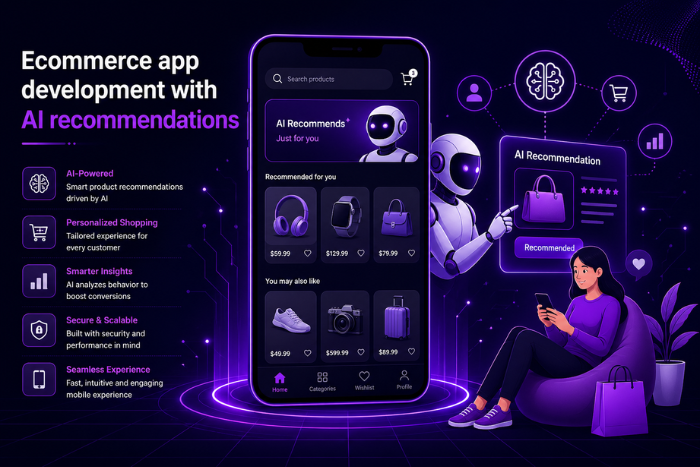
Ecommerce App Development with AI Recommendations Boost sales with ecommerce app development with AI recommendations, personalization, smart search, and scalable shopping experiences. Introduction The ecommerce industry is evolving rapidly, and artificial intelligence is transforming how consumers discover, shop, and interact with digital retail platforms. In 2026, businesses that invest in ecommerce app development with AI recommendations gain a significant competitive advantage through personalized shopping experiences, intelligent automation, and higher customer retention. AI-powered recommendation engines can analyze user behavior, preferences, and purchase history to deliver highly relevant product suggestions, increasing conversion rates and average order values. Modern ecommerce apps must do more than simply list products—they need to provide dynamic personalization, predictive analytics, conversational commerce, visual search, and seamless omnichannel experiences. Whether for B2C, B2B, marketplaces, or subscription commerce, AI integration is now essential for scalable growth. By adopting AI recommendation systems and advanced ecommerce technologies, businesses can improve customer satisfaction, optimize inventory, enhance marketing efficiency, and future-proof their digital commerce ecosystem. This guide explores the essential strategies, technologies, and trends shaping AI-driven ecommerce app development in 2026. Why Ecommerce App Development with AI Recommendations is Important AI recommendations are no longer optional—they are essential for delivering competitive ecommerce experiences. Higher Conversion RatesPersonalized recommendations increase purchase likelihood. Improved Customer RetentionRelevant product suggestions enhance user satisfaction. Increased Average Order ValueSmart upselling and cross-selling improve revenue. Enhanced Shopping ExperienceAI simplifies product discovery and decision-making. Operational EfficiencyAutomation improves marketing, inventory, and support. Data-Driven InsightsCustomer behavior analytics optimize strategy. Scalable Revenue GrowthAI supports long-term ecommerce expansion. Types of Solutions for Ecommerce App Development with AI Recommendations AI-powered ecommerce solutions support multiple business models: B2C Ecommerce AppsPersonalized consumer shopping platforms. Marketplace AppsMulti-vendor commerce ecosystems. B2B Ecommerce PlatformsIntelligent enterprise purchasing systems. Subscription Commerce AppsRecurring purchases with predictive recommendations. Social Commerce AppsAI-driven shopping through social channels. Quick Commerce PlatformsFast delivery with real-time personalization. Luxury & Fashion Retail AppsVisual AI recommendations and virtual try-ons. Niche Retail AppsSpecialized product ecosystems with tailored user journeys. Get Free Quotation Now..!! Key Features of Ecommerce App Development with AI Recommendations Modern AI ecommerce apps require advanced capabilities: Personalized Product RecommendationsBehavioral and predictive product suggestions. Smart Search & DiscoveryAI-powered search, filtering, and visual product discovery. AI Chatbots & Virtual AssistantsConversational commerce and customer support. Dynamic Pricing OptimizationIntelligent pricing strategies based on demand. Fraud Detection & Secure PaymentsAI-enhanced transaction security. Inventory ForecastingPredictive stock and supply management. Push Notification PersonalizationContext-aware customer engagement. AR/VR Shopping FeaturesVirtual product experiences. Voice Commerce IntegrationSmart shopping through voice assistants. Omnichannel Shopping SupportSeamless multi-platform experiences. Development Process Building AI-powered ecommerce apps requires a strategic development lifecycle: Business Analysis & Market ResearchIdentify audience, commerce model, and AI opportunities. Feature Planning & MVP StrategyPrioritize core ecommerce and AI capabilities. UI/UX DesignCreate conversion-focused, intuitive shopping experiences. Architecture DesignBuild scalable AI, commerce, and cloud systems. AI Recommendation Engine DevelopmentDeploy machine learning for personalization. App DevelopmentBuild frontend, backend, payment, and logistics integrations. Testing & OptimizationValidate performance, security, and AI accuracy. Deployment & LaunchRelease across platforms with optimization strategies. Continuous ImprovementMonitor customer behavior and refine AI models. Technology Stack for Ecommerce App Development with AI Recommendations Successful AI ecommerce platforms use cutting-edge technologies: Programming Languages: Python, JavaScript, Swift, KotlinMobile Frameworks: Flutter, React NativeAI/ML Frameworks: TensorFlow, PyTorch, Scikit-learnBackend Technologies: Node.js, Django, LaravelCloud Platforms: AWS, Google Cloud, Microsoft AzureDatabases: PostgreSQL, MongoDB, FirebaseSearch Tools: Elasticsearch, AlgoliaPayment Integrations: Stripe, PayPal, RazorpayDevOps Tools: Docker, Kubernetes Cost Factors for Ecommerce App Development with AI Recommendations Development costs depend on several variables: AI ComplexityRecommendation engines and predictive analytics increase budgets. App FeaturesAR, voice commerce, and advanced personalization impact costs. Platform ScopeiOS, Android, web, or omnichannel deployment. Third-Party IntegrationsERP, CRM, logistics, and payment systems. UI/UX DesignPremium shopping experiences require investment. Cloud InfrastructureScalable hosting and AI model deployment. Security RequirementsFraud prevention and compliance systems. Maintenance & UpdatesOngoing optimization and feature expansion. Latest Trends in Ecommerce App Development with AI Recommendations AI is driving the next generation of ecommerce innovation: Hyper-Personalized ShoppingReal-time adaptive recommendations. Visual Search ExpansionImage-based product discovery. Voice Commerce GrowthConversational shopping experiences. AI-Powered Virtual Try-OnsFashion and beauty innovation. Predictive Inventory SystemsSmarter supply chain management. Dynamic Pricing ModelsAutomated pricing intelligence. Social Commerce IntegrationAI shopping across social platforms. Blockchain Commerce SecuritySecure, transparent transactions. Why Choose Us Building successful AI-powered ecommerce platforms requires more than traditional app development—it demands advanced commerce expertise, AI innovation, and conversion-focused digital strategy. Our team helps businesses create scalable ecommerce ecosystems that maximize customer engagement, revenue, and long-term growth. Ecommerce & AI Expertise Deep experience in intelligent commerce platform development. Personalization-First Solutions Advanced AI recommendation engines that increase conversions. Scalable Commerce Architecture Future-ready systems for enterprise growth. Conversion-Focused UX Design Optimized user journeys that drive higher sales. Secure & Reliable Infrastructure Robust payment security and fraud prevention systems. Omnichannel Commerce Integration Unified experiences across mobile, web, and retail channels. Continuous Optimization Data-driven improvements for sustained performance. Transparent Development Process Clear communication from strategy through deployment. We help businesses transform digital retail into intelligent, scalable, and high-conversion ecommerce ecosystems powered by AI innovation. Ready to build an AI-powered ecommerce app that drives sales in 2026?Let’s create personalized shopping experiences tailored to your business goals.Contact us today for expert ecommerce app development solutions. Get Free Quotation Now..!! Key Points : AI-powered product recommendations increase ecommerce conversions through personalized shopping experiences. Smart search, visual discovery, and predictive analytics improve customer engagement and retention. AI chatbots and conversational commerce enhance customer support and streamline buying journeys. Dynamic pricing and inventory forecasting optimize operational efficiency and profitability. AR/VR features and virtual try-ons elevate user experiences in fashion and retail ecommerce apps. FAQ’s What are AI recommendations in ecommerce apps? AI recommendations use machine learning to personalize product suggestions based on customer behavior. How do AI recommendations increase ecommerce sales? They improve conversions, upselling, customer retention, and average order value. What features are essential in AI-powered ecommerce apps? Key features include personalization, smart search, chatbots, dynamic pricing, and predictive analytics. How much does ecommerce app development with AI recommendations cost? Costs vary based on complexity, features, integrations, and scalability. Can AI improve customer retention in ecommerce? Yes, personalized shopping
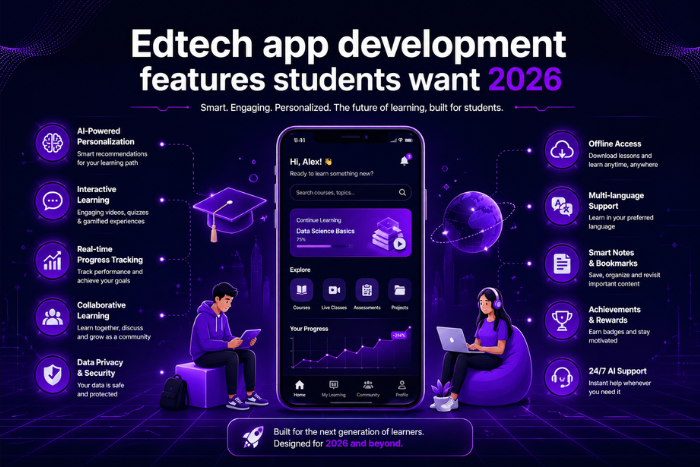
Edtech App Development Features Students Want 2026
Edtech App Development Features Students Want 2026 Discover edtech app development features students want in 2026, including AI, gamification, personalization, and scalable learning solutions. Introduction The education technology industry is evolving rapidly as student expectations, digital learning behaviors, and technological innovation reshape how educational platforms are designed. In 2026, successful educational applications must go beyond traditional e-learning by offering personalized, engaging, and highly interactive experiences. Understanding edtech app development features students want 2026 is essential for schools, startups, enterprises, and educational institutions seeking to build competitive, future-ready learning platforms. Modern students demand AI-powered personalization, mobile-first experiences, gamification, real-time collaboration, microlearning, and seamless accessibility across devices. Whether developing online learning platforms, tutoring apps, virtual classrooms, skill development systems, or institutional education software, integrating the right features can dramatically improve student retention, engagement, and learning outcomes. As the global edtech ecosystem expands, businesses that align with the latest student-centered development trends can unlock scalable growth opportunities while transforming digital education experiences. This guide explores the essential features, development strategies, technologies, and future trends driving edtech app success in 2026. Why Edtech App Development Features Students Want 2026 is Important Meeting evolving student expectations is crucial for educational platforms aiming to remain relevant and effective in an increasingly competitive digital landscape. Higher Student EngagementInteractive and personalized learning increases retention and participation. Improved Learning OutcomesAI-driven recommendations optimize educational experiences. Competitive AdvantageStudent-focused innovation strengthens market positioning. Scalable Digital EducationModern architectures support institutional growth. Better AccessibilityMulti-device and remote learning expand educational reach. Enhanced Monetization OpportunitiesAdvanced features improve subscriptions and revenue models. Future-Ready Learning EcosystemsTechnology adoption supports long-term relevance. Types of Solutions for Edtech App Development Features Students Want 2026 Educational platforms in 2026 span multiple digital learning categories: E-Learning PlatformsCourse delivery, skill development, and certification systems. Virtual Classroom AppsLive classes, collaboration tools, and teacher-student communication. Language Learning AppsAI tutors, speech recognition, and adaptive practice systems. Test Preparation PlatformsExam simulation, analytics, and personalized revision. Corporate Training AppsEmployee upskilling and enterprise education. STEM Learning PlatformsVirtual labs, simulations, and interactive modules. Gamified Learning AppsReward systems, quizzes, and competitive education. Mental Wellness & Student Support AppsAcademic productivity and emotional well-being tools. Get Free Quotation Now..!! Key Features of Edtech App Development Features Students Want 2026 Modern students expect advanced, intuitive, and engaging educational features: AI-Powered Personalized LearningAdaptive course recommendations and individualized learning paths. Gamification & Reward SystemsBadges, points, leaderboards, and challenges. Live Classes & Real-Time CollaborationVideo learning, messaging, and group discussions. Microlearning ModulesBite-sized educational content for flexible learning. Offline Learning AccessDownloadable resources with smart syncing. Learning Analytics & Progress TrackingPerformance dashboards and predictive insights. Voice Search & AI TutorsConversational learning assistants and accessibility tools. Multi-Language SupportLocalization for global education scalability. Blockchain CertificationsSecure digital credentials and academic verification. Career Mapping IntegrationSkills alignment with career opportunities. Development Process Building future-ready edtech apps requires a strategic, user-centered development process: Market Research & Student Behavior AnalysisIdentify target learners, educational gaps, and demand trends. Feature Planning & MVP DevelopmentDefine core features aligned with student needs. UI/UX DesignCreate intuitive, mobile-first, and student-friendly experiences. Technology Stack SelectionChoose scalable infrastructure and integrations. App DevelopmentBuild front-end, back-end, and AI-driven learning systems. Third-Party IntegrationsAdd payment gateways, LMS tools, analytics, and communication systems. Testing & Quality AssuranceValidate performance, accessibility, and engagement. Deployment & LaunchRelease across platforms with growth strategies. Post-Launch OptimizationMonitor user feedback and continuously improve. Technology Stack for Edtech App Development Features Students Want 2026 Modern educational apps leverage powerful technologies: Programming Languages: Python, JavaScript, Swift, KotlinMobile Frameworks: Flutter, React NativeAI/ML Frameworks: TensorFlow, PyTorchBackend Technologies: Node.js, Django, LaravelCloud Platforms: AWS, Google Cloud, Microsoft AzureDatabase Systems: PostgreSQL, MongoDB, FirebaseVideo Streaming Tools: WebRTC, Zoom SDK, AgoraDevOps Tools: Docker, Kubernetes Cost Factors for Edtech App Development Features Students Want 2026 Several factors influence edtech app development investment: Feature ComplexityAI, gamification, and live learning features increase costs. UI/UX RequirementsStudent-centered design impacts budgets. Content DevelopmentMultimedia and course creation require additional resources. Third-Party IntegrationsLMS, payment systems, and communication tools affect pricing. Cloud InfrastructureScalable hosting for large user bases. Maintenance & UpdatesContinuous improvements and support. Security & ComplianceData privacy for minors and institutions. Development Team ExpertiseSpecialized edtech developers and strategists. Latest Trends in Edtech App Development Features Students Want 2026 Educational technology continues evolving with transformative trends: AI-First Learning PlatformsPersonalized education at scale. Gamified Learning ExpansionIncreased student motivation and retention. AR/VR Learning ExperiencesImmersive education for practical skills. Microlearning GrowthShort-form, mobile-friendly educational modules. Blockchain CredentialingSecure digital certification systems. Social Learning CommunitiesPeer collaboration and engagement. Voice-Based LearningConversational interfaces for accessibility. Career-Focused Learning EcosystemsSkill mapping with employability outcomes. Why Choose Us Building successful edtech platforms requires more than standard app development—it demands educational expertise, student behavior insights, and future-focused technology strategies. Our team creates scalable, student-centered educational applications designed to maximize engagement, learning outcomes, and business growth. Edtech Development Expertise Deep experience in building innovative educational platforms for diverse learning models. Student-Centered Design Apps designed around engagement, accessibility, and personalized learning. AI & Advanced Learning Systems Intelligent educational ecosystems powered by automation and analytics. Scalable Infrastructure Future-ready solutions for institutions, startups, and enterprises. Gamification & Engagement Focus Retention-driven features that improve educational outcomes. End-to-End Development Support From strategy and design to launch and optimization. Performance & Security Excellence Reliable, secure, and scalable digital learning environments. Transparent Collaboration Strategic communication and measurable project success. We help businesses transform digital education through innovative, scalable, and conversion-focused edtech app solutions. Ready to build the next generation of student-focused edtech apps in 2026?Let’s create powerful, engaging educational platforms tailored to your vision.Contact us today for expert edtech app development services. Get Free Quotation Now..!! Key Points : AI-powered personalized learning is a top feature students expect from edtech apps in 2026. Gamification boosts student engagement through rewards, challenges, and interactive experiences. Live classes, real-time collaboration, and virtual classrooms are essential for modern digital learning. Microlearning and mobile-first design support flexible, on-the-go education experiences. Learning analytics and progress tracking improve academic performance and retention. FAQ’s What features do students want most in edtech apps in 2026? Students prioritize AI personalization, gamification, live collaboration, microlearning, and mobile accessibility. Why is personalization important in edtech apps?
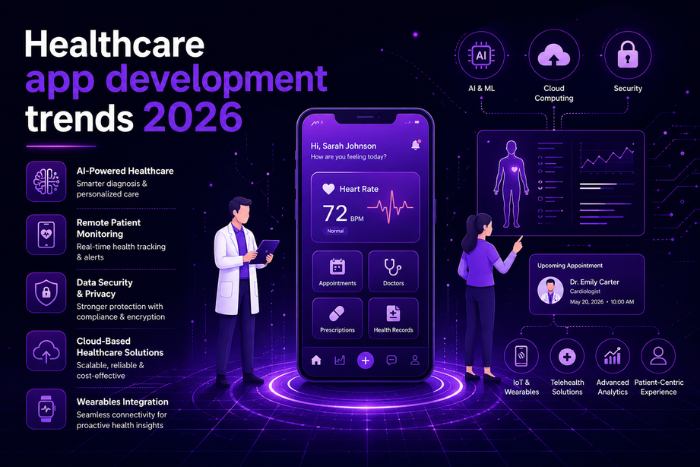
Healthcare App Development Trends 2026
Healthcare App Development Trends 2026 Explore healthcare app development trends 2026, including AI, telehealth, security, interoperability, and scalable digital health solutions. Introduction The healthcare industry is undergoing rapid digital transformation, and mobile technology is at the center of this evolution. As patient expectations, regulatory requirements, and medical innovation continue to advance, understanding healthcare app development trends 2026 is critical for healthcare providers, startups, enterprises, and digital health innovators. Mobile healthcare applications are no longer limited to appointment scheduling or fitness tracking—they now power telemedicine, remote patient monitoring, AI diagnostics, mental health solutions, and personalized patient experiences. In 2026, healthcare apps must prioritize security, interoperability, patient engagement, and intelligent automation to remain competitive. Businesses investing in healthcare app development must align with emerging technologies such as artificial intelligence, wearable integrations, cloud healthcare infrastructure, and compliance-focused architectures. By adopting the latest healthcare app development trends, organizations can improve patient outcomes, streamline operations, reduce costs, and deliver scalable digital healthcare experiences. This guide explores the technologies, strategies, and innovations shaping healthcare mobile applications in 2026 and beyond. Why Healthcare App Development Trends 2026 is Important Staying ahead of healthcare technology trends is essential for organizations seeking to improve care delivery, patient retention, and operational efficiency. Improved Patient EngagementModern healthcare apps offer personalized experiences that increase patient satisfaction. Enhanced Care AccessibilityTelehealth and remote monitoring expand healthcare access globally. Operational EfficiencyDigital healthcare systems streamline workflows for providers and institutions. Better Clinical OutcomesAI and predictive analytics improve diagnostics and treatment decisions. Regulatory ComplianceModern architectures ensure HIPAA, GDPR, and healthcare data security standards. Competitive AdvantageEarly adoption of healthcare innovation strengthens market positioning. Scalable Healthcare EcosystemsFuture-ready apps support long-term digital expansion. Types of Solutions in Healthcare App Development Trends 2026 Healthcare app development in 2026 includes a wide range of innovative digital health solutions: Telemedicine & Virtual Care AppsVideo consultations, e-prescriptions, and digital health platforms. Remote Patient Monitoring AppsWearable integrations and chronic disease management systems. Electronic Health Record (EHR) SolutionsSecure digital patient record access and interoperability. Mental Health & Wellness AppsTherapy, meditation, and behavioral health support platforms. AI Diagnostic ApplicationsPredictive healthcare insights and symptom analysis tools. Fitness & Preventive Care AppsLifestyle management and wellness tracking systems. Healthcare Logistics AppsMedical delivery, prescription management, and operational coordination. Personalized Medicine AppsGenomics, treatment customization, and precision healthcare platforms. Get Free Quotation Now..!! Key Features of Healthcare App Development Trends 2026 Modern healthcare applications require advanced features that balance usability, security, and innovation: AI-Powered DiagnosticsIntelligent decision support systems. Remote Monitoring IntegrationReal-time wearable and IoT health data tracking. Telehealth CapabilitiesSecure video consultations and patient communication. InteroperabilitySeamless data exchange across healthcare systems. Data Privacy & ComplianceHIPAA, GDPR, and secure cloud infrastructure. Voice & Conversational InterfacesVirtual assistants for patient support. Personalized User ExperiencesTailored healthcare journeys and treatment plans. Scalable Cloud ArchitectureEnterprise-grade healthcare infrastructure. Development Process Developing future-ready healthcare apps requires a strategic and compliance-focused process: Healthcare Market Research & StrategyIdentify target audience, compliance requirements, and use cases. Feature Planning & UX DesignBuild patient-centric, provider-friendly user experiences. Architecture DesignDevelop secure, interoperable, and scalable healthcare systems. App DevelopmentImplement front-end, back-end, AI, and healthcare integrations. Compliance & Security ImplementationEnsure healthcare regulations and data privacy standards. Testing & Quality AssuranceValidate usability, security, and performance. Deployment & Continuous OptimizationLaunch, monitor, and improve app performance. Technology Stack for Healthcare App Development Trends 2026 Healthcare app development leverages advanced technologies: Programming Languages: Python, Java, Swift, KotlinMobile Frameworks: Flutter, React NativeAI/ML Frameworks: TensorFlow, PyTorchCloud Platforms: AWS HealthLake, Google Cloud Healthcare API, Microsoft Azure HealthDatabase Systems: PostgreSQL, MongoDB, FirebaseSecurity Tools: OAuth 2.0, SSL/TLS, blockchain healthcare securityWearable Integrations: Apple HealthKit, Google Fit, Fitbit APIsDevOps Tools: Docker, Kubernetes Cost Factors for Healthcare App Development Trends 2026 Healthcare app development costs vary based on complexity, compliance, and innovation: App ComplexityAdvanced AI and interoperability features increase investment. Compliance RequirementsSecurity certifications and regulatory standards affect budgets. Third-Party IntegrationsEHR, wearable, and payment integrations add development scope. UI/UX DesignPatient-friendly design impacts overall costs. Cloud InfrastructureScalable healthcare hosting systems influence expenses. Maintenance & UpdatesOngoing compliance and feature upgrades. Development Team ExpertiseSpecialized healthcare developers and security engineers. Testing & Security AuditsComprehensive validation is essential. Latest Trends The healthcare app ecosystem is evolving with powerful innovations: AI-First Healthcare PlatformsAI becomes central to diagnostics and care management. Remote Patient Monitoring ExpansionWearables and IoT dominate chronic care. Telehealth Platform ConsolidationVirtual care expands into comprehensive ecosystems. Interoperability as StandardCross-system healthcare data exchange is mandatory. Cybersecurity-Driven ArchitectureSecurity-first development becomes essential. Voice-Enabled Healthcare AppsConversational AI adoption increases. Personalized Digital TherapeuticsIndividualized care experiences. Blockchain for Healthcare SecurityDecentralized patient data protection. Why Choose Us for Healthcare App Development Trends 2026 Healthcare innovation requires more than app development—it demands strategic healthcare expertise, regulatory knowledge, and future-focused technology implementation. Our team builds secure, scalable, and patient-centered healthcare applications designed for long-term digital success. Healthcare Technology Expertise Extensive experience in digital health, telemedicine, and healthcare compliance solutions. Compliance-First Development HIPAA, GDPR, and healthcare-grade security integrated from day one. AI & Advanced Healthcare Innovation Building intelligent healthcare ecosystems powered by automation and predictive care. Scalable Infrastructure Future-ready healthcare platforms built for enterprise growth. Patient-Centered UX Design Optimized experiences for patients, providers, and healthcare administrators. End-to-End Development Support From strategy and design to deployment and optimization. Performance & Security Focus Reliable, secure, and compliant healthcare solutions. Transparent Collaboration Clear communication and measurable development outcomes. We help healthcare organizations transform digital care delivery through innovative, compliant, and scalable healthcare app solutions. Ready to build future-ready healthcare apps in 2026?Let’s create secure, intelligent healthcare solutions tailored to your business.Contact us today for expert healthcare app development services. Get Free Quotation Now..!! Key Points : AI-powered healthcare apps are transforming diagnostics, patient care, and operational efficiency in 2026. Telehealth and virtual care platforms continue expanding access to healthcare services globally. Remote patient monitoring with wearables is becoming essential for chronic disease management. Data security, HIPAA compliance, and privacy-first architectures are critical in healthcare app development. Personalized medicine and patient-centric experiences are driving higher engagement and better outcomes. Voice assistants and conversational AI are improving accessibility in digital healthcare platforms. FAQ’s What are the top healthcare app development trends in
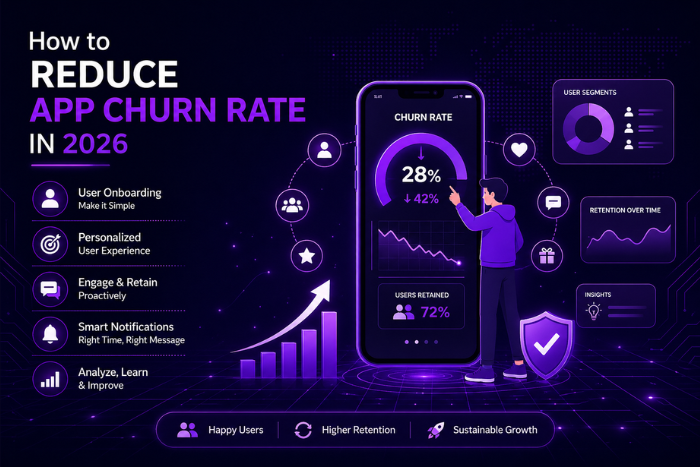
How to Reduce App Churn Rate in 2026
How to Reduce App Churn Rate in 2026 Learn how to reduce app churn rate in 2026 with proven retention strategies, personalization, analytics, and scalable mobile growth. Introduction In the highly competitive mobile app market, acquiring users is only half the battle—retaining them is what drives sustainable business growth. As user expectations rise in 2026, businesses must focus on reducing churn rates to maximize customer lifetime value, increase revenue, and maintain competitive advantage. App churn occurs when users stop engaging with or uninstall an app, often due to poor onboarding, lack of personalization, technical issues, or unmet expectations. Understanding how to reduce app churn rate in 2026 is essential for startups, SaaS companies, enterprises, and app developers aiming to improve retention and long-term profitability. With advanced analytics, AI-driven personalization, user behavior tracking, and strategic engagement techniques, businesses can significantly lower churn while building stronger customer loyalty. By implementing proactive retention strategies, companies can enhance user satisfaction, improve product adoption, and ensure their mobile applications remain valuable in a crowded digital ecosystem. This guide explores proven strategies, modern technologies, and scalable solutions to reduce app churn effectively in 2026. Why How to Reduce App Churn Rate in 2026 is Important Reducing app churn is critical because retaining existing users is significantly more cost-effective than acquiring new ones. Businesses that prioritize retention can improve profitability, strengthen brand loyalty, and create sustainable growth. Higher Customer Lifetime Value (CLV)Retained users generate more long-term revenue. Lower User Acquisition CostsReduced churn decreases the need for constant new user spending. Improved User EngagementActive users interact more frequently with app features. Better App Store RankingsHigher retention rates can improve app visibility and reviews. Enhanced Brand LoyaltySatisfied users are more likely to recommend your app. Scalable Business GrowthConsistent retention supports sustainable expansion. Data-Driven Product OptimizationUser insights help refine app performance and features. Types of Solutions for How to Reduce App Churn Rate in 2026 Businesses can implement multiple retention-focused solutions to minimize user loss and improve engagement: Personalized User OnboardingGuided experiences that accelerate time-to-value. AI-Powered Recommendation SystemsTailored content, products, or services for each user. Behavior Analytics & Churn PredictionIdentifying at-risk users before they leave. Push Notification OptimizationStrategic messaging without overwhelming users. In-App Engagement FeaturesGamification, loyalty rewards, and interactive experiences. Customer Support IntegrationReal-time support via chatbots or live assistance. Subscription Retention SystemsFlexible pricing, loyalty offers, and renewal optimization. Performance Optimization SolutionsFaster load times and seamless user experiences. Get Free Quotation Now..!! Key Features of How to Reduce App Churn Rate in 2026 Effective churn reduction strategies include advanced features designed to improve retention: Smart Onboarding FlowsPersonalized tutorials and frictionless account setup. Predictive AnalyticsAI models that detect churn risk patterns. User SegmentationTargeted retention strategies based on behavior. Automated Engagement CampaignsLifecycle emails, push notifications, and rewards. In-App Feedback SystemsReal-time surveys and user satisfaction monitoring. Performance MonitoringCrash detection, speed optimization, and technical stability. Loyalty ProgramsReward systems that increase repeat engagement. Cross-Platform Retention ToolsConsistent experiences across mobile, web, and desktop. Development Process A structured development approach ensures effective retention strategy implementation: Retention Audit & User Behavior AnalysisAnalyze churn metrics, user journeys, and drop-off points. Customer SegmentationIdentify high-value, active, and at-risk user groups. Retention Strategy PlanningDesign onboarding, personalization, and engagement initiatives. Feature DevelopmentImplement retention tools like push systems, analytics, and loyalty features. AI & Automation IntegrationDeploy predictive churn models and personalized campaigns. Testing & OptimizationA/B test retention strategies for maximum effectiveness. Deployment & Continuous MonitoringMonitor KPIs and refine strategies based on real-time data. Technology Stack for How to Reduce App Churn Rate in 2026 Modern churn reduction systems rely on advanced technologies: Programming Languages: Python, JavaScript, Swift, KotlinMobile Frameworks: Flutter, React NativeAnalytics Platforms: Mixpanel, Amplitude, Firebase AnalyticsAI/ML Frameworks: TensorFlow, PyTorchCRM & Engagement Tools: HubSpot, Braze, CleverTapPush Notification Systems: OneSignal, Firebase Cloud MessagingCloud Platforms: AWS, Google Cloud, Microsoft AzureDevOps Tools: Docker, Kubernetes Cost Factors for How to Reduce App Churn Rate in 2026 Several factors influence the cost of implementing churn reduction solutions: Analytics InfrastructureAdvanced data tracking tools may increase expenses. AI Model DevelopmentPredictive churn systems require specialized expertise. Personalization FeaturesCustom recommendation engines add development complexity. Customer Support SystemsIntegrating chatbots or support teams impacts budgets. Performance OptimizationTechnical improvements may require infrastructure investment. Marketing AutomationRetention campaigns involve software and operational costs. Team ExpertiseSkilled developers, analysts, and retention strategists affect pricing. Scalability RequirementsLarge user bases require more robust retention systems. Latest Trends Retention strategies are evolving rapidly with technological advancements: AI-Based Churn PredictionMachine learning identifies churn risks early. Hyper-PersonalizationIndividualized app experiences based on real-time behavior. Behavioral Push NotificationsContext-aware messaging improves engagement. Gamification ExpansionRewards, challenges, and loyalty mechanics boost retention. Voice & Conversational InterfacesEnhanced engagement through AI assistants. Community-Driven RetentionBuilding user communities within apps. Privacy-First Retention StrategiesBalancing personalization with regulatory compliance. Subscription FlexibilityAdaptive pricing models reduce cancellations. Why Choose Us for How to Reduce App Churn Rate in 2026 Reducing churn requires more than generic engagement tactics—it demands strategic expertise, technical excellence, and data-driven execution. Our team helps businesses build retention-focused mobile app ecosystems that maximize long-term success. Mobile Retention Specialists Deep expertise in user engagement, customer lifecycle management, and churn reduction strategies. AI-Driven Retention Solutions Advanced predictive analytics and automation tools to identify at-risk users and improve retention. Scalable App Architecture Future-ready mobile app systems designed to support sustainable growth and evolving customer needs. Advanced Analytics Integration Real-time behavioral insights, churn forecasting, and data-driven performance optimization. Performance-Focused Development Fast, reliable, and user-friendly mobile experiences that minimize drop-offs. Customized Business Strategies Tailored churn reduction solutions aligned with your industry, audience, and growth goals. Transparent Collaboration Clear communication, strategic planning, and continuous optimization throughout the development process. Conversion-Focused Execution Retention strategies built to increase engagement, maximize customer lifetime value, and drive long-term profitability. We help businesses transform user retention into a powerful growth engine with innovative, scalable, and conversion-focused mobile solutions. Ready to reduce app churn and maximize retention in 2026?Let’s build smarter engagement strategies for sustainable app growth.Contact us today for expert retention solutions tailored to your business. Get Free Quotation Now..!! Key Points : Reduce app churn with personalized onboarding and faster user activation. Improve retention through
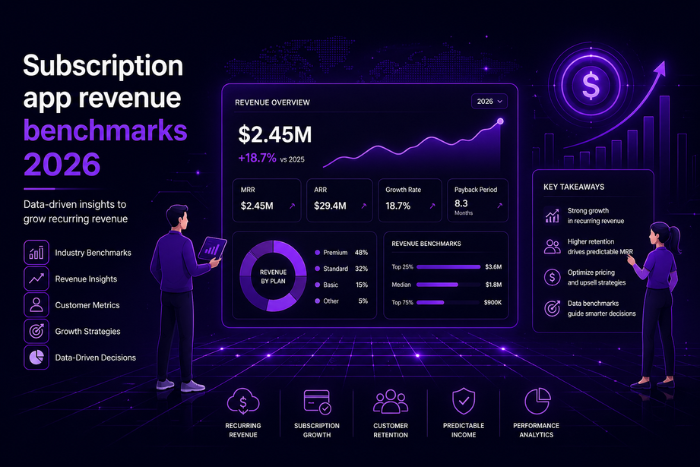
Subscription App Revenue Benchmarks 2026
Subscription App Revenue Benchmarks 2026 Explore subscription app revenue benchmarks 2026, including conversion rates, pricing, retention, and strategies to maximize app revenue growth. Introduction Subscription-based apps have become one of the most profitable digital business models in 2026. From SaaS platforms to fitness, AI tools, and content apps, recurring revenue is now the backbone of sustainable growth. However, success in this space isn’t just about launching a subscription—it’s about understanding performance benchmarks, user behavior, and revenue optimization strategies. The subscription app revenue benchmarks 2026 provide critical insights into how top-performing apps generate revenue, convert users, and retain subscribers. Metrics like lifetime value (LTV), conversion rates, retention, and pricing strategies define whether your app scales or stagnates. Recent data shows that subscription apps are evolving rapidly, with hybrid monetization models, AI-driven personalization, and smarter paywalls shaping revenue outcomes. If you’re building or scaling a subscription-based app, understanding these benchmarks is essential to compete effectively and maximize ROI in today’s highly competitive app ecosystem. Why Subscription App Revenue Benchmarks 2026 is Important Understanding subscription app revenue benchmarks 2026 helps businesses make data-driven decisions rather than relying on assumptions. First, benchmarks provide clarity on performance expectations. Without them, it’s difficult to know whether your app’s conversion rate or revenue per user is above or below industry standards. Second, they guide pricing and monetization strategies. Knowing what successful apps charge and how users respond helps you optimize pricing tiers and subscription plans. Third, benchmarks reduce risk. Instead of experimenting blindly, you can align your strategy with proven revenue models used by top-performing apps. Finally, they improve scalability. Apps that align with benchmark-driven growth strategies tend to achieve faster revenue growth and better user retention. In 2026, where competition is intense and user acquisition costs are rising, leveraging benchmarks is no longer optional—it’s a necessity. Types of Subscription App Revenue Benchmark Solutions When analyzing subscription app revenue benchmarks 2026, businesses typically focus on multiple solution categories: Revenue Benchmark AnalysisCompare your app’s revenue metrics (MRR, ARPU, LTV) with industry averages. Conversion Funnel OptimizationEvaluate download-to-trial and trial-to-paid conversion benchmarks. Retention BenchmarkingAnalyze churn rates, renewal rates, and long-term subscriber behavior. Pricing Strategy BenchmarkingCompare weekly, monthly, and annual pricing models across industries. Paywall Performance BenchmarkingMeasure how different paywall designs impact conversions. Regional Revenue BenchmarkingUnderstand how revenue performance varies across global markets. Get Free Quotation Now..!! Key Features of Subscription App Revenue Benchmarks 2026 A strong benchmarking strategy includes several critical features: Accurate Revenue Metrics TrackingMonitor key indicators like ARPU, LTV, and revenue per install (RPI). Conversion Rate AnalysisTrack user journey from download to paid subscription. Retention InsightsMeasure how long users stay subscribed and when they churn. Pricing Optimization ToolsIdentify the best-performing pricing tiers for your app category. User SegmentationAnalyze performance by geography, platform, and user behavior. Real-Time Data MonitoringContinuously update benchmarks based on current market trends. Competitive BenchmarkingCompare your app against top-performing competitors. Development Process Requirement AnalysisDefine business goals, target metrics, and key performance indicators (KPIs). Data Collection & IntegrationGather data from analytics tools, app stores, and user behavior tracking systems. Benchmark MappingAlign your app’s metrics with industry benchmarks and performance standards. Dashboard DevelopmentBuild intuitive dashboards for real-time monitoring and insights. Testing & ValidationEnsure accuracy and reliability of benchmark data. Deployment & OptimizationImplement insights into your app strategy and continuously refine performance. Technology Stack for Subscription App Revenue Benchmarks 2026 To implement effective benchmarking, modern technology stacks are essential: Analytics Tools: Firebase, Mixpanel, Amplitude Backend Technologies: Node.js, Python, Django Frontend Frameworks: React, Angular Cloud Platforms: AWS, Google Cloud, Azure Data Processing: BigQuery, Snowflake AI & ML Tools: Predictive analytics for churn and revenue forecasting These technologies enable real-time tracking, predictive insights, and scalable analytics solutions. Cost Factors for Subscription App Revenue Benchmarks 2026 Several factors influence the cost of implementing benchmarking solutions: Data ComplexityMore complex apps require advanced analytics and higher costs. Integration RequirementsConnecting multiple data sources increases development effort. Feature ScopeAdvanced features like AI predictions and segmentation add to costs. Team ExpertiseHiring experienced data analysts and developers impacts pricing. Maintenance & UpdatesContinuous monitoring and updates require ongoing investment. Scale of OperationsLarger apps with global audiences require more robust infrastructure. Latest Trends Subscription app monetization is evolving rapidly in 2026. Key trends include: AI-Driven PersonalizationApps use AI to tailor pricing and offers for individual users. Hybrid Monetization ModelsCombining subscriptions with in-app purchases and ads. Shorter Subscription CyclesWeekly plans are gaining popularity for faster conversions. Dynamic PaywallsPersonalized paywalls based on user behavior improve conversions. Web-to-App FunnelsApps leverage web onboarding to reduce platform fees and increase revenue. Retention-Focused GrowthRevenue growth is increasingly tied to long-term retention rather than acquisition. Why Choose Us for Subscription App Revenue Benchmarks 2026 Choosing the right partner can significantly impact your app’s success. We provide data-driven insights tailored to your business model, ensuring you make informed decisions at every stage. Our expertise in subscription app ecosystems allows us to identify growth opportunities that others miss. We focus on measurable results—improving conversion rates, increasing retention, and maximizing revenue. Our solutions are scalable, secure, and aligned with the latest industry trends. With a strong understanding of global app markets and user behavior, we help you stay ahead of competitors and achieve sustainable growth. Ready to optimize your subscription app revenue?Contact us today for a customized benchmarking solution.Let’s turn your app data into scalable revenue growth. Get Free Quotation Now..!! Key Points : Focus on subscription app revenue benchmarks 2026 to evaluate app performance accurately Track key metrics like LTV, ARPU, conversion rates, and retention for growth Optimize pricing strategies (weekly, monthly, annual plans) for higher revenue Improve download-to-paid conversion using data-driven funnel optimization Leverage AI-driven personalization and dynamic paywalls for better monetization FAQ’s What are subscription app revenue benchmarks? They are industry standards for metrics like revenue, conversion rates, and retention used to evaluate app performance. What is a good conversion rate for subscription apps in 2026? Top-performing apps achieve 5–10% or higher download-to-paid conversion rates depending on the category. How is lifetime value (LTV) calculated? LTV measures the total revenue generated by a user during their
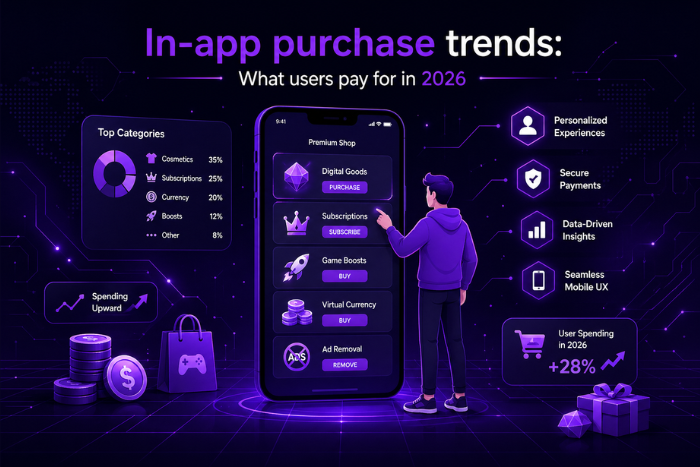
In-app purchase trends: What users pay for in 2026
In-app purchase trends: What users pay for in 2026 Explore in-app purchase trends: what users pay for in 2026, including subscriptions, and strategies to maximize app revenue. Introduction In-app purchases (IAP) have become the backbone of mobile app monetization, evolving far beyond simple upgrades or one-time purchases. In 2026, user spending behavior is driven by personalization, convenience, and perceived value rather than just functionality. From subscription-based models to microtransactions and hybrid monetization strategies, the way users pay within apps has transformed significantly. Modern users expect flexible pricing, seamless payment experiences, and value-driven offerings. Businesses that understand in-app purchase trends: what users pay for in 2026 can maximize revenue, improve retention, and build sustainable growth in a competitive app ecosystem. Why This Service is Important for In-app purchase trends: What users pay for in 2026 Understanding in-app purchase trends in 2026 is critical for building profitable mobile apps. Monetization is no longer just about adding a paywall—it’s about delivering value at the right moment. With rising competition, outdated monetization strategies lead to low conversions and poor retention. Businesses must adapt to modern user behavior, including demand for subscriptions, flexible pricing, and personalized offers. By aligning with these trends, companies can improve user engagement, increase lifetime value, and create scalable revenue streams. Types of Solutions for In-app purchase trends: What users pay for in 2026 Subscription-Based ModelsRecurring plans (weekly, monthly, yearly) driving predictable revenue Freemium UpgradesFree apps with premium features unlocked via purchase Consumable PurchasesItems like tokens, coins, or credits used repeatedly Non-Consumable PurchasesOne-time purchases such as lifetime access or ad removal Hybrid MonetizationCombining ads, subscriptions, and purchases Usage-Based PricingPay-per-use models, especially for AI and SaaS apps Get Free Quotation Now..!! Key Features of In-application purchase trends: What users pay for in 2026 Personalized pricing and offers Seamless in-app checkout experience Multi-currency support Subscription lifecycle management Secure payment integration A/B testing for paywalls AI-driven upselling Real-time analytics and tracking Development Process Requirement Analysis Monetization Strategy Planning Paywall UI/UX Design Payment Gateway Integration Backend Development Testing & Optimization Launch & Continuous Updates Technology Stack Frontend: Flutter, React Native, Swift, Kotlin Backend: Node.js, Python, Firebase Payments: Stripe, Razorpay, in-app billing APIs Analytics: Firebase Analytics, Mixpanel Cloud: AWS, Google Cloud Security: Encryption, OAuth Cost Factors of In-app purchase trends: What users pay for in 2026 App complexity and features Monetization model type Payment integration requirements Subscription management system UI/UX design complexity Security and compliance Third-party service costs Maintenance and updates Latest Trends Subscription models dominate revenue Weekly plans are growing faster than expected Hybrid monetization is becoming standard AI-powered features are premium offerings Dynamic paywalls improve conversions Web-based payments are rising Retention impacts revenue more than acquisition Continuous experimentation drives growth Industry insights show pricing strategy, plan duration, and paywall design significantly influence conversions and revenue . Why Choose Us for In-app purchase trends: What users pay for in 2026 We build monetization systems aligned with in-application purchase trends: what users pay for in 2026 to maximize revenue and engagement. Data-driven monetization strategies Conversion-focused paywall design Secure and scalable integrations Continuous optimization and testing Industry-specific expertise Ready to increase your app revenue?Contact us today for a customized monetization strategy.Let’s build an app users love—and pay for. Get Free Quotation Now..!! Key Points : Subscription-based models dominate user spending in 2026 Users prefer flexible pricing like weekly and monthly plans Hybrid monetization (ads + IAP + subscriptions) boosts revenue Personalized offers and dynamic pricing increase conversions AI-powered features are becoming premium paid services Seamless and fast checkout improves purchase completion rates FAQ’s What are the top in-app purchase trends in 2026? Subscriptions, hybrid monetization, and AI-driven pricing are leading trends. What do users pay for the most in apps? Premium features, subscriptions, content access, and convenience-based services. Why are subscriptions popular in 2026? They offer recurring revenue and better long-term user engagement. How can I improve in-app purchase conversions? Use personalized offers, optimize paywalls, and provide clear value. What role does AI play in monetization? AI helps personalize offers and optimize pricing strategies. Get Free Quotation Now..!!
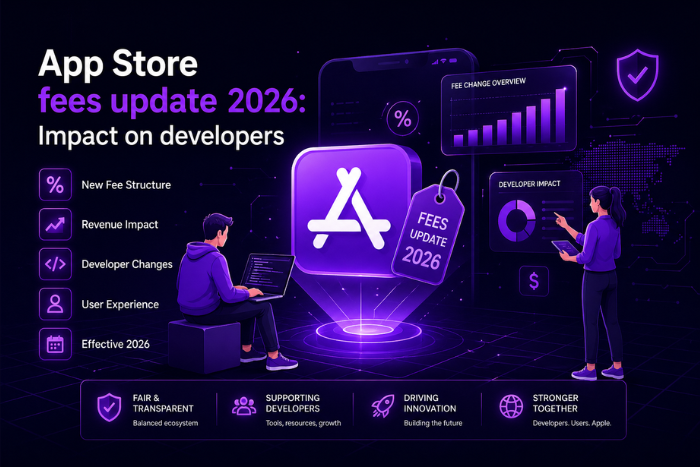
App Store Fees Update 2026: Impact on Developers
App Store Fees Update 2026: Impact on Developers Explore App Store fees update 2026 impact on developers, pricing changes, monetization strategies, and cost optimization tips. Introduction The App Store fees update 2026: impact on developers has become one of the most discussed topics in the mobile app ecosystem. With evolving regulations, platform policies, and monetization models, both Apple App Store and Google Play have introduced significant changes that directly affect how developers earn revenue from their apps. Traditionally, app stores charged commissions ranging from 15% to 30% on in-app purchases and subscriptions. However, in 2026, new rules—including alternative payment options, regional regulations, and flexible fee structures—are reshaping this landscape. These changes are driven by global regulatory pressures, developer demands, and the need for fair competition. While these updates provide developers with more control over monetization, they also introduce complexity. Developers must now navigate different fee structures based on region, payment methods, and app category. Understanding these changes is crucial for optimizing revenue, pricing strategies, and long-term profitability. This service helps developers and businesses understand the latest App Store fee changes, assess their impact, and implement strategies to maximize revenue while staying compliant in 2026. Why App Store Fees Update 2026: Impact on Developers is Important App store fee changes directly influence business profitability and growth. Affects Revenue MarginsCommission changes impact overall earnings. Introduces New Monetization OptionsAlternative payment methods provide flexibility. Increases Strategic ComplexityDifferent rules across regions require planning. Impacts User Pricing ModelsPricing strategies must adapt to fee structures. Enhances Developer ControlMore flexibility in payment systems. Supports Competitive AdvantageSmart strategies can maximize profits. Types of Solutions in App Store Fees Update 2026: Impact on Developers Developers can adopt various monetization and optimization strategies: In-App Purchase OptimizationAdjust pricing and subscription models. External Payment IntegrationReduce dependency on app store billing. Subscription-Based Revenue ModelsOptimize recurring revenue streams. Hybrid Monetization StrategiesCombine in-app and external payments. Regional Pricing OptimizationAdapt pricing based on local regulations. Freemium Model ImplementationOffer free features with paid upgrades. Ad-Based MonetizationGenerate revenue through ads. Web-to-App Monetization StrategiesDrive users to external payment platforms. Get Free Quotation Now..!! Key Features of App Store Fees Update 2026: Impact on Developers The 2026 updates introduce several important features: Flexible Commission StructuresReduced fees for small businesses and subscriptions. Alternative Payment OptionsSupport for external payment systems. Regional Fee VariationsDifferent rules across global markets. Subscription Fee ReductionsLower fees for long-term subscriptions. Improved Transparency in FeesClear breakdown of charges. Regulatory Compliance RequirementsAdherence to global laws and policies. Enhanced Developer ControlMore flexibility in monetization. Increased Competition Among PlatformsEncouraging innovation and better pricing. Development Process Fee Structure AnalysisUnderstand current app store fee policies. Revenue Model EvaluationAssess existing monetization strategies. Strategy PlanningDefine optimal pricing and payment methods. Implementation of Payment SolutionsIntegrate in-app and external payment systems. Testing & OptimizationEvaluate performance and revenue impact. Compliance CheckEnsure adherence to platform policies. Continuous Monitoring & AdjustmentAdapt strategies based on changes. Technology Stack for App Store Fees Update 2026: Impact on Developers Programming Languages: Swift, Kotlin, JavaScriptFrameworks: Flutter, React NativePayment Gateways: Stripe, PayPal, RazorpayAnalytics Tools: Firebase, Mixpanel, Google AnalyticsSubscription Management Tools: RevenueCat, ChargebeeBackend Technologies: Node.js, DjangoCloud Platforms: AWS, Google Cloud, AzureSecurity Tools: Encryption, Tokenization Cost Factors for App Store Fees Update 2026: Impact on Developers Several factors influence costs and revenue impact: Commission RatesVary based on platform and program. Payment Method ChoiceExternal payments may reduce fees. Subscription ModelLong-term subscriptions may have lower fees. Regional RegulationsDifferent rules across countries. App Category & TypeSome categories have specific fee structures. User Acquisition CostsMarketing expenses affect profitability. Operational OverheadManaging multiple payment systems. Compliance & Legal CostsAdhering to regulations adds expenses. Latest Trends Shift Toward Alternative PaymentsDevelopers using external billing systems. Regional Monetization StrategiesAdapting to local regulations. Subscription-Based Growth ModelsIncreasing focus on recurring revenue. Web-to-App MonetizationDriving users outside app stores for payments. Reduced Commission for Small DevelopersSupporting startups and small businesses. Increased Regulatory InfluenceGovernments shaping app store policies. Hybrid Revenue ModelsCombining multiple monetization strategies. Why Choose Us for App Store Fees Update 2026: Impact on Developers Monetization Expertise Optimize revenue strategies for maximum profit. Policy & Compliance Knowledge Stay compliant with evolving regulations. Cost Optimization Strategies Reduce fees and improve margins. Advanced Analytics Track and improve revenue performance. Custom Solutions Tailored strategies for your business model. End-to-End Support From strategy to implementation. Proven Results Experience in improving app monetization. Want to maximize your app revenue under new fee structures?Let us help you optimize your monetization strategy for 2026.Contact us today to get started. Get Free Quotation Now..!! Key Points : App Store fees in 2026 range from 15%–30% depending on program and model Alternative payment options help reduce dependency on platform commissions Subscription-based models offer lower long-term fees and better ROI Regional regulations create different fee structures across markets Hybrid monetization (in-app + external payments) is becoming standard FAQ’s What are the new App Store fees in 2026? Fees vary but typically range from 15% to 30% depending on programs and models. Can developers avoid App Store fees? Alternative payment methods can reduce dependency but may not eliminate fees entirely. How do fee changes impact revenue? They affect profit margins and pricing strategies. What is the best monetization strategy in 2026? A hybrid approach combining subscriptions and external payments. Do small developers get lower fees? Yes, many programs offer reduced commissions. Should developers use external payments? It depends on compliance, cost savings, and user experience. Get Free Quotation Now..!!
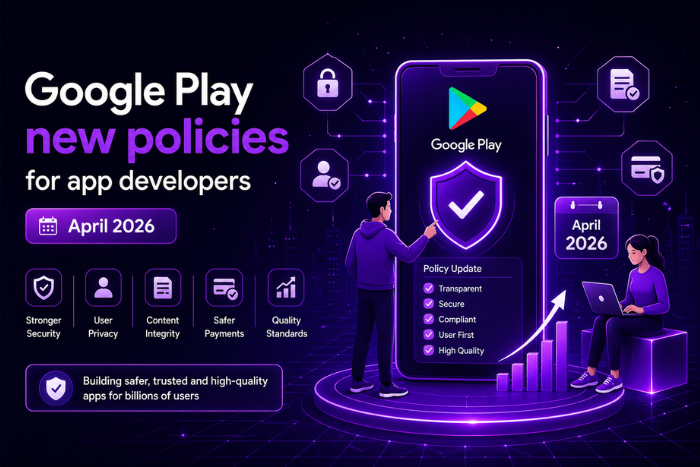
Google Play New Policies for App Developers April 2026
Google Play New Policies for App Developers April 2026 Learn Google Play new policies for app developers April 2026, compliance rules, updates, and how to stay approved on Play Store. Introduction In April 2026, Google Play introduced a series of policy updates aimed at improving user safety, transparency, and app quality across the platform. For developers, understanding these changes is no longer optional—it is essential for app approval, visibility, and long-term success. The Google Play new policies for app developers April 2026 bring stricter guidelines around data privacy, monetization, user experience, and content compliance. With millions of apps competing for attention, Google is prioritizing trust and security. Apps that fail to comply with updated policies risk rejection, removal, or even permanent suspension. At the same time, these updates also create opportunities for developers who follow best practices to gain higher rankings and better user trust. The 2026 updates reflect broader industry trends such as increased focus on data protection, AI regulation, and fair monetization practices. Developers must now ensure their apps meet stricter requirements for permissions, SDK usage, and transparency. This service helps developers understand, implement, and comply with the latest Google Play policies—ensuring smooth app approvals, reduced risks, and improved performance in 2026. Why Google Play New Policies for App Developers April 2026 is Important Policy compliance directly impacts your app’s success on the Play Store. Avoid App Rejection or RemovalEnsure compliance to stay live on the store. Improve User Trust & CredibilityTransparent apps attract more users. Enhance App Store RankingsPolicy-compliant apps perform better. Protect User Data & PrivacyMeet strict data protection requirements. Reduce Legal & Compliance RisksAvoid penalties and violations. Ensure Long-Term App StabilityMaintain consistent app availability. Types of Solutions in Google Play New Policies for App Developers April 2026 Developers can implement various compliance solutions: Policy Compliance AuditsEvaluate apps against new Google Play guidelines. Data Privacy & Security ImplementationEnsure proper data handling and permissions. Monetization Policy ComplianceAlign ads and in-app purchases with rules. SDK & API Compliance ChecksVerify third-party integrations. Content Moderation SolutionsEnsure app content meets guidelines. User Experience OptimizationImprove app usability and performance. App Store Listing OptimizationEnsure accurate and compliant metadata. Ongoing Compliance MonitoringTrack updates and maintain compliance. Get Free Quotation Now..!! Key Features of Google Play New Policies for App Developers April 2026 The latest policies focus on critical areas: Enhanced Data Privacy RequirementsClear user consent and data usage transparency. Strict SDK Usage GuidelinesControl over third-party integrations. Improved Content Moderation RulesRestrictions on harmful or misleading content. Monetization TransparencyClear pricing and billing practices. User Experience StandardsHigh-quality app performance requirements. Security & Malware ProtectionStronger safeguards against threats. Accurate Store ListingsHonest descriptions and visuals. Compliance Enforcement MechanismsAutomated and manual policy checks. Development Process Policy Analysis & Gap AssessmentReview current app compliance status. Compliance Strategy PlanningDefine required changes and updates. Implementation of Policy RequirementsUpdate app features, permissions, and data handling. Testing & ValidationEnsure compliance with guidelines. App Store Submission & ReviewSubmit app for approval. Monitoring & UpdatesTrack policy changes and maintain compliance. Continuous OptimizationImprove app performance and adherence. Technology Stack for Google Play New Policies for App Developers April 2026 Programming Languages: Java, Kotlin, Python, JavaScriptFrameworks: Flutter, React Native, Android SDKSecurity Tools: Encryption, Identity Management, OAuthAnalytics Tools: Firebase Analytics, Google AnalyticsCompliance Tools: Policy monitoring platforms, audit toolsCloud Platforms: Google Cloud, AWS, AzureTesting Tools: Espresso, Selenium, AppiumCI/CD Tools: Jenkins, GitHub Actions Cost Factors for Google Play New Policies for App Developers April 2026 Compliance costs depend on several factors: App ComplexityMore features require more compliance work. Data Privacy ImplementationSecurity measures increase costs. Third-Party IntegrationsSDK compliance adds effort. Testing & ValidationEnsuring compliance requires thorough testing. Legal & Regulatory RequirementsCompliance with regional laws. Ongoing Monitoring & UpdatesContinuous compliance maintenance. Team ExpertiseSkilled professionals may increase cost. Time-to-ComplianceFaster implementation may require more resources. Latest Trends Stricter Data Privacy RegulationsIncreased focus on user consent and transparency. AI & Automation in ComplianceAutomated tools for policy monitoring. Enhanced Security StandardsStronger protection against malware and fraud. Transparency in MonetizationClear pricing and billing practices. Improved User Experience RequirementsHigher quality standards for apps. Real-Time Policy EnforcementFaster detection of violations. Global Compliance AlignmentAdapting to international regulations. Why Choose Us for Google Play New Policies for App Developers April 2026 Compliance Expertise Deep understanding of Google Play policies. Risk Mitigation Strategies Reduce chances of app rejection or removal. End-to-End Support From audit to implementation and monitoring. Cost-Effective Solutions Optimize compliance without overspending. Advanced Tools & Technology Use modern tools for efficient compliance. Continuous Monitoring Stay updated with policy changes. Proven Track Record Successful compliance for multiple apps. Need help navigating Google Play policy updates?Let us ensure your app stays compliant and successful.Contact us today for expert compliance support. Get Free Quotation Now..!! Key Points : Google Play policies for application developers April 2026 focus heavily on data privacy, security, and transparency Apps must clearly disclose data usage and obtain proper user consent to remain compliant Strict SDK and third-party integration guidelines are now enforced more rigorously Monetization policies require transparent pricing and compliant in-app billing practices User experience and app quality standards are now key factors for approval and ranking Continuous monitoring and updates are necessary to stay compliant with evolving policies FAQ’s What are the major Google Play policy updates in April 2026? They focus on data privacy, monetization, security, and user experience. Why is compliance important for app developers? Non-compliance can lead to app rejection or removal. What happens if an app violates policies? It may be removed or suspended from the Play Store. Do policies affect app monetization? Yes, developers must follow strict billing and ad guidelines. How often do Google Play policies change? Policies are updated regularly to improve security and user experience. Can compliance improve app rankings? Yes, compliant apps are more likely to perform better. Get Free Quotation Now..!!
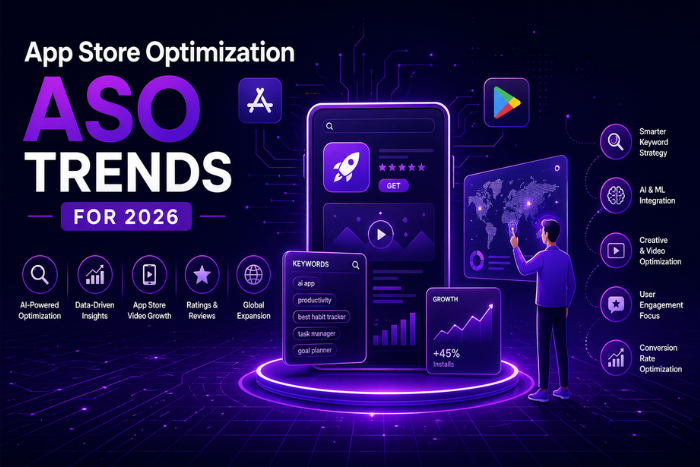
App Store Optimization ASO Trends for 2026
App Store Optimization ASO Trends for 2026 Explore App Store Optimization ASO trends for 2026 to boost app rankings, downloads, and visibility with advanced strategies. Introduction In 2026, App Store Optimization (ASO) has evolved far beyond simple keyword placement. With millions of apps competing for attention on platforms like the App Store and Google Play, businesses must adopt advanced strategies to improve visibility, rankings, and downloads. Understanding App Store Optimization ASO trends for 2026 is essential for developers, startups, and enterprises aiming to stay competitive in a crowded marketplace. Modern ASO is driven by a combination of factors including user behavior, AI-driven algorithms, retention rates, and visual optimization. App stores are increasingly prioritizing user engagement metrics such as downloads, ratings, session duration, and retention over traditional keyword-based ranking alone. Additionally, new features like custom product pages, AI-powered recommendations, and localized listings are reshaping how apps are discovered. Businesses must focus on both metadata (titles, descriptions, keywords) and creative assets (icons, screenshots, videos) to maximize performance. This service helps businesses implement data-driven ASO strategies, leverage the latest trends, and optimize their apps for maximum visibility and growth in 2026. Why App Store Optimization ASO Trends for 2026 is Important ASO plays a critical role in app success and growth. Improves App VisibilityHigher rankings in app store search results. Increases Organic DownloadsReduce dependency on paid advertising. Enhances User AcquisitionAttract high-quality users. Boosts Conversion RatesOptimize store listings for better installs. Supports Global ExpansionLocalization helps reach new markets. Maximizes ROICost-effective marketing strategy. Types of Solutions in App Store Optimization ASO Trends for 2026 Businesses can implement various ASO strategies: Keyword OptimizationResearch and optimize app store keywords. Metadata OptimizationImprove titles, descriptions, and tags. Visual Asset OptimizationEnhance icons, screenshots, and videos. Conversion Rate Optimization (CRO)Increase install rates from store views. Localization & Global ASOOptimize listings for different regions. A/B Testing for Store ListingsTest variations for better performance. Review & Rating ManagementImprove user feedback and ratings. Custom Product Page OptimizationTailor pages for specific audiences. Get Free Quotation Now..!! Key Features of App Store Optimization ASO Trends for 2026 Effective ASO strategies include: Advanced Keyword TargetingFocus on search intent and relevance. AI-Driven OptimizationUse data insights for better decisions. Visual Optimization StrategiesHigh-quality screenshots and videos. Retention-Based Ranking FactorsImprove user engagement metrics. Performance Analytics & TrackingMonitor rankings and downloads. Localization & PersonalizationTailor content for different markets. Competitor AnalysisBenchmark against competitors. Continuous Optimization ProcessRegular updates and improvements. Development Process ASO Audit & AnalysisEvaluate current app performance. Keyword Research & StrategyIdentify high-performing keywords. Metadata OptimizationOptimize titles, descriptions, and tags. Visual Asset EnhancementImprove screenshots and videos. A/B Testing & OptimizationTest variations for better results. Performance MonitoringTrack rankings and downloads. Continuous ImprovementUpdate strategies based on data. Technology Stack for App Store Optimization ASO Trends for 2026 ASO Tools: App Annie, Sensor Tower, Mobile ActionAnalytics Platforms: Firebase Analytics, Google AnalyticsA/B Testing Tools: SplitMetrics, StoreMavenKeyword Research Tools: SEMrush, AhrefsDesign Tools: Figma, Adobe XDAutomation Tools: AI-based optimization platformsData Visualization Tools: Tableau, Power BI Cost Factors for App Store Optimization ASO Trends for 2026 Several factors influence ASO costs: App Complexity & CategoryCompetitive niches require more effort. Keyword Research ScopeExtensive research increases cost. Localization RequirementsMultiple regions add expenses. Creative Asset DevelopmentHigh-quality visuals require investment. A/B Testing & OptimizationContinuous testing impacts cost. Tool & Software CostsPremium ASO tools add expenses. Ongoing Optimization EffortsASO is a continuous process. Agency vs In-House ApproachOutsourcing may increase cost but improve results. Latest Trends AI-Driven ASO StrategiesAutomated keyword and performance optimization. Retention as a Ranking FactorEngagement metrics influencing rankings. Custom Product Pages GrowthPersonalized app store experiences. Visual Search & OCR IntegrationScreenshots influencing discoverability. Voice & Semantic Search OptimizationAdapting to new search behaviors. Localization & Hyper-PersonalizationTargeting specific user segments. Integration of Paid & Organic StrategiesCombining ASO with app marketing. Why Choose Us for App Store Optimization ASO Trends for 2026 Data-Driven ASO Strategies Optimize based on real performance insights. Expertise in Latest Trends Stay ahead with cutting-edge ASO techniques. Conversion-Focused Approach Improve downloads and user engagement. Global ASO Expertise Expand your app to international markets. Continuous Optimization Ongoing improvements for sustained growth. Advanced Tools & Analytics Leverage the best ASO tools and technologies. Proven Results Track record of improving app rankings and downloads. Want to boost your app rankings and downloads in 2026?Let us optimize your app store presence for maximum visibility.Contact us today to start your ASO growth journey. Get Free Quotation Now..!! Key Points : Retention, engagement, and user behavior are now major ranking factors beyond keywords High-quality visuals like screenshots and videos significantly impact conversion rates Custom product pages and personalized listings are improving user targeting and installs Localization is essential for reaching global audiences and increasing downloads Combining ASO with paid marketing creates a stronger growth strategy FAQ’s What is App Store Optimization (ASO)? ASO is the process of improving app visibility and downloads in app stores. Why is ASO important in 2026? It helps apps rank higher and attract more users organically. What are the key ASO ranking factors? Keywords, downloads, ratings, retention, and engagement. How long does ASO take to show results? Typically 4–12 weeks depending on competition. Can ASO replace paid marketing? It reduces dependency but works best alongside paid strategies. Get Free Quotation Now..!!
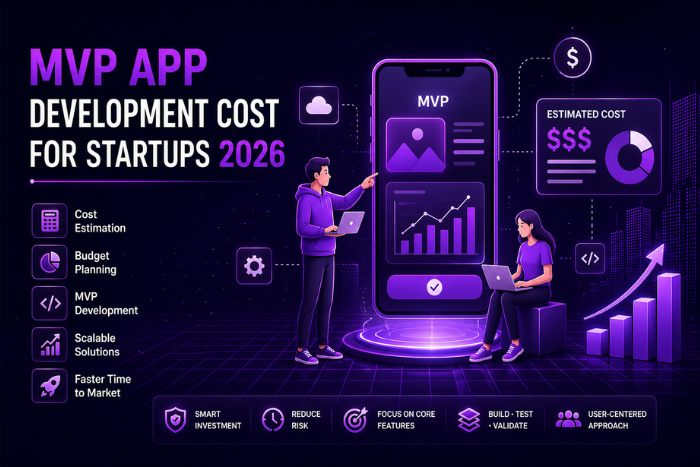
MVP App Development Cost for Startups 2026
MVP App Development Cost for Startups 2026 Explore MVP app development cost for startups 2026, pricing factors, timelines, and strategies to build cost-effective MVPs. Introduction For startups in 2026, building a Minimum Viable Product (MVP) is one of the smartest ways to validate ideas while minimizing risk and investment. Understanding the MVP app development cost for startups 2026 is crucial for founders who want to launch quickly, test market demand, and optimize their budgets. An MVP focuses on core features that solve a specific problem, allowing startups to gather real user feedback before investing in full-scale development. This lean approach helps reduce initial costs while increasing the chances of product-market fit. However, MVP costs can vary widely depending on factors such as complexity, platform choice, development approach, and team location. Startups must carefully balance speed, cost, and quality to ensure their MVP delivers real value. In today’s competitive landscape, leveraging modern technologies like AI-assisted development, cross-platform frameworks, and cloud infrastructure can significantly reduce MVP costs and timelines. This service helps startups plan, design, and build cost-effective MVPs—ensuring faster launches, better validation, and scalable growth in 2026. Why MVP App Development Cost for Startups 2026 is Important Understanding MVP cost helps startups make informed decisions and avoid overspending. Validates Business Ideas QuicklyTest concepts before full investment. Reduces Financial RiskAvoid spending on unproven ideas. Faster Time-to-MarketLaunch products quickly. Attracts InvestorsDemonstrates proof of concept. Focus on Core FeaturesPrioritize essential functionality. Supports Scalable GrowthBuild a foundation for future expansion. Types of Solutions in MVP App Development Cost for Startups 2026 Startups can choose from different MVP development approaches: No-Code MVP DevelopmentQuick and low-cost validation. Low-Code MVP SolutionsFaster development with limited customization. Custom MVP DevelopmentFully tailored solutions for unique ideas. Cross-Platform MVP AppsSingle codebase for multiple platforms. Web-Based MVPsBrowser-based applications for quick launch. Landing Page MVPsValidate demand before building the product. AI-Powered MVP DevelopmentIntegrate AI features for innovation. Hybrid MVP ApproachCombine no-code and custom development. Get Free Quotation Now..!! Key Features of MVP App Development Cost for Startups 2026 An effective MVP should include essential features only: Core Functionality FocusSolve the primary user problem. Simple UI/UX DesignEasy and intuitive user experience. Scalable ArchitectureReady for future expansion. Basic Analytics IntegrationTrack user behavior and performance. Fast Development CycleQuick launch to gather feedback. Cost Optimization StrategiesMinimize unnecessary expenses. Third-Party IntegrationsUse existing tools to reduce development effort. User Feedback MechanismsCollect insights for improvement. Development Process Idea Validation & Market ResearchIdentify target audience and problem. Feature PrioritizationDefine core MVP features. UI/UX Design & PrototypingCreate user-friendly designs. MVP DevelopmentBuild core functionality. Testing & Quality AssuranceEnsure performance and usability. Launch & User Feedback CollectionRelease MVP and gather insights. Iteration & ScalingImprove and expand features. Technology Stack for MVP App Development Cost for Startups 2026 Programming Languages: JavaScript, Python, Kotlin, SwiftFrameworks: Flutter, React Native, Angular, Node.jsNo-Code Platforms: Bubble, Adalo, WebflowBackend Technologies: Firebase, Django, Express.jsDatabases: MongoDB, PostgreSQL, MySQLCloud Platforms: AWS, Google Cloud, Microsoft AzureAnalytics Tools: Firebase Analytics, MixpanelDevOps Tools: Docker, Jenkins Cost Factors for MVP App Development Cost for Startups 2026 Several factors influence MVP development cost: App Complexity & FeaturesMore features increase cost. Platform ChoiceiOS, Android, or cross-platform. Development ApproachNo-code vs custom development. Team Location & ExpertiseOffshore teams reduce costs. Design RequirementsAdvanced UI/UX increases cost. Third-Party IntegrationsAPIs and services add expenses. Development TimelineFaster delivery may increase cost. Post-Launch IterationsContinuous improvements require budget. Estimated MVP Cost Ranges (2026): Simple MVP: $8,000 – $25,000 Medium MVP: $25,000 – $55,000 Complex MVP: $55,000 – $150,000+ Latest Trends AI-Assisted DevelopmentReducing development time and cost. No-Code & Low-Code AdoptionFaster MVP launches. Lean Startup MethodologyFocus on rapid validation. Cloud-Native MVP DevelopmentScalable and cost-efficient infrastructure. Cross-Platform Development GrowthReducing development effort. Data-Driven Product DecisionsUsing analytics for improvements. Faster Iteration CyclesContinuous updates based on feedback. Why Choose Us for MVP App Development Cost for Startups 2026 Startup-Focused Approach We understand startup challenges and budgets. Cost-Effective Development Optimize resources for maximum ROI. Rapid MVP Delivery Launch your product quickly. Scalable Solutions Build a strong foundation for growth. Expert Development Team Experienced in startup product development. Flexible Engagement Models Tailored solutions for your needs. End-to-End Support From idea validation to scaling. Ready to build your MVP and validate your idea?Let us help you launch faster with optimized costs.Contact us today to start your MVP journey. Get Free Quotation Now..!! Key Points : Building an MVP helps validate ideas quickly while minimizing financial risk Startups can use no-code, low-code, or custom development depending on budget and scalability needs Key cost factors include features, platform choice, design, and development team location Cross-platform and AI-assisted development are reducing MVP costs and timelines Focusing on core features helps avoid unnecessary expenses and speeds up launch A well-built MVP creates a strong foundation for scaling into a full product FAQ’s How much does MVP app development cost in 2026? It typically ranges from $8,000 to $150,000+ depending on complexity. How long does it take to build an MVP? Usually 4–16 weeks based on features and scope. What is the cheapest way to build an MVP? Using no-code or low-code platforms. Should startups choose no-code or custom MVP? Depends on complexity and scalability needs. Can an MVP be scaled into a full product? Yes, MVPs are designed for future expansion. How can startups reduce MVP development cost? By prioritizing features and using efficient technologies. Get Free Quotation Now..!!