

Explore App Store fees update 2026 impact on developers, pricing changes, monetization strategies, and cost optimization tips.
Introduction
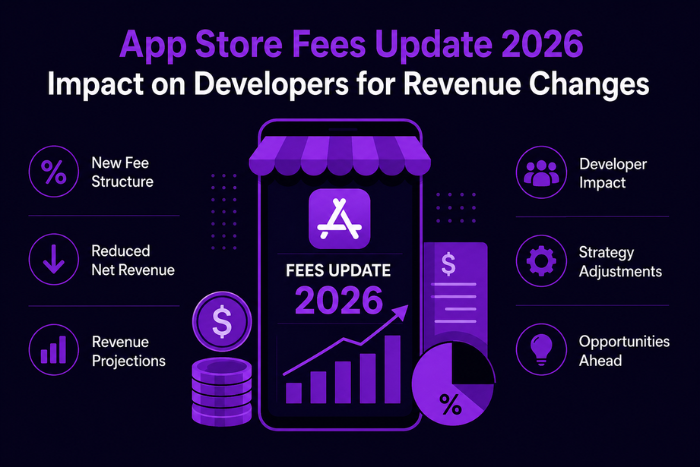
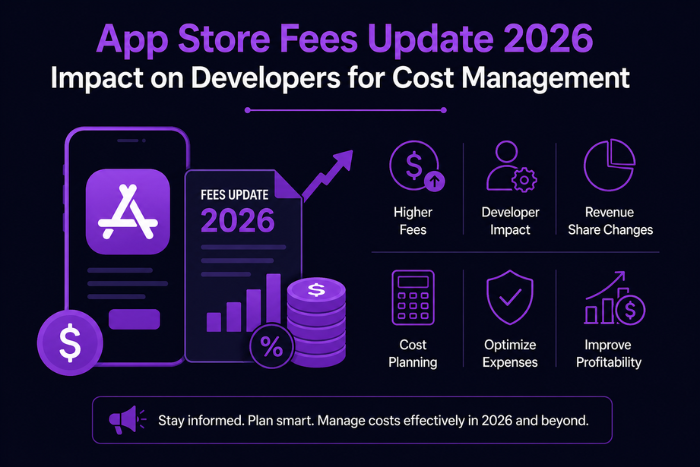
The App Store fees update 2026: impact on developers has become one of the most discussed topics in the mobile app ecosystem. With evolving regulations, platform policies, and monetization models, both Apple App Store and Google Play have introduced significant changes that directly affect how developers earn revenue from their apps.
Traditionally, app stores charged commissions ranging from 15% to 30% on in-app purchases and subscriptions. However, in 2026, new rules—including alternative payment options, regional regulations, and flexible fee structures—are reshaping this landscape. These changes are driven by global regulatory pressures, developer demands, and the need for fair competition.
While these updates provide developers with more control over monetization, they also introduce complexity. Developers must now navigate different fee structures based on region, payment methods, and app category. Understanding these changes is crucial for optimizing revenue, pricing strategies, and long-term profitability.
This service helps developers and businesses understand the latest App Store fee changes, assess their impact, and implement strategies to maximize revenue while staying compliant in 2026.
Why App Store Fees Update 2026: Impact on Developers is Important
App store fee changes directly influence business profitability and growth.
- Affects Revenue Margins
Commission changes impact overall earnings. - Introduces New Monetization Options
Alternative payment methods provide flexibility. - Increases Strategic Complexity
Different rules across regions require planning. - Impacts User Pricing Models
Pricing strategies must adapt to fee structures. - Enhances Developer Control
More flexibility in payment systems. - Supports Competitive Advantage
Smart strategies can maximize profits.
Types of Solutions in App Store Fees Update 2026: Impact on Developers
Developers can adopt various monetization and optimization strategies:
- In-App Purchase Optimization
Adjust pricing and subscription models. - External Payment Integration
Reduce dependency on app store billing. - Subscription-Based Revenue Models
Optimize recurring revenue streams. - Hybrid Monetization Strategies
Combine in-app and external payments. - Regional Pricing Optimization
Adapt pricing based on local regulations. - Freemium Model Implementation
Offer free features with paid upgrades. - Ad-Based Monetization
Generate revenue through ads. - Web-to-App Monetization Strategies
Drive users to external payment platforms.
Key Features of App Store Fees Update 2026: Impact on Developers
The 2026 updates introduce several important features:
- Flexible Commission Structures
Reduced fees for small businesses and subscriptions. - Alternative Payment Options
Support for external payment systems. - Regional Fee Variations
Different rules across global markets. - Subscription Fee Reductions
Lower fees for long-term subscriptions. - Improved Transparency in Fees
Clear breakdown of charges. - Regulatory Compliance Requirements
Adherence to global laws and policies. - Enhanced Developer Control
More flexibility in monetization. - Increased Competition Among Platforms
Encouraging innovation and better pricing.
Development Process
- Fee Structure Analysis
Understand current app store fee policies. - Revenue Model Evaluation
Assess existing monetization strategies. - Strategy Planning
Define optimal pricing and payment methods. - Implementation of Payment Solutions
Integrate in-app and external payment systems. - Testing & Optimization
Evaluate performance and revenue impact. - Compliance Check
Ensure adherence to platform policies. - Continuous Monitoring & Adjustment
Adapt strategies based on changes.
Technology Stack for App Store Fees Update 2026: Impact on Developers
Programming Languages: Swift, Kotlin, JavaScript
Frameworks: Flutter, React Native
Payment Gateways: Stripe, PayPal, Razorpay
Analytics Tools: Firebase, Mixpanel, Google Analytics
Subscription Management Tools: RevenueCat, Chargebee
Backend Technologies: Node.js, Django
Cloud Platforms: AWS, Google Cloud, Azure
Security Tools: Encryption, Tokenization
Cost Factors for App Store Fees Update 2026: Impact on Developers
Several factors influence costs and revenue impact:
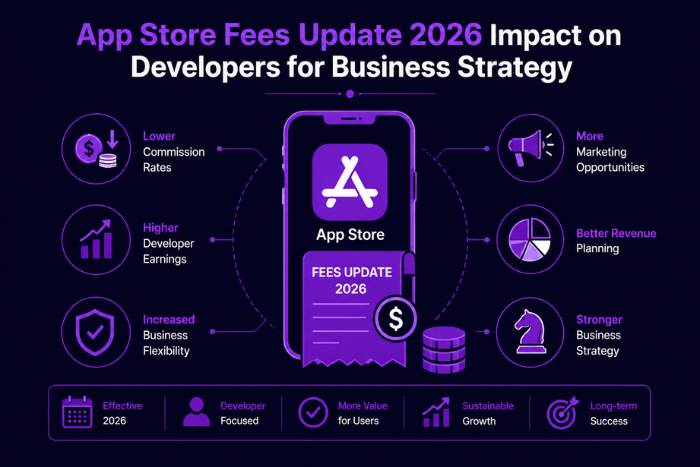
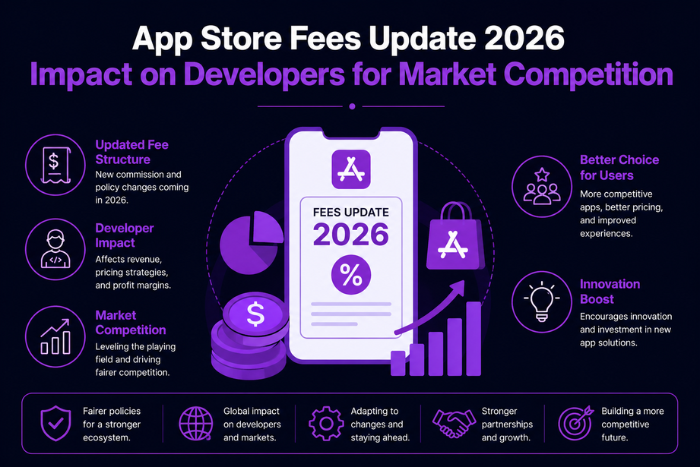
- Commission Rates
Vary based on platform and program. - Payment Method Choice
External payments may reduce fees. - Subscription Model
Long-term subscriptions may have lower fees. - Regional Regulations
Different rules across countries. - App Category & Type
Some categories have specific fee structures. - User Acquisition Costs
Marketing expenses affect profitability. - Operational Overhead
Managing multiple payment systems. - Compliance & Legal Costs
Adhering to regulations adds expenses.
Latest Trends
- Shift Toward Alternative Payments
Developers using external billing systems. - Regional Monetization Strategies
Adapting to local regulations. - Subscription-Based Growth Models
Increasing focus on recurring revenue. - Web-to-App Monetization
Driving users outside app stores for payments. - Reduced Commission for Small Developers
Supporting startups and small businesses. - Increased Regulatory Influence
Governments shaping app store policies. - Hybrid Revenue Models
Combining multiple monetization strategies.
Why Choose Us for App Store Fees Update 2026: Impact on Developers
Monetization Expertise
Optimize revenue strategies for maximum profit.
Policy & Compliance Knowledge
Stay compliant with evolving regulations.
Cost Optimization Strategies
Reduce fees and improve margins.
Advanced Analytics
Track and improve revenue performance.
Custom Solutions
Tailored strategies for your business model.
End-to-End Support
From strategy to implementation.
Proven Results
Experience in improving app monetization.
Want to maximize your app revenue under new fee structures?
Let us help you optimize your monetization strategy for 2026.
Contact us today to get started.
Key Points :
- App Store fees in 2026 range from 15%–30% depending on program and model
- Alternative payment options help reduce dependency on platform commissions
- Subscription-based models offer lower long-term fees and better ROI
- Regional regulations create different fee structures across markets
- Hybrid monetization (in-app + external payments) is becoming standard
FAQ's
Fees vary but typically range from 15% to 30% depending on programs and models.
Alternative payment methods can reduce dependency but may not eliminate fees entirely.
They affect profit margins and pricing strategies.
A hybrid approach combining subscriptions and external payments.
Yes, many programs offer reduced commissions.
It depends on compliance, cost savings, and user experience.