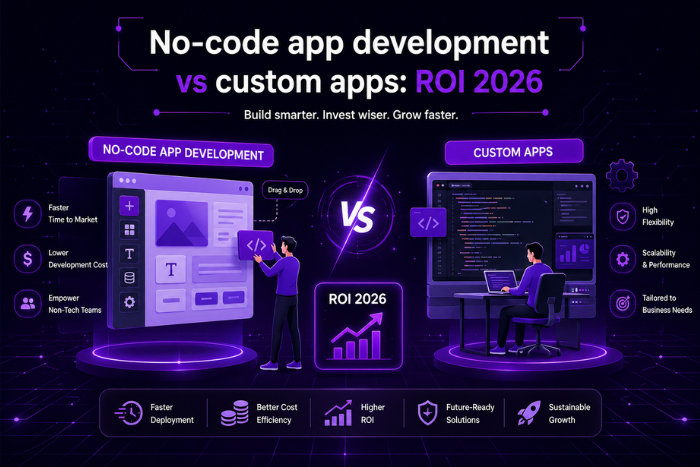
No-code App Development vs Custom Apps: ROI 2026 Compare no-code app development vs custom apps ROI 2026, costs, scalability, and best choice for your business growth. Introduction In 2026, businesses are increasingly evaluating whether to build applications using no-code platforms or invest in fully custom development. The debate around no-code application development vs custom apps: ROI 2026 has become central to digital strategy, especially for startups and enterprises aiming to optimize costs while scaling efficiently. No-code and low-code platforms have gained massive traction due to their speed and accessibility, enabling non-technical users to build apps quickly. On the other hand, custom app development offers unmatched flexibility, scalability, and long-term value—making it the preferred choice for complex and high-growth businesses. The real question is not just which option is cheaper, but which delivers the best return on investment (ROI) over time. While no-code solutions reduce initial costs, they may introduce limitations in customization, performance, and scalability. Custom apps, though requiring higher upfront investment, often provide better long-term ROI through tailored features and ownership. This service helps businesses evaluate both approaches, understand ROI implications, and choose the right development strategy for sustainable growth in 2026. Why No-code App Development vs Custom Apps: ROI 2026 is Important Choosing the right development approach directly impacts business growth and profitability. Cost vs Long-Term ValueBalance between initial investment and future returns. Speed of DevelopmentFaster launches vs scalable solutions. Flexibility & CustomizationAbility to adapt to business needs. Scalability ConsiderationsSupport for growth and increasing users. Ownership & ControlData and system ownership differences. Competitive AdvantageCustom features vs standard templates. Types of Solutions in No-code App Development vs Custom Apps: ROI 2026 Businesses can choose from multiple development approaches: No-Code PlatformsDrag-and-drop tools for rapid app creation. Low-Code DevelopmentMinimal coding with some customization. Custom App DevelopmentFully tailored applications built from scratch. Hybrid Development ApproachCombining no-code with custom features. MVP Development with No-CodeQuick validation of ideas. Enterprise Custom ApplicationsComplex systems with advanced integrations. SaaS-Based No-Code SolutionsSubscription-based platforms. Migration from No-Code to CustomScaling apps as business grows. Get Free Quotation Now..!! Key Features of No-code App Development vs Custom Apps: ROI 2026 Understanding feature differences helps evaluate ROI: Development SpeedNo-code offers faster deployment. Customization CapabilityCustom apps provide full flexibility. ScalabilityCustom apps handle large user bases better. Cost EfficiencyNo-code reduces upfront costs. Integration CapabilitiesCustom apps support complex integrations. Performance OptimizationCustom apps deliver higher performance. Security & ComplianceCustom solutions offer better control. Ownership & Data ControlCustom apps ensure full ownership. Development Process Requirement Analysis & Business GoalsDefine objectives and expected ROI. Approach Selection (No-Code vs Custom)Choose the right development strategy. UI/UX Design & PrototypingCreate user-friendly interfaces. Application DevelopmentBuild using chosen approach. Integration & TestingEnsure compatibility and performance. Deployment & LaunchRelease the application. Monitoring & OptimizationImprove performance and ROI over time. Technology Stack for No-code App Development vs Custom Apps: ROI 2026 No-Code Platforms: Bubble, Adalo, Glide, WebflowLow-Code Platforms: OutSystems, MendixProgramming Languages: JavaScript, Python, Java, Kotlin, SwiftFrameworks: Flutter, React Native, Angular, Node.jsBackend Technologies: Django, Spring Boot, Express.jsDatabases: MongoDB, PostgreSQL, MySQLCloud Platforms: AWS, Google Cloud, Microsoft AzureAnalytics Tools: Firebase, Mixpanel Cost Factors for No-code App Development vs Custom Apps: ROI 2026 Several factors influence ROI and cost: Initial Development CostNo-code is cheaper upfront; custom requires investment. Subscription & Licensing FeesNo-code platforms have recurring costs. Scalability CostsCustom apps scale more efficiently. Maintenance & UpdatesCustom apps offer better long-term control. Integration RequirementsComplex integrations increase cost. Performance Optimization NeedsCustom apps may require additional investment. Migration CostsMoving from no-code to custom can be expensive. Total Cost of Ownership (TCO)Long-term cost comparison is crucial. Latest Trends Rise of No-Code AdoptionStartups using no-code for rapid MVPs. Hybrid Development ModelsCombining no-code with custom solutions. AI Integration in No-Code PlatformsEnhancing capabilities and automation. Shift Toward Custom for ScalingBusinesses moving to custom apps as they grow. Focus on ROI-Driven DevelopmentDecisions based on long-term value. Low-Code Enterprise SolutionsIncreasing adoption in large organizations. Improved No-Code CapabilitiesExpanding features and integrations. Why Choose Us for No-code App Development vs Custom Apps: ROI 2026 Strategic Consulting We help you choose the best development approach. ROI-Focused Solutions Maximize long-term value and performance. Custom & No-Code Expertise Experience in both development models. Scalable Development Strategies Build solutions that grow with your business. Cost Optimization Balance budget and performance effectively. End-to-End Services From planning to deployment and scaling. Continuous Support Ongoing improvements and optimization. Not sure whether to choose no-code or custom development?Let’s help you make the right decision for maximum ROI.Contact us today to start building your app strategy. Get Free Quotation Now..!! Key Points : Custom app development provides better scalability, flexibility, and long-term ROI for growing businesses No-code platforms have limitations in customization, performance, and complex integrations Custom apps ensure full ownership, better security, and advanced feature capabilities Hybrid approaches combining no-code and custom development are becoming popular in 2026 Total cost of ownership (TCO) is crucial when comparing long-term ROI between both approaches FAQ’s What is the main difference between no-code and custom apps? No-code uses pre-built tools, while custom apps are built from scratch. Which option offers better ROI in 2026? Custom apps provide better long-term ROI, while no-code is cost-effective initially. Is no-code suitable for startups? Yes, it’s ideal for MVPs and quick launches. Can I switch from no-code to custom later? Yes, but migration may involve additional costs. How much does custom app development cost? Costs vary depending on complexity and features. What is a hybrid development approach? Combining no-code tools with custom development for flexibility. Get Free Quotation Now..!!
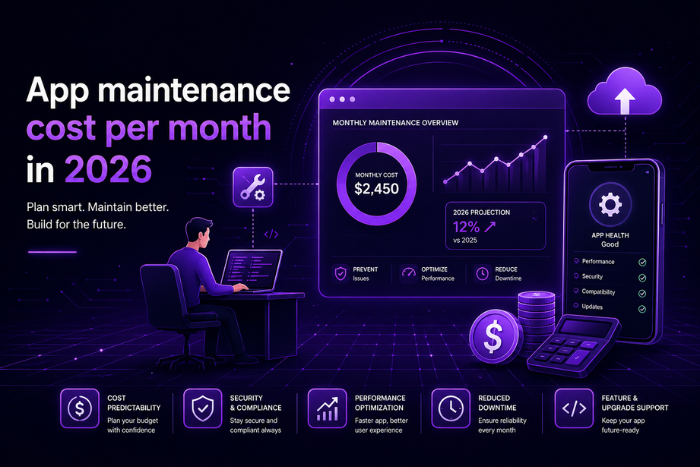
App Maintenance Cost Per Month in 2026
App Maintenance Cost Per Month in 2026 Learn app maintenance cost per month in 2026, factors, pricing, and strategies to optimize long-term app performance and budget. Introduction Building a mobile or web application is only the beginning—ongoing maintenance is what ensures long-term success. In 2026, businesses are increasingly focusing on app maintenance cost per month in 2026 as a critical part of their digital strategy. Whether it’s fixing bugs, updating features, improving performance, or ensuring security compliance, maintenance plays a vital role in keeping applications relevant and functional. Many companies underestimate post-launch costs, assuming development is the primary expense. However, app maintenance typically accounts for 15–25% of the initial development cost annually, making it an essential budget consideration. Monthly costs can vary significantly depending on app complexity, user base, infrastructure, and required updates. With evolving technologies, changing user expectations, and frequent OS updates, apps require continuous improvements to stay competitive. Businesses must adopt proactive maintenance strategies to reduce downtime, enhance user experience, and avoid costly disruptions. This service helps organizations plan, manage, and optimize app maintenance costs—ensuring efficiency, scalability, and long-term ROI in 2026. Why App Maintenance Cost Per Month in 2026 is Important App maintenance is essential for ensuring performance, security, and user satisfaction. Ensures App Stability & PerformanceRegular updates prevent crashes and improve speed. Enhances User ExperienceContinuous improvements keep users engaged. Maintains Security & ComplianceProtects against vulnerabilities and data breaches. Supports OS & Device UpdatesEnsures compatibility with new platforms. Reduces Long-Term CostsPrevents expensive fixes through proactive maintenance. Improves Business ContinuityMinimizes downtime and disruptions. Types of Solutions in App Maintenance Cost Per Month in 2026 Businesses can choose from different maintenance approaches: Corrective MaintenanceFixing bugs and resolving issues. Adaptive MaintenanceUpdating apps for new OS versions and devices. Perfective MaintenanceEnhancing features and performance. Preventive MaintenanceProactively identifying and resolving potential issues. Cloud & Infrastructure MaintenanceManaging servers, hosting, and scalability. Security & Compliance UpdatesEnsuring data protection and regulatory compliance. Third-Party Integration MaintenanceUpdating APIs and external services. Performance Optimization ServicesImproving speed and responsiveness. Get Free Quotation Now..!! Key Features of App Maintenance Cost Per Month in 2026 Effective maintenance services include essential features: Bug Fixing & Issue ResolutionContinuous monitoring and quick fixes. Performance MonitoringTracking app speed and user behavior. Regular Updates & EnhancementsAdding new features and improvements. Security Patches & UpdatesProtecting against vulnerabilities. Backup & Disaster RecoveryEnsuring data safety. Scalability ManagementHandling growing user demand. Analytics & ReportingInsights into app performance. User Support & Feedback IntegrationAddressing user concerns effectively. Development Process Maintenance Requirement AnalysisIdentify ongoing needs and priorities. Monitoring & Issue DetectionTrack app performance and detect issues. Bug Fixing & UpdatesResolve issues and implement improvements. Performance OptimizationEnhance speed and usability. Security & Compliance UpdatesApply necessary patches and upgrades. Testing & Quality AssuranceEnsure stability after updates. Continuous Monitoring & SupportMaintain long-term app performance. Technology Stack for App Maintenance Cost Per Month in 2026 Programming Languages: Java, Kotlin, Swift, Python, JavaScriptFrameworks: Flutter, React Native, Angular, Node.jsBackend Technologies: Django, Spring Boot, Express.jsDatabases: MySQL, PostgreSQL, MongoDBCloud Platforms: AWS, Google Cloud, Microsoft AzureMonitoring Tools: New Relic, Datadog, FirebaseDevOps Tools: Docker, Kubernetes, JenkinsSecurity Tools: Encryption, Firewalls, Identity Management Cost Factors for App Maintenance Cost Per Month in 2026 Several factors determine monthly maintenance costs: App Complexity & FeaturesMore features require higher maintenance. User Base SizeLarger user bases increase infrastructure costs. Platform (iOS, Android, Web)Multi-platform apps cost more to maintain. Hosting & InfrastructureCloud services impact monthly expenses. Frequency of UpdatesRegular updates increase costs. Third-Party ServicesAPIs and integrations add expenses. Security RequirementsAdvanced security measures increase cost. Support & Maintenance Team SizeLarger teams lead to higher costs. Latest Trends AI-Based Monitoring ToolsAutomated issue detection and resolution. Cloud-Native Maintenance SolutionsScalable and cost-efficient infrastructure. Automation in Testing & UpdatesFaster and more reliable maintenance. Focus on User Experience OptimizationContinuous UI/UX improvements. Cybersecurity EnhancementsIncreased focus on data protection. Predictive MaintenancePreventing issues before they occur. Integration with Analytics PlatformsData-driven maintenance strategies. Why Choose Us for App Maintenance Cost Per Month in 2026 Expert Maintenance Services Comprehensive support for all app types. Cost Optimization Strategies Reduce maintenance expenses while improving performance. Proactive Monitoring Prevent issues before they impact users. Scalable Solutions Support growing user bases and features. Advanced Security Measures Protect your app and user data. End-to-End Support From updates to performance optimization. Proven Experience Track record of successful app maintenance projects. Want to optimize your app maintenance costs in 2026?Let us help you keep your app secure, scalable, and high-performing.Contact us today for expert maintenance solutions. Get Free Quotation Now..!! Key Points : App maintenance cost per month in 2026 typically ranges from $500 to $5,000+ depending on app complexity and scale Maintenance usually accounts for 15–25% of the initial development cost annually Key cost drivers include app features, user base, platform (iOS, Android, web), and infrastructure Regular updates, bug fixes, and performance optimization are essential for long-term success Cloud hosting, third-party APIs, and security requirements add to monthly expenses Proactive maintenance reduces downtime and prevents costly issues in the future FAQ’s How much does app maintenance cost per month in 2026? It typically ranges from $500 to $5,000+ depending on app complexity. What percentage of development cost is maintenance? Usually 15–25% annually. Why is app maintenance necessary? To ensure performance, security, and user satisfaction. What factors affect maintenance cost? Complexity, user base, infrastructure, and updates. Can maintenance costs be reduced? Yes, through proactive strategies and automation. How often should apps be updated? Regular updates are recommended based on user needs and OS changes. Get Free Quotation Now..!!
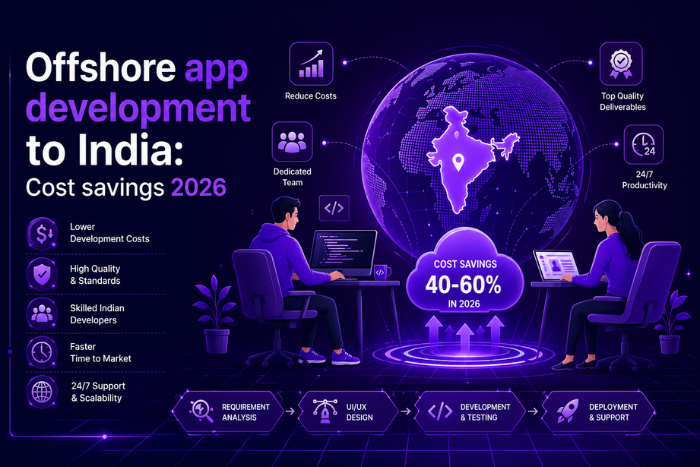
Offshore App Development to India: Cost Savings 2026
Offshore App Development to India: Cost Savings 2026 Discover offshore app development to India cost savings 2026, benefits, pricing, and how to maximize ROI with outsourcing. Introduction In 2026, offshore app development to India has become one of the most strategic decisions for businesses aiming to reduce costs while maintaining high-quality output. With the global demand for mobile and web applications rising, companies are increasingly turning to India as a preferred outsourcing destination due to its vast talent pool, competitive pricing, and strong technical expertise. The concept of offshore application development to India: cost savings 2026 goes beyond just lower hourly rates. It involves optimizing total cost of ownership (TCO), improving efficiency, and leveraging global collaboration to accelerate product development. Businesses can achieve up to 60–70% cost savings by outsourcing development to offshore teams while reinvesting those savings into innovation and growth . India offers a unique combination of affordability, scalability, and quality, making it ideal for startups, SMEs, and enterprises. However, successful offshore development requires careful planning, the right engagement model, and effective communication strategies. This service helps businesses plan, execute, and optimize offshore app development in India—ensuring maximum cost savings, high performance, and long-term success in 2026. Why Offshore App Development to India: Cost Savings 2026 is Important Offshore development is no longer just a cost-cutting measure—it’s a growth strategy. Significant Cost ReductionLower development costs compared to Western markets. Access to Skilled TalentLarge pool of experienced developers across technologies. Scalable Development TeamsEasily expand or reduce team size based on needs. Faster Time-to-MarketRound-the-clock development cycles. Focus on Core Business ActivitiesOutsource development while focusing on strategy. High ROI & Business GrowthReinvest savings into innovation and scaling. Types of Solutions in Offshore App Development to India: Cost Savings 2026 Businesses can choose from various offshore development solutions: Dedicated Offshore Development TeamsFull-time teams working exclusively on your project. Project-Based OutsourcingFixed-scope projects with defined timelines. Staff AugmentationAdd offshore developers to your existing team. Mobile App Development (iOS & Android)Native and cross-platform applications. Web Application DevelopmentScalable and responsive web solutions. Enterprise Software DevelopmentComplex systems for large organizations. AI & Emerging Technology SolutionsAdvanced applications using AI, ML, and blockchain. Maintenance & Support ServicesOngoing updates and performance optimization. Get Free Quotation Now..!! Key Features of Offshore App Development to India: Cost Savings 2026 Offshore development offers several advantages that drive efficiency and cost savings: Cost Efficiency & Budget OptimizationReduce development expenses significantly. Flexible Engagement ModelsChoose between T&M, fixed price, or dedicated teams. High-Quality Development StandardsAccess to skilled and experienced developers. Time Zone AdvantageContinuous development cycles for faster delivery. Advanced Communication ToolsSeamless collaboration across locations. Scalable InfrastructureEasily adjust resources based on project needs. Robust Quality AssuranceComprehensive testing and performance checks. Security & Compliance MeasuresEnsure data protection and IP safety. Development Process Requirement Analysis & Offshore StrategyDefine project goals and outsourcing objectives. Vendor Selection & EvaluationChoose the right offshore development partner. Engagement Model FinalizationSelect T&M, fixed price, or dedicated team model. Project Planning & Team SetupAllocate resources and define workflows. Application Development & IntegrationBuild frontend, backend, and integrate systems. Testing & Quality AssuranceEnsure performance, security, and reliability. Deployment & Ongoing SupportLaunch and maintain the application. Technology Stack for Offshore App Development to India: Cost Savings 2026 Programming Languages: Java, Kotlin, Swift, Python, JavaScriptFrameworks: Flutter, React Native, Angular, Node.jsBackend Technologies: Spring Boot, Django, Express.jsDatabases: PostgreSQL, MySQL, MongoDBCloud Platforms: AWS, Google Cloud, Microsoft AzureDevOps Tools: Docker, Kubernetes, JenkinsTesting Tools: Selenium, AppiumCollaboration Tools: Jira, Slack, Trello Cost Factors for Offshore App Development to India: Cost Savings 2026 Understanding cost factors is crucial for maximizing savings: Developer Rates & LocationIndia offers significantly lower hourly rates. Engagement Model SelectionT&M, fixed price, or dedicated team impacts cost. Project ComplexityAdvanced features increase development effort. Infrastructure & ToolsCloud, licenses, and security systems add costs. Management & Communication OverheadCoordination across teams requires investment. Quality Assurance & TestingProper QA reduces long-term costs. Compliance & Legal RequirementsEnsuring IP protection and regulations. Total Cost of Ownership (TCO)Includes development, maintenance, and operations. Latest Trends Hybrid Offshore ModelsCombining onshore strategy with offshore execution. AI-Powered Development ToolsImproving efficiency and reducing costs. Cloud-Native DevelopmentScalable and flexible infrastructure. Focus on TCO OptimizationBusinesses evaluating total cost instead of hourly rates. Global Remote CollaborationSeamless teamwork across countries. Increased Demand for Dedicated TeamsLong-term offshore partnerships. Enhanced Cybersecurity MeasuresStronger focus on data protection. Why Choose Us for Offshore App Development to India: Cost Savings 2026 Offshore Expertise Deep experience in managing offshore development projects. Cost Optimization Strategies Maximize savings without compromising quality. Access to Top Talent Connect with skilled developers in India. Flexible Engagement Models Tailored solutions for your business needs. Transparent Communication Clear processes and regular updates. Scalable Solutions Adapt teams as your project grows. End-to-End Support From planning to deployment and maintenance. Looking to reduce your app development costs with offshore teams?Let’s help you build high-quality apps while maximizing cost savings.Contact us today to start your offshore development journey. Get Free Quotation Now..!! Key Points : Offshore app development to India in 2026 offers significant cost savings of up to 60–70% compared to Western markets Businesses gain access to a large pool of skilled developers across mobile, web, and emerging technologies Flexible engagement models like dedicated teams, fixed-price, and staff augmentation help optimize costs Total cost of ownership (TCO) is more important than just hourly rates when evaluating offshore projects Effective communication, project management, and QA reduce risks and improve outcomes Time zone advantages enable faster development cycles and quicker time-to-market FAQ’s How much cost can businesses save by outsourcing to India? Businesses can save up to 60–70% compared to Western markets. Is offshore app development to India reliable? Yes, with the right partner, it ensures high-quality and timely delivery. What are the best engagement models for offshore development? Dedicated teams, fixed price, and time & materials are common models. What factors affect offshore development costs? Rates, complexity, infrastructure, and management overhead. Is data security a concern in offshore development? With proper measures, data security and compliance can be ensured. How long does offshore app development take? It depends on project complexity but typically ranges from
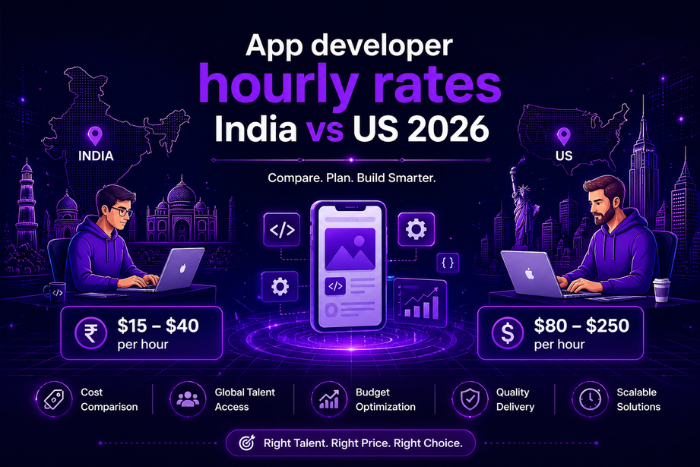
App Developer Hourly Rates India vs US 2026
App Developer Hourly Rates India vs US 2026 Compare app developer hourly rates India vs US 2026, costs, quality, and how to choose the best development partner. Introduction In 2026, businesses across the globe are increasingly evaluating where to build their mobile and web applications. One of the most critical factors influencing this decision is the app developer hourly rates India vs US 2026 comparison. With rising demand for digital products, companies must balance cost, quality, and speed to stay competitive. The United States remains a hub for premium app development services, offering highly experienced developers and advanced innovation capabilities. However, these benefits come at a significantly higher cost. On the other hand, India has emerged as a global outsourcing leader, providing skilled developers at more competitive rates without compromising on quality. Understanding the differences in hourly rates, development ecosystems, and overall value proposition is essential for startups, enterprises, and entrepreneurs planning to build apps in 2026. This service helps you analyze cost comparisons, evaluate development options, and choose the most efficient strategy for your project—ensuring maximum ROI and high-performance results. Why App Developer Hourly Rates India vs US 2026 is Important Choosing the right development location directly impacts your project’s success and budget. Cost OptimizationSignificant price differences affect overall project investment. Quality vs Budget BalanceBusinesses must evaluate value, not just cost. Access to Global TalentBoth regions offer skilled developers with different strengths. Faster Time-to-MarketCost-effective teams enable quicker development cycles. Scalability of ProjectsBudget savings allow for feature expansion and scaling. Strategic Outsourcing DecisionsHelps businesses choose the right development model. Types of Solutions in App Developer Hourly Rates India vs US 2026 Different project types influence how hourly rates are applied: Startup MVP DevelopmentCost-effective solutions for early-stage products. Enterprise Application DevelopmentComplex systems requiring advanced expertise. Mobile App Development (iOS & Android)Native and cross-platform applications. Web Application DevelopmentScalable and responsive platforms. AI & Machine Learning SolutionsHigh-end development requiring specialized skills. E-commerce App DevelopmentOnline stores and marketplace platforms. SaaS Product DevelopmentSubscription-based cloud applications. Maintenance & Support ServicesOngoing updates and performance optimization. Get Free Quotation Now..!! Key Features of App Developer Hourly Rates India vs US 2026 Understanding rate differences involves analyzing multiple factors: Hourly Rate ComparisonIndia: $20–$80/hour vs US: $80–$200+/hour. Developer Expertise LevelsJunior, mid-level, and senior developer cost variations. Project Cost EfficiencyLower hourly rates reduce total development cost. Quality & Delivery StandardsBoth regions offer high-quality development. Time Zone AdvantagesOffshore development enables round-the-clock progress. Flexible Hiring ModelsDedicated teams, freelancers, or agencies. Communication & Collaboration ToolsSeamless remote project management. Scalable Resource AllocationEasily expand or reduce team size. Development Process Requirement Analysis & Budget PlanningDefine project scope and cost expectations. Location & Team SelectionChoose between India, US, or hybrid models. Resource Allocation & HiringSelect developers based on expertise and rates. UI/UX Design & PrototypingCreate user-friendly designs. Application DevelopmentBuild frontend and backend components. Testing & Quality AssuranceEnsure performance and reliability. Deployment & Ongoing SupportLaunch and maintain the application. Technology Stack for App Developer Hourly Rates India vs US 2026 Programming Languages: Java, Kotlin, Swift, Python, JavaScriptFrameworks: Flutter, React Native, Angular, Node.jsBackend Technologies: Spring Boot, Django, Express.jsDatabases: PostgreSQL, MySQL, MongoDBCloud Platforms: AWS, Google Cloud, Microsoft AzureDevOps Tools: Docker, Kubernetes, JenkinsTesting Tools: Selenium, AppiumAnalytics Tools: Firebase, Mixpanel Cost Factors for App Developer Hourly Rates India vs US 2026 Several factors influence hourly rates and overall development costs: Developer LocationUS developers charge significantly higher rates than Indian developers. Experience LevelSenior developers cost more than junior developers. Project ComplexityAdvanced features increase development time and cost. Technology StackSpecialized technologies require higher expertise. Company vs FreelancerAgencies charge more but offer reliability. Communication & Management OverheadOffshore projects may require coordination efforts. Time Zone DifferencesCan impact collaboration and timelines. Maintenance & Long-Term CostsOngoing support adds to total cost. Latest Trends Hybrid Development ModelsCombining US strategy with Indian development teams. Rise of Offshore DevelopmentBusinesses increasingly outsourcing to India. AI-Powered Development ToolsImproving productivity and reducing costs. Remote Work NormalizationGlobal collaboration becoming standard. Focus on Value Over CostBusinesses prioritizing ROI instead of just pricing. Cross-Platform Development GrowthReducing cost and development time. Global Talent Pool ExpansionAccess to developers worldwide. Why Choose Us for App Developer Hourly Rates India vs US 2026 Cost Optimization Expertise We help you balance cost and quality effectively. Global Talent Access Connect with top developers from India and the US. Customized Development Strategies Tailored solutions based on your project needs. Transparent Pricing Models Clear and detailed cost breakdown. Scalable Team Solutions Flexible hiring and resource allocation. End-to-End Support From planning to deployment and maintenance. Proven Experience Track record of successful global projects. Want to reduce your app development costs without compromising quality?Let’s help you choose the right development strategy for your business.Contact us today for expert consultation and cost analysis. Get Free Quotation Now..!! Key Points : Indian developers typically charge $20–$80/hour, while US developers charge $80–$200+/hour Businesses can reduce overall development costs by outsourcing to India without compromising quality Hybrid models combining US strategy and Indian development are becoming popular Project complexity, developer expertise, and technology stack influence hourly rates Offshore development enables faster time-to-market and scalable team expansion FAQ’s What is the average hourly rate for app developers in India in 2026? Typically between $20 and $80 per hour depending on experience. What is the hourly rate for app developers in the US? Usually ranges from $80 to $200+ per hour. Why are Indian developers more affordable? Lower operational costs and a large talent pool reduce pricing. Which option is better: India or the US? It depends on your budget, project complexity, and business goals. Can I combine teams from both countries? Yes, hybrid models are increasingly popular. What factors affect app development costs? Complexity, technology stack, team size, and location. Get Free Quotation Now..!!
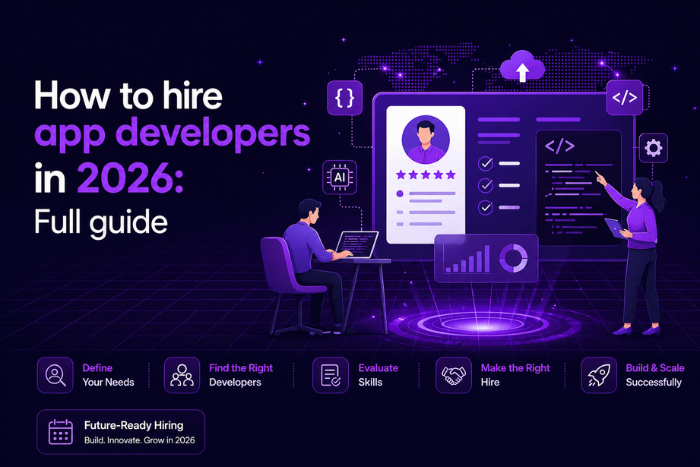
How to Hire App Developers in 2026: Full Guide
How to Hire App Developers in 2026: Full Guide Learn how to hire app developers in 2026 with this full guide covering hiring models, costs, skills, and best practices. Introduction Hiring the right app developers in 2026 is one of the most critical decisions for businesses planning to build digital products. With mobile apps driving revenue, customer engagement, and business growth, the demand for skilled developers has increased significantly. However, finding the right talent—while balancing cost, quality, and timelines—can be challenging. This how to hire app developers in 2026: full guide is designed to help startups, enterprises, and entrepreneurs navigate the evolving hiring landscape. From choosing the right hiring model to evaluating technical expertise and managing remote teams, businesses must adopt a strategic approach to hiring. In today’s globalized environment, companies can hire developers from anywhere—whether local teams, offshore agencies, or freelancers. Each option comes with its own advantages and challenges. Additionally, advancements in AI, remote work, and agile development have reshaped how teams collaborate and deliver projects. This guide provides a comprehensive framework to help you hire the best app developers in 2026—ensuring efficiency, scalability, and long-term success for your app development project. Why How to Hire App Developers in 2026: Full Guide is Important Hiring the right developers directly impacts your product’s success. Ensures High-Quality DevelopmentSkilled developers deliver better performance and user experience. Reduces Development RisksProper hiring minimizes project failures. Optimizes Cost EfficiencyChoosing the right team helps control budget. Faster Time-to-MarketExperienced developers accelerate development. Scalable Team GrowthEasy to expand or modify team size. Long-Term Project SuccessReliable developers support ongoing improvements. Types of Solutions in How to Hire App Developers in 2026: Full Guide Businesses can choose from different hiring models based on their needs: Freelance DevelopersSuitable for small projects and short-term tasks. Dedicated Development TeamsFull-time teams working exclusively on your project. App Development AgenciesEnd-to-end services with experienced professionals. In-House DevelopersPermanent employees for long-term projects. Offshore Development TeamsCost-effective teams located in other countries. Hybrid Hiring ModelsCombination of in-house and outsourced teams. Contract-Based DevelopersTemporary hires for specific project phases. AI-Assisted Development TeamsDevelopers leveraging AI tools for faster delivery. Get Free Quotation Now..!! Key Features of How to Hire App Developers in 2026: Full Guide When hiring developers, focus on essential qualities and capabilities: Technical ExpertiseProficiency in relevant programming languages and frameworks. Problem-Solving SkillsAbility to handle complex challenges. Communication & CollaborationEffective teamwork and clear communication. Experience & PortfolioProven track record of successful projects. Adaptability to New TechnologiesFamiliarity with modern tools and trends. Quality Assurance PracticesFocus on testing and performance. Security AwarenessUnderstanding of data protection and compliance. Time Management & ReliabilityAbility to meet deadlines consistently. Development Process Define Project RequirementsClearly outline goals, features, and budget. Choose Hiring ModelDecide between freelancers, agencies, or in-house teams. Source CandidatesUse platforms, referrals, or agencies to find developers. Evaluate Skills & ExperienceReview portfolios and conduct technical assessments. Interview & SelectionAssess communication and problem-solving abilities. Onboarding & Project SetupProvide guidelines and tools for development. Monitor Progress & OptimizeTrack performance and ensure quality delivery. Technology Stack for How to Hire App Developers in 2026: Full Guide Programming Languages: Java, Kotlin, Swift, Python, JavaScriptFrameworks: Flutter, React Native, Angular, Node.jsBackend Technologies: Django, Spring Boot, Express.jsDatabases: MySQL, PostgreSQL, MongoDBCloud Platforms: AWS, Google Cloud, Microsoft AzureDevOps Tools: Docker, Kubernetes, JenkinsTesting Tools: Selenium, AppiumCollaboration Tools: Jira, Slack, Trello Cost Factors for How to Hire App Developers in 2026: Full Guide Several factors influence the cost of hiring app developers: Developer LocationRates vary significantly by region. Experience LevelSenior developers charge higher fees. Project ComplexityAdvanced features increase cost. Hiring ModelAgencies cost more than freelancers. Technology StackSpecialized skills may cost more. Development TimelineUrgent projects may require additional resources. Team SizeLarger teams increase overall cost. Post-Launch SupportMaintenance adds to long-term expenses. Latest Trends Remote Hiring & Global TeamsBusinesses hiring talent worldwide. AI-Assisted DevelopmentFaster coding and automation. Low-Code & No-Code PlatformsSimplifying app development. Hybrid Work ModelsCombining in-house and remote teams. Focus on Specialized SkillsDemand for niche expertise. Agile & DevOps AdoptionFaster and more efficient workflows. Increased Demand for Security ExpertiseStronger focus on data protection. Why Choose Us for How to Hire App Developers in 2026: Full Guide Expert Hiring Consultation We help you choose the best hiring model. Access to Global Talent Connect with top developers worldwide. Customized Hiring Solutions Tailored strategies for your business needs. Cost-Effective Hiring Optimize budget without compromising quality. Transparent Process Clear communication and reporting. End-to-End Support From hiring to project execution. Proven Experience Successful track record in developer hiring. Looking to hire the best app developers for your project?Let us guide you through the hiring process for maximum success.Contact us today to build your ideal development team. Get Free Quotation Now..!! Key Points : Hiring app developers in 2026 requires a strategic approach to balance cost, quality, and scalability Businesses can choose from freelancers, agencies, in-house teams, or offshore developers based on project needs Evaluating technical skills, experience, and communication is essential for selecting the right developers Development costs depend on location, expertise level, and project complexity Agile methodologies and AI-assisted development are improving efficiency and speed Clear project requirements and structured hiring processes reduce risks and delays FAQ’s What is the best way to hire app developers in 2026? Choose the right hiring model based on your project needs and budget. Should I hire freelancers or agencies? Freelancers are cost-effective, while agencies offer full-service solutions. How much does it cost to hire app developers? Costs vary based on location, experience, and project complexity. How long does it take to hire developers? Typically 1–4 weeks depending on requirements. Can I hire remote developers? Yes, remote hiring is widely adopted in 2026. What is a dedicated development team? A team that works exclusively on your project. Get Free Quotation Now..!!
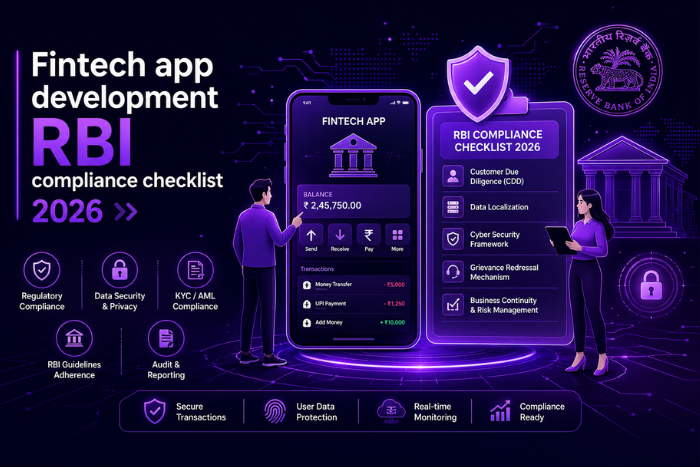
Fintech App Development RBI Compliance Checklist 2026
Fintech App Development RBI Compliance Checklist 2026 Learn fintech app development RBI compliance checklist 2026, key regulations, features, costs, and how to build secure fintech apps. Introduction The fintech industry in India is entering a critical phase in 2026, where regulatory compliance is no longer optional but a core requirement for survival and growth. With stricter guidelines introduced by the Reserve Bank of India (RBI), businesses must ensure their applications meet evolving standards related to digital lending, payments, KYC, data security, and consumer protection. The fintech app development RBI compliance checklist 2026 has become essential for startups, NBFCs, payment aggregators, and financial platforms aiming to operate legally and build user trust. Recent regulatory shifts highlight that compliance is now a “make-or-break” factor for fintech companies . From mandatory KYC processes to real-time monitoring, RBI expects fintech applications to maintain transparency, security, and accountability at every level. For developers and businesses, this means building compliance-first applications with integrated regulatory frameworks, audit trails, and automated reporting systems. This service helps organizations design, develop, and deploy fintech apps that are fully aligned with RBI regulations—ensuring scalability, security, and long-term success in India’s financial ecosystem. Why Fintech App Development RBI Compliance Checklist 2026 is Important Compliance is the foundation of trust and sustainability in fintech applications. Legal & Regulatory ComplianceEnsures adherence to RBI guidelines and avoids penalties. Enhanced User TrustSecure and compliant apps build customer confidence. Fraud Prevention & Risk ManagementStrong compliance reduces financial risks. Access to Banking PartnershipsCompliance is essential for collaborating with banks and NBFCs. Operational TransparencyClear processes and reporting improve accountability. Long-Term Business SustainabilityAvoid disruptions caused by regulatory violations. Types of Solutions in Fintech App Development RBI Compliance Checklist 2026 Different fintech solutions require tailored compliance strategies: Digital Lending AppsApps with RBI-compliant lending practices and disclosures. Payment Gateway & Wallet AppsSecure payment processing and transaction monitoring. NBFC & Microfinance ApplicationsCompliance with financial regulations and reporting standards. Investment & Wealth Management AppsRegulatory adherence for financial advisory services. KYC & Identity Verification SystemsAutomated onboarding and verification solutions. RegTech SolutionsPlatforms for managing compliance and reporting. Banking & Neo-Banking AppsFull-stack digital banking solutions. Fraud Detection & Risk Management SystemsAI-driven monitoring and alerts. Get Free Quotation Now..!! Key Features of Fintech App Development RBI Compliance Checklist 2026 A compliance-first fintech app must include critical features: KYC & eKYC IntegrationIdentity verification as per RBI guidelines. AML (Anti-Money Laundering) SystemsMonitoring suspicious transactions. Data Encryption & Security ProtocolsProtection of sensitive financial data. Audit Trails & ReportingDetailed logs for regulatory compliance. Consent Management SystemsTransparent data usage and permissions. Real-Time Transaction MonitoringInstant detection of anomalies. Regulatory Reporting AutomationSimplified compliance reporting. User Data Privacy ControlsCompliance with data protection laws. Development Process Compliance Requirement AnalysisIdentify applicable RBI regulations and business requirements. Regulatory Architecture DesignDesign systems with built-in compliance mechanisms. UI/UX Design for Secure User ExperienceCreate user-friendly and secure interfaces. Core Fintech Application DevelopmentBuild payment, lending, or financial modules. Integration with KYC, AML & Banking APIsConnect with compliance and financial systems. Testing & Compliance ValidationEnsure adherence to regulatory standards. Deployment & Continuous MonitoringLaunch and maintain compliance with ongoing updates. Technology Stack for Fintech App Development RBI Compliance Checklist 2026 Programming Languages: Java, Kotlin, Swift, Python, JavaScriptFrameworks: Flutter, React Native, Angular, Node.jsBackend Technologies: Spring Boot, Django, Express.jsDatabases: PostgreSQL, MongoDB, MySQLCloud Platforms: AWS, Google Cloud, Microsoft AzureSecurity Tools: Encryption, Tokenization, Identity Verification APIsCompliance Tools: RegTech Platforms, AML Monitoring SystemsAnalytics Tools: Power BI, Tableau Cost Factors for Fintech App Development RBI Compliance Checklist 2026 Several factors influence the cost of compliance-driven fintech apps: Regulatory ComplexityMore compliance requirements increase development effort. App Type & FeaturesLending apps cost more than simple payment apps. Security & Compliance IntegrationAdvanced security systems add to cost. Third-Party API IntegrationKYC, AML, and banking APIs increase expenses. Scalability RequirementsInfrastructure for handling large transactions. Development TimelineFaster delivery requires more resources. Maintenance & Compliance UpdatesOngoing updates for regulatory changes. Expertise of Development TeamSkilled fintech developers impact pricing. Latest Trends Real-Time Compliance MonitoringContinuous tracking of transactions and risks. AI-Powered Fraud DetectionAdvanced systems for preventing fraud. RegTech IntegrationAutomation of compliance processes. Open Banking & API EcosystemsSeamless integration with financial institutions. Stronger Data Privacy RegulationsIncreased focus on user data protection. Digital Lending Regulations EvolutionMore transparency in lending practices. Biometric Authentication AdoptionEnhanced security for user access. Why Choose Us for Fintech App Development RBI Compliance Checklist 2026 Fintech Compliance Expertise Deep understanding of RBI regulations and fintech standards. Compliance-First Development Built-in regulatory frameworks from the start. Secure & Scalable Solutions High-performance apps with strong security measures. End-to-End Development From strategy to deployment and compliance monitoring. Advanced Technology Integration AI, RegTech, and modern frameworks. Cost-Effective Solutions Optimized development strategies. Continuous Compliance Support Regular updates to meet evolving regulations. Looking to build an RBI-compliant fintech app?Let’s create a secure and scalable financial solution for your business.Contact us today for expert fintech development and compliance support. Get Free Quotation Now..!! Key Points : Key compliance areas include KYC, AML, data privacy, and real-time transaction monitoring Compliance-first architecture helps build secure, scalable, and trustworthy fintech applications Integration with RegTech, banking APIs, and identity verification systems is essential Non-compliance can lead to penalties, operational risks, and loss of user trust AI-powered fraud detection and real-time monitoring are shaping modern fintech security FAQ’s What is RBI compliance in fintech app development? It refers to adhering to regulations set by RBI for financial applications. Why is compliance important for fintech apps? It ensures legal operation, security, and user trust. What are key compliance requirements in 2026? KYC, AML, data privacy, and real-time monitoring. How long does it take to develop a compliant fintech app? Typically 3–6 months depending on complexity. Do fintech apps require regular updates? Yes, to align with changing regulations. What technologies support fintech compliance? APIs, cloud platforms, encryption, and monitoring tools. Get Free Quotation Now..!!
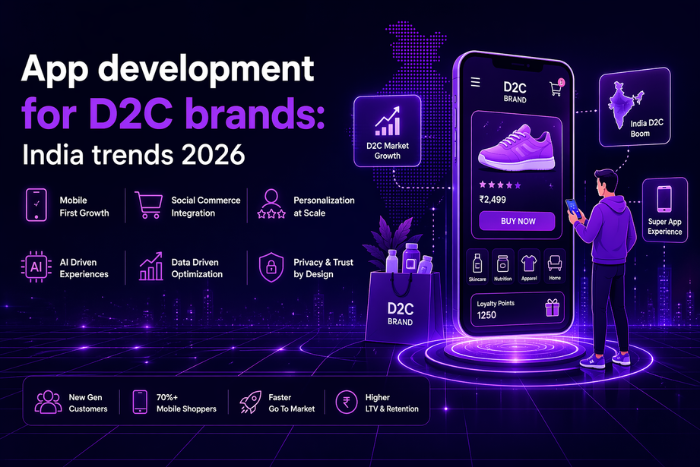
App Development for D2C Brands: India Trends 2026
App Development for D2C Brands: India Trends 2026 Explore app development for D2C brands India trends 2026, features, costs, and strategies to build high-converting mobile apps. Introduction The Direct-to-Consumer (D2C) model is rapidly transforming India’s digital commerce landscape, and mobile apps have become a critical growth engine for modern brands. In 2026, businesses are increasingly investing in app development for D2C brands: India trends 2026 to create personalized shopping experiences, improve customer retention, and build long-term brand loyalty. Unlike traditional marketplaces, D2C brands rely heavily on owned channels—especially mobile apps—to control user experience, collect customer data, and drive repeat purchases. With rising competition and evolving consumer expectations, having a high-performance mobile app is no longer optional but essential for scaling operations. From AI-driven personalization to seamless checkout experiences and omnichannel integrations, D2C apps are becoming smarter and more customer-centric. Indian consumers are also embracing mobile-first shopping, making app-based engagement a key differentiator. This service focuses on helping D2C brands design, develop, and scale mobile applications that align with 2026 trends—ensuring higher conversions, better user engagement, and sustainable growth in a competitive market. Why App Development for D2C Brands: India Trends 2026 is Important Mobile apps are now central to the success of D2C businesses in India. Direct Customer RelationshipApps enable brands to connect directly with customers without intermediaries. Higher Conversion RatesOptimized app experiences lead to better sales performance. Customer Retention & LoyaltyPush notifications and personalized offers increase repeat purchases. Data Ownership & InsightsBrands gain valuable customer behavior data. Omnichannel ExperienceSeamless integration across web, mobile, and offline channels. Competitive AdvantageApps differentiate brands in crowded markets. Types of Solutions in App Development for D2C Brands: India Trends 2026 D2C brands can build various types of applications based on their business model: E-commerce Mobile AppsFully functional shopping apps with product catalogs and checkout. Subscription-Based AppsRecurring billing for products like FMCG, wellness, and SaaS. Loyalty & Rewards AppsApps designed to boost customer engagement and retention. Quick Commerce AppsFast delivery solutions for hyperlocal markets. Omnichannel Retail AppsIntegration of online and offline shopping experiences. AI-Powered Shopping AppsPersonalized recommendations and smart search features. Marketplace Integration AppsApps connecting D2C brands with multiple sales channels. Brand Experience AppsContent-driven apps for storytelling and engagement. Get Free Quotation Now..!! Key Features of App Development for D2C Brands: India Trends 2026 Modern D2C apps must include advanced features to drive growth and engagement: Personalized User ExperienceAI-driven product recommendations. Seamless Checkout ProcessFast and secure payment options. Push Notifications & Engagement ToolsReal-time communication with users. Inventory & Order ManagementReal-time tracking and updates. Multi-Payment IntegrationSupport for UPI, wallets, and cards. Analytics & Customer InsightsData-driven decision-making. High Performance & Speed OptimizationFast loading and smooth navigation. Scalable ArchitectureSupport for growing user base and transactions. Development Process Business Analysis & Strategy PlanningUnderstand brand goals, target audience, and growth strategy. Platform & Architecture SelectionChoose the right technology stack and development approach. UI/UX Design & PrototypingCreate engaging and user-friendly interfaces. Core App DevelopmentBuild frontend and backend functionalities. Integration with E-commerce Platforms & APIsConnect with payment gateways, CRM, and inventory systems. Testing & Performance OptimizationEnsure speed, security, and reliability. Launch & Growth OptimizationDeploy the app and continuously improve based on analytics. Technology Stack for App Development for D2C Brands: India Trends 2026 Programming Languages: JavaScript, Kotlin, Swift, PythonFrameworks: Flutter, React Native, Angular, Node.jsE-commerce Platforms: Shopify, Magento, WooCommerceBackend Technologies: Django, Spring Boot, Express.jsDatabases: MongoDB, PostgreSQL, MySQLCloud Platforms: AWS, Google Cloud, Microsoft AzureAnalytics Tools: Firebase, Mixpanel, Google AnalyticsPayment Integrations: UPI, Razorpay, Stripe Cost Factors for App Development for D2C Brands: India Trends 2026 Several factors influence the cost of building D2C mobile applications: App Complexity & FeaturesAdvanced features increase development cost. Platform ChoiceNative vs cross-platform development impacts pricing. Design RequirementsCustom UI/UX adds to the cost. Integration NeedsAPIs and third-party services increase complexity. Scalability RequirementsInfrastructure for handling growth. Development TimelineFaster delivery may require additional resources. Maintenance & UpdatesOngoing improvements and feature updates. Marketing & User Acquisition CostsPost-launch investment for growth. Latest Trends AI-Driven PersonalizationTailored shopping experiences for users. Mobile-First Commerce GrowthApps becoming primary sales channels. Quick Commerce ExpansionFaster delivery expectations. Subscription-Based Business ModelsRecurring revenue strategies. Omnichannel IntegrationUnified customer experience across channels. Voice & Visual Search IntegrationEnhanced product discovery. Social Commerce IntegrationShopping through social platforms. Why Choose Us for App Development for D2C Brands: India Trends 2026 D2C Industry Expertise Deep understanding of D2C business models and trends. Custom App Development Tailored solutions for your brand’s unique needs. Conversion-Focused Design Apps optimized for higher sales and engagement. Scalable & Secure Solutions Built for growth and data protection. End-to-End Services From strategy to development and scaling. Advanced Technology Integration AI, analytics, and modern frameworks. Continuous Support & Optimization Ongoing improvements based on performance data. Want to build a high-converting D2C mobile app?Let’s create a powerful app that drives growth and customer loyalty.Contact us today to start your D2C app development journey. Get Free Quotation Now..!! Key Points : Mobile apps enable higher conversion rates through personalized shopping experiences and seamless checkout Integration with e-commerce platforms like Shopify and payment systems enhances operational efficiency AI-driven personalization and analytics help brands understand customer behavior and boost sales Omnichannel strategies connect mobile apps with web, offline stores, and social commerce platforms Quick commerce and subscription-based models are driving new revenue opportunities Scalable and high-performance apps support growing user bases and transaction volumes FAQ’s Why do D2C brands need mobile apps? To build direct customer relationships, improve retention, and increase sales. What features are essential in a D2C app? Personalization, seamless checkout, analytics, and push notifications. How much does it cost to build a D2C app in India? Costs vary from $5,000 to $50,000+ depending on features and complexity. How long does it take to develop a D2C app? Typically 2–4 months depending on requirements. Can D2C apps integrate with e-commerce platforms? Yes, they can integrate with Shopify, Magento, and other platforms. How can apps improve customer retention? Through personalization, notifications, and loyalty programs. Get Free Quotation Now..!!
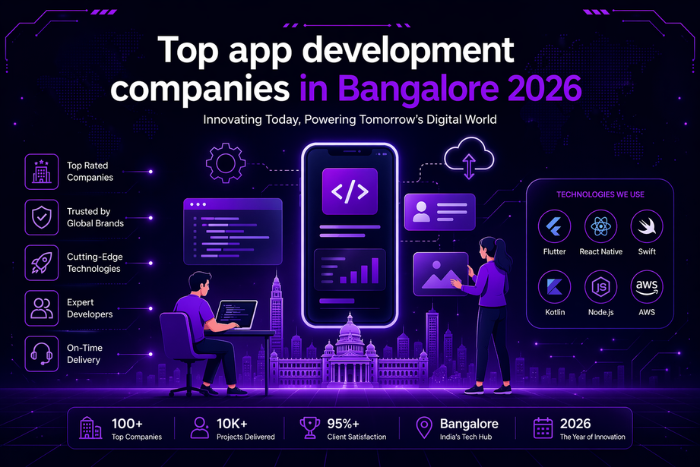
Top App Development Companies in Bangalore 2026
Top App Development Companies in Bangalore 2026 Discover top app development companies in Bangalore 2026, services, costs, and how to choose the right development partner. Introduction Bangalore, often referred to as India’s Silicon Valley, continues to dominate the technology landscape in 2026. With a thriving startup ecosystem, global tech presence, and access to highly skilled developers, the city has become a hub for businesses seeking world-class mobile and web application development services. The demand for top app development companies in Bangalore 2026 is higher than ever as businesses aim to build scalable, innovative, and high-performance digital products. From startups building MVPs to enterprises developing complex digital ecosystems, Bangalore-based app development companies offer expertise across industries such as fintech, healthcare, e-commerce, and SaaS. Companies like GeekyAnts, Robosoft Technologies, GoodWorkLabs, and Codewave Global are among the recognized players contributing to this dynamic ecosystem . Choosing the right development partner is crucial for ensuring product success, cost efficiency, and long-term scalability. This service helps businesses identify, evaluate, and collaborate with the best app development companies in Bangalore to achieve their digital goals in 2026 and beyond. Why Top App Development Companies in Bangalore 2026 is Important Selecting the right app development company can directly impact your product’s success and business growth. Access to Top TalentBangalore hosts some of the best developers and engineers in India. Innovation-Driven EcosystemStrong startup culture fosters cutting-edge solutions. Global Quality StandardsCompanies follow international development practices. Wide Technology ExpertiseFrom AI to blockchain, diverse skill sets are available. Faster Time-to-MarketEfficient teams ensure quicker delivery. Scalable Development CapabilitiesSuitable for both startups and enterprises. Types of Solutions in Top App Development Companies in Bangalore 2026 Leading companies in Bangalore offer a wide range of app development solutions: Mobile App Development (iOS & Android)Native and cross-platform mobile applications. Web Application DevelopmentScalable and responsive web-based platforms. Custom Software DevelopmentTailored solutions for specific business needs. Enterprise App DevelopmentLarge-scale systems with advanced integrations. AI & Machine Learning AppsIntelligent applications with automation capabilities. E-commerce App DevelopmentOnline stores and marketplace platforms. On-Demand Service AppsApps for delivery, booking, and services. SaaS Product DevelopmentCloud-based software solutions. Get Free Quotation Now..!! Key Features of Top App Development Companies in Bangalore 2026 Top development companies provide advanced features and capabilities: End-to-End Development ServicesFrom ideation to deployment and maintenance. Agile Development MethodologyFaster iterations and continuous improvement. UI/UX ExcellenceFocus on user-friendly and engaging designs. Scalable ArchitectureApps built for growth and performance. Cross-Platform ExpertiseEfficient development across multiple platforms. Quality Assurance & TestingEnsuring bug-free and stable applications. Security & Compliance StandardsProtection of user data and privacy. Post-Launch Support & MaintenanceContinuous updates and improvements. Development Process Requirement Analysis & PlanningUnderstand business goals and define project scope. Company Selection & EvaluationChoose the right development partner based on expertise. UI/UX Design & PrototypingCreate wireframes and interactive designs. Application DevelopmentBuild frontend and backend components. Integration of APIs & ServicesAdd third-party functionalities. Testing & Quality AssuranceEnsure performance and reliability. Deployment & MaintenanceLaunch the app and provide ongoing support. Technology Stack for Top App Development Companies in Bangalore 2026 Programming Languages: Java, Kotlin, Swift, JavaScript, PythonFrameworks: Flutter, React Native, Angular, Node.jsBackend Technologies: Spring Boot, Django, Express.jsDatabases: MySQL, PostgreSQL, MongoDBCloud Platforms: AWS, Google Cloud, Microsoft AzureDevOps Tools: Docker, Kubernetes, JenkinsTesting Tools: Selenium, AppiumAnalytics Tools: Firebase, Mixpanel Cost Factors for Top App Development Companies in Bangalore 2026 Several factors influence the cost of hiring app development companies: Project ComplexitySimple apps cost less than feature-rich applications. Company Expertise & ReputationEstablished firms charge higher rates. Technology StackAdvanced technologies increase costs. Team Size & StructureLarger teams lead to higher expenses. Development TimelineFaster delivery may require additional resources. Design RequirementsCustom UI/UX adds to the cost. Maintenance & SupportOngoing services impact long-term pricing. Third-Party IntegrationsAPIs and external tools add to development cost. Latest Trends AI-Driven App DevelopmentIncreasing use of AI for smarter applications. Cross-Platform Development GrowthBusinesses prefer cost-efficient frameworks. Cloud-Native ApplicationsScalable and flexible infrastructure. Low-Code & No-Code PlatformsFaster development cycles. 5G-Enabled ApplicationsEnhanced performance and connectivity. Focus on User ExperienceUI/UX becoming a key differentiator. Cybersecurity EnhancementsStronger focus on data protection. Why Choose Us for Top App Development Companies in Bangalore 2026 Expert Partner Selection We help you identify the best development companies for your needs. Industry Experience Deep understanding of Bangalore’s tech ecosystem. End-to-End Support From consultation to project execution. Cost Optimization Find high-quality services within your budget. Scalable Solutions Ensure long-term growth and performance. Transparent Process Clear communication and detailed insights. Trusted Network Access to top-rated and verified companies. Looking for the best app development company in Bangalore?Let us help you find the perfect partner for your project.Contact us today to get started with expert guidance. Get Free Quotation Now..!! Key Points : Bangalore’s strong tech ecosystem provides access to highly skilled developers and innovative startups Businesses can choose from services like AI apps, SaaS platforms, e-commerce apps, and enterprise solutions Selecting the right development partner ensures better scalability, performance, and faster time-to-market Development costs vary based on project complexity, company expertise, and technology stack Cross-platform and cloud-native development are becoming the preferred choices for businesses Leading companies provide end-to-end services including design, development, testing, and maintenance FAQ’s Why is Bangalore a hub for app development? Because of its skilled talent pool, strong tech ecosystem, and innovation-driven environment. How do I choose the right app development company? By evaluating experience, portfolio, client reviews, and technical expertise. What is the average cost of app development in Bangalore? It ranges from $5,000 to $50,000+ depending on complexity. Do Bangalore companies offer cross-platform development? Yes, most companies specialize in both native and cross-platform solutions. How long does it take to develop an app? Typically 2–6 months depending on features and requirements. Get Free Quotation Now..!!
ONDC App Development Opportunities for Businesses
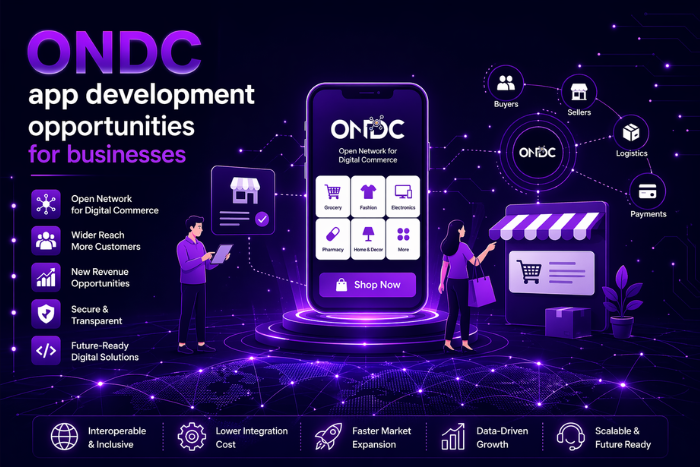
ONDC App Development Opportunities for Businesses Explore ONDC app development opportunities for businesses, features, costs, and strategies to build scalable open commerce apps. Introduction The rise of the Open Network for Digital Commerce (ONDC) is transforming the way businesses operate in India’s digital economy. By breaking the monopoly of centralized e-commerce platforms, ONDC enables a decentralized and open network where buyers, sellers, and service providers can interact seamlessly. This shift has unlocked massive ONDC app development opportunities for businesses, allowing them to build scalable, interoperable, and cost-efficient digital commerce solutions. Unlike traditional marketplaces, ONDC is not a platform but a network protocol that connects multiple applications. This creates a level playing field for small businesses, startups, and enterprises to participate in digital commerce without high commissions or platform dependency. As adoption grows across sectors like retail, mobility, logistics, and food delivery, businesses are increasingly investing in ONDC-enabled applications. For developers and organizations, this presents a unique opportunity to build buyer apps, seller apps, logistics solutions, and backend systems tailored to ONDC standards. This service helps businesses leverage ONDC by developing robust, compliant, and future-ready applications that drive growth and innovation in the open commerce ecosystem. Why ONDC App Development Opportunities for Businesses is Important The shift toward open commerce is redefining how businesses engage with customers and scale digitally. Decentralized Commerce ModelEliminates dependency on single platforms. Lower Transaction CostsReduced commissions compared to traditional marketplaces. Access to a Wider Customer BaseConnect with buyers across multiple ONDC-enabled apps. Interoperability Across PlatformsSeamless integration between different service providers. Boost for MSMEs and StartupsEnables small businesses to compete with larger players. Government-Backed InitiativeStrong regulatory support ensures long-term growth. Types of Solutions in ONDC App Development Opportunities for Businesses Businesses can build various ONDC-enabled solutions based on their goals: Buyer ApplicationsApps that allow users to discover and purchase products across the ONDC network. Seller ApplicationsPlatforms for merchants to list products and manage orders. Logistics & Delivery AppsSolutions for order fulfillment and last-mile delivery. ONDC Marketplace AggregatorsUnified platforms connecting multiple buyers and sellers. Inventory & Order Management SystemsBackend systems for managing products and transactions. Payment & Checkout Integration SolutionsSecure and seamless transaction handling. Domain-Specific AppsSolutions for sectors like retail, food delivery, mobility, and healthcare. Technology Service Provider (TSP) SolutionsPlatforms enabling businesses to integrate with ONDC. Get Free Quotation Now..!! Key Features of ONDC App Development Opportunities for Businesses ONDC-based applications require advanced features to ensure scalability and interoperability: Open Network Protocol IntegrationSeamless communication across ONDC participants. Multi-Vendor SupportManage multiple sellers within a single platform. Real-Time Order ManagementTrack orders, deliveries, and transactions. Advanced Search & DiscoveryEnable users to find products across the network. Secure Payment IntegrationSupport for multiple payment methods. Scalable ArchitectureHandle high transaction volumes efficiently. Customizable User ExperienceTailored interfaces for different business models. Data Analytics & InsightsMonitor performance and optimize operations. Development Process Requirement Analysis & ONDC StrategyDefine business model, target users, and ONDC participation role. ONDC Compliance & Protocol DesignEnsure adherence to ONDC standards and APIs. UI/UX Design & PrototypingCreate intuitive and user-friendly interfaces. Core Application DevelopmentBuild frontend, backend, and integration layers. API Integration with ONDC NetworkConnect with ONDC gateways and services. Testing & Quality AssuranceValidate performance, security, and interoperability. Deployment & Go-LiveLaunch the app and monitor performance. Technology Stack for ONDC App Development Opportunities for Businesses Programming Languages: Java, Kotlin, Swift, JavaScript, PythonFrameworks: Flutter, React Native, Angular, Node.jsBackend Technologies: Spring Boot, Django, Express.jsDatabases: PostgreSQL, MongoDB, MySQLCloud Platforms: AWS, Google Cloud, Microsoft AzureAPIs & Protocols: ONDC APIs, REST APIs, GraphQLSecurity Standards: OAuth, SSL/TLS EncryptionDevOps Tools: Docker, Kubernetes, Jenkins Cost Factors for ONDC App Development Opportunities for Businesses Several factors influence the cost of developing ONDC-enabled applications: App Type & ComplexityBuyer apps, seller apps, and full marketplaces vary in cost. ONDC Integration RequirementsCompliance and API integration add complexity. Feature SetAdvanced features like analytics and multi-vendor support increase cost. Platform ChoiceNative vs cross-platform development impacts pricing. UI/UX Design ComplexityCustom designs require more resources. Scalability & InfrastructureCloud and server requirements affect long-term costs. Third-Party IntegrationsPayment gateways and logistics services add expenses. Maintenance & UpdatesOngoing improvements and compliance updates. Latest Trends Rapid ONDC Adoption Across IndustriesExpansion into retail, mobility, and services. Rise of Hyperlocal Commerce AppsLocal businesses leveraging ONDC for growth. AI-Powered Product DiscoveryPersonalized recommendations for users. Integration with Digital Payments & UPISeamless payment experiences. Growth of Logistics Tech SolutionsEfficient delivery and supply chain management. Multi-App Ecosystem ExpansionIncreased interoperability between apps. Focus on Data-Driven CommerceAnalytics-driven decision-making for businesses. Why Choose Us for ONDC App Development Opportunities for Businesses ONDC Expertise Deep understanding of ONDC protocols and ecosystem. End-to-End Development From strategy to deployment and scaling. Custom Solutions Tailored apps for your specific business model. Scalable Architecture Built for high performance and growth. Secure & Compliant Systems Ensure data security and regulatory compliance. Cost-Effective Development Optimized solutions to maximize ROI. Ongoing Support Continuous updates and performance monitoring. Ready to leverage ONDC for your business growth?Let’s build a powerful ONDC-enabled app tailored to your needs.Contact us today to start your open commerce journey. Get Free Quotation Now..!! Key Points : ONDC app development opportunities enable businesses to participate in decentralized digital commerce without platform dependency Businesses can build buyer apps, seller apps, logistics platforms, and marketplace aggregators on the ONDC network ONDC reduces transaction costs and increases reach by connecting multiple apps and service providers Open network protocols ensure interoperability and seamless integration across platforms MSMEs and startups benefit from equal access to digital commerce opportunities Scalable architecture and cloud-based solutions support high transaction volumes FAQ’s What is ONDC and how does it work? ONDC is an open network that connects buyers, sellers, and service providers through standardized protocols. What types of apps can be built on ONDC? Buyer apps, seller apps, logistics platforms, and marketplace aggregators. Is ONDC suitable for small businesses? Yes, it enables MSMEs to compete without high platform commissions. How long does ONDC app development take? Typically 4–12 weeks depending on complexity and features. What are the benefits of ONDC over traditional marketplaces? Lower costs, interoperability, and wider reach. Does ONDC support multiple industries? Yes, including retail,
Government App Development Tenders India 2026
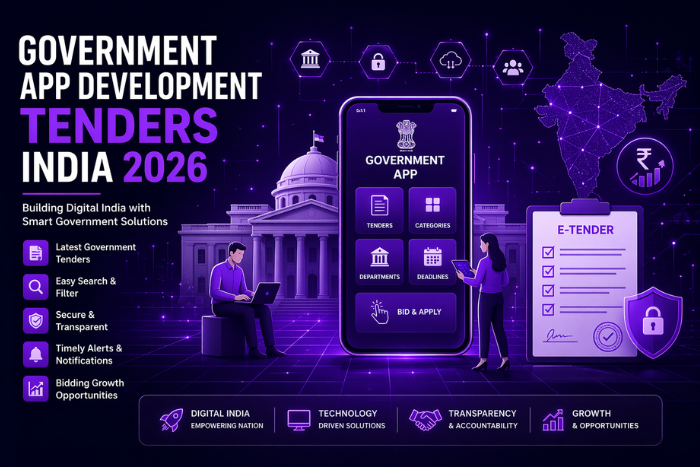
Government App Development Tenders India 2026 Explore government app development tenders India 2026, process, costs, and how to build scalable, compliant public sector apps. Introduction The Indian government is rapidly embracing digital transformation, creating a surge in government app development tenders India 2026. From smart governance platforms to citizen service apps, public sector organizations are increasingly investing in mobile and web applications to improve accessibility, transparency, and efficiency. With initiatives like Digital India, Smart Cities Mission, and e-Governance frameworks, government departments are actively releasing tenders for app development across sectors such as healthcare, education, transport, agriculture, and public services. These tenders present significant opportunities for IT companies, startups, and developers to collaborate with government bodies and deliver large-scale, impactful solutions. However, developing applications for government tenders requires a deep understanding of compliance, security standards, scalability, and integration with existing public infrastructure. Businesses must also navigate complex bidding processes, documentation, and evaluation criteria. This service helps organizations identify, prepare for, and execute government app development projects efficiently—ensuring compliance, high performance, and successful tender acquisition in 2026 and beyond. Why Government App Development Tenders India 2026 is Important Government tenders represent one of the most lucrative and stable opportunities in the IT sector. High-Value ProjectsGovernment contracts often involve large budgets and long-term engagements. Digital Transformation DemandIncreasing need for citizen-centric digital services. Stable Revenue StreamsGovernment projects provide consistent and reliable income. Nationwide ImpactApplications can serve millions of users across India. Compliance-Driven DevelopmentEncourages high-quality and secure software solutions. Growth Opportunities for IT CompaniesExpands portfolio and credibility in the public sector. Types of Solutions in Government App Development Tenders India 2026 Government tenders cover a wide range of application types: E-Governance ApplicationsCitizen services, grievance portals, and administrative systems. Healthcare & Telemedicine AppsDigital health records and remote consultation platforms. Education & E-Learning AppsOnline learning platforms for students and institutions. Smart City ApplicationsTraffic management, utilities, and urban planning systems. Agriculture & Rural Development AppsFarmer support, subsidy tracking, and resource management. Transport & Mobility AppsPublic transport tracking and ticketing systems. Financial & Taxation AppsGST, tax filing, and digital payment solutions. Public Safety & Security AppsEmergency response and law enforcement systems. Get Free Quotation Now..!! Key Features of Government App Development Tenders India 2026 Government applications require robust features to meet strict standards: High-Level Security & Data ProtectionCompliance with government security protocols. Scalable ArchitectureAbility to handle millions of users. Multi-Language SupportAccessibility for diverse user groups. Integration with Government SystemsSeamless data exchange with existing infrastructure. User-Friendly InterfacesSimple and intuitive design for citizens. Real-Time Data ProcessingInstant updates and reporting. Offline FunctionalityAccess in low-connectivity areas. Audit & Compliance TrackingDetailed logs for transparency and accountability. Development Process Tender Analysis & Requirement UnderstandingReview tender documents, scope, and eligibility criteria. Proposal & Bid PreparationCreate technical and financial proposals. System Design & Architecture PlanningDesign scalable and secure application architecture. UI/UX Design & PrototypingDevelop user-friendly interfaces. Application Development & IntegrationBuild frontend, backend, and integrate APIs. Testing & Compliance ValidationEnsure adherence to government standards. Deployment & MaintenanceLaunch the app and provide ongoing support. Technology Stack for Government App Development Tenders India 2026 Programming Languages: Java, Python, Kotlin, Swift, JavaScriptFrameworks: Angular, React, Flutter, React NativeBackend Technologies: Spring Boot, Django, Node.jsDatabases: PostgreSQL, MySQL, MongoDBCloud Platforms: AWS, NIC Cloud (MeghRaj), Microsoft AzureSecurity Standards: SSL/TLS, OAuth, Government Security GuidelinesDevOps Tools: Docker, Kubernetes, JenkinsAnalytics Tools: Power BI, Tableau Cost Factors for Government App Development Tenders India 2026 Several factors influence the cost of government app development: Project Scope & ComplexityLarge-scale applications require higher investment. Compliance & Security RequirementsStrict standards increase development effort. Integration with Legacy SystemsConnecting with existing infrastructure adds complexity. User Base SizeApps serving millions require scalable systems. Technology Stack SelectionAdvanced technologies may increase costs. Development TimelineFaster delivery may require additional resources. Maintenance & SupportLong-term support contracts impact overall cost. Documentation & Approval ProcessesAdditional effort for compliance and reporting. Latest Trends AI-Powered Government ApplicationsSmart automation and predictive analytics. Cloud-Based E-Governance PlatformsScalable and cost-efficient infrastructure. Mobile-First Public ServicesIncreasing focus on mobile accessibility. Blockchain for TransparencySecure and tamper-proof records. Integration with Digital Identity SystemsAadhaar-based authentication and services. Data-Driven Decision MakingUse of analytics for policy and governance. Citizen-Centric App DesignImproved usability and accessibility. Why Choose Us for Government App Development Tenders India 2026 Government Project Expertise Experience in handling public sector projects and tenders. End-to-End Tender Support From bid preparation to project execution. Compliance-Ready Solutions Adherence to all government standards and regulations. Scalable & Secure Applications Built for high performance and data protection. Cost-Optimized Development Efficient solutions to maximize ROI. Advanced Technology Integration Use of modern tools and frameworks. Dedicated Support & Maintenance Continuous monitoring and updates. Looking to win and execute government app development tenders?Let’s help you build compliant and scalable public sector applications.Contact us today for expert guidance and development support. Get Free Quotation Now..!! Key Points : Government app development tenders India 2026 offer high-value opportunities for IT companies and developers Public sector projects focus on e-governance, healthcare, education, and smart city applications Strong compliance, security standards, and scalability are essential for winning and executing tenders Businesses must understand tender documentation, bidding processes, and eligibility requirements Integration with existing government systems and digital infrastructure is critical Cloud-based and mobile-first solutions are driving modern government app development FAQ’s What are government app development tenders? They are official requests from government bodies seeking developers to build applications. How can businesses apply for government tenders? By registering on tender portals and submitting proposals. What types of apps are included in government tenders? E-governance, healthcare, education, transport, and more. What skills are required for government app development? Expertise in secure, scalable, and compliant application development. How long does it take to complete a government app project? It depends on complexity but typically ranges from 3 to 12 months. Is compliance important in government app development? Yes, strict adherence to security and regulatory standards is mandatory. Get Free Quotation Now..!!