
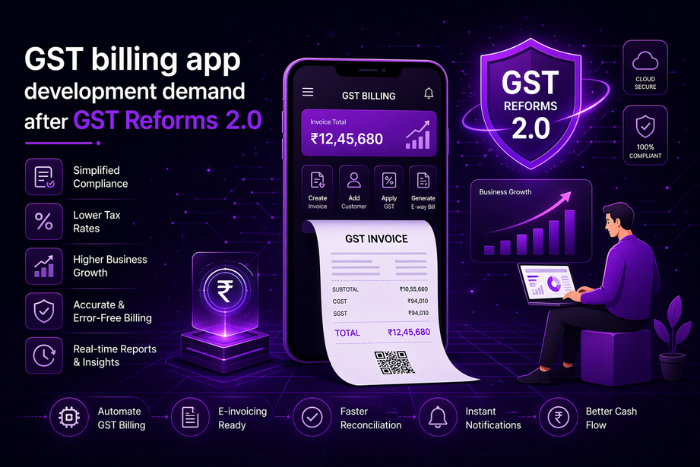
GST Billing App Development Demand After GST Reforms 2.0 Explore GST billing app development demand after GST Reforms 2.0, features, costs, and how to build compliant, scalable billing apps. Introduction The introduction of GST Reforms 2.0 has significantly reshaped India’s taxation landscape, bringing simplified tax structures, improved compliance requirements, and enhanced digital reporting systems. As businesses adapt to these changes, the demand for advanced billing and invoicing solutions has surged. This has created a strong market for GST billing app development demand after GST Reforms 2.0, especially among MSMEs, enterprises, and digital-first businesses. With updated GST slabs, real-time reporting, and stricter compliance norms, traditional billing systems are no longer sufficient. Businesses now require intelligent billing applications that automate tax calculations, ensure compliance, and integrate seamlessly with accounting and ERP systems. Mobile-first GST billing apps are becoming essential for managing invoices, tracking input tax credits, and generating accurate financial reports. For developers and businesses alike, this shift presents a major opportunity. Building scalable, secure, and compliant GST billing apps can help companies streamline operations while meeting regulatory requirements. This service focuses on developing future-ready GST billing applications tailored to the needs of businesses in the post-GST 2.0 era. Why GST Billing App Development Demand After GST Reforms 2.0 is Important The evolving tax framework has made digital billing solutions a necessity rather than a luxury. Mandatory Compliance RequirementsBusinesses must follow updated GST rules and reporting standards. Automation of Tax CalculationsReduces manual errors and improves efficiency. Real-Time Reporting NeedsFaster filing and accurate data submission to authorities. Increased Demand from MSMEsSmall businesses require affordable and easy-to-use billing solutions. Integration with Accounting SystemsSeamless financial management across platforms. Enhanced TransparencyImproved audit readiness and financial tracking. Types of Solutions in GST Billing App Development Demand After GST Reforms 2.0 Different business needs require customized GST billing solutions: Mobile GST Billing AppsOn-the-go invoicing and payment tracking for businesses. Cloud-Based Billing SolutionsCentralized systems accessible from anywhere. POS Billing Systems with GST IntegrationRetail-focused solutions with real-time billing. E-Invoicing & E-Way Bill Integration AppsAutomated compliance with government systems. Accounting & GST Software IntegrationUnified financial and tax management platforms. Multi-Business & Multi-GSTIN AppsManage multiple businesses under one platform. Enterprise GST Billing SystemsAdvanced solutions for large-scale operations. Subscription-Based Billing PlatformsSaaS-based billing solutions for recurring revenue models. Get Free Quotation Now..!! Key Features of GST Billing App Development Demand After GST Reforms 2.0 Modern GST billing apps must include advanced features to meet compliance and business needs: Automated GST CalculationAccurate tax computation based on updated slabs. E-Invoice Generation & ValidationCompliance with government e-invoicing standards. Input Tax Credit (ITC) ManagementTrack and optimize tax credits efficiently. Real-Time Data SyncInstant updates across devices and platforms. Multi-User & Role-Based AccessSecure access control for teams. Invoice Customization & BrandingProfessional invoice templates. Offline Billing SupportGenerate invoices without internet connectivity. Advanced Reporting & AnalyticsInsights into sales, taxes, and financial performance. Development Process Requirement Analysis & Compliance PlanningUnderstand business needs and GST compliance requirements. System Architecture DesignDesign scalable and secure application architecture. UI/UX Design for Billing ExperienceCreate intuitive interfaces for easy billing operations. Core Feature DevelopmentBuild invoicing, tax calculation, and reporting modules. Integration with GST APIs & SystemsConnect with government portals for compliance. Testing & Quality AssuranceEnsure accuracy, security, and performance. Deployment & Continuous UpdatesLaunch and update apps as GST rules evolve. Technology Stack for GST Billing App Development Demand After GST Reforms 2.0 Programming Languages: Java, Kotlin, Swift, JavaScript, PythonFrameworks: Flutter, React Native, Angular, Node.jsBackend Technologies: Django, Spring Boot, Express.jsDatabases: MySQL, PostgreSQL, MongoDBCloud Platforms: AWS, Google Cloud, Microsoft AzureAPIs & Integrations: GST APIs, Payment Gateways, ERP SystemsSecurity Standards: SSL/TLS, OAuth, Data EncryptionAnalytics Tools: Power BI, Tableau Cost Factors for GST Billing App Development Demand After GST Reforms 2.0 Several factors influence the cost of developing GST billing applications: App Complexity & FeaturesAdvanced features like e-invoicing increase development cost. Platform SelectionNative vs cross-platform development impacts pricing. Compliance RequirementsEnsuring GST compliance adds development effort. Integration with Third-Party SystemsAPIs and ERP integrations increase complexity. UI/UX Design ComplexityCustom designs require additional resources. Scalability RequirementsInfrastructure for handling large data volumes. Maintenance & UpdatesRegular updates to comply with changing GST rules. Development Team ExpertiseSkilled developers impact project cost. Latest Trends AI-Based GST AutomationIntelligent systems for tax calculation and compliance. Cloud-Native Billing PlatformsScalable and accessible billing solutions. Real-Time GST Filing IntegrationDirect filing from billing applications. Mobile-First Billing AppsIncreasing demand for mobile-based solutions. Blockchain for Tax TransparencySecure and transparent transaction tracking. Integration with Digital PaymentsSeamless payment and billing systems. SaaS-Based GST SolutionsSubscription-based billing platforms gaining popularity. Why Choose Us for GST Billing App Development Demand After GST Reforms 2.0 GST Compliance Expertise Deep understanding of GST laws and regulatory requirements. Custom-Built Solutions Tailored billing apps designed for your business needs. Scalable Architecture Apps built to handle growth and high transaction volumes. Secure & Reliable Systems Advanced security measures for data protection. Seamless Integrations Integration with GST portals, payment gateways, and ERP systems. Cost-Effective Development Optimized solutions to reduce development and operational costs. Continuous Support Ongoing updates to keep your app compliant with new GST rules. Looking to build a GST-compliant billing app for your business?Let’s create a scalable and secure billing solution tailored to your needs.Contact us today to get started with expert GST app development services. Get Free Quotation Now..!! Key Points : GST billing app development demand has increased significantly after GST Reforms 2.0 due to stricter compliance requirements Businesses require automated invoicing and tax calculation to reduce errors and improve efficiency Features like e-invoicing, ITC tracking, and real-time reporting are now essential for modern billing apps MSMEs and enterprises are rapidly adopting digital GST billing solutions for better financial management Integration with GST APIs, ERP systems, and payment gateways enhances operational efficiency Mobile-first and cloud-based billing apps are driving scalability and accessibility FAQ’s What is GST billing app development? It involves creating software applications that automate invoicing, tax calculation, and compliance with GST regulations. Why is there increased demand after GST Reforms 2.0? Because businesses need updated systems to comply with new tax rules and reporting requirements. What features are essential in a GST

UPI 2.0 Integration Guide for App Developers 2026
UPI 2.0 Integration Guide for App Developers 2026 Learn UPI 2.0 integration guide for app developers in 2026. Build secure, fast, and scalable payment apps with APIs and best practices. Introduction Digital payments in India have evolved rapidly, and UPI 2.0 has emerged as a powerful upgrade that brings enhanced security, faster transactions, and new features for developers and businesses. As mobile apps continue to dominate user interactions, integrating UPI 2.0 is no longer optional—it is a necessity for delivering seamless, real-time payment experiences. This UPI 2.0 integration guide for app developers 2026 is designed to help businesses and developers understand how to implement modern UPI payment flows efficiently. With features like signed intent, overdraft accounts, invoice verification, and improved authentication mechanisms, UPI 2.0 opens new opportunities for fintech apps, e-commerce platforms, and service-based applications. For developers, the challenge lies in choosing the right integration method—Intent flow, Collect flow, or QR-based payments—while ensuring compliance with evolving NPCI guidelines. A well-implemented UPI system not only improves transaction success rates but also enhances user trust and retention. This guide explores the complete integration process, key features, cost considerations, and future trends to help you build robust, secure, and scalable UPI-enabled applications in 2026 and beyond. Why UPI 2.0 Integration Guide for App Developers 2026 is Important Understanding UPI integration is critical for building competitive and user-friendly mobile applications in today’s digital economy. Massive User AdoptionUPI dominates digital payments in India with billions of monthly transactions. Real-Time Payment ProcessingInstant fund transfers improve user experience and satisfaction. Higher Conversion RatesSeamless payment flows reduce drop-offs during checkout. Enhanced Security FeaturesUPI 2.0 introduces signed intent and invoice verification. Cost-Effective TransactionsLower processing fees compared to traditional payment methods. Omnichannel Payment SupportWorks across mobile apps, web platforms, and QR-based systems. Types of Solutions in UPI 2.0 Integration Guide for App Developers 2026 Different integration approaches are available depending on your app requirements: UPI Intent Flow IntegrationApp-to-app redirection for faster and more secure payments. UPI Collect Flow IntegrationRequest-based payment system where users approve transactions. QR Code-Based PaymentsScan-and-pay functionality for offline and online use cases. In-App UPI SDK IntegrationSeamless payment experience within the app environment. Recurring Payment Integration (AutoPay)Subscription-based billing for SaaS and services. UPI for E-commerce CheckoutOptimized payment flows for higher conversion rates. P2P & P2M Payment SolutionsPerson-to-person and merchant transactions. Invoice-Based Payment IntegrationSecure payments with verified invoice data. Get Free Quotation Now..!! Key Features of UPI 2.0 Integration Guide for App Developers 2026 Modern UPI 2.0 integration offers powerful capabilities for developers: Signed Intent AuthenticationEnsures secure and verified payment initiation. Invoice in the InboxUsers can verify transaction details before approval. Overdraft Account SupportEnables payments using pre-approved credit lines. Real-Time Payment ConfirmationInstant transaction status updates. Enhanced Security ProtocolsMulti-layer authentication and encryption. High Transaction Success RatesOptimized flows reduce failures and retries. Cross-App CompatibilityWorks with all major UPI-enabled apps. Scalable Payment InfrastructureHandles high transaction volumes efficiently. Development Process Requirement Analysis & Payment StrategyDefine business goals, payment flows, and target users. Selecting a UPI Payment GatewayChoose a reliable provider supporting UPI 2.0 features. API & SDK Integration SetupObtain credentials and integrate payment APIs into the app. Implementing Payment FlowsConfigure Intent, Collect, or QR-based payment methods. Backend Integration & Security SetupHandle transaction verification, callbacks, and encryption. Testing in Sandbox EnvironmentValidate payment flows and error handling. Deployment & MonitoringGo live and continuously monitor transaction performance. Technology Stack for UPI 2.0 Integration Guide for App Developers 2026 Programming Languages: Java, Kotlin, Swift, JavaScriptMobile Frameworks: Flutter, React NativeBackend Technologies: Node.js, Python, Java (Spring Boot)Payment Gateways: Razorpay, PhonePe, Paytm, CashfreeAPIs & Protocols: REST APIs, UPI SDKs, OAuthSecurity Standards: PCI-DSS, SSL/TLS EncryptionCloud Platforms: AWS, Google Cloud, Microsoft AzureMonitoring Tools: Firebase, Datadog, New Relic Cost Factors for UPI 2.0 Integration Guide for App Developers 2026 Several factors influence the cost of integrating UPI into your app: Integration ComplexityAdvanced features like AutoPay and invoice verification increase effort. Payment Gateway ChargesFees vary based on provider and transaction volume. Development TimeCustom integrations require more time and resources. Security & Compliance RequirementsEnsuring adherence to NPCI guidelines adds cost. Maintenance & UpdatesRegular updates to support new features and regulations. Scalability NeedsHigh-traffic apps require robust infrastructure. Testing & QA EffortEnsuring seamless payment experience across devices. Latest Trends UPI AutoPay ExpansionGrowing adoption of subscription-based payments. Voice-Enabled UPI PaymentsIntegration of voice assistants for transactions. Credit on UPI (Overdraft Usage)Increased use of credit lines for payments. AI-Based Fraud DetectionSmarter systems to detect and prevent fraud. Cross-Border UPI PaymentsExpansion of UPI beyond India. UPI Lite for Small TransactionsFaster payments for low-value transactions. Embedded Finance IntegrationPayments integrated directly into apps and platforms. Why Choose Us for UPI 2.0 Integration Guide for App Developers 2026 UPI Integration Expertise Deep experience in building secure and scalable UPI-enabled applications. End-to-End Development From strategy to deployment, we handle complete integration. Compliance-Ready Solutions Ensure adherence to NPCI and banking regulations. High Conversion Optimization Design payment flows that maximize success rates. Secure Architecture Advanced encryption and fraud prevention mechanisms. Scalable Infrastructure Built to support high transaction volumes. Continuous Support & Monitoring Ongoing optimization and performance tracking. Looking to integrate UPI 2.0 into your app seamlessly?Let’s build a secure and high-performing payment system tailored to your business.Contact us today to get started with expert UPI integration solutions. Get Free Quotation Now..!! Key Points : UPI 2.0 integration enables real-time, secure, and seamless payment experiences in mobile apps Developers can choose between Intent, Collect, QR, and AutoPay flows based on app requirements Features like signed intent and invoice verification improve transaction security and trust Proper API and SDK integration ensures high success rates and smooth user experience UPI integration reduces payment costs compared to traditional payment gateways Scalable architecture supports high transaction volumes for growing applications FAQ’s What is UPI 2.0 and how is it different from UPI 1.0? UPI 2.0 introduces features like signed intent, overdraft accounts, and invoice verification for enhanced security and functionality. Which UPI integration method is best for mobile apps? UPI Intent flow is generally preferred due to higher success rates and better user experience. How long does UPI integration take? It
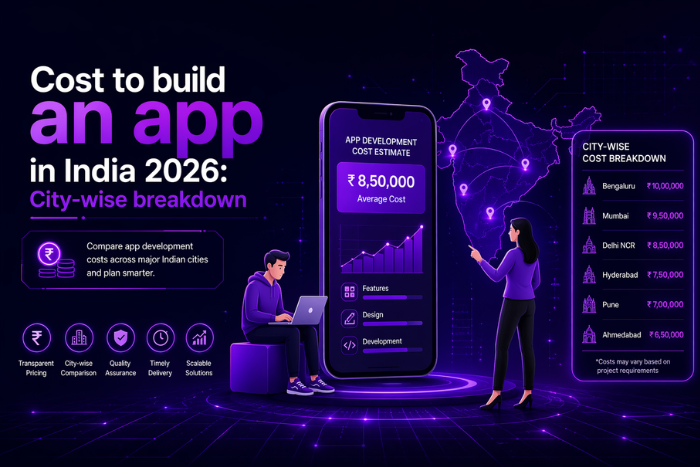
Cost to Build an App in India 2026: City-wise Breakdown
Cost to Build an App in India 2026: City-wise Breakdown Explore cost to build an app in India 2026 with city-wise breakdown, pricing factors, and tips to optimize development costs. Introduction India continues to be one of the most preferred destinations for mobile app development in 2026, thanks to its skilled talent pool, cost efficiency, and strong technology ecosystem. However, the cost to build an app in India 2026: city-wise breakdown varies significantly depending on the location, expertise, and infrastructure available in each city. From major tech hubs like Bangalore, Hyderabad, and Pune to emerging cities like Jaipur and Ahmedabad, development costs can differ based on developer rates, operational expenses, and access to advanced technologies. Businesses looking to build scalable, high-performance applications must understand these regional cost variations to make informed decisions. Whether you are a startup, enterprise, or entrepreneur, knowing how costs vary across cities helps in budget planning, resource allocation, and choosing the right development partner. This guide provides a detailed breakdown of app development costs across Indian cities, along with key factors, trends, and strategies to optimize your investment in 2026. Why Cost to Build an App in India 2026: City-wise Breakdown is Important Understanding regional pricing differences is essential for optimizing your app development budget and ensuring maximum ROI. Accurate Budget PlanningCity-wise insights help estimate realistic development costs. Better Vendor SelectionChoose development teams based on expertise and pricing. Cost Optimization OpportunitiesIdentify cities offering high-quality services at lower costs. Access to Skilled TalentDifferent cities specialize in different technologies and industries. Scalability & Resource AvailabilityLarger cities offer better infrastructure for scaling projects. Strategic Decision MakingHelps businesses balance cost, quality, and delivery timelines. Types of Solutions in Cost to Build an App in India 2026: City-wise Breakdown Different types of app solutions influence development costs across cities: Startup MVP App DevelopmentCost-effective solutions for validating business ideas quickly. E-commerce App DevelopmentScalable platforms with payment integration and product management. On-Demand Service AppsApps like food delivery, ride-sharing, and booking platforms. Enterprise App DevelopmentComplex systems with advanced integrations and security. Fintech & Payment AppsSecure applications with real-time transaction capabilities. Healthcare & Telemedicine AppsApps with compliance and data privacy requirements. Social Media & Community AppsHigh engagement platforms with real-time features. AI-Powered Mobile AppsAdvanced apps using machine learning and automation. Get Free Quotation Now..!! Key Features of Cost to Build an App in India 2026: City-wise Breakdown A comprehensive cost analysis includes multiple performance and development factors: City-Wise Developer RatesHourly rates vary across metro and tier-2 cities. Project Complexity LevelsSimple, medium, and complex app cost variations. Platform Selection ImpactNative vs cross-platform cost differences. UI/UX Design RequirementsCustom designs increase overall cost. Backend & API IntegrationAdvanced functionalities require higher investment. Maintenance & Support CostsOngoing updates and bug fixes. Time-to-Market ConsiderationsFaster delivery may increase development cost. Scalability RequirementsInfrastructure planning for future growth. Development Process Requirement Analysis & Budget PlanningDefine app goals, features, and target audience. City & Development Team SelectionChoose the right city and team based on cost and expertise. UI/UX Design & PrototypingCreate wireframes and user interface designs. Frontend & Backend DevelopmentBuild app functionality and server-side logic. Integration of APIs & Third-Party ServicesAdd payment gateways, analytics, and other features. Testing & Quality AssuranceEnsure app performance, security, and usability. Deployment & Post-Launch SupportLaunch the app and provide ongoing maintenance. Technology Stack for Cost to Build an App in India 2026: City-wise Breakdown Programming Languages: Java, Kotlin, Swift, JavaScript, PythonFrameworks: Flutter, React Native, Angular, Node.jsBackend Technologies: Django, Spring Boot, Express.jsDatabases: MySQL, PostgreSQL, MongoDBCloud Platforms: AWS, Google Cloud, Microsoft AzureDevOps Tools: Docker, Kubernetes, JenkinsTesting Tools: Selenium, AppiumAnalytics Tools: Firebase, Google Analytics Cost Factors for Cost to Build an App in India 2026: City-wise Breakdown Several factors influence app development pricing across Indian cities: City-Based Developer RatesMetro cities like Bangalore and Mumbai have higher rates than tier-2 cities. App ComplexityMore features increase development time and cost. Platform ChoiceNative apps cost more than cross-platform solutions. Design ComplexityAdvanced UI/UX increases design and development cost. Development Team SizeLarger teams lead to higher overall costs. Third-Party IntegrationsPayment gateways, APIs, and tools add to expenses. Maintenance & UpdatesOngoing costs for improvements and bug fixes. Infrastructure & Hosting CostsCloud services and servers impact long-term costs. Latest Trends Rise of Tier-2 Development HubsCities like Indore, Jaipur, and Kochi offer cost-effective development. Cross-Platform Development GrowthBusinesses prefer cost-efficient frameworks like Flutter. AI Integration in AppsIncreasing demand for AI-driven features. Remote Development TeamsCompanies hiring distributed teams to reduce costs. Low-Code & No-Code PlatformsFaster development with reduced costs. Cloud-Native ApplicationsScalable and cost-efficient infrastructure. Focus on Performance OptimizationApps designed for speed and efficiency. Why Choose Us for Cost to Build an App in India 2026: City-wise Breakdown Cost-Effective Development We help you choose the right city and team to optimize your budget. Expert Development Teams Access skilled developers across multiple Indian cities. Transparent Pricing Model No hidden costs—clear and detailed cost breakdown. Scalable Solutions Apps designed for long-term growth and performance. End-to-End Services From planning to deployment and maintenance. Latest Technology Integration We use modern tools and frameworks for high-quality apps. Dedicated Support Continuous assistance and performance monitoring. Want to estimate your app development cost accurately?Let’s help you build a high-quality app within your budget.Contact us today for a detailed cost breakdown and consultation. Get Free Quotation Now..!! Key Points : Cost to build an app in India 2026 varies significantly based on city, developer expertise, and infrastructure Metro cities like Bangalore and Mumbai have higher development costs compared to tier-2 cities App complexity, features, and platform choice directly impact overall development pricing Choosing the right city helps optimize budget without compromising quality Cross-platform development reduces cost compared to native app development UI/UX design, backend development, and third-party integrations influence total cost FAQ’s What is the average cost to build an app in India in 2026? It typically ranges from $5,000 to $50,000+ depending on complexity and features. Which city is best for affordable app development in India? Tier-2 cities like Jaipur, Indore, and Ahmedabad offer cost-effective solutions. Why do development costs vary across cities? Due to differences in developer rates, infrastructure,
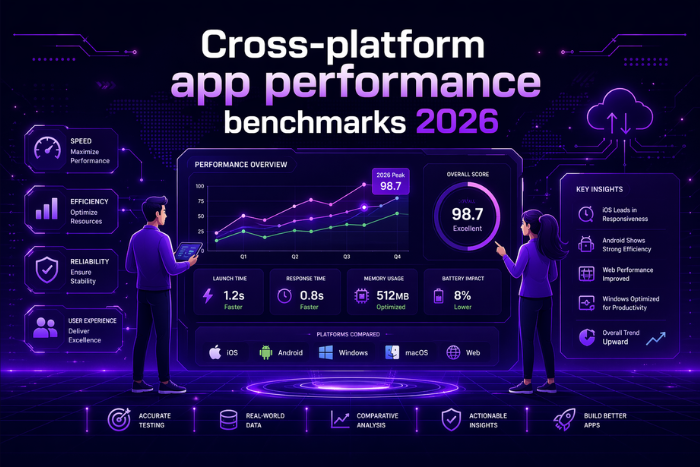
Cross-platform App Performance Benchmarks 2026
Cross-platform App Performance Benchmarks 2026 Explore cross-platform app performance benchmarks 2026, compare frameworks, optimize speed, and build high-performance mobile apps. Introduction In 2026, mobile users expect lightning-fast performance, seamless user experiences, and real-time responsiveness across devices. As businesses increasingly adopt cross-platform development, understanding cross-platform app performance benchmarks 2026 has become critical for making informed technology decisions. Cross-platform frameworks such as Flutter, React Native, and Kotlin Multiplatform have evolved significantly, narrowing the performance gap between native and hybrid applications. However, performance still varies based on architecture, rendering engines, and integration strategies. Factors like app load time, UI responsiveness, CPU usage, memory efficiency, and frame rates now define the success of modern mobile applications. By leveraging the right benchmarks and performance metrics, businesses can ensure their apps meet user expectations while optimizing development costs and time-to-market. This service helps you evaluate, measure, and optimize your app performance using the latest 2026 benchmarks—ensuring your cross-platform app performs at par with or even exceeds native standards. Why Cross-platform App Performance Benchmarks 2026 is Important Understanding performance benchmarks is no longer optional—it is a strategic necessity for delivering competitive mobile applications. Ensures Optimal User ExperienceBenchmarking helps identify performance bottlenecks affecting app speed and usability. Data-Driven Technology DecisionsChoose the right framework based on real-world performance metrics. Improved App StabilityReduce crashes, lags, and performance issues across devices. Competitive AdvantageHigh-performing apps retain users and improve engagement. Efficient Resource UtilizationOptimize CPU, GPU, and memory usage for better efficiency. Scalability ReadinessPrepare apps to handle increased traffic and complex features. Types of Solutions in Cross-platform App Performance Benchmarks 2026 We provide comprehensive benchmarking solutions tailored to different business needs: Framework Comparison BenchmarkingEvaluate performance differences between Flutter, React Native, and other frameworks. UI Rendering Performance TestingAnalyze frame rates, animations, and UI smoothness. App Load & Startup Time TestingMeasure cold start and warm start performance. Memory & CPU Usage AnalysisIdentify inefficiencies and optimize resource consumption. Network Performance TestingEvaluate API response times and data handling efficiency. Real-Device TestingTest apps across multiple devices and OS versions. Scalability & Stress TestingAssess app performance under high user loads. On-Device vs Cloud Processing BenchmarkingCompare edge computing vs cloud-based processing performance. Get Free Quotation Now..!! Key Features of Cross-platform App Performance Benchmarks 2026 Our benchmarking service focuses on delivering actionable insights and measurable improvements: Comprehensive Performance MetricsDetailed analysis of speed, responsiveness, and stability. Real-World Scenario TestingSimulate actual user conditions for accurate results. Cross-Framework Comparison ReportsSide-by-side performance evaluation. Optimization RecommendationsPractical strategies to improve app performance. Device Fragmentation CoverageTesting across multiple screen sizes and OS versions. Automated Benchmarking ToolsContinuous monitoring and reporting systems. Performance ScorecardsClear benchmarks to track improvements over time. Security & Efficiency AnalysisIdentify risks impacting performance and data handling. Development Process Requirement Analysis & Benchmark GoalsDefine performance KPIs, target devices, and business objectives. Framework & Architecture ReviewAnalyze current app architecture and technology stack. Benchmark Setup & Tool SelectionConfigure tools for performance measurement and testing. Performance Testing ExecutionConduct tests for speed, responsiveness, and resource usage. Data Collection & AnalysisGather insights from multiple test scenarios. Optimization Strategy DevelopmentIdentify performance gaps and recommend improvements. Implementation & Re-TestingApply optimizations and validate improvements. Technology Stack for Cross-platform App Performance Benchmarks 2026 Programming Languages: Dart, JavaScript, Kotlin, SwiftFrameworks: Flutter, React Native, .NET MAUI, Kotlin MultiplatformPerformance Tools: Firebase Performance Monitoring, Android Profiler, Xcode InstrumentsTesting Tools: Appium, Selenium, DetoxCloud Platforms: AWS, Google Cloud, Microsoft AzureCI/CD Tools: Jenkins, GitHub Actions, BitriseMonitoring Tools: New Relic, DatadogAnalytics Tools: Google Analytics, Mixpanel Cost Factors for Cross-platform App Performance Benchmarks 2026 Several factors influence the cost of performance benchmarking and optimization: App ComplexityMore features require extensive testing and analysis. Number of PlatformsTesting across Android, iOS, and web increases effort. Framework SelectionDifferent frameworks require different optimization approaches. Testing Tools & InfrastructureAdvanced tools may increase costs but improve accuracy. Device CoverageTesting on multiple devices adds to the cost. Optimization RequirementsExtensive performance fixes may require additional development. Team ExpertiseSkilled engineers ensure accurate benchmarking and results. Latest Trends The mobile app landscape continues to evolve with new performance-driven innovations: Near-Native Performance FrameworksModern frameworks are closing the gap with native apps. Edge Computing IntegrationFaster processing through on-device computation. AI-Powered Performance OptimizationAutomated tools identifying performance issues. GPU Acceleration in Mobile AppsEnhanced graphics and processing capabilities. Real-Time Monitoring SystemsContinuous performance tracking post-deployment. 5G-Optimized ApplicationsFaster connectivity enabling high-performance apps. Modular App ArchitecturesImproved scalability and maintainability. Why Choose Us for Cross-platform App Performance Benchmarks 2026 Choosing the right partner can make a significant difference in your app’s performance and success. Performance-First Approach We prioritize speed, responsiveness, and user experience in every project. Deep Cross-Platform Expertise Extensive experience with modern frameworks and performance optimization. Data-Driven Insights We rely on real metrics—not assumptions—to guide decisions. End-to-End Optimization From benchmarking to implementation, we cover everything. Scalable Solutions Our strategies ensure your app performs well as it grows. Advanced Tools & Technologies We use cutting-edge tools for accurate performance analysis. Transparent Process Clear communication and detailed reporting at every stage. Want to improve your app’s performance using the latest benchmarks?Let’s optimize your cross-platform app for speed and scalability.Contact us today to get started with expert benchmarking solutions. Get Free Quotation Now..!! Key Points : Cross-platform app performance benchmarks 2026 help businesses measure speed, responsiveness, and efficiency across modern frameworks Benchmarking enables data-driven decisions when choosing between Flutter, React Native, and other technologies Optimizing CPU, memory, and GPU usage improves user experience and reduces app crashes Real-device testing ensures consistent performance across multiple devices and operating systems Advanced tools and metrics help achieve near-native performance in cross-platform apps FAQ’s What are cross-platform app performance benchmarks? They are standardized metrics used to measure app speed, responsiveness, and efficiency across different frameworks and devices. Why are performance benchmarks important in 2026? Because users expect fast, smooth apps, and benchmarks help ensure your app meets those expectations. Which framework performs best in 2026? Performance depends on use cases, but Flutter and Kotlin Multiplatform are known for near-native performance. Can cross-platform apps match native performance? Yes, with proper optimization and modern frameworks, they can achieve near-native performance. How long does benchmarking take? It depends on app complexity but typically

App Development with .NET MAUI Market Share 2026
App Development with .NET MAUI Market Share 2026 Explore app development with .NET MAUI market share 2026, benefits, cost, trends, and why businesses choose MAUI for cross-platform apps. Introduction In 2026, cross-platform development has become a strategic priority for businesses aiming to reduce costs while maintaining high performance and user experience. Among the leading frameworks, .NET MAUI has emerged as a strong contender, especially for enterprises leveraging the Microsoft ecosystem. Understanding app development with .NET MAUI market share 2026 is crucial for businesses planning scalable, future-ready applications. .NET MAUI (Multi-platform App UI) enables developers to build native apps for Android, iOS, Windows, and macOS using a single codebase. With growing adoption across startups and enterprises, its market share continues to expand due to its seamless integration with C#, .NET, and cloud services. Businesses are increasingly choosing MAUI for its ability to accelerate development, reduce maintenance costs, and deliver consistent performance across platforms. As digital transformation accelerates, choosing the right framework can directly impact time-to-market, scalability, and ROI. This guide explores the importance, solutions, features, and trends shaping .NET MAUI app development in 2026. Why App Development with .NET MAUI Market Share 2026 is Important The rising adoption of .NET MAUI reflects a shift toward unified development strategies. Businesses are moving away from separate native apps toward a single, efficient codebase that ensures faster deployment and easier maintenance. Key reasons why this service is important: Growing Market Adoption.NET MAUI is gaining traction as a reliable cross-platform solution among enterprises and startups. Reduced Development CostsOne codebase significantly lowers development and maintenance expenses. Faster Time-to-MarketAccelerated development cycles help businesses launch products quickly. Enterprise-Grade IntegrationSeamless compatibility with Microsoft tools and services enhances productivity. Consistent User ExperienceUniform UI/UX across multiple platforms ensures better user engagement. Scalable ArchitectureApplications can easily scale as business requirements evolve. Types of App Development with .NET MAUI Market Share 2026 Solutions Businesses leverage .NET MAUI for various types of applications: Enterprise ApplicationsSecure and scalable apps for internal operations and workflow automation. E-commerce ApplicationsFeature-rich shopping apps with payment integration and real-time tracking. On-Demand Service AppsPlatforms for food delivery, ride-sharing, and booking services. Healthcare ApplicationsApps for patient management, telemedicine, and health monitoring. Fintech ApplicationsSecure apps for banking, payments, and financial services. Social Networking AppsInteractive apps with messaging, notifications, and user engagement features. Business Productivity AppsTools for project management, collaboration, and analytics. Get Free Quotation Now..!! Key Features of App Development with .NET MAUI Market Share 2026 Modern .NET MAUI applications are built with performance, scalability, and usability in mind: Single Codebase DevelopmentWrite once and deploy across multiple platforms. Native PerformanceDelivers near-native speed and responsiveness. Hot Reload FunctionalityFaster development cycles with real-time updates. Cross-Platform UI ConsistencyUnified design across Android, iOS, and desktop platforms. Integration with Microsoft EcosystemWorks seamlessly with Azure, Visual Studio, and other tools. Robust Security FeaturesBuilt-in security measures for data protection and compliance. API & Cloud IntegrationEasy integration with third-party services and cloud platforms. Development Process A structured process ensures efficient delivery of high-quality applications: Requirement Analysis & PlanningUnderstanding business needs and defining project scope. UI/UX DesignDesigning intuitive and engaging user interfaces. Application DevelopmentBuilding scalable apps using .NET MAUI and modern frameworks. Testing & Quality AssuranceEnsuring performance, security, and bug-free functionality. Deployment & LaunchPublishing apps across platforms and app stores. Maintenance & SupportContinuous updates, monitoring, and performance optimization. Technology Stack for App Development with .NET MAUI Market Share 2026 Modern .NET MAUI development relies on a robust technology stack: Frontend Technologies: .NET MAUI, XAML, C#Backend Technologies: .NET Core, ASP.NET, Node.jsDatabase: SQL Server, MongoDB, PostgreSQL, FirebaseCloud Platforms: Microsoft Azure, AWS, Google CloudDevOps Tools: Docker, Kubernetes, Azure DevOpsTesting Tools: NUnit, Selenium, Appium Cost Factors for App Development with .NET MAUI Market Share 2026 The cost of developing .NET MAUI applications depends on several factors: App complexity and feature requirements Platform coverage (mobile, web, desktop) UI/UX design customization Development team expertise Integration with third-party services Testing and quality assurance processes Ongoing maintenance and updates While initial investment may vary, .NET MAUI reduces long-term costs by minimizing code duplication and maintenance efforts. Latest Trends The .NET MAUI ecosystem is evolving rapidly with emerging trends: AI Integration in AppsSmarter applications with automation and predictive capabilities. Cloud-Native DevelopmentSeamless integration with cloud infrastructure for scalability. Cross-Platform DominanceIncreasing shift toward unified development frameworks. IoT IntegrationApps connected with smart devices and real-time data systems. Enhanced Developer ProductivityImproved tools and frameworks for faster development cycles. Enterprise Adoption GrowthLarge organizations adopting MAUI for digital transformation. Why Choose Us for App Development with .NET MAUI Market Share 2026 Choosing the right development partner is essential for building scalable and high-performance applications. Our expertise in .NET MAUI ensures reliable, efficient, and future-ready solutions. Experienced Development Team Our developers have extensive experience in building cross-platform applications using modern frameworks. Scalable & Future-Ready Solutions We design applications that grow with your business needs. Custom-Built Applications Every solution is tailored to your unique business requirements. Agile Development Approach We ensure faster delivery with flexibility and continuous improvements. End-to-End Services From ideation to deployment and maintenance, we handle everything. Transparent Communication We keep you informed at every stage of development. We focus on delivering high-performance applications that drive business growth and user engagement. Looking to leverage app development with .NET MAUI market share 2026 for your business?Let us build a scalable, cross-platform solution tailored to your needs.Contact us today for a free consultation and project estimate. Get Free Quotation Now..!! Key Points : App development with .NET MAUI market share 2026 is growing rapidly Single codebase reduces development and maintenance costs Ideal for enterprise and Microsoft ecosystem-based applications Faster time-to-market with cross-platform development Near-native performance across Android, iOS, and desktop Increasing adoption among startups and enterprises in 2026 FAQ’s What is .NET MAUI and why is it popular in 2026? .NET MAUI is a cross-platform framework that allows developers to build apps for multiple platforms using a single codebase, making it highly efficient and cost-effective. What is the market share of .NET MAUI in 2026? The market share is steadily growing as more businesses adopt cross-platform solutions, especially
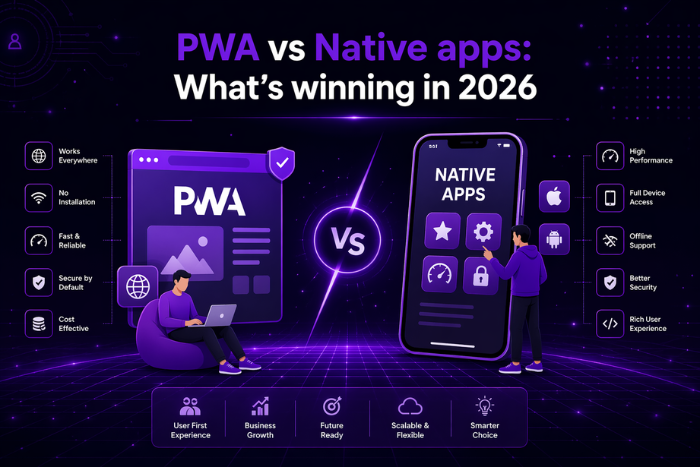
PWA vs Native Apps: What’s Winning in 2026
PWA vs Native Apps: What’s Winning in 2026 PWA vs Native apps: what’s winning in 2026? Compare performance, cost, and scalability to choose the right app strategy. Introduction The mobile app landscape has undergone a major transformation in recent years, with businesses now choosing between Progressive Web Apps (PWAs) and native applications. The debate around PWA vs Native apps: what’s winning in 2026 is more relevant than ever as companies strive to deliver seamless user experiences while optimizing development costs and time-to-market. Progressive Web Apps (PWAs) offer a web-first approach, enabling users to access apps directly through browsers with features like offline support and push notifications. On the other hand, native apps are built specifically for platforms like Android and iOS, providing deeper hardware integration and superior performance. In 2026, the decision is no longer about choosing one over the other universally—it’s about selecting the right approach based on business goals, user expectations, and technical requirements. PWAs are gaining traction for their cost-effectiveness and accessibility, while native apps continue to dominate in performance-heavy and feature-rich applications. Understanding the strengths and limitations of both approaches will help businesses make informed decisions and build future-ready applications that meet evolving user demands. Why PWA vs Native Apps: What’s Winning in 2026 is Important Choosing between PWAs and native apps directly impacts your app’s success. Understanding PWA vs Native apps: what’s winning in 2026 helps businesses make strategic decisions. Cost EfficiencyPWAs reduce development costs compared to native apps. Performance OptimizationNative apps offer better performance for complex tasks. User ExperienceImpacts engagement, speed, and usability. Time-to-MarketPWAs enable faster deployment and updates. ScalabilityBoth approaches support growth with the right architecture. Platform ReachPWAs work across devices, while native apps are platform-specific. Types of Solutions for PWA vs Native Apps: What’s Winning in 2026 Businesses can choose from various application types based on their needs: Content-Based ApplicationsPWAs are ideal for blogs, news, and informational apps. E-commerce PlatformsBoth PWAs and native apps support scalable shopping experiences. Enterprise ApplicationsNative apps provide better performance and security. On-Demand Service AppsNative apps are preferred for real-time features. Healthcare & Fintech AppsNative apps ensure secure and high-performance solutions. Startup MVP ApplicationsPWAs enable faster and cost-effective launches. Media & Streaming AppsNative apps offer better performance for multimedia. Hybrid SolutionsCombining PWA and native strategies for flexibility. Get Free Quotation Now..!! Key Features of PWA vs Native Apps: What’s Winning in 2026 Both approaches offer unique features that influence decision-making: Offline FunctionalityPWAs support offline access using caching. Performance & SpeedNative apps provide superior speed and responsiveness. Installation & AccessibilityPWAs require no app store installation. Push NotificationsBoth support notifications, with native apps offering more control. Hardware AccessNative apps have deeper integration with device features. Cross-Platform CompatibilityPWAs work across devices with a single codebase. App Store PresenceNative apps benefit from app store visibility. Maintenance & UpdatesPWAs allow instant updates without app store approvals. Development Process A structured approach ensures efficient app development: Requirement Analysis & Strategy SelectionChoosing between PWA, native, or hybrid approach. UI/UX DesignDesigning user-friendly and responsive interfaces. App DevelopmentBuilding features using selected technology. Integration & API DevelopmentConnecting backend systems and services. Testing & OptimizationEnsuring performance and compatibility. Deployment & LaunchPublishing apps or deploying PWAs. Maintenance & UpdatesContinuous improvements and scaling. Technology Stack for PWA vs Native Apps: What’s Winning in 2026 Modern app development uses advanced technologies: PWA Technologies: HTML5, CSS3, JavaScript, Service WorkersNative Technologies: Swift, Kotlin, JavaFrameworks: React, Angular, Vue.js, FlutterBackend Technologies: Node.js, Django, FirebaseDatabase: MongoDB, PostgreSQL, FirebaseCloud Platforms: AWS, Google Cloud, AzureDevOps Tools: Docker, Kubernetes, CI/CD pipelines Cost Factors for PWA vs Native Apps: What’s Winning in 2026 Development costs vary based on several factors: App ComplexityMore features increase development costs. Technology ChoicePWAs are generally more cost-effective than native apps. UI/UX RequirementsCustom designs impact pricing. Development Team ExpertiseSkilled developers influence cost. Integration ComplexityBackend and third-party integrations add cost. Maintenance & UpdatesOngoing support requirements. Scalability NeedsFuture growth considerations. Latest Trends The app development landscape is evolving with new trends: Rise of PWAs for StartupsCost-effective solutions gaining popularity. Hybrid App StrategiesCombining PWA and native approaches. AI Integration in AppsSmarter and personalized experiences. Edge ComputingFaster performance with local processing. Improved Web CapabilitiesPWAs becoming more powerful. Focus on Performance OptimizationEnhancing speed and responsiveness. Cross-Platform Development GrowthIncreasing adoption of unified solutions. Why Choose Us for PWA vs Native Apps: What’s Winning in 2026 Choosing the right development partner is crucial for success. We help businesses decide and implement the best solution for PWA vs Native applications : what’s winning in 2026. Cross-Platform Expertise Experienced in both PWA and native app development. Strategic Consultation Helping you choose the right approach for your business. Custom App Solutions Tailored applications for different industries. End-to-End Development From concept to launch and maintenance. Scalable Architecture Apps designed for long-term growth. Cost-Effective Development Optimized solutions for better ROI. Transparent Communication Clear updates throughout the project. We deliver high-performance applications that align with your business goals. Not sure whether to choose PWA or native apps?Let our experts guide you to the best solution for your project.Contact us today for a free consultation and project estimate. Get Free Quotation Now..!! Key Points : Compare Progressive Web Apps and native apps to choose the right approach in 2026 PWAs offer cost-effective development with a single codebase Native apps deliver superior performance and hardware integration Choose PWAs for MVPs, content apps, and faster time-to-market Choose native apps for complex, high-performance applications Hybrid approach (PWA + native) is trending in 2026 FAQ’s What is the main difference between PWA and native apps? Progressive Web Apps run in browsers, while native apps are platform-specific. Are PWAs faster than native apps? Native apps generally offer better performance. Are PWAs cheaper to develop? Yes, PWAs are usually more cost-effective. Do native apps provide better security? Native apps offer stronger security features. Can I combine PWA and native apps? Yes, hybrid approaches are common. How do I choose between PWA and native apps? Consider performance, cost, and business goals. Get Free Quotation Now..!!

Kotlin Multiplatform Adoption Rate Among Startups 2026
Kotlin Multiplatform Adoption Rate Among Startups 2026 Explore Kotlin Multiplatform adoption rate among startups 2026 and how it helps build scalable, cross-platform apps efficiently. Introduction The mobile app development landscape is rapidly evolving, and startups are constantly seeking faster, cost-effective ways to build scalable applications. One technology gaining significant traction is Kotlin Multiplatform. As businesses aim to reduce development time while maintaining performance, understanding the Kotlin Multiplatform adoption rate among startups 2026 has become crucial. Kotlin Multiplatform (KMP) allows developers to share code across multiple platforms—Android, iOS, web, and backend—while still maintaining native performance. Unlike traditional cross-platform frameworks, KMP offers flexibility by enabling teams to share only the logic they need, without compromising platform-specific UI capabilities. In 2026, startups are increasingly adopting KMP due to its ability to streamline development workflows, reduce costs, and improve time-to-market. With strong backing from JetBrains and growing ecosystem support, Kotlin Multiplatform is emerging as a strategic choice for modern startups. Understanding its adoption trends helps businesses make informed decisions about their development strategy and stay ahead in a competitive market. Why Kotlin Multiplatform Adoption Rate Among Startups 2026 is Important The growing adoption of KMP highlights its importance in modern app development. Understanding Kotlin Multiplatform adoption rate among startups 2026 helps businesses evaluate its potential. Faster Development CyclesShared code reduces development time. Cost EfficiencyLower development and maintenance costs. Native PerformanceApps maintain platform-specific performance. Scalable ArchitectureSupports long-term growth and expansion. Flexibility in DevelopmentDevelopers can choose what to share and what to keep native. Growing Ecosystem SupportIncreased tools and community adoption. Types of Solutions for Kotlin Multiplatform Adoption Rate Among Startups 2026 Startups are leveraging KMP across various application types: Mobile Applications (Android & iOS)Shared business logic with native UI. Web & Desktop ApplicationsCross-platform solutions with shared backend logic. Enterprise ApplicationsScalable systems for business operations. Fintech & Healthcare AppsSecure and data-driven applications. E-commerce PlatformsHigh-performance shopping experiences. IoT & Smart Device AppsIntegration with connected devices. Backend & API DevelopmentShared logic across server-side applications. MVP Development for StartupsFaster product launches with reduced cost. Get Free Quotation Now..!! Key Features of Kotlin Multiplatform Adoption Rate Among Startups 2026 KMP offers unique features that drive its adoption among startups: Code Sharing Across PlatformsReuse business logic across multiple platforms. Native PerformanceNo compromise on speed and responsiveness. Incremental AdoptionIntegrate KMP into existing projects gradually. Platform-Specific UI FlexibilityMaintain native user experience. Strong Tooling SupportBacked by JetBrains and modern IDEs. Improved Developer ProductivityFaster development and reduced duplication. Scalable CodebaseSupports complex and growing applications. Interoperability with Existing CodeWorks seamlessly with existing Android and iOS codebases. Development Process A structured approach ensures efficient implementation of Kotlin Multiplatform: Requirement Analysis & Strategy PlanningIdentifying project goals and platform requirements. Architecture DesignDefining shared and platform-specific components. Code Sharing ImplementationDeveloping shared business logic. Platform-Specific DevelopmentBuilding native UI components. Integration & TestingEnsuring compatibility across platforms. Deployment & LaunchPublishing apps on respective platforms. Maintenance & ScalingContinuous updates and performance improvements. Technology Stack for Kotlin Multiplatform Adoption Rate Among Startups 2026 Modern KMP development uses advanced technologies: Programming Languages: Kotlin, Swift, JavaFrameworks: Kotlin Multiplatform, Compose MultiplatformDevelopment Tools: IntelliJ IDEA, Android StudioBackend Technologies: Ktor, Node.js, Spring BootDatabase: PostgreSQL, MongoDB, FirebaseCloud Platforms: AWS, Google Cloud, AzureDevOps Tools: Docker, Kubernetes, CI/CD pipelinesTesting Tools: Kotlin Test, JUnit Cost Factors for Kotlin Multiplatform Adoption Rate Among Startups 2026 The cost of adopting KMP depends on several factors: Project ComplexityMore features increase development costs. Code Sharing LevelHigher shared code reduces overall cost. Team ExpertiseSkilled developers impact pricing. Integration ComplexityExisting systems may require additional effort. Testing & Quality AssuranceCross-platform testing adds cost. Maintenance & UpdatesOngoing improvements and scaling. Infrastructure CostsCloud and backend services. Latest Trends Kotlin Multiplatform is evolving rapidly with new trends: Increased Startup AdoptionMore startups choosing KMP for efficiency. Compose Multiplatform GrowthUnified UI development across platforms. Improved Tooling & EcosystemBetter developer tools and libraries. AI Integration in AppsSmarter applications with AI features. Cross-Platform Strategy ShiftMoving away from fully native development. Enterprise Adoption ExpansionLarge organizations adopting KMP. Focus on Developer ProductivityFaster development cycles and reduced effort. Why Choose Us for Kotlin Multiplatform Adoption Rate Among Startups 2026 Choosing the right development partner is key to leveraging KMP effectively. We specialize in helping businesses adopt Kotlin Multiplatform adoption rate among startups 2026 strategies for scalable app development. Kotlin Expertise Experienced in Kotlin and cross-platform development. Strategic Consultation Helping startups decide the best approach for adoption. Custom Development Solutions Tailored apps for different industries. End-to-End Development From planning to deployment and support. Scalable Architecture Apps designed for growth and performance. Cost-Effective Development Optimized solutions for better ROI. Transparent Communication Clear updates throughout the project. We help startups build efficient, scalable, and future-ready applications using Kotlin Multiplatform. Looking to adopt Kotlin Multiplatform for your startup?Let’s build scalable and high-performance cross-platform applications.Contact us today for a free consultation and development strategy. Get Free Quotation Now..!! Key Points : Growing adoption of Kotlin Multiplatform among startups in 2026 Reduce development time with shared code across Android, iOS, and web Maintain native performance while using a single codebase Enable flexible development with platform-specific UI support Lower costs with efficient cross-platform architecture FAQ’s What is Kotlin Multiplatform? Kotlin Multiplatform is a framework that allows code sharing across multiple platforms. Why are startups adopting Kotlin Multiplatform? It reduces development time, cost, and improves scalability. Is Kotlin Multiplatform better than Flutter? It depends on project needs; KMP offers native flexibility. How much does it cost to build a KMP app? Costs vary based on complexity and features. What industries use Kotlin Multiplatform? Startups in fintech, healthcare, e-commerce, and more. Is Kotlin Multiplatform suitable for MVPs? Yes, it enables faster development and launch. Get Free Quotation Now..!!
SwiftUI vs UIKit for iOS Apps in 2026
SwiftUI vs UIKit for iOS Apps in 2026 SwiftUI vs UIKit for iOS apps in 2026: compare performance, cost, and scalability to choose the right framework for your app. Introduction Choosing the right framework is one of the most critical decisions in iOS development. As Apple continues to evolve its ecosystem, the debate around SwiftUI vs UIKit for iOS apps in 2026 has become more relevant than ever. Developers and businesses must evaluate which framework aligns best with their goals, performance needs, and long-term scalability. SwiftUI represents Apple’s modern, declarative approach to building user interfaces, enabling faster development and real-time previews. On the other hand, UIKit remains a mature and powerful framework that has been the foundation of iOS apps for years. In 2026, both frameworks coexist, offering unique advantages. SwiftUI is gaining rapid adoption due to its simplicity and efficiency, while UIKit continues to be preferred for complex, highly customized applications. Understanding their differences is essential for making informed decisions. This guide will help you compare both frameworks in terms of performance, development speed, scalability, and business impact—so you can choose the best approach for your iOS app. Why SwiftUI vs UIKit for iOS Apps in 2026 is Important Selecting the right framework directly impacts your app’s success. Understanding SwiftUI vs UIKit for iOS apps in 2026 helps developers and businesses make strategic decisions. Development SpeedFaster development cycles with modern frameworks. Performance OptimizationChoosing the right framework ensures smooth performance. Scalability & MaintenanceImpacts long-term growth and updates. User Experience QualityDetermines UI responsiveness and design flexibility. Cost EfficiencyInfluences development and maintenance costs. Future-Proof DevelopmentAligns with Apple’s evolving ecosystem. Types of Solutions for SwiftUI vs UIKit for iOS Apps in 2026 Both frameworks support a wide range of applications: Startup MVP ApplicationsSwiftUI is ideal for rapid prototyping and quick launches. Enterprise ApplicationsUIKit is preferred for complex business systems. E-commerce AppsBoth frameworks support scalable shopping platforms. Healthcare & Fintech AppsSecure and performance-driven applications. Social Media AppsReal-time interactions and dynamic UI. Media & Entertainment AppsHigh-performance video and content apps. Gaming InterfacesCustom UI components for immersive experiences. Hybrid Apps (SwiftUI + UIKit)Combining both frameworks for optimal results. Get Free Quotation Now..!! Key Features of SwiftUI vs UIKit for iOS Apps in 2026 Understanding the features of both frameworks helps in making the right choice: Declarative vs Imperative ProgrammingSwiftUI uses declarative syntax; UIKit follows imperative approach. Development SpeedSwiftUI enables faster UI development with less code. UI FlexibilityUIKit offers more control for complex designs. Real-Time PreviewSwiftUI provides live previews during development. Performance OptimizationUIKit excels in complex and large-scale apps. Integration CapabilitiesBoth frameworks can work together seamlessly. Community & EcosystemUIKit has a mature ecosystem; SwiftUI is rapidly growing. Cross-Device CompatibilitySwiftUI supports multiple Apple platforms. Development Process A structured approach ensures efficient iOS app development: Requirement Analysis & Framework SelectionChoosing between SwiftUI, UIKit, or a hybrid approach. UI/UX DesignDesigning intuitive and responsive interfaces. App DevelopmentImplementing features using selected framework. Integration & API DevelopmentConnecting backend services and third-party tools. Testing & OptimizationEnsuring performance and compatibility. Deployment & App Store LaunchPublishing apps with proper optimization. Maintenance & UpdatesContinuous improvements and scaling. Technology Stack for SwiftUI vs UIKit for iOS Apps in 2026 Modern iOS development uses advanced tools and technologies: Programming Languages: Swift, Objective-CFrameworks: SwiftUI, UIKitDevelopment Tools: XcodeBackend Technologies: Node.js, Django, FirebaseDatabase: Core Data, SQLite, FirebaseCloud Platforms: AWS, Apple CloudKitTesting Tools: XCTest, TestFlightDevOps Tools: CI/CD pipelines, Docker Cost Factors for SwiftUI vs UIKit for iOS Apps in 2026 Development costs depend on several factors: Project ComplexityMore features increase cost. Framework ChoiceSwiftUI may reduce development time; UIKit may require more effort. UI/UX RequirementsCustom designs impact pricing. Development Team ExpertiseSkilled developers influence cost. Integration ComplexityBackend and API integrations add cost. Maintenance & UpdatesLong-term support requirements. Scalability NeedsFuture growth considerations. Latest Trends iOS development is evolving with new trends shaping framework adoption: SwiftUI Rapid AdoptionBecoming the preferred framework for new apps. Hybrid Development ApproachCombining SwiftUI and UIKit for flexibility. AI-Driven UI EnhancementsSmarter and adaptive interfaces. Cross-Platform Apple EcosystemUnified apps across iPhone, iPad, and Mac. Performance Optimization FocusImproving speed and responsiveness. Low-Code UI DevelopmentFaster UI creation with modern tools. Developer Productivity ToolsEnhanced workflows and automation. Why Choose Us for SwiftUI vs UIKit for iOS Apps in 2026 Choosing the right development partner ensures successful app delivery. We help businesses decide and implement the best solution for SwiftUI vs UIKit for iOS apps in 2026. iOS Development Expertise Experienced in both SwiftUI and UIKit frameworks. Strategic Consultation Helping you choose the right framework for your project. Custom App Solutions Tailored applications for different industries. End-to-End Development From idea to launch and maintenance. Scalable Architecture Apps designed for long-term growth. Cost-Effective Development Optimized solutions for better ROI. Transparent Communication Clear updates throughout the project. We deliver high-performance iOS applications that align with your business goals. Not sure whether to choose SwiftUI or UIKit?Let our experts guide you to the best solution for your app.Contact us today for a free consultation and project estimate. Get Free Quotation Now..!! Key Points : Compare SwiftUI and UIKit for iOS app development in 2026 SwiftUI offers faster development with a modern declarative approach UIKit provides better control for complex and large-scale applications Choose SwiftUI for MVPs and rapid UI development Choose UIKit for advanced customization and performance-heavy apps Select the framework aligned with your team skills and app complexity FAQ’s Which is better in 2026, SwiftUI or UIKit? It depends on project requirements, complexity, and scalability needs. Is SwiftUI faster than UIKit? SwiftUI enables faster development, but performance depends on use case. Is UIKit still relevant in 2026? UIKit remains essential for complex applications. Can SwiftUI and UIKit be used together? Yes, hybrid development is common in modern iOS apps. Which framework is better for complex apps? UIKit is often preferred for advanced and complex applications. Does SwiftUI support all iOS features? It supports most features, but some advanced cases still require UIKit. Get Free Quotation Now..!!
React Native vs Flutter in 2026: Which to Choose
React Native vs Flutter in 2026: Which to Choose React Native vs Flutter in 2026: which to choose for performance, cost, and scalability. Compare frameworks for modern app development. Introduction Choosing the right cross-platform framework is one of the most critical decisions in modern mobile app development. With businesses aiming to build scalable, high-performance apps faster, the debate around React Native vs Flutter in 2026: which to choose has become more relevant than ever. Both React Native and Flutter have evolved significantly, offering robust tools for building apps across iOS and Android using a single codebase. However, they differ in performance, development experience, UI capabilities, and long-term scalability. In 2026, the decision is no longer about which framework is better overall—it’s about which one aligns with your business goals, project complexity, and user expectations. React Native continues to leverage JavaScript and a vast ecosystem, while Flutter stands out with its custom rendering engine and consistent UI performance. Understanding the strengths, limitations, and use cases of both frameworks will help you make an informed decision. This guide breaks down everything you need to know to choose the right technology for your next app. Why React Native vs Flutter in 2026: Which to Choose is Important Selecting the right framework directly impacts app performance, cost, and scalability. Understanding React Native vs Flutter in 2026: which to choose ensures better decision-making. Faster Time-to-MarketCross-platform frameworks reduce development time. Cost EfficiencySingle codebase lowers development and maintenance costs. Performance OptimizationChoosing the right framework ensures smooth performance. Scalability for GrowthSupports future expansion and feature updates. Better User ExperienceImpacts UI consistency and responsiveness. Development FlexibilityEnables easier updates and integrations. Types of Solutions for React Native vs Flutter in 2026: Which to Choose Both frameworks support a wide range of applications: Startup MVP ApplicationsRapid development for quick market entry. E-commerce AppsScalable and feature-rich shopping platforms. Enterprise ApplicationsSecure and high-performance business solutions. On-Demand AppsFood delivery, ride-sharing, and service apps. Healthcare & Fintech AppsSecure and data-driven applications. Social Media AppsReal-time interaction and engagement features. IoT & Smart AppsIntegration with connected devices. Content & Media AppsStreaming and multimedia applications. Get Free Quotation Now..!! Key Features of React Native vs Flutter in 2026: Which to Choose Understanding core features helps in choosing the right framework: Single Codebase DevelopmentBuild apps for multiple platforms efficiently. Hot Reload CapabilityFaster development and testing cycles. Strong Community SupportLarge developer ecosystems for both frameworks. Custom UI CapabilitiesFlutter offers pixel-perfect UI, React Native uses native components. Third-Party IntegrationsExtensive libraries and plugins. Performance OptimizationFlutter excels in graphics; React Native leverages native modules. Cross-Platform CompatibilitySeamless deployment across devices. Scalable ArchitectureSuitable for both startups and enterprises. Development Process A structured approach ensures efficient cross-platform app development: Requirement Analysis & Framework SelectionChoosing between React Native and Flutter based on goals. UI/UX DesignCreating responsive and user-friendly interfaces. App DevelopmentBuilding features using selected framework. API IntegrationConnecting backend services and third-party tools. Testing & OptimizationEnsuring performance across devices. Deployment & LaunchPublishing apps on app stores. Maintenance & UpdatesContinuous improvements and scaling. Technology Stack for React Native vs Flutter in 2026: Which to Choose Both frameworks use modern technologies: React Native Stack: JavaScript, TypeScript, React, Node.jsFlutter Stack: Dart, Flutter SDKBackend Technologies: Node.js, Django, FirebaseDatabase: MongoDB, PostgreSQL, FirebaseCloud Platforms: AWS, Google Cloud, AzureDevOps Tools: Docker, Kubernetes, CI/CD pipelinesTesting Tools: Jest, Detox, Flutter Test Cost Factors for React Native vs Flutter in 2026: Which to Choose Development costs vary based on multiple factors: App ComplexityMore features increase cost. Framework ChoiceFlutter may reduce UI development cost; React Native may reduce hiring cost. UI/UX RequirementsCustom designs impact pricing. Development Team ExpertiseSkilled developers influence cost. Third-Party IntegrationsAdditional features increase expenses. Maintenance & UpdatesLong-term support costs. Scalability RequirementsFuture growth considerations. Latest Trends Cross-platform development is evolving rapidly with new trends: AI Integration in Mobile AppsSmarter and more personalized applications. Super Apps DevelopmentMulti-functional platforms gaining popularity. Low-Code/No-Code IntegrationFaster app development processes. Edge ComputingImproved performance with local processing. Enhanced UI/UX DesignFocus on immersive experiences. Cross-Platform DominanceIncreased adoption of Flutter and React Native. Performance-Driven DevelopmentOptimizing apps for speed and efficiency. Why Choose Us for React Native vs Flutter in 2026: Which to Choose Choosing the right development partner ensures successful app delivery. We help businesses decide and implement the best solution for React Native vs Flutter in 2026: which to choose. Cross-Platform Expertise Experienced in both React Native and Flutter development. Technology Consultation Helping you choose the right framework for your needs. Custom App Solutions Tailored applications for different industries. End-to-End Development From idea to launch and maintenance. Scalable Architecture Apps designed for long-term growth. Cost-Effective Solutions Optimized development for better ROI. Transparent Communication Clear updates throughout the project. We deliver high-performance, scalable apps that align with your business goals. Not sure whether to choose React Native or Flutter?Let our experts guide you to the best solution for your app.Contact us today for a free consultation and project estimate. Get Free Quotation Now..!! Key Points : Compare React Native and Flutter to choose the right framework in 2026 Use a single codebase to reduce development time and cost Flutter offers better UI consistency and performance with custom rendering React Native provides faster development with a strong JavaScript ecosystem Choose Flutter for design-heavy apps and React Native for faster MVPs Select the framework that aligns with your team expertise and project goals FAQ’s Which is better in 2026, React Native or Flutter? It depends on project requirements, performance needs, and team expertise. Is Flutter faster than React Native? Flutter generally offers better performance due to its rendering engine. Is React Native easier to learn? React Native is easier for developers familiar with JavaScript. Which framework is more cost-effective? Both are cost-effective, but costs vary based on project needs. Can both frameworks build scalable apps? Yes, both support scalable and enterprise-level applications. Are React Native apps truly native? They use native components but are not fully native. Get Free Quotation Now..!!
Android 16 New APIs for App Developers 2026
Android 16 New APIs for App Developers 2026 Explore Android 16 new APIs for app developers 2026 to build faster, secure, and high-performance mobile applications. Introduction The release of Android 16 introduces a powerful set of APIs and features that are redefining mobile app development in 2026. With a strong focus on performance, privacy, user experience, and developer productivity, Android 16 new APIs for app developers 2026 bring significant enhancements that developers must understand to build modern, future-ready applications. Android continues to evolve rapidly, and with version 16, developers gain access to improved system-level capabilities, advanced UI interactions, better battery optimization, and stronger security frameworks. These updates are designed to support the growing demand for AI-powered apps, immersive user experiences, and seamless cross-device functionality. For businesses and developers, adapting to these new APIs is critical. Applications that leverage the latest Android capabilities can deliver superior performance, enhanced security, and improved user engagement. Ignoring these updates may result in outdated apps that struggle to compete in a fast-paced digital ecosystem. Understanding these APIs ensures your app stays relevant, efficient, and aligned with modern Android standards. Why Android 16 New APIs for App Developers 2026 is Important Keeping up with platform updates is essential for delivering high-quality mobile applications. Understanding Android 16 new APIs for app developers 2026 helps developers stay competitive. Improved App PerformanceOptimized APIs for faster execution and efficiency. Enhanced User ExperienceAdvanced UI and interaction capabilities. Stronger Security & PrivacyImproved data protection and secure APIs. Better Battery OptimizationEfficient resource management for longer battery life. AI & Smart Features SupportAPIs designed for AI-driven applications. Future-Proof DevelopmentEnsures compatibility with upcoming Android versions. Types of Solutions for Android 16 New APIs for App Developers 2026 Android 16 enables the development of diverse and advanced applications: AI-Powered Mobile AppsApps leveraging intelligent features and automation. E-commerce & Retail AppsPersonalized shopping experiences with improved UI. Healthcare & Fitness AppsSecure and data-driven health monitoring solutions. Gaming ApplicationsHigh-performance graphics and immersive gameplay. Enterprise ApplicationsScalable and secure business solutions. IoT & Smart Device AppsSeamless connectivity with smart devices. Media & Entertainment AppsEnhanced video, audio, and content delivery. Productivity AppsTools for task management and workflow automation. Get Free Quotation Now..!! Key Features of Android 16 New APIs for App Developers 2026 Android 16 introduces several important features that enhance app capabilities: Advanced UI & System Interaction APIsImproved notifications, navigation, and UI components. Performance Optimization ToolsSystem-level profiling and resource management. Enhanced Privacy & Security APIsStronger data protection and sandboxing features. Improved Connectivity APIsBetter device communication and networking. Camera & Media EnhancementsAdvanced imaging and video capabilities. Accessibility ImprovementsEnhanced support for inclusive app design. Battery & Resource Management APIsOptimized energy consumption. Cross-Device Compatibility FeaturesSeamless experiences across devices. Development Process Building apps with Android 16 APIs requires a modern development approach: Requirement Analysis & PlanningUnderstanding business goals and platform capabilities. UI/UX Design ImplementationDesigning responsive and user-friendly interfaces. API Integration & DevelopmentImplementing new Android 16 APIs. Feature Enhancement & OptimizationAdding advanced functionalities. Testing & DebuggingEnsuring performance and compatibility. Deployment & Play Store OptimizationLaunching apps with best practices. Maintenance & UpdatesContinuous improvement and updates. Technology Stack for Android 16 New APIs for App Developers 2026 Modern Android development uses advanced tools and technologies: Programming Languages: Kotlin, JavaFrameworks: Android SDK, Jetpack ComposeDevelopment Tools: Android StudioAI Tools: ML Kit, TensorFlow LiteBackend Technologies: Node.js, Spring Boot, FirebaseCloud Platforms: AWS, Google CloudDatabase: SQLite, Room, FirebaseTesting Tools: Espresso, JUnit Cost Factors for Android 16 New APIs for App Developers 2026 The cost of developing Android 16 applications depends on several factors: App ComplexityAdvanced features increase development costs. UI/UX Design RequirementsCustom designs require more effort. API Integration ComplexityImplementing new APIs adds to cost. Development Team ExpertiseSkilled developers impact pricing. Testing & OptimizationEnsuring compatibility across devices. Maintenance & UpdatesOngoing improvements and updates. Device CompatibilitySupporting multiple devices increases effort. Latest Trends Android 16 is shaping the future of mobile app development with new trends: AI-Driven Mobile AppsIncreased adoption of AI features. Edge Computing IntegrationProcessing data on-device for faster performance. Enhanced Privacy ControlsUser-focused data protection. Immersive UI ExperiencesAdvanced animations and interactions. Cross-Platform Development GrowthSeamless integration across platforms. IoT & Smart Device ExpansionMore connected applications. Performance-Centric DevelopmentFocus on speed and efficiency. Why Choose Us for Android 16 New APIs for App Developers 2026 Choosing the right development partner ensures successful implementation of new Android features. We specialize in leveraging Android 16 new APIs for app developers 2026 to build high-performance applications. Android Development Expertise Experienced in building advanced Android applications. Latest Technology Integration Using cutting-edge tools and frameworks. Custom Solutions Tailored apps based on business requirements. End-to-End Development From concept to deployment and support. Scalable Architecture Apps designed for growth and performance. Cost-Optimized Development Efficient solutions for better ROI. Transparent Communication Clear updates throughout the project. We help businesses build future-ready Android applications that deliver exceptional user experiences. Looking to build apps with the latest Android 16 APIs?Let’s create powerful, scalable, and high-performance Android applications.Contact us today for a free consultation and development strategy. Get Free Quotation Now..!! Key Points : Leverage Android 16 APIs for faster and modern app development Improve app performance with advanced system profiling and optimization tools Enhance user experience with updated UI, notifications, and navigation APIs Build secure apps using improved privacy and data protection frameworks Optimize battery usage with efficient resource management APIs Develop scalable apps compatible with future Android versions FAQ’s What are the major features of Android 16? Android 16 includes performance improvements, security updates, and advanced APIs. Do I need to update my app for Android 16? Yes, updating ensures compatibility and access to new features. What programming languages are used for Android 16? Kotlin and Java are the primary languages. How does Android 16 improve app performance? Through optimized APIs and better resource management. Are Android 16 APIs secure? Yes, they include enhanced security and privacy features. Get Free Quotation Now..!!

