


React Native vs Flutter in 2026: which to choose for performance, cost, and scalability. Compare frameworks for modern app development.
Introduction
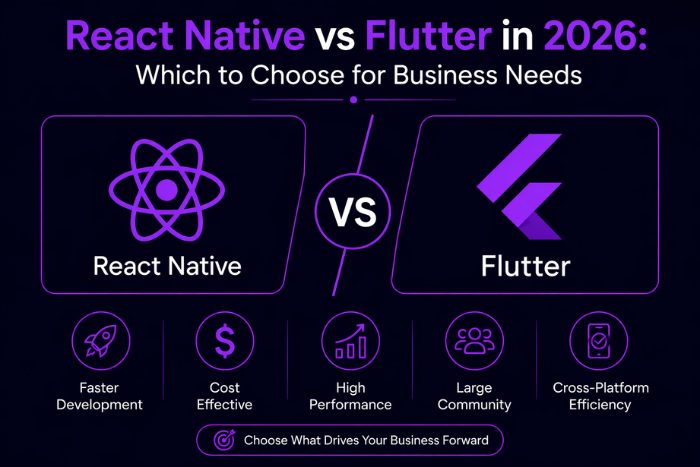
Choosing the right cross-platform framework is one of the most critical decisions in modern mobile app development. With businesses aiming to build scalable, high-performance apps faster, the debate around React Native vs Flutter in 2026: which to choose has become more relevant than ever.
Both React Native and Flutter have evolved significantly, offering robust tools for building apps across iOS and Android using a single codebase. However, they differ in performance, development experience, UI capabilities, and long-term scalability.
In 2026, the decision is no longer about which framework is better overall—it’s about which one aligns with your business goals, project complexity, and user expectations. React Native continues to leverage JavaScript and a vast ecosystem, while Flutter stands out with its custom rendering engine and consistent UI performance.
Understanding the strengths, limitations, and use cases of both frameworks will help you make an informed decision. This guide breaks down everything you need to know to choose the right technology for your next app.
Why React Native vs Flutter in 2026: Which to Choose is Important
Selecting the right framework directly impacts app performance, cost, and scalability. Understanding React Native vs Flutter in 2026: which to choose ensures better decision-making.
- Faster Time-to-Market
Cross-platform frameworks reduce development time. - Cost Efficiency
Single codebase lowers development and maintenance costs. - Performance Optimization
Choosing the right framework ensures smooth performance. - Scalability for Growth
Supports future expansion and feature updates. - Better User Experience
Impacts UI consistency and responsiveness. - Development Flexibility
Enables easier updates and integrations.
Types of Solutions for React Native vs Flutter in 2026: Which to Choose
Both frameworks support a wide range of applications:
- Startup MVP Applications
Rapid development for quick market entry. - E-commerce Apps
Scalable and feature-rich shopping platforms. - Enterprise Applications
Secure and high-performance business solutions. - On-Demand Apps
Food delivery, ride-sharing, and service apps. - Healthcare & Fintech Apps
Secure and data-driven applications. - Social Media Apps
Real-time interaction and engagement features. - IoT & Smart Apps
Integration with connected devices. - Content & Media Apps
Streaming and multimedia applications.
Key Features of React Native vs Flutter in 2026: Which to Choose
Understanding core features helps in choosing the right framework:
- Single Codebase Development
Build apps for multiple platforms efficiently. - Hot Reload Capability
Faster development and testing cycles. - Strong Community Support
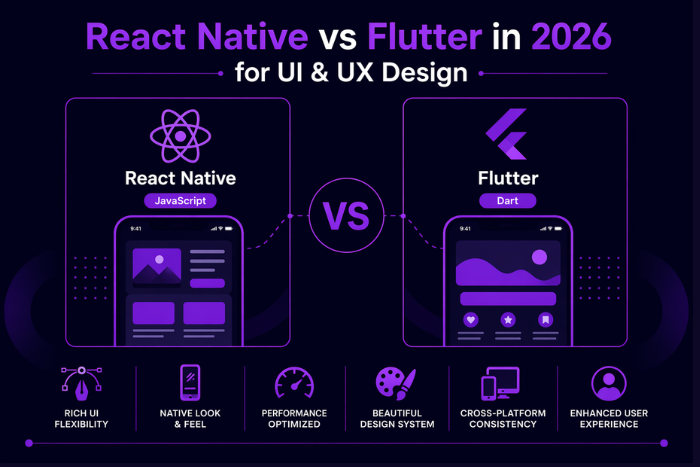
Large developer ecosystems for both frameworks. - Custom UI Capabilities
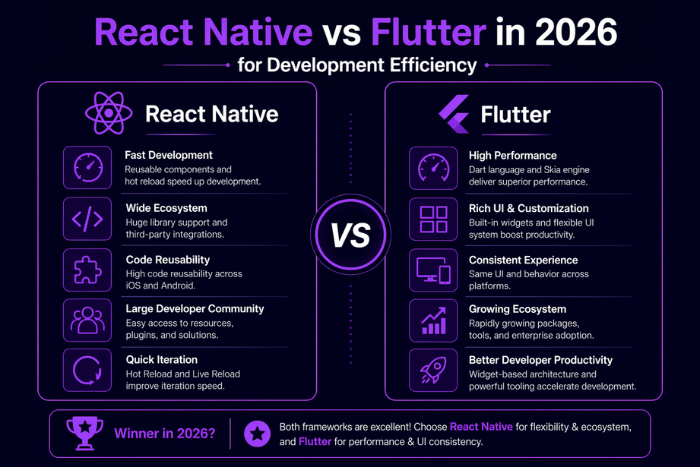
Flutter offers pixel-perfect UI, React Native uses native components. - Third-Party Integrations
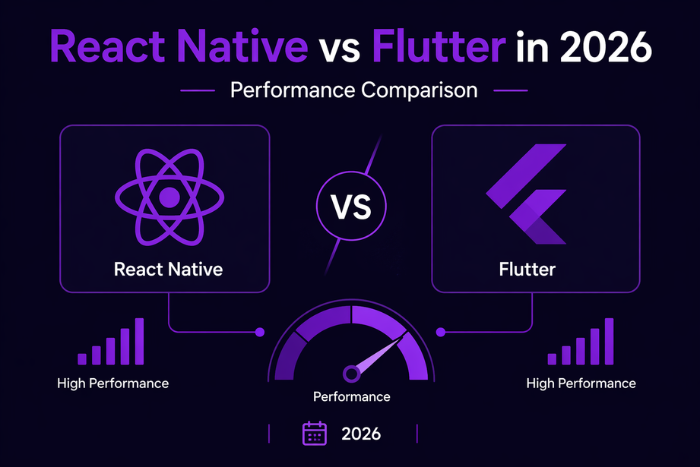
Extensive libraries and plugins. - Performance Optimization
Flutter excels in graphics; React Native leverages native modules. - Cross-Platform Compatibility
Seamless deployment across devices. - Scalable Architecture
Suitable for both startups and enterprises.
Development Process
A structured approach ensures efficient cross-platform app development:
- Requirement Analysis & Framework Selection
Choosing between React Native and Flutter based on goals. - UI/UX Design
Creating responsive and user-friendly interfaces. - App Development
Building features using selected framework. - API Integration
Connecting backend services and third-party tools. - Testing & Optimization
Ensuring performance across devices. - Deployment & Launch
Publishing apps on app stores. - Maintenance & Updates
Continuous improvements and scaling.
Technology Stack for React Native vs Flutter in 2026: Which to Choose
Both frameworks use modern technologies:
React Native Stack: JavaScript, TypeScript, React, Node.js
Flutter Stack: Dart, Flutter SDK
Backend Technologies: Node.js, Django, Firebase
Database: MongoDB, PostgreSQL, Firebase
Cloud Platforms: AWS, Google Cloud, Azure
DevOps Tools: Docker, Kubernetes, CI/CD pipelines
Testing Tools: Jest, Detox, Flutter Test
Cost Factors for React Native vs Flutter in 2026: Which to Choose
Development costs vary based on multiple factors:
- App Complexity
More features increase cost. - Framework Choice
Flutter may reduce UI development cost; React Native may reduce hiring cost. - UI/UX Requirements
Custom designs impact pricing. - Development Team Expertise
Skilled developers influence cost. - Third-Party Integrations
Additional features increase expenses. - Maintenance & Updates
Long-term support costs. - Scalability Requirements
Future growth considerations.
Latest Trends
Cross-platform development is evolving rapidly with new trends:
- AI Integration in Mobile Apps
Smarter and more personalized applications. - Super Apps Development
Multi-functional platforms gaining popularity. - Low-Code/No-Code Integration
Faster app development processes. - Edge Computing
Improved performance with local processing. - Enhanced UI/UX Design
Focus on immersive experiences. - Cross-Platform Dominance
Increased adoption of Flutter and React Native. - Performance-Driven Development
Optimizing apps for speed and efficiency.
Why Choose Us for React Native vs Flutter in 2026: Which to Choose
Choosing the right development partner ensures successful app delivery. We help businesses decide and implement the best solution for React Native vs Flutter in 2026: which to choose.
Cross-Platform Expertise
Experienced in both React Native and Flutter development.
Technology Consultation
Helping you choose the right framework for your needs.
Custom App Solutions
Tailored applications for different industries.
End-to-End Development
From idea to launch and maintenance.
Scalable Architecture
Apps designed for long-term growth.
Cost-Effective Solutions
Optimized development for better ROI.
Transparent Communication
Clear updates throughout the project.
We deliver high-performance, scalable apps that align with your business goals.
Not sure whether to choose React Native or Flutter?
Let our experts guide you to the best solution for your app.
Contact us today for a free consultation and project estimate.
Key Points :
- Compare React Native and Flutter to choose the right framework in 2026
- Use a single codebase to reduce development time and cost
- Flutter offers better UI consistency and performance with custom rendering
- React Native provides faster development with a strong JavaScript ecosystem
- Choose Flutter for design-heavy apps and React Native for faster MVPs
- Select the framework that aligns with your team expertise and project goals
FAQ's
It depends on project requirements, performance needs, and team expertise.
Flutter generally offers better performance due to its rendering engine.
React Native is easier for developers familiar with JavaScript.
Both are cost-effective, but costs vary based on project needs.
Yes, both support scalable and enterprise-level applications.
They use native components but are not fully native.