



Explore GST billing app development demand after GST Reforms 2.0, features, costs, and how to build compliant, scalable billing apps.
Introduction
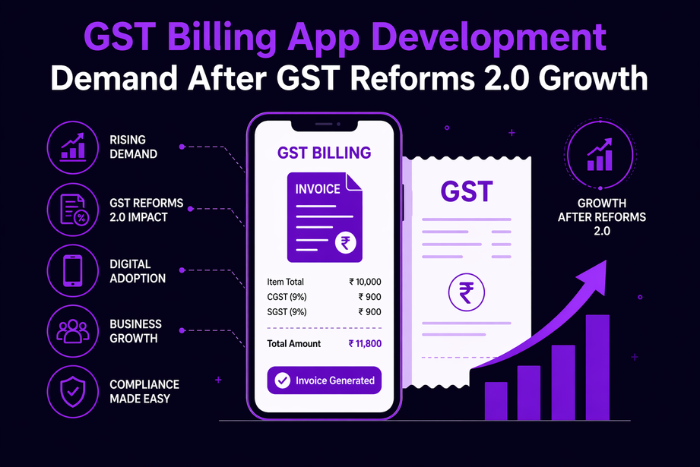
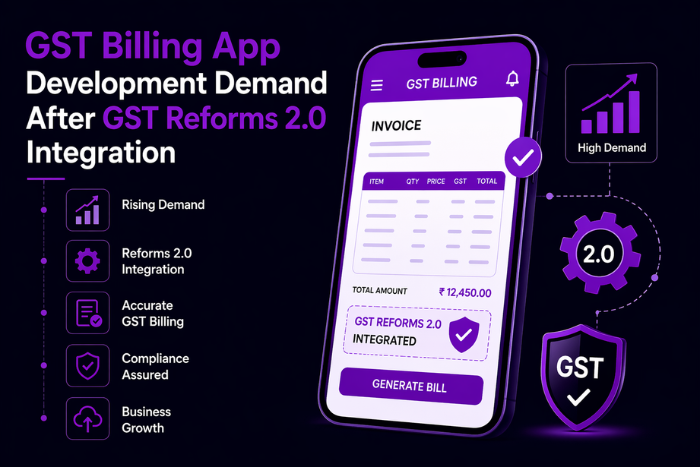
The introduction of GST Reforms 2.0 has significantly reshaped India’s taxation landscape, bringing simplified tax structures, improved compliance requirements, and enhanced digital reporting systems. As businesses adapt to these changes, the demand for advanced billing and invoicing solutions has surged. This has created a strong market for GST billing app development demand after GST Reforms 2.0, especially among MSMEs, enterprises, and digital-first businesses.
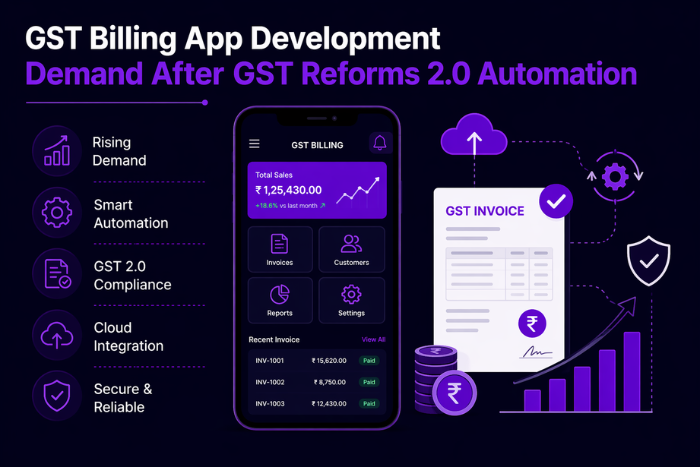
With updated GST slabs, real-time reporting, and stricter compliance norms, traditional billing systems are no longer sufficient. Businesses now require intelligent billing applications that automate tax calculations, ensure compliance, and integrate seamlessly with accounting and ERP systems. Mobile-first GST billing apps are becoming essential for managing invoices, tracking input tax credits, and generating accurate financial reports.
For developers and businesses alike, this shift presents a major opportunity. Building scalable, secure, and compliant GST billing apps can help companies streamline operations while meeting regulatory requirements. This service focuses on developing future-ready GST billing applications tailored to the needs of businesses in the post-GST 2.0 era.
Why GST Billing App Development Demand After GST Reforms 2.0 is Important
The evolving tax framework has made digital billing solutions a necessity rather than a luxury.
- Mandatory Compliance Requirements
Businesses must follow updated GST rules and reporting standards. - Automation of Tax Calculations
Reduces manual errors and improves efficiency. - Real-Time Reporting Needs
Faster filing and accurate data submission to authorities. - Increased Demand from MSMEs
Small businesses require affordable and easy-to-use billing solutions. - Integration with Accounting Systems
Seamless financial management across platforms. - Enhanced Transparency
Improved audit readiness and financial tracking.
Types of Solutions in GST Billing App Development Demand After GST Reforms 2.0
Different business needs require customized GST billing solutions:
- Mobile GST Billing Apps
On-the-go invoicing and payment tracking for businesses. - Cloud-Based Billing Solutions
Centralized systems accessible from anywhere. - POS Billing Systems with GST Integration
Retail-focused solutions with real-time billing. - E-Invoicing & E-Way Bill Integration Apps
Automated compliance with government systems. - Accounting & GST Software Integration
Unified financial and tax management platforms. - Multi-Business & Multi-GSTIN Apps
Manage multiple businesses under one platform. - Enterprise GST Billing Systems
Advanced solutions for large-scale operations. - Subscription-Based Billing Platforms
SaaS-based billing solutions for recurring revenue models.
Key Features of GST Billing App Development Demand After GST Reforms 2.0
Modern GST billing apps must include advanced features to meet compliance and business needs:
- Automated GST Calculation
Accurate tax computation based on updated slabs. - E-Invoice Generation & Validation
Compliance with government e-invoicing standards. - Input Tax Credit (ITC) Management
Track and optimize tax credits efficiently. - Real-Time Data Sync
Instant updates across devices and platforms. - Multi-User & Role-Based Access
Secure access control for teams. - Invoice Customization & Branding
Professional invoice templates. - Offline Billing Support
Generate invoices without internet connectivity. - Advanced Reporting & Analytics
Insights into sales, taxes, and financial performance.
Development Process
- Requirement Analysis & Compliance Planning
Understand business needs and GST compliance requirements. - System Architecture Design
Design scalable and secure application architecture. - UI/UX Design for Billing Experience
Create intuitive interfaces for easy billing operations. - Core Feature Development
Build invoicing, tax calculation, and reporting modules. - Integration with GST APIs & Systems
Connect with government portals for compliance. - Testing & Quality Assurance
Ensure accuracy, security, and performance. - Deployment & Continuous Updates
Launch and update apps as GST rules evolve.
Technology Stack for GST Billing App Development Demand After GST Reforms 2.0
Programming Languages: Java, Kotlin, Swift, JavaScript, Python
Frameworks: Flutter, React Native, Angular, Node.js
Backend Technologies: Django, Spring Boot, Express.js
Databases: MySQL, PostgreSQL, MongoDB
Cloud Platforms: AWS, Google Cloud, Microsoft Azure
APIs & Integrations: GST APIs, Payment Gateways, ERP Systems
Security Standards: SSL/TLS, OAuth, Data Encryption
Analytics Tools: Power BI, Tableau
Cost Factors for GST Billing App Development Demand After GST Reforms 2.0
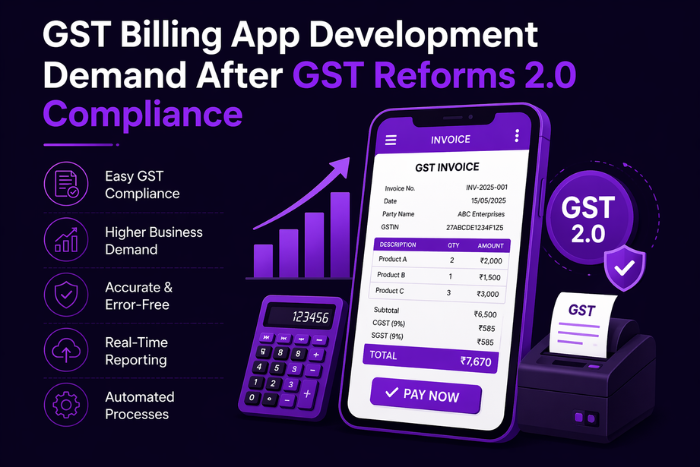
Several factors influence the cost of developing GST billing applications:
- App Complexity & Features
Advanced features like e-invoicing increase development cost. - Platform Selection
Native vs cross-platform development impacts pricing. - Compliance Requirements
Ensuring GST compliance adds development effort. - Integration with Third-Party Systems
APIs and ERP integrations increase complexity. - UI/UX Design Complexity
Custom designs require additional resources. - Scalability Requirements
Infrastructure for handling large data volumes. - Maintenance & Updates
Regular updates to comply with changing GST rules. - Development Team Expertise
Skilled developers impact project cost.
Latest Trends
- AI-Based GST Automation
Intelligent systems for tax calculation and compliance. - Cloud-Native Billing Platforms
Scalable and accessible billing solutions. - Real-Time GST Filing Integration
Direct filing from billing applications. - Mobile-First Billing Apps
Increasing demand for mobile-based solutions. - Blockchain for Tax Transparency
Secure and transparent transaction tracking. - Integration with Digital Payments
Seamless payment and billing systems. - SaaS-Based GST Solutions
Subscription-based billing platforms gaining popularity.
Why Choose Us for GST Billing App Development Demand After GST Reforms 2.0
GST Compliance Expertise
Deep understanding of GST laws and regulatory requirements.
Custom-Built Solutions
Tailored billing apps designed for your business needs.
Scalable Architecture
Apps built to handle growth and high transaction volumes.
Secure & Reliable Systems
Advanced security measures for data protection.
Seamless Integrations
Integration with GST portals, payment gateways, and ERP systems.
Cost-Effective Development
Optimized solutions to reduce development and operational costs.
Continuous Support
Ongoing updates to keep your app compliant with new GST rules.
Looking to build a GST-compliant billing app for your business?
Let’s create a scalable and secure billing solution tailored to your needs.
Contact us today to get started with expert GST app development services.
Key Points :
- GST billing app development demand has increased significantly after GST Reforms 2.0 due to stricter compliance requirements
- Businesses require automated invoicing and tax calculation to reduce errors and improve efficiency
- Features like e-invoicing, ITC tracking, and real-time reporting are now essential for modern billing apps
- MSMEs and enterprises are rapidly adopting digital GST billing solutions for better financial management
- Integration with GST APIs, ERP systems, and payment gateways enhances operational efficiency
- Mobile-first and cloud-based billing apps are driving scalability and accessibility
FAQ's
It involves creating software applications that automate invoicing, tax calculation, and compliance with GST regulations.
Because businesses need updated systems to comply with new tax rules and reporting requirements.
Key features include automated GST calculation, e-invoicing, ITC tracking, and reporting.
Costs vary based on features, integrations, and scalability requirements.
Yes, they can integrate with ERP and accounting systems for seamless operations.
Yes, with proper encryption and compliance standards, they ensure data security.