
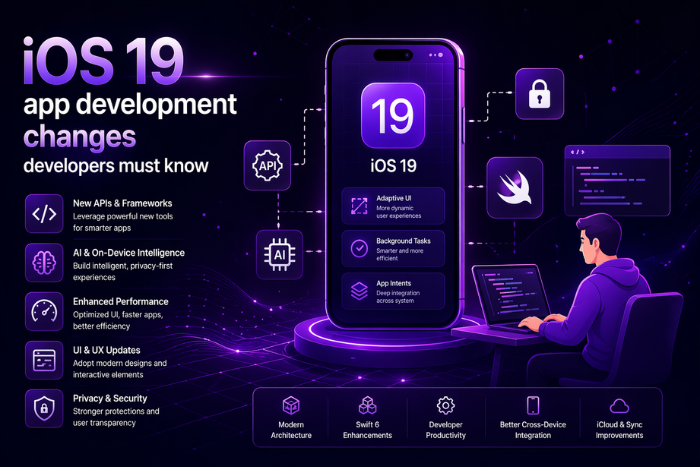
iOS 19 App Development Changes Developers Must Know Explore iOS 19 app development changes developers must know to build faster, secure, and AI-powered iPhone apps in 2026. Introduction The release of iOS 19 marks a significant evolution in mobile app development, introducing new frameworks, tools, and architectural changes that developers must understand to stay competitive. With advancements in AI integration, performance optimization, and privacy enhancements, iOS 19 app development changes developers must know are reshaping how modern iPhone applications are built and deployed. Apple continues to push innovation through enhanced developer tools like Xcode updates, improved SwiftUI capabilities, and deeper on-device AI integration. These changes are not just incremental—they redefine app lifecycle management, user experience design, and cross-device functionality across the Apple ecosystem. For businesses and developers, adapting to these updates is critical. Apps that leverage the latest features can deliver better performance, improved security, and richer user experiences. On the other hand, failing to adapt may result in compatibility issues and missed opportunities in a highly competitive app market. Understanding these changes ensures your applications remain future-ready and aligned with Apple’s evolving ecosystem. Why iOS 19 App Development Changes Developers Must Know is Important Keeping up with platform updates is essential for building high-quality applications. Understanding iOS 19 application development changes developers must know helps developers stay ahead. Enhanced Performance OptimizationImproved system efficiency and faster app execution. Stronger Security & PrivacyNew frameworks for data protection and user privacy. AI Integration CapabilitiesBuilt-in support for on-device intelligence. Improved User ExperienceModern UI frameworks for better design and usability. Cross-Device CompatibilitySeamless integration across Apple devices. Future-Proof DevelopmentStaying aligned with Apple’s latest ecosystem updates. Types of Solutions for iOS 19 App Development Changes Developers Must Know iOS 19 enables developers to build a wide range of advanced applications: AI-Powered iOS AppsApps leveraging on-device AI for smarter functionality. Enterprise iOS ApplicationsSecure and scalable business solutions. E-commerce & Retail AppsPersonalized shopping experiences with AI. Healthcare & Fitness AppsData-driven health monitoring and insights. AR/VR & Spatial Computing AppsImmersive experiences using advanced frameworks. Cross-Platform AppsSeamless integration across Apple devices. Productivity & Utility AppsEnhanced workflow and task management tools. Gaming ApplicationsHigh-performance and immersive mobile gaming. Get Free Quotation Now..!! Key Features of iOS 19 App Development Changes Developers Must Know The latest iOS update introduces several important features for developers: Advanced SwiftUI EnhancementsSimplified UI development and better responsiveness. AI-Powered Development ToolsIntelligent code suggestions and automation. Improved App Lifecycle ManagementBetter handling of background tasks and concurrency. Enhanced Security FrameworksAdvanced privacy controls and permissions. On-Device AI IntegrationFaster and more secure AI processing. Performance Optimization ToolsImproved battery and resource management. Cross-Device Experience APIsSeamless interaction across Apple ecosystem. Real-Time Analytics & MonitoringBetter insights into app performance. Development Process Building apps with iOS 19 requires a modern development approach: Requirement Analysis & PlanningUnderstanding business goals and platform capabilities. UI/UX Design with SwiftUICreating responsive and modern interfaces. App Development & IntegrationImplementing features using latest frameworks. AI & Feature IntegrationAdding intelligent functionalities where required. Testing & OptimizationEnsuring performance and compatibility. Deployment & App Store OptimizationLaunching apps with proper optimization. Maintenance & UpdatesContinuous improvement and feature updates. Technology Stack for iOS 19 App Development Changes Developers Must Know Modern iOS development uses advanced tools and technologies: Programming Languages: Swift, Objective-CFrameworks: SwiftUI, UIKitDevelopment Tools: Xcode 17AI Integration Tools: Core ML, on-device AI frameworksBackend Technologies: Node.js, Django, FirebaseCloud Platforms: AWS, Apple CloudKitDatabase: SQLite, Core DataTesting Tools: XCTest, TestFlight Cost Factors for iOS 19 App Development Changes Developers Must Know The cost of developing iOS 19 applications depends on several factors: App ComplexityAdvanced features increase development cost. UI/UX RequirementsCustom designs require more resources. AI & Advanced FeaturesIntegration of AI adds to cost. Development Team ExpertiseSkilled iOS developers impact pricing. Testing & OptimizationEnsuring compatibility across devices. Maintenance & UpdatesOngoing improvements and updates. App Store ComplianceMeeting Apple’s guidelines and requirements. Latest Trends iOS 19 introduces trends that will shape the future of app development: On-Device AI AdoptionMore apps leveraging local AI processing. SwiftUI DominanceBecoming the standard for UI development. AI-Assisted Development ToolsFaster coding and automation. Privacy-First ApplicationsFocus on data protection and user control. Cross-Device Ecosystem IntegrationSeamless user experiences across Apple devices. AR & Spatial Computing GrowthExpansion of immersive app experiences. Performance-Centric DevelopmentOptimizing apps for speed and efficiency. Why Choose Us for iOS 19 App Development Changes Developers Must Know Choosing the right development partner ensures successful implementation of new platform changes. We specialize in leveraging iOS 19 app development changes developers must know to build high-performance applications. iOS Development Expertise Experienced in building advanced iOS applications. Latest Technology Integration Using cutting-edge tools and frameworks. Custom Solutions Tailored apps based on business requirements. End-to-End Development From concept to deployment and support. Scalable Architecture Apps designed for growth and performance. Cost-Optimized Development Efficient solutions for better ROI. Transparent Communication Clear updates throughout the project. We help businesses build future-ready iOS applications that deliver exceptional user experiences. Looking to build apps with the latest iOS 19 features?Let’s create powerful, scalable, and high-performance iOS applications.Contact us today for a free consultation and development strategy. Get Free Quotation Now..!! Key Points : Stay updated with iOS 19 changes for future-ready app development Leverage SwiftUI enhancements for faster and modern UI development Integrate on-device AI for smarter and more efficient apps Enhance security with advanced privacy frameworks and permissions Build seamless cross-device experiences across the Apple ecosystem Use AI-powered developer tools for faster coding and testing FAQ’s What are the major changes in iOS 19 for developers? iOS 19 introduces AI integration, SwiftUI enhancements, and improved security frameworks. Is SwiftUI mandatory for iOS 19 development? SwiftUI is highly recommended but UIKit is still supported. Can AI be integrated into iOS 19 apps? Yes, on-device AI integration is a key feature. How much does it cost to develop an iOS 19 app? Costs vary based on complexity and features. Are iOS 19 apps backward compatible? Compatibility depends on implementation and device support. How can I start developing iOS 19 apps? Partnering with experienced developers ensures the best results. Get Free Quotation Now..!!
Generative AI Features Clients Expect in Apps Now
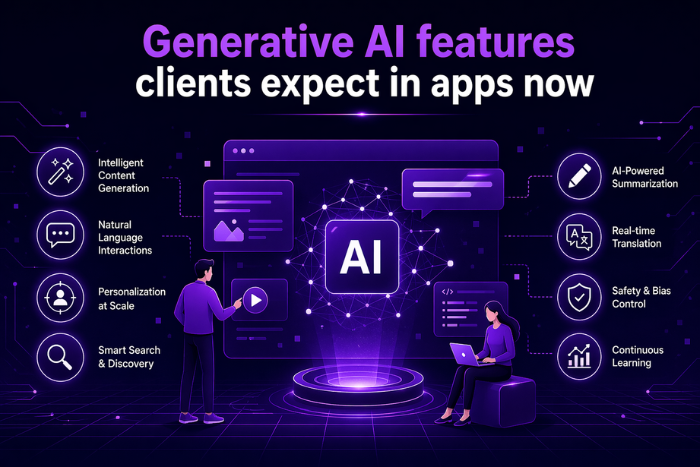
Generative AI Features Clients Expect in Apps Now Discover generative AI features clients expect in apps now to boost personalization, automation, and user engagement in modern applications. Introduction The expectations of app users have evolved dramatically with the rise of Artificial Intelligence. Today, businesses are no longer just building functional applications—they are expected to deliver intelligent, personalized, and highly interactive experiences. This shift has made generative AI features clients expect in apps now a critical factor in modern app development strategies. Generative AI enables applications to create content, automate workflows, and deliver real-time insights. From AI-powered chatbots to personalized recommendations and automated content generation, these features are transforming how users interact with digital platforms. Technologies like ChatGPT and other advanced AI systems have set new benchmarks for user experience, making intelligent features a standard expectation rather than a luxury. In 2026, clients expect apps to be proactive, adaptive, and capable of understanding user intent. Businesses that fail to integrate generative AI risk falling behind competitors who are already leveraging AI to enhance engagement, streamline operations, and drive growth. Understanding these expectations is key to building future-ready applications. Why Generative AI Features Clients Expect in Apps Now is Important The demand for AI-powered features is reshaping app development. Understanding generative AI features clients expect in apps now helps businesses meet user expectations and stay competitive. Enhanced User ExperienceAI delivers personalized and intuitive interactions. Increased EngagementSmart features keep users active and engaged. Automation of TasksReduces manual effort and improves efficiency. Competitive AdvantageAI-driven apps stand out in the market. Scalable SolutionsAI adapts to growing user demands. Data-Driven Decision MakingInsights from AI improve business strategies. Types of Solutions for Generative AI Features Clients Expect in Apps Now Generative AI is powering a wide range of application solutions: AI Chatbots & Virtual AssistantsIntelligent customer support and interaction. Content Generation AppsAutomated creation of text, images, and videos. Personalized Recommendation SystemsTailored suggestions based on user behavior. AI-Powered Search & DiscoverySmart search with contextual understanding. Marketing Automation PlatformsAI-driven campaigns and customer targeting. Voice & Conversational AI AppsSpeech-based interaction and automation. Productivity & Workflow AppsTask automation and intelligent scheduling. E-commerce AI SolutionsPersonalized shopping experiences and recommendations. Get Free Quotation Now..!! Key Features of Generative AI Features Clients Expect in Apps Now Modern applications must include advanced AI capabilities to meet client expectations: Real-Time Content GenerationInstant creation of text, images, and responses. Hyper-PersonalizationCustomized user experiences based on data. Natural Language Processing (NLP)Human-like conversations and understanding. Predictive AnalyticsAnticipating user needs and behavior. Multimodal AI CapabilitiesIntegration of text, voice, and visual AI. Automation & Workflow OptimizationStreamlining business processes. Context AwarenessUnderstanding user intent across interactions. Scalable AI InfrastructureHandling large user bases efficiently. Development Process Building apps with generative AI features requires a structured approach: Requirement Analysis & AI StrategyIdentifying key AI features and business goals. Data Collection & PreparationGathering and organizing datasets for AI models. Model Selection & IntegrationChoosing suitable generative AI models. App Development & UI/UX DesignCreating intuitive and AI-driven interfaces. Testing & OptimizationEnsuring accuracy and performance. Deployment & IntegrationLaunching the app across platforms. Monitoring & Continuous ImprovementUpdating AI models and improving features. Technology Stack for Generative AI Features Clients Expect in Apps Now Modern generative AI apps rely on advanced technologies: Programming Languages: Python, JavaScript, Swift, KotlinAI Frameworks: TensorFlow, PyTorchGenerative AI Tools: OpenAI APIs, NLP modelsMobile Frameworks: Flutter, React NativeCloud Platforms: AWS, Google Cloud, Microsoft AzureDatabase: MongoDB, PostgreSQL, FirebaseDevOps Tools: Docker, KubernetesAnalytics Tools: Power BI, Tableau Cost Factors for Generative AI Features Clients Expect in Apps Now The cost of integrating generative AI features depends on several factors: Complexity of AI FeaturesAdvanced features increase development costs. Model Selection & API UsageUsage-based pricing impacts budget. Data RequirementsHigh-quality datasets require investment. Infrastructure CostsCloud and computing resources. Integration ComplexityConnecting AI with existing systems. Maintenance & UpdatesContinuous improvements and monitoring. Scalability RequirementsSupporting large user bases. Latest Trends Generative AI is evolving rapidly with new trends shaping app development: Multimodal AI ApplicationsCombining text, voice, and visual capabilities. AI Agents & Autonomous SystemsApps performing complex tasks independently. Real-Time AI InteractionsInstant responses and dynamic content generation. AI Personalization at ScaleHighly customized user experiences. Low-Code AI DevelopmentFaster deployment with minimal coding. Edge AI IntegrationProcessing AI tasks on devices. AI-Driven UX DesignAdaptive interfaces based on user behavior. Why Choose Us for Generative AI Features Clients Expect in Apps Now Choosing the right development partner is key to successfully implementing AI features. We specialize in integrating generative AI features clients expect in apps now into scalable and high-performance applications. AI Development Expertise Experienced in building advanced AI-powered applications. Custom AI Solutions Tailored features based on your business needs. End-to-End Development From strategy to deployment and support. Scalable Architecture Apps designed to grow with your business. Advanced Technology Stack Using cutting-edge tools and frameworks. Cost-Optimized Development Efficient solutions for maximum ROI. Transparent Communication Clear updates throughout the project. We focus on delivering intelligent applications that enhance user engagement and business growth. Looking to integrate generative AI features into your app?Let’s build smart, scalable, and future-ready applications.Contact us today for a free consultation and development strategy. Get Free Quotation Now..!! Key Points : Integrate generative AI features to enhance personalization and user experience Use tools like ChatGPT for intelligent chat and content generation Automate workflows and reduce manual effort with AI-powered apps Deliver real-time recommendations and predictive insights Build scalable apps with multimodal AI (text, voice, visual) capabilities FAQ’s What are generative AI features in apps? They include AI-driven content creation, chatbots, and personalized recommendations. Why are generative AI features important? They improve user experience, engagement, and automation. What technologies are used in generative AI apps? Technologies include AI frameworks, APIs, and cloud platforms. Can generative AI apps scale easily? Yes, with proper architecture and infrastructure. Are generative AI apps secure? Yes, with proper implementation and compliance measures. How can I start building a generative AI app? Partnering with an experienced AI development company is recommended. Get Free Quotation Now..!!
AI App Development for Healthcare: HIPAA Compliance 2026
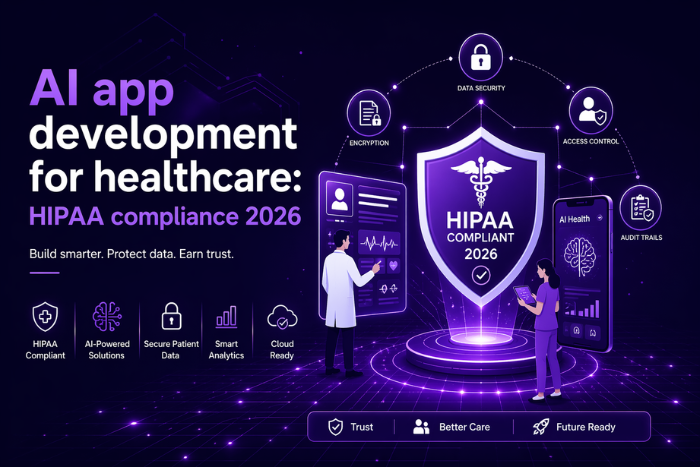
AI App Development for Healthcare: HIPAA Compliance 2026 Build AI healthcare apps with AI app development for healthcare: HIPAA compliance 2026. Secure and scalable solutions for healthcare systems. Introduction The healthcare industry is rapidly embracing digital transformation, and Artificial Intelligence is playing a central role in improving patient care, operational efficiency, and clinical decision-making. However, with the increasing use of AI in healthcare applications comes a critical responsibility—ensuring strict compliance with regulations like HIPAA. This is why understanding AI app development for healthcare: HIPAA compliance 2026 is essential for healthcare providers, startups, and enterprises. HIPAA (Health Insurance Portability and Accountability Act) sets the standard for protecting sensitive patient data, also known as Protected Health Information (PHI). When developing AI-powered healthcare apps, compliance is not optional—it is mandatory. AI systems must be designed to handle data securely while maintaining transparency, accountability, and privacy. In 2026, healthcare apps are leveraging AI for diagnostics, patient monitoring, telemedicine, and predictive analytics. At the same time, organizations must ensure that these applications meet compliance requirements without compromising innovation. This balance between advanced AI capabilities and data security defines the future of healthcare app development. Why AI App Development for Healthcare: HIPAA Compliance 2026 is Important Ensuring compliance while building AI-driven healthcare apps is critical for both legal and operational success. Protection of Patient Data (PHI)Safeguards sensitive medical information from breaches. Regulatory ComplianceAvoids legal penalties and ensures adherence to HIPAA standards. Trust & CredibilityBuilds confidence among patients and healthcare providers. Secure Data ManagementEnsures encryption, access control, and audit tracking. Risk MitigationReduces the likelihood of cyber threats and data leaks. Scalable Healthcare SolutionsEnables growth while maintaining compliance standards. Types of Solutions for AI App Development for Healthcare: HIPAA Compliance 2026 AI-powered healthcare applications with compliance requirements span multiple use cases: Telemedicine ApplicationsSecure video consultations and remote patient care. AI Chatbots & Virtual Health AssistantsPatient interaction, appointment scheduling, and support. Remote Patient Monitoring (RPM)Real-time tracking of patient health data. Medical Imaging & Diagnostics AppsAI-powered analysis of scans and imaging data. Electronic Health Record (EHR) SystemsSecure storage and management of patient records. Predictive Analytics PlatformsEarly detection of diseases and risk assessment. Healthcare Workflow AutomationStreamlining administrative processes. Personalized Treatment AppsAI-driven recommendations for patient care. Get Free Quotation Now..!! Key Features of AI App Development for Healthcare: HIPAA Compliance 2026 HIPAA-compliant AI healthcare apps require advanced security and performance features: End-to-End Data EncryptionProtects data during storage and transmission. Role-Based Access Control (RBAC)Restricts access based on user roles. Audit Logs & MonitoringTracks system activity for compliance. Data Anonymization & De-IdentificationProtects patient identity in AI processing. Secure Cloud InfrastructureEnsures compliant hosting environments. Multi-Factor Authentication (MFA)Adds an extra layer of security. Compliance Reporting ToolsEnsures adherence to regulatory standards. AI Transparency & ExplainabilityImproves trust in AI-driven decisions. Development Process A structured approach ensures both innovation and compliance in healthcare AI apps: Requirement Analysis & Risk AssessmentIdentifying compliance needs and AI use cases. Data Classification & ManagementSeparating sensitive and non-sensitive data. Secure Architecture DesignBuilding systems aligned with HIPAA standards. AI Model Development & IntegrationImplementing AI features securely. Security ImplementationEncryption, access control, and monitoring. Testing & Compliance ValidationEnsuring the app meets regulatory requirements. Deployment & Continuous MonitoringOngoing updates and compliance checks. Technology Stack for AI App Development for Healthcare: HIPAA Compliance 2026 Modern healthcare AI applications rely on secure and scalable technologies: Programming Languages: Python, Java, JavaScript, C#AI Frameworks: TensorFlow, PyTorchHealthcare Standards: HL7, FHIRCloud Platforms: AWS (HIPAA-compliant), Google Cloud Healthcare API, Microsoft AzureDatabase: PostgreSQL, MongoDB, HIPAA-compliant storageSecurity Tools: Encryption protocols, IAM systemsDevOps Tools: Docker, KubernetesAnalytics Tools: Power BI, Tableau Cost Factors for AI App Development for Healthcare: HIPAA Compliance 2026 The cost of developing compliant healthcare AI apps depends on multiple factors: Compliance RequirementsImplementing HIPAA standards increases development complexity. AI Model ComplexityAdvanced features require more resources. Data Security MeasuresEncryption and secure infrastructure add to costs. Integration with Healthcare SystemsEHR and third-party integrations increase effort. Development Team ExpertiseSkilled healthcare AI developers impact pricing. Testing & CertificationCompliance validation processes add time and cost. Maintenance & UpdatesContinuous monitoring and updates for compliance. Latest Trends Healthcare AI development is evolving rapidly with new trends: AI-Powered DiagnosticsFaster and more accurate disease detection. Agentic AI in HealthcareAutonomous systems assisting medical workflows. Remote Patient Monitoring GrowthIncreased adoption of wearable devices. Data Privacy & Security InnovationsAdvanced encryption and compliance tools. Interoperability Standards (FHIR)Seamless data exchange across systems. Edge AI in HealthcareProcessing data locally for faster insights. Personalized MedicineAI-driven treatment tailored to individuals. Why Choose Us for AI App Development for Healthcare: HIPAA Compliance 2026 Choosing the right development partner is critical for building secure and scalable healthcare applications. We specialize in AI app development for healthcare: HIPAA compliance 2026 to deliver high-quality, compliant solutions. Healthcare AI Expertise Deep experience in AI-driven healthcare solutions. Compliance-First Approach Ensuring full adherence to HIPAA regulations. Custom Healthcare Solutions Tailored applications for specific medical use cases. End-to-End Development From planning to deployment and maintenance. Advanced Security Implementation Robust data protection and compliance measures. Scalable Architecture Solutions designed for growth and high performance. Transparent Communication Clear updates throughout the development process. We help healthcare organizations build secure, intelligent, and compliant AI applications that improve patient outcomes and operational efficiency. Looking to build a HIPAA-compliant AI healthcare app?Let’s create secure and scalable healthcare solutions tailored to your needs.Contact us today for a free consultation and development strategy. Get Free Quotation Now..!! Key Points : Ensure HIPAA compliance to protect sensitive patient data (PHI) Build secure AI healthcare apps with encryption, RBAC, and audit logs Use AI for telemedicine, diagnostics, and remote patient monitoring Implement data anonymization and privacy-first AI processing Improve patient outcomes with AI-driven insights and automation Develop scalable, compliant healthcare apps for long-term growth FAQ’s What is HIPAA compliance in healthcare apps? HIPAA compliance ensures the protection of sensitive patient data (PHI). Why is HIPAA important for AI healthcare apps? It ensures data privacy, security, and legal compliance. What types of apps require HIPAA compliance? Apps handling patient data, such as telemedicine and EHR systems. How much does it cost to build a HIPAA-compliant AI app? Costs vary based
How to Integrate Meta AI into Business Apps
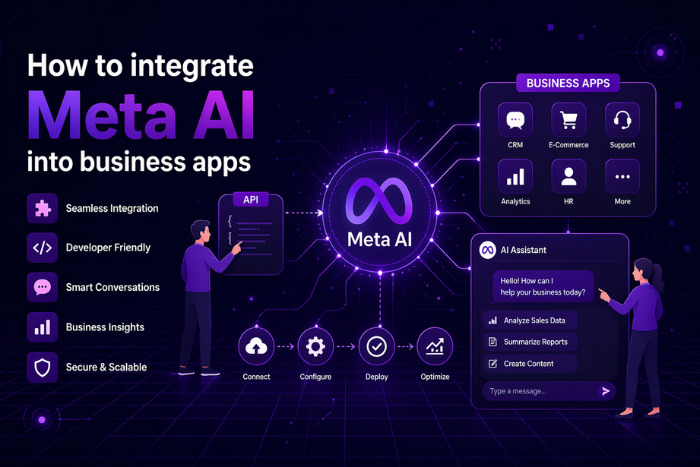
How to Integrate Meta AI into Business Apps Learn how to integrate Meta AI into business apps to improve automation, customer engagement, and scalable AI-powered solutions. Introduction Artificial Intelligence is transforming how businesses interact with customers, automate workflows, and drive growth. One of the most impactful developments in this space is the rise of AI tools within platforms like Meta. Businesses today are increasingly exploring how to integrate Meta AI into business apps to create smarter, more responsive, and personalized digital experiences. Meta AI enables companies to automate customer interactions, deliver personalized recommendations, and enhance engagement across platforms such as messaging apps, social media, and websites. By integrating AI into business applications, organizations can streamline operations, reduce response times, and improve customer satisfaction. Whether you’re building a customer support chatbot, an e-commerce platform, or a marketing automation tool, Meta AI provides scalable solutions that can be tailored to your business needs. Understanding how to effectively integrate this technology is key to unlocking its full potential and staying competitive in an AI-driven marketplace. Why How to Integrate Meta AI into Business Apps is Important Understanding how to integrate Meta AI into business apps is essential for businesses looking to improve efficiency and customer engagement. 24/7 Customer SupportAI-powered chatbots provide instant responses at any time. Enhanced PersonalizationTailored experiences based on user behavior and preferences. Improved Customer EngagementReal-time interactions increase satisfaction and retention. Operational EfficiencyAutomates repetitive tasks and reduces manual workload. Scalable Business SolutionsHandles increasing user demand without performance issues. Data-Driven InsightsAI analyzes user data to improve decision-making. Types of Solutions for How to Integrate Meta AI into Business Apps Meta AI can be integrated into various types of business applications: AI Chatbots & Messaging AppsAutomated conversations on platforms like Messenger and WhatsApp. E-commerce & Shopping AppsPersonalized product recommendations and support. Customer Support SystemsAI-driven ticket handling and issue resolution. Marketing Automation ToolsTargeted campaigns and user segmentation. Social Media Management AppsAI-powered content scheduling and engagement tracking. Lead Generation & CRM AppsIntelligent customer data analysis and follow-ups. Voice & Conversational AI AppsSpeech-based interaction and automation. Enterprise Workflow AutomationAI integration for internal business processes. Get Free Quotation Now..!! Key Features of How to Integrate Meta AI into Business Apps Meta AI integration offers powerful features that enhance application performance: Real-Time AI ResponsesInstant communication with users. Natural Language Processing (NLP)Human-like conversations and understanding. Personalized RecommendationsAI-driven suggestions for users. Multichannel IntegrationWorks across messaging, apps, and websites. Automation & Workflow ManagementReduces manual processes. Analytics & ReportingInsights into user behavior and engagement. Secure Data HandlingEnsures privacy and compliance. Scalable InfrastructureSupports business growth and high traffic. Development Process A structured approach ensures successful Meta AI integration: Requirement Analysis & StrategyIdentifying business goals and AI use cases. Platform Selection & API SetupChoosing Meta platforms and configuring APIs. Data Collection & PreparationGathering data for AI training and personalization. AI Model IntegrationImplementing Meta AI features into the app. UI/UX Design for AI InteractionCreating intuitive interfaces for user engagement. Testing & OptimizationEnsuring performance, accuracy, and reliability. Deployment & MonitoringLaunching and continuously improving the app. Technology Stack for How to Integrate Meta AI into Business Apps Modern Meta AI integrations use advanced technologies: Programming Languages: JavaScript, Python, Java, PHPAI & NLP Tools: Meta AI APIs, NLP frameworksFrontend Technologies: React, Angular, FlutterBackend Technologies: Node.js, Django, Spring BootCloud Platforms: AWS, Google Cloud, Microsoft AzureDatabase: MongoDB, MySQL, PostgreSQLDevOps Tools: Docker, KubernetesAnalytics Tools: Power BI, Google Analytics Cost Factors for How to Integrate Meta AI into Business Apps The cost of integrating Meta AI depends on several factors: Complexity of AI FeaturesAdvanced functionalities increase development costs. Platform Integration ScopeMultiple platforms require more resources. Data RequirementsHigh-quality datasets for personalization. API Usage CostsPricing based on usage and interactions. Development Team ExpertiseSkilled developers impact overall cost. Testing & OptimizationEnsuring accuracy and performance. Maintenance & UpdatesContinuous improvements and monitoring. Latest Trends Meta AI integration is evolving with new trends shaping business applications: AI-Powered Messaging PlatformsAdvanced chatbots for real-time communication. Hyper-PersonalizationAI-driven user experiences tailored to individuals. Voice AI IntegrationSpeech-based interactions in business apps. AI-Driven Marketing AutomationSmarter campaigns and customer targeting. Multimodal AI CapabilitiesCombining text, voice, and visual AI. Edge AI ProcessingFaster processing on devices. AI Commerce (Conversational Shopping)Voice and chat-based purchasing experiences. Why Choose Us for How to Integrate Meta AI into Business Apps Choosing the right partner is critical for successful AI integration. We specialize in helping businesses implement how to integrate Meta AI into business apps with scalable and efficient solutions. AI Integration Expertise Experienced in implementing Meta AI across multiple platforms. Custom Business Solutions Tailored applications based on your specific needs. End-to-End Development From strategy to deployment and ongoing support. Scalable Architecture Apps designed to grow with your business. Advanced Technology Stack Using cutting-edge tools and frameworks. Cost-Optimized Development Efficient solutions that maximize ROI. Transparent Communication Clear updates and collaboration throughout the project. We help businesses transform their applications with intelligent AI-driven solutions. Looking to integrate Meta AI into your business apps?Let’s build smart, scalable, and engaging AI-powered solutions.Contact us today for a free consultation and development strategy. Get Free Quotation Now..!! Key Points : Integrate Meta AI to automate customer interactions and support Enhance user engagement with personalized recommendations and real-time responses Build AI-powered chatbots for Messenger and WhatsApp platforms Improve business efficiency with workflow automation and smart analytics Enable multichannel AI integration across apps, websites, and social media Scale your business apps with secure and intelligent AI solutions FAQ’s What is Meta AI in business applications? Meta AI enables automation, personalization, and intelligent interactions in apps. How can Meta AI improve customer engagement? It provides real-time responses, personalized recommendations, and automated interactions. Which platforms support Meta AI integration? Platforms include Messenger, WhatsApp, and websites. Is Meta AI integration expensive? Costs vary based on features, usage, and development complexity. Do I need developers to integrate Meta AI? Yes, professional developers ensure proper implementation and scalability. How long does integration take? It depends on complexity, typically ranging from a few weeks to months. Get Free Quotation Now..!!
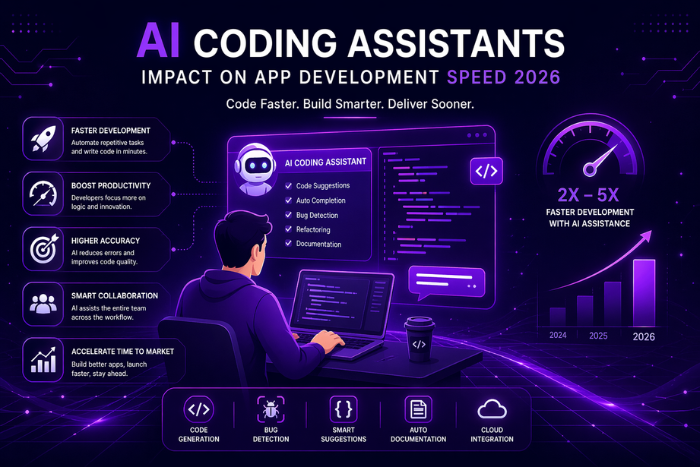
AI Coding Assistants Impact on App Development Speed 2026
AI Coding Assistants Impact on App Development Speed 2026 Explore how AI coding assistants impact app development speed in 2026, boosting productivity, automation, and faster delivery. Introduction The software development landscape is evolving rapidly, and one of the most transformative forces driving this change is the rise of AI coding assistants. In 2026, tools powered by advanced AI models—such as GitHub Copilot, Claude, and ChatGPT—are significantly accelerating the way applications are built, tested, and deployed. Understanding the AI coding assistants impact on app development speed 2026 is essential for businesses and developers aiming to improve productivity and reduce time-to-market. These tools are no longer just autocomplete engines—they now generate entire code blocks, assist in debugging, suggest optimizations, and even help with architecture decisions. As organizations face increasing pressure to deliver high-quality applications faster, AI coding assistants are becoming a core part of modern development workflows. From startups to enterprise teams, adopting these tools can lead to faster development cycles, reduced costs, and improved code quality. This shift is not just about speed—it’s about transforming how software is created in a more intelligent and efficient way. Why AI Coding Assistants Impact on App Development Speed 2026 is Important AI coding assistants are redefining development efficiency. Understanding the AI coding assistants impact on app development speed 2026 helps businesses stay competitive in a fast-paced digital environment. Faster Development CyclesAutomates repetitive coding tasks, reducing development time. Improved Developer ProductivityDevelopers can focus on complex problem-solving instead of boilerplate code. Reduced Errors & Debugging TimeAI-assisted suggestions improve code accuracy. Enhanced CollaborationTeams can standardize coding practices with AI guidance. Lower Development CostsFaster delivery reduces overall project expenses. Accelerated Time-to-MarketLaunch applications quickly to stay ahead of competitors. Types of Solutions Enabled by AI Coding Assistants AI coding assistants are transforming multiple types of app development solutions: Web & Mobile App DevelopmentFaster front-end and back-end coding with AI assistance. Enterprise Software DevelopmentStreamlined development for large-scale applications. API & Backend DevelopmentAutomated API generation and integration. AI & Machine Learning ApplicationsSimplified model implementation and deployment. DevOps & Automation ToolsAI-assisted scripting and infrastructure management. Low-Code/No-Code PlatformsAccelerated development for non-technical users. Testing & QA AutomationAI-generated test cases and debugging support. Legacy System ModernizationFaster code refactoring and system upgrades. Get Free Quotation Now..!! Key Features of AI Coding Assistants Impact on App Development Speed 2026 Modern AI coding tools offer advanced features that enhance development speed and efficiency: Code Autocompletion & GenerationAutomatically generates code snippets and functions. Context-Aware SuggestionsUnderstands project structure and provides relevant recommendations. Real-Time Debugging AssistanceIdentifies and fixes errors instantly. Multi-Language SupportSupports various programming languages and frameworks. Automated DocumentationGenerates documentation alongside code. Integration with Development ToolsWorks seamlessly with IDEs and version control systems. AI-Powered Code ReviewImproves code quality and consistency. Continuous Learning CapabilitiesAdapts based on developer behavior and project needs. Development Process AI coding assistants are integrated into every stage of the development lifecycle: Requirement Analysis & PlanningDefining project scope and development goals. Code Generation & DevelopmentUsing AI tools to accelerate coding tasks. Integration & API DevelopmentAutomating backend and third-party integrations. Testing & DebuggingAI-assisted testing and error resolution. Deployment & CI/CD IntegrationStreamlining deployment with automated workflows. Monitoring & OptimizationContinuous performance improvements using AI insights. Technology Stack for AI Coding Assistants Impact on App Development Speed 2026 Modern development with AI coding assistants uses advanced technologies: Programming Languages: JavaScript, Python, Java, C#, GoAI Models & Tools: OpenAI APIs, Anthropic Claude, GitHub CopilotFrameworks: React, Angular, Vue.js, Node.js, DjangoCloud Platforms: AWS, Google Cloud, Microsoft AzureDevOps Tools: Docker, Kubernetes, JenkinsVersion Control: Git, GitHub, GitLabTesting Tools: Selenium, Jest, Cypress Cost Factors for AI Coding Assistants Impact on App Development Speed 2026 The adoption of AI coding assistants affects development costs in several ways: Tool Subscription CostsPricing for AI coding platforms and APIs. Training & OnboardingTime required for teams to adopt new tools. Project ComplexityComplex projects may still require manual intervention. Integration CostsIntegrating AI tools into existing workflows. Maintenance & UpdatesContinuous updates and tool improvements. Productivity GainsFaster development reduces overall costs. Team Size OptimizationSmaller teams can achieve more with AI assistance. Latest Trends The role of AI coding assistants is expanding with new trends shaping the future of development: AI Pair ProgrammingDevelopers collaborating with AI in real time. Autonomous Code GenerationAI generating entire modules or applications. AI-Driven DevOpsAutomation of deployment and infrastructure management. Natural Language ProgrammingWriting code using plain language instructions. AI-Powered Testing & QAAutomated testing and bug detection. Custom AI Coding ModelsBusinesses training models on their own codebases. Integration with IDEs & WorkflowsSeamless AI integration into development environments. Why Choose Us for AI Coding Assistants Impact on App Development Speed 2026 Adopting AI coding assistants requires expertise and strategic implementation. We help businesses leverage the AI coding assistants impact on application development speed 2026 to build faster, smarter, and more efficient applications. AI-Driven Development Expertise Experienced in integrating AI tools into development workflows. Faster Time-to-Market Accelerated development cycles for quicker launches. Custom Development Solutions Tailored applications based on your business needs. End-to-End Services From planning to deployment and optimization. Advanced Technology Stack Using cutting-edge tools for high-performance applications. Cost Optimization Efficient development strategies for better ROI. Transparent Communication Clear updates and collaboration throughout the project. We focus on delivering high-quality applications with speed, efficiency, and innovation. Ready to accelerate your app development with AI coding assistants?Let’s build faster, smarter, and more efficient applications.Contact us today for a free consultation and development strategy. Get Free Quotation Now..!! Key Points : Use AI coding assistants like GitHub Copilot to accelerate app development speed Automate repetitive coding tasks and reduce manual effort Improve developer productivity with real-time code suggestions Minimize errors with AI-powered debugging and code reviews Speed up time-to-market for web and mobile applications FAQ’s How do AI coding assistants improve development speed? They automate coding tasks, reduce errors, and provide real-time suggestions. What are the most popular AI coding assistants? Popular tools include GitHub Copilot, Claude, and ChatGPT. Can AI coding assistants replace developers? No, they assist developers but do not replace human expertise. Do AI coding tools support multiple languages? Yes, they support various programming
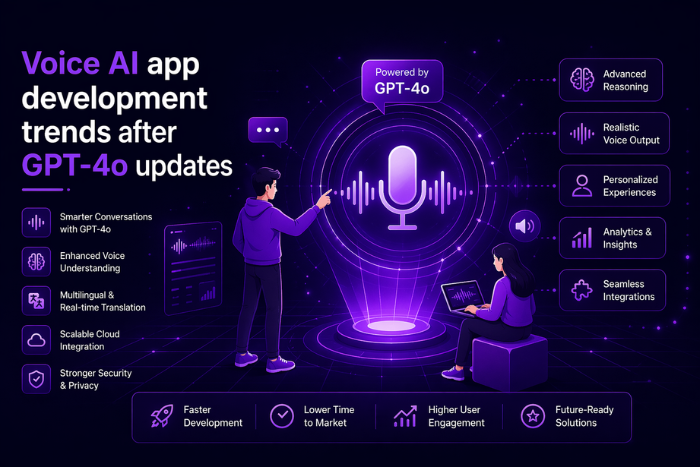
Voice AI App Development Trends After GPT-4o Updates
Voice AI App Development Trends After GPT-4o Updates Explore voice AI app development trends after GPT-4o updates, including real-time voice agents, speech AI, and next-gen mobile apps. Introduction Voice technology is undergoing a major transformation, driven by advancements in real-time AI and multimodal capabilities. With the introduction of powerful models like GPT-4o, voice AI has evolved from basic speech recognition to fully interactive, human-like communication systems. This shift is redefining how users interact with mobile applications. Understanding voice AI app development trends after GPT-4o updates is crucial for businesses aiming to deliver next-generation digital experiences. Modern voice-enabled apps are no longer limited to commands—they can now engage in natural conversations, process context, and respond instantly with high accuracy. From customer support and virtual assistants to healthcare and enterprise solutions, voice AI is becoming a core feature across industries. With real-time speech-to-speech capabilities, emotion detection, and multilingual support, businesses have new opportunities to enhance user engagement and streamline operations. As voice AI continues to evolve, companies that adopt these innovations early will gain a significant competitive advantage in the mobile app ecosystem. Why Voice AI App Development Trends After GPT-4o Updates is Important The advancements introduced by GPT-4o have significantly impacted how voice AI applications are built and used. Understanding voice AI app development trends after GPT-4o updates helps businesses stay ahead in a competitive market. Natural Human-Like ConversationsAI models now support fluid, context-aware interactions. Real-Time Voice ProcessingFaster responses improve user experience. Multimodal CapabilitiesIntegration of voice, text, and visual inputs. Increased AutomationVoice AI can handle complex workflows and tasks. Enhanced AccessibilityVoice interfaces make apps more inclusive. Global ReachMultilingual support expands market opportunities. Types of Voice AI App Development Solutions Voice AI is transforming multiple types of mobile applications: Voice Assistants & ChatbotsIntelligent assistants for customer support and personal productivity. Voice Commerce ApplicationsHands-free shopping and transactions. Healthcare Voice AppsPatient interaction, diagnostics, and virtual consultations. Smart Home & IoT AppsVoice-controlled devices and automation systems. Enterprise Voice SolutionsWorkflow automation and internal communication tools. Education & Learning AppsVoice-based tutoring and interactive learning. Voice-Enabled Navigation AppsReal-time directions and assistance. Multilingual Communication AppsReal-time translation and global communication tools. Get Free Quotation Now..!! Key Features of Voice AI App Development Trends After GPT-4o Updates Modern voice AI applications offer advanced features that enhance usability and performance: Speech-to-Speech InteractionReal-time voice conversations without text conversion delays. Context AwarenessUnderstanding user intent across multiple interactions. Emotion & Tone DetectionAI adapts responses based on user sentiment. Low Latency ResponsesInstant interaction for seamless experiences. Custom Voice GenerationUnique brand voices and personalized interactions. Multilingual SupportSupport for multiple languages and dialects. Secure Voice AuthenticationVoice-based identity verification. Offline Voice CapabilitiesFunctionality without constant internet connectivity. Development Process Building voice AI-powered applications requires a strategic and structured approach: Use Case Definition & StrategyIdentifying where voice AI adds the most value. Data Collection & Voice TrainingGathering datasets for speech recognition and synthesis. Model Selection & IntegrationChoosing the right voice AI models and APIs. App Development & UI/UX DesignDesigning intuitive voice-first interfaces. Testing & OptimizationEnsuring accuracy, latency, and performance. Deployment & IntegrationLaunching the app across platforms. Monitoring & Continuous ImprovementUpdating models and improving user experience. Technology Stack for Voice AI App Development Trends After GPT-4o Updates Modern voice AI applications rely on advanced technologies: Programming Languages: Python, JavaScript, Swift, KotlinAI Frameworks: TensorFlow, PyTorchVoice AI APIs: OpenAI Audio APIs, Google Speech-to-Text, Amazon PollyMobile Frameworks: Flutter, React NativeCloud Platforms: AWS, Google Cloud, Microsoft AzureEdge AI Tools: TensorFlow Lite, Core MLDatabase: MongoDB, FirebaseDevOps Tools: Docker, Kubernetes Cost Factors for Voice AI App Development Trends After GPT-4o Updates The cost of developing voice AI applications depends on several factors: Complexity of Voice FeaturesAdvanced features like emotion detection increase costs. Model Selection & API UsageUsage-based pricing impacts overall budget. Data RequirementsHigh-quality voice datasets require investment. Integration ComplexityConnecting voice AI with existing systems. Infrastructure CostsCloud and edge computing expenses. Testing & OptimizationEnsuring accuracy across different accents and environments. Maintenance & UpdatesContinuous improvements and model upgrades. Latest Trends The voice AI landscape is evolving rapidly with new innovations: Real-Time Conversational AIInstant voice interactions without delays. Voice AI AgentsAutonomous systems handling complex tasks. Multimodal AI IntegrationCombining voice, text, and visual AI. Edge Voice AIProcessing voice data directly on devices. AI PersonalizationCustom voice experiences for users. Voice Commerce GrowthIncreasing adoption of voice-based transactions. AI-Powered Accessibility ToolsHelping users with disabilities interact easily. Why Choose Us for Voice AI App Development Trends After GPT-4o Updates Adopting voice AI requires expertise and strategic implementation. We help businesses leverage the latest voice AI application development trends after GPT-4o updates to build innovative and scalable applications. Voice AI Expertise Specialized in developing advanced voice-enabled applications. Custom Voice Solutions Tailored apps designed for your business needs. End-to-End Development From concept to deployment and support. Scalable Architecture Apps built to handle growth and increasing demand. Advanced Technology Integration Using cutting-edge AI and voice technologies. Cost-Optimized Solutions Efficient development strategies for better ROI. Transparent Communication Clear updates and collaboration throughout the project. We focus on delivering intelligent voice applications that enhance user engagement and business growth. Ready to transform your app with advanced voice AI capabilities?Let’s build real-time, intelligent voice-powered applications.Contact us today for a free consultation and development roadmap. Get Free Quotation Now..!! Key Points : Leverage GPT-4o for real-time, human-like voice interactions Build voice AI apps with speech-to-speech and low-latency responses Enable multilingual and context-aware conversational experiences Integrate voice AI into mobile, IoT, and enterprise applications Enhance user engagement with personalized voice assistants Stay competitive with next-gen voice AI trends and technologies FAQ’s What are the latest voice AI trends after GPT-4o updates? Trends include real-time voice interaction, multimodal AI, and voice agents How does GPT-4o improve voice AI apps? GPT-4o enables faster, more natural, and context-aware voice interactions. Can voice AI apps work offline? Yes, with edge AI technologies, some features can work offline. How much does voice AI app development cost? Costs vary based on features, complexity, and infrastructure. What technologies are used in voice AI apps? Technologies include AI frameworks, speech APIs, and cloud platforms. How can I start building a voice
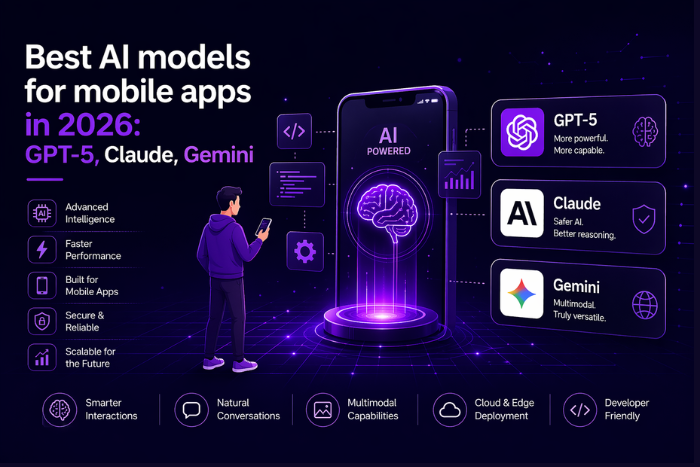
Best AI Models for Mobile Apps in 2026: GPT-5, Claude, Gemini
Best AI Models for Mobile Apps in 2026: GPT-5, Claude, Gemini Explore the best AI models for mobile apps in 2026 including GPT-5, Claude, and Gemini for smarter, scalable app development. Introduction Artificial Intelligence is redefining mobile app experiences, making applications smarter, faster, and more personalized than ever before. In 2026, selecting the best AI models for mobile apps in 2026: GPT-5, Claude, Gemini has become a critical decision for businesses aiming to stay competitive in a rapidly evolving digital landscape. Modern mobile applications rely on AI models for features like conversational interfaces, recommendation engines, predictive analytics, and automation. Leading models such as GPT-5, Claude, and Gemini are shaping the future of AI-powered mobile solutions by offering advanced natural language understanding, multimodal capabilities, and scalable performance. Whether you’re building a chatbot, a productivity app, or an AI-powered marketplace, choosing the right AI model directly impacts user experience, performance, and cost. This guide explores the capabilities, use cases, and strategic benefits of these models, helping businesses make informed decisions for mobile app development in 2026. Why Best AI Models for Mobile Apps in 2026: GPT-5, Claude, Gemini is Important Choosing the right AI model is essential for building high-performing mobile applications. Understanding the best AI models for mobile apps in 2026: GPT-5, Claude, Gemini helps businesses maximize efficiency and innovation. Enhanced User ExperienceAI models enable personalized and intelligent interactions. Improved App PerformanceAdvanced models provide faster and more accurate outputs. Scalable AI CapabilitiesEasily handle growing user demand and complex queries. Competitive AdvantageLeveraging top AI models helps differentiate your app. Automation & EfficiencyReduces manual effort through intelligent processes. Future-Ready ApplicationsEnsures compatibility with emerging AI technologies. Types of Solutions Using Best AI Models for Mobile Apps in 2026 Different AI models are suited for various mobile app use cases: Conversational AI AppsChatbots and virtual assistants powered by GPT-5 and Claude. Content Generation AppsAI-driven tools for text, image, and video creation. Productivity & Workflow AppsSmart automation tools for businesses and professionals. E-commerce & Recommendation AppsPersonalized product suggestions using AI models. Healthcare AI AppsDiagnostics, patient interaction, and health monitoring solutions. Education & Learning AppsAI tutors and personalized learning platforms. Finance & Fintech AppsFraud detection, financial insights, and automation. Multimodal AI ApplicationsApps combining text, voice, and visual AI capabilities. Get Free Quotation Now..!! Key Features of Best AI Models for Mobile Apps in 2026: GPT-5, Claude, Gemini Leading AI models offer advanced features that enhance mobile applications: Natural Language UnderstandingHuman-like conversation and context awareness. Multimodal CapabilitiesAbility to process text, images, audio, and video. High Accuracy & ReliabilityImproved output quality for better user trust. Real-Time ProcessingInstant responses for seamless user interaction. Customizable AI ModelsTailored solutions based on business needs. Scalable ArchitectureSupports high traffic and large datasets. Secure Data HandlingEnsures privacy and compliance with regulations. Integration FlexibilityEasy integration with mobile apps and APIs. Development Process Implementing AI models into mobile apps requires a structured approach: Requirement Analysis & AI StrategyDefining use cases and selecting the right AI model. Data Collection & PreparationGathering and cleaning datasets for training. Model Selection & CustomizationChoosing between GPT-5, Claude, or Gemini based on needs. App Development & IntegrationIntegrating AI models into mobile applications. Testing & OptimizationEnsuring accuracy, speed, and performance. Deployment & LaunchReleasing the app with optimized AI functionality. Monitoring & Continuous ImprovementUpdating models and improving performance over time. Technology Stack for Best AI Models for Mobile Apps in 2026: GPT-5, Claude, Gemini Modern AI-powered mobile apps use advanced technologies: Programming Languages: Python, JavaScript, Swift, KotlinAI Frameworks: TensorFlow, PyTorchAPIs & SDKs: OpenAI API, Anthropic API, Google AI APIsMobile Frameworks: Flutter, React NativeCloud Platforms: AWS, Google Cloud, Microsoft AzureDatabase: MongoDB, PostgreSQL, FirebaseDevOps Tools: Docker, KubernetesAnalytics Tools: Power BI, Tableau Cost Factors for Best AI Models for Mobile Apps in 2026: GPT-5, Claude, Gemini The cost of implementing AI models depends on several factors: Model SelectionAdvanced models may have higher API or licensing costs. App ComplexityMore features increase development expenses. Data RequirementsHigh-quality datasets require investment. Infrastructure CostsCloud and computing resources impact overall cost. Integration ComplexityConnecting AI with existing systems adds effort. Maintenance & UpdatesContinuous improvements and monitoring. Usage-Based PricingMany AI models charge based on API usage. Latest Trends AI model advancements are shaping the future of mobile applications: Multimodal AI GrowthCombining text, image, and voice processing. On-Device AI ProcessingReducing dependency on cloud infrastructure. AI Personalization at ScaleHyper-personalized user experiences. AI Agents & AutomationAutonomous systems performing complex tasks. Low-Code AI IntegrationFaster deployment with minimal coding. AI Ethics & Responsible AIFocus on transparency and fairness. Real-Time AI ApplicationsInstant insights and interactions. Why Choose Us for Best AI Models for Mobile Apps in 2026: GPT-5, Claude, Gemini Choosing the right development partner is crucial for leveraging AI effectively. We help businesses integrate the best AI models for mobile applications in 2026: GPT-5, Claude, Gemini into scalable and high-performance applications. AI Expertise Experienced team specializing in advanced AI model integration. Custom AI Solutions Tailored applications based on your business goals. End-to-End Development From strategy to deployment and ongoing support. Scalable Architecture Apps designed to handle growth and increasing demand. Advanced Technology Stack Using cutting-edge tools and frameworks. Cost-Effective Solutions Optimized development for maximum ROI. Transparent Communication Clear updates and collaboration throughout the project. We focus on delivering intelligent mobile applications that drive engagement, efficiency, and business growth. Looking to integrate the best AI models into your mobile app?Let’s build a powerful AI-driven application tailored to your needs.Contact us today for a free consultation and development roadmap. Get Free Quotation Now..!! Key Points : Choose from top AI models like GPT-5, Claude, and Gemini for mobile apps Enhance user experience with advanced conversational and multimodal AI Build scalable AI-powered mobile apps with real-time performance Select the right model based on use case, cost, and app complexity Leverage APIs and cloud platforms for seamless AI integration Optimize costs with usage-based pricing and efficient infrastructure FAQ’s What are the best AI models for mobile apps in 2026? Top models include GPT-5, Claude, and Gemini. Which AI model is best for chatbots? GPT-5 and Claude are highly effective for conversational AI applications. Can
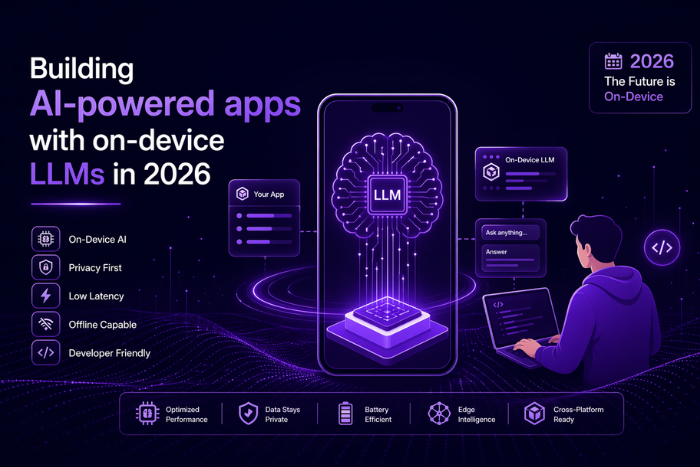
Building AI-Powered Apps with On-Device LLMs in 2026
Building AI-Powered Apps with On-Device LLMs in 2026 Build AI-powered apps with on-device LLMs in 2026 for faster performance, privacy, and scalable mobile AI solutions. Introduction Artificial Intelligence is entering a new phase where performance, privacy, and speed are becoming top priorities for mobile applications. One of the biggest innovations driving this shift is the rise of on-device Large Language Models (LLMs). Instead of relying entirely on cloud-based AI, businesses are now focusing on building AI-powered apps with on-device LLMs in 2026 to deliver faster, more secure, and cost-efficient solutions. On-device LLMs allow AI models to run directly on smartphones, tablets, and edge devices. This means reduced latency, offline functionality, and improved data privacy—critical factors in industries like healthcare, finance, and enterprise applications. With advancements in mobile hardware and optimized AI frameworks, deploying LLMs locally is now more practical than ever. For businesses, this shift opens new opportunities to create intelligent mobile apps that are responsive, scalable, and user-centric. Whether it’s AI assistants, recommendation engines, or real-time analytics, on-device AI is redefining how mobile applications are built and experienced in 2026. Why Building AI-Powered Apps with On-Device LLMs in 2026 is Important The move toward on-device AI is transforming mobile app development. Understanding building AI-powered apps with on-device LLMs in 2026 helps businesses stay ahead of technological trends. Enhanced Privacy & SecuritySensitive data stays on the device, reducing risks. Faster Response TimeEliminates dependency on cloud latency. Offline FunctionalityApps work even without internet connectivity. Reduced Cloud CostsLower reliance on expensive cloud infrastructure. Improved User ExperienceReal-time interactions with minimal delay. Regulatory ComplianceEasier adherence to data protection laws. Types of Solutions for Building AI-Powered Apps with On-Device LLMs in 2026 On-device LLMs enable a wide range of innovative mobile applications: AI Chatbots & AssistantsOffline conversational AI with instant responses. Personal Productivity AppsSmart assistants for scheduling, writing, and task management. Healthcare AI ApplicationsOn-device diagnostics and patient data processing. Voice & Speech Recognition AppsReal-time speech processing without cloud dependency. Smart Keyboard & Writing ToolsPredictive text and grammar correction using local AI models. Recommendation SystemsPersonalized suggestions processed directly on the device. Enterprise Mobile SolutionsSecure AI applications for business operations. Edge AI ApplicationsReal-time analytics for IoT and connected devices. Get Free Quotation Now..!! Key Features of Building AI-Powered Apps with On-Device LLMs in 2026 On-device AI introduces powerful features that enhance mobile app performance: Low Latency ProcessingInstant AI responses without network delays. Data Privacy by DesignNo need to send sensitive data to external servers. Offline AI CapabilitiesFunctionality available without internet access. Energy-Efficient ModelsOptimized AI models for mobile hardware. Real-Time Decision MakingImmediate insights and actions. Seamless User ExperienceSmooth and uninterrupted interactions. Reduced Bandwidth UsageLess reliance on data transmission. Adaptive Learning ModelsAI improves based on user behavior locally. Development Process Building AI-powered mobile apps with on-device LLMs requires a strategic approach: Use Case Definition & PlanningIdentifying where on-device AI adds value. Data Collection & OptimizationPreparing datasets suitable for lightweight models. Model Selection & CompressionChoosing and optimizing LLMs for mobile deployment. App Development & IntegrationEmbedding AI models into mobile applications. Performance OptimizationEnsuring efficient memory and battery usage. Testing & ValidationVerifying accuracy and responsiveness. Deployment & MonitoringLaunching and continuously improving the app. Technology Stack for Building AI-Powered Apps with On-Device LLMs in 2026 Modern on-device AI apps rely on advanced technologies: Programming Languages: Python, Swift, Kotlin, JavaScriptAI Frameworks: TensorFlow Lite, PyTorch Mobile, ONNX RuntimeMobile Frameworks: Flutter, React NativeEdge AI Tools: Core ML, Android ML KitCloud Platforms: AWS, Google Cloud (for hybrid models)Database: SQLite, FirebaseDevOps Tools: Docker, KubernetesOptimization Tools: Quantization, Model Pruning Cost Factors for Building AI-Powered Apps with On-Device LLMs in 2026 The cost of developing on-device AI apps depends on several factors: Model Complexity & SizeLarger models require more optimization effort. Device CompatibilitySupporting multiple devices increases development cost. Data PreparationHigh-quality datasets require time and resources. Development ExpertiseSkilled AI engineers impact overall cost. Testing & OptimizationEnsuring performance across devices. Hybrid Infrastructure NeedsCombining cloud and on-device processing. Maintenance & UpdatesContinuous improvements and model updates. Latest Trends The evolution of on-device AI is shaping the future of mobile applications: Edge AI ExpansionMore processing happening directly on devices. Smaller, Efficient LLMsLightweight models optimized for mobile. Privacy-First AI DevelopmentFocus on user data protection. Hybrid AI ArchitecturesCombining cloud and on-device processing. AI-Powered Super AppsMulti-functional apps with integrated AI features. Hardware AccelerationAI chips improving mobile performance. Real-Time PersonalizationInstant, user-specific experiences. Why Choose Us for Building AI-Powered Apps with On-Device LLMs in 2026 Choosing the right development partner is crucial for leveraging on-device AI effectively. We specialize in building AI-powered apps with on-device LLMs in 2026 that are fast, secure, and scalable. AI & Edge Expertise Deep experience in on-device and edge AI development. Custom AI Solutions Tailored applications based on your business needs. Performance Optimization Efficient models for speed and battery performance. End-to-End Development From strategy to deployment and maintenance. Scalable Architecture Apps designed to grow with your business. Advanced Technology Stack Using cutting-edge AI frameworks and tools. Transparent Communication Clear updates throughout the development process. We help businesses build next-generation AI apps that deliver real value and competitive advantage. Want to build fast and privacy-first AI apps with on-device LLMs?Let’s create intelligent mobile solutions tailored to your business.Contact us today for a free consultation and AI strategy. Get Free Quotation Now..!! Key Points : Build faster apps with on-device LLMs for real-time AI performance Enhance data privacy by processing user data directly on devices Enable offline AI functionality without relying on cloud connectivity Reduce cloud infrastructure costs with edge AI processing Deliver seamless user experience with low latency responses Use optimized lightweight AI models for mobile performance FAQ’s What are on-device LLMs? On-device LLMs are AI models that run directly on mobile devices instead of cloud servers. Why use on-device AI for mobile apps? It improves privacy, reduces latency, and enables offline functionality. Are on-device LLMs as powerful as cloud-based models? They are optimized for efficiency, though slightly smaller than cloud models. Can AI apps work without internet using on-device models? Yes, on-device AI enables full offline functionality. What industries benefit from on-device AI? Healthcare,
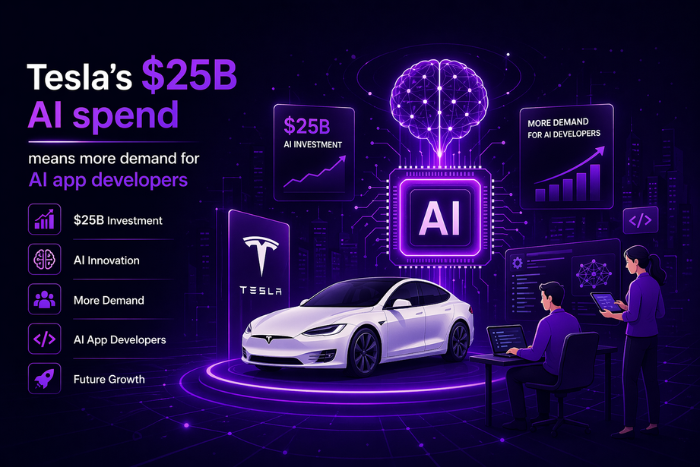
Tesla’s $25B AI Spend Means More Demand for AI App Developers
Tesla’s $25B AI Spend Means More Demand for AI App Developers Discover how Tesla’s $25B AI spend is increasing demand for AI app developers and shaping future AI-powered mobile applications. Introduction Artificial Intelligence is rapidly becoming the backbone of modern digital innovation, and major investments from global tech leaders are accelerating this transformation. One of the most significant developments is Tesla committing an estimated $25 billion toward AI and robotics. This massive investment signals a major shift in how AI technologies will be developed, deployed, and scaled across industries. Understanding Tesla’s $25B AI spend means more demand for AI app developers is essential for businesses, startups, and tech professionals. As AI adoption grows, companies across sectors—from healthcare and finance to retail and mobility—are racing to build intelligent applications. This surge creates unprecedented demand for skilled AI app developers capable of designing scalable, high-performance solutions. Mobile applications, in particular, stand to benefit from these advancements. AI-powered apps are becoming smarter, faster, and more personalized. With increased investment in AI infrastructure and innovation, businesses must prepare to leverage these opportunities or risk falling behind in an increasingly competitive digital landscape. Why Tesla’s $25B AI Spend Means More Demand for AI App Developers is Important The scale of AI investment by companies like Tesla has far-reaching implications for the tech ecosystem. Understanding Tesla’s $25B AI spend means more demand for AI app developers helps businesses adapt to emerging opportunities. Increased Demand for AI TalentCompanies are actively seeking skilled developers to build AI-powered applications. Acceleration of AI InnovationLarge investments push rapid advancements in AI capabilities. Expansion of AI Use CasesMore industries adopting AI-driven solutions. Competitive Business AdvantageEarly adopters gain a significant edge in the market. Improved App CapabilitiesAI apps become more intelligent and user-focused. Global Digital TransformationBusinesses shift toward AI-first strategies. Types of Solutions Driven by AI Investment Growth The rise in AI spending is driving demand for a wide range of application types: AI-Powered Mobile ApplicationsSmart apps with real-time decision-making capabilities. Autonomous Systems & Mobility AppsApplications supporting self-driving and smart transportation systems. AI Chatbots & Virtual AssistantsIntelligent conversational interfaces for businesses. Predictive Analytics PlatformsData-driven insights for business decision-making. Computer Vision ApplicationsImage recognition for healthcare, retail, and security. Voice Recognition SystemsSpeech-enabled applications and assistants. Robotics & Automation SoftwareAI-driven automation tools for industries. Enterprise AI SolutionsScalable applications for large organizations. Get Free Quotation Now..!! Key Features of Tesla’s $25B AI Spend Means More Demand for AI App Developers AI-powered applications influenced by large-scale investments offer advanced features: Real-Time IntelligenceInstant insights and automated decision-making. Advanced Machine Learning ModelsImproved accuracy and predictive capabilities. Scalable InfrastructureSupports high user demand and large datasets. Automation & EfficiencyReduces manual processes and increases productivity. Personalized User ExperienceTailored content and recommendations. Cross-Platform FunctionalitySeamless performance across devices and platforms. Data Security & ComplianceEnsures safe handling of sensitive data. Continuous Learning SystemsAI models that evolve and improve over time. Development Process Building AI-powered applications in this evolving landscape requires a structured approach: Business Analysis & AI StrategyIdentifying opportunities for AI integration. Data Collection & PreparationGathering and processing relevant datasets. Model Development & TrainingBuilding machine learning models for specific use cases. Application DevelopmentIntegrating AI into mobile or web applications. Testing & OptimizationEnsuring accuracy, performance, and scalability. Deployment & IntegrationLaunching applications and connecting systems. Monitoring & Continuous ImprovementUpdating models and improving performance over time. Technology Stack for Tesla’s $25B AI Spend Means More Demand for AI App Developers Modern AI applications rely on advanced technologies: Programming Languages: Python, Java, C++, RAI/ML Frameworks: TensorFlow, PyTorch, Scikit-learnMobile Technologies: Flutter, React Native, Swift, KotlinCloud Platforms: AWS, Google Cloud, Microsoft AzureData Processing Tools: Apache Spark, HadoopDatabase: MongoDB, PostgreSQL, BigQueryDevOps Tools: Docker, KubernetesVisualization Tools: Power BI, Tableau Cost Factors for Tesla’s $25B AI Spend Means More Demand for AI App Developers AI development costs are influenced by multiple factors: Project ComplexityAdvanced AI solutions require more time and resources. Data RequirementsHigh-quality datasets increase development costs. Development Team ExpertiseSkilled AI developers command higher rates. Infrastructure & Computing PowerAI models require significant processing capabilities. Integration with Existing SystemsComplex integrations add to development costs. Maintenance & UpdatesContinuous model training and optimization. Time-to-Market RequirementsFaster delivery may increase overall costs. Latest Trends AI investment growth is shaping several key trends in the app development industry: AI-First Mobile ApplicationsApps designed with AI at their core functionality. Autonomous Systems IntegrationIncreased use of AI in mobility and robotics. Generative AI AdoptionAI tools for content creation and automation. Edge AI ComputingProcessing AI tasks directly on devices. AI-as-a-Service (AIaaS)Cloud-based AI solutions for businesses. Hyper-PersonalizationHighly customized user experiences. AI + IoT IntegrationSmart ecosystems powered by connected devices. Why Choose Us for Tesla’s $25B AI Spend Means More Demand for AI App Developers Adapting to the rapid rise in AI demand requires expertise and innovation. We help businesses leverage these opportunities with advanced AI app development solutions. AI Development Expertise Experienced team specializing in AI-powered applications. Scalable Solutions Applications designed to grow with your business needs. End-to-End Services From strategy to deployment and maintenance. Advanced Technology Integration Using cutting-edge tools for high-performance apps. Cost-Optimized Development Efficient solutions that maximize ROI. Transparent Communication Clear updates and collaboration throughout the project. Future-Ready Applications Built to adapt to evolving AI trends and technologies. We focus on delivering intelligent applications that drive business growth and innovation. Ready to leverage the growing demand for AI-powered applications?Let’s build scalable and future-ready AI solutions for your business.Contact us today for a free consultation and development roadmap. Get Free Quotation Now..!! Key Points : Tesla $25B AI investment is accelerating demand for AI app developers Businesses must adopt AI-powered mobile apps to stay competitive Rising AI investments are expanding opportunities across industries Advanced AI features like automation and personalization are becoming standard Demand for skilled AI developers is increasing globally Early adoption of AI technologies provides a strong market advantage FAQ’s Why is Tesla investing $25B in AI? Tesla is investing heavily to advance AI capabilities in robotics, autonomous systems, and automation technologies. How does Tesla’s AI investment impact app development? It increases demand for AI developers and accelerates innovation in AI-powered
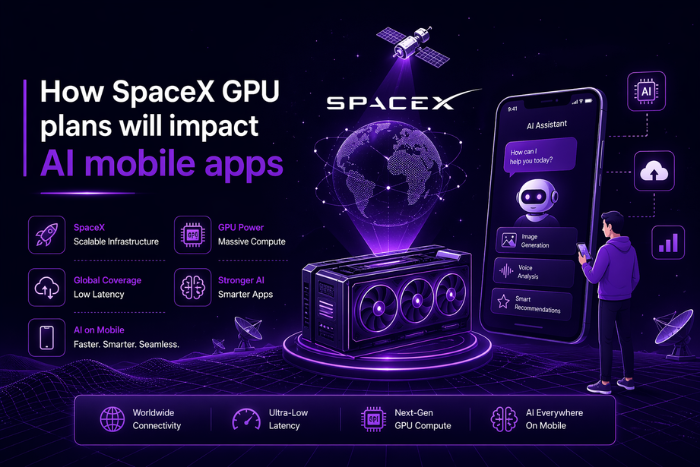
How SpaceX GPU Plans Will Impact AI Mobile Apps
How SpaceX GPU Plans Will Impact AI Mobile Apps Explore how SpaceX GPU plans will impact AI mobile apps, costs, performance, scalability, and future mobile AI innovation. Introduction The rapid evolution of artificial intelligence is heavily dependent on computing power, and GPUs (Graphics Processing Units) play a critical role in enabling advanced AI capabilities. With SpaceX reportedly exploring in-house GPU development, the landscape of AI infrastructure is poised for significant change. This shift has far-reaching implications, especially for mobile applications powered by AI. Understanding how SpaceX GPU plans will impact AI mobile apps is essential for businesses, developers, and tech leaders aiming to stay competitive. Mobile AI apps—from chatbots and recommendation engines to computer vision and voice assistants—require efficient, scalable, and cost-effective compute resources. Any disruption or innovation in GPU supply and performance can directly influence app capabilities, development costs, and user experiences. As companies seek faster, smarter, and more responsive mobile applications, innovations in GPU technology could redefine how AI is built, deployed, and scaled on mobile platforms. This guide explores the impact, opportunities, and strategic considerations businesses must understand in 2026 and beyond. Why How SpaceX GPU Plans Will Impact AI Mobile Apps is Important The influence of GPU advancements extends beyond hardware—it reshapes the entire AI ecosystem. Understanding how SpaceX GPU plans will impact AI mobile apps helps businesses prepare for technological shifts and competitive advantages. Improved AI PerformanceFaster GPUs enable real-time AI processing in mobile apps. Reduced Dependency on Third-Party ChipsIn-house GPU development may stabilize supply chains. Cost Optimization OpportunitiesNew GPU players can reduce pricing pressure in the market. Enhanced ScalabilityAI apps can handle more users and complex computations. Innovation AccelerationDevelopers gain access to more powerful AI tools. Competitive AdvantageBusinesses adopting early innovations can outperform competitors. Types of Solutions Impacted by SpaceX GPU Plans The development of new GPU technologies will influence multiple types of AI-powered mobile applications: AI Chatbots & Virtual AssistantsFaster response times and improved natural language understanding. Computer Vision AppsReal-time image and video processing for mobile platforms. Recommendation SystemsMore accurate personalization using advanced machine learning models. Voice Recognition AppsEnhanced speech processing with lower latency. Gaming & AR/VR ApplicationsHigh-performance rendering and AI-driven interactions. Healthcare AI AppsFaster diagnostics and real-time monitoring capabilities. Fintech & Fraud Detection AppsImproved security through advanced AI algorithms. On-Device AI ApplicationsReduced reliance on cloud processing for better privacy and speed. Get Free Quotation Now..!! Key Features of How SpaceX GPU Plans Will Impact AI Mobile Apps Emerging GPU innovations are expected to introduce powerful features into AI mobile applications: High-Speed Data ProcessingFaster computation enables real-time AI features. Low Latency PerformanceImmediate response times for enhanced user experience. Energy EfficiencyOptimized GPU designs for mobile-friendly performance. Advanced AI Model SupportAbility to run complex neural networks efficiently. Edge AI CapabilitiesProcessing AI tasks directly on devices instead of the cloud. Improved Graphics & VisualizationBetter rendering for AR/VR and gaming apps. Scalable Infrastructure SupportSeamless scaling for growing user bases. Enhanced SecurityOn-device processing reduces data exposure risks. Development Process Adapting to new GPU advancements requires a strategic development approach: Requirement Analysis & AI StrategyIdentifying use cases where GPU advancements can add value. Data Preparation & Model SelectionOptimizing datasets and choosing efficient AI models. Architecture DesignDesigning systems for edge and cloud-based AI processing. AI Model DevelopmentBuilding and training models optimized for GPU performance. Integration with Mobile AppsEmbedding AI capabilities into mobile platforms. Testing & Performance OptimizationEnsuring efficient GPU utilization and smooth app performance. Deployment & Continuous MonitoringLaunching and optimizing apps based on real-world usage. Technology Stack for How SpaceX GPU Plans Will Impact AI Mobile Apps Modern AI mobile apps influenced by GPU advancements use cutting-edge technologies: Programming Languages: Python, Swift, Kotlin, JavaAI/ML Frameworks: TensorFlow, PyTorch, ONNXMobile Frameworks: Flutter, React NativeCloud Platforms: AWS, Google Cloud, Microsoft AzureEdge AI Tools: TensorFlow Lite, Core MLData Processing: Apache Spark, HadoopDevOps Tools: Docker, KubernetesVisualization Tools: Power BI, Tableau Cost Factors for How SpaceX GPU Plans Will Impact AI Mobile Apps GPU developments can directly influence the cost of AI mobile app development: GPU Availability & PricingIncreased competition may reduce hardware costs. Infrastructure CostsMore efficient GPUs can lower cloud computing expenses. Model Training ExpensesFaster GPUs reduce training time and associated costs. Integration ComplexityAdapting to new hardware may require additional development effort. Scalability RequirementsHigh-performance apps may need advanced infrastructure. Maintenance & UpdatesContinuous optimization for new GPU capabilities. Development Team ExpertiseSkilled AI engineers may impact overall project cost. Latest Trends The intersection of GPU innovation and AI is shaping several key trends in mobile app development: Edge AI ExpansionMore AI processing happening directly on mobile devices. AI-Powered Super AppsMulti-functional apps integrating multiple AI features. Real-Time AI ProcessingInstant insights and responses in mobile applications. GPU-as-a-Service (GPUaaS)On-demand GPU access via cloud platforms. AI + 5G IntegrationFaster connectivity enabling advanced AI use cases. Sustainable ComputingEnergy-efficient GPUs reducing environmental impact. Custom AI Hardware DevelopmentCompanies building specialized chips for specific use cases. Why Choose Us for How SpaceX GPU Plans Will Impact AI Mobile Apps Adapting to rapid technological changes requires expertise and strategic planning. We help businesses leverage innovations like GPU advancements to build future-ready AI mobile applications. AI & Mobile Expertise Deep experience in developing AI-powered mobile applications. Future-Ready Solutions We design apps optimized for next-generation GPU technologies. Cost-Optimized Development Efficient strategies to reduce infrastructure and development costs. Scalable Architecture Apps built to handle growth and increasing AI demands. Advanced Technology Integration Leveraging AI, cloud, and edge computing for high performance. Transparent Development Process Clear communication and regular updates throughout the project. Performance-Driven Approach Focus on speed, efficiency, and user experience. We empower businesses to stay ahead in the evolving AI landscape with innovative and scalable mobile solutions. Want to future-proof your AI mobile app with next-gen GPU technology?Let’s build high-performance AI solutions tailored to your business.Contact us today for expert guidance and development support. Get Free Quotation Now..!! Key Points : Understand how SpaceX GPU plans can transform AI mobile app performance Improve real-time AI processing with faster and more efficient GPU capabilities Reduce development and infrastructure costs through increased GPU competition Enhance scalability for AI-powered mobile

