
Discover edtech app development features students want in 2026, including AI, gamification, personalization, and scalable learning solutions.
Introduction
The education technology industry is evolving rapidly as student expectations, digital learning behaviors, and technological innovation reshape how educational platforms are designed. In 2026, successful educational applications must go beyond traditional e-learning by offering personalized, engaging, and highly interactive experiences. Understanding edtech app development features students want 2026 is essential for schools, startups, enterprises, and educational institutions seeking to build competitive, future-ready learning platforms.
Modern students demand AI-powered personalization, mobile-first experiences, gamification, real-time collaboration, microlearning, and seamless accessibility across devices. Whether developing online learning platforms, tutoring apps, virtual classrooms, skill development systems, or institutional education software, integrating the right features can dramatically improve student retention, engagement, and learning outcomes.
As the global edtech ecosystem expands, businesses that align with the latest student-centered development trends can unlock scalable growth opportunities while transforming digital education experiences. This guide explores the essential features, development strategies, technologies, and future trends driving edtech app success in 2026.
Why Edtech App Development Features Students Want 2026 is Important
Meeting evolving student expectations is crucial for educational platforms aiming to remain relevant and effective in an increasingly competitive digital landscape.
- Higher Student Engagement
Interactive and personalized learning increases retention and participation. - Improved Learning Outcomes
AI-driven recommendations optimize educational experiences. - Competitive Advantage
Student-focused innovation strengthens market positioning. - Scalable Digital Education
Modern architectures support institutional growth. - Better Accessibility
Multi-device and remote learning expand educational reach. - Enhanced Monetization Opportunities
Advanced features improve subscriptions and revenue models. - Future-Ready Learning Ecosystems
Technology adoption supports long-term relevance.
Types of Solutions for Edtech App Development Features Students Want 2026
Educational platforms in 2026 span multiple digital learning categories:
- E-Learning Platforms
Course delivery, skill development, and certification systems. - Virtual Classroom Apps
Live classes, collaboration tools, and teacher-student communication. - Language Learning Apps
AI tutors, speech recognition, and adaptive practice systems. - Test Preparation Platforms
Exam simulation, analytics, and personalized revision. - Corporate Training Apps
Employee upskilling and enterprise education. - STEM Learning Platforms
Virtual labs, simulations, and interactive modules. - Gamified Learning Apps
Reward systems, quizzes, and competitive education. - Mental Wellness & Student Support Apps
Academic productivity and emotional well-being tools.
Key Features of Edtech App Development Features Students Want 2026
Modern students expect advanced, intuitive, and engaging educational features:
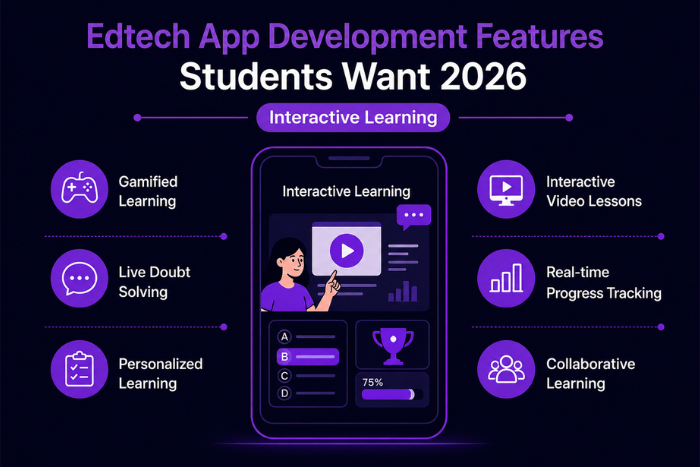
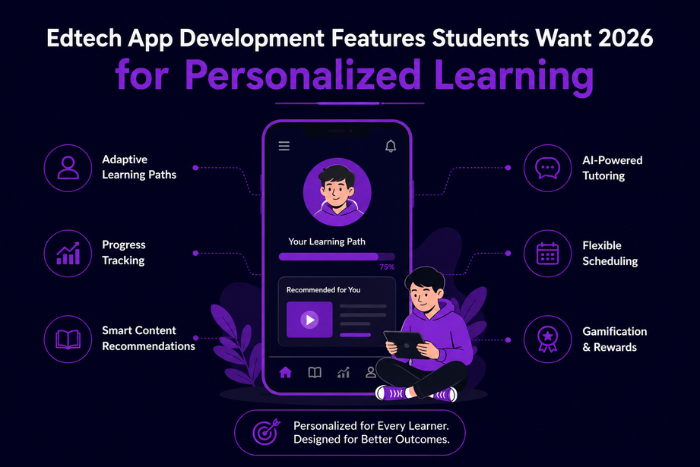
- AI-Powered Personalized Learning
Adaptive course recommendations and individualized learning paths. - Gamification & Reward Systems
Badges, points, leaderboards, and challenges. - Live Classes & Real-Time Collaboration
Video learning, messaging, and group discussions. - Microlearning Modules
Bite-sized educational content for flexible learning. - Offline Learning Access
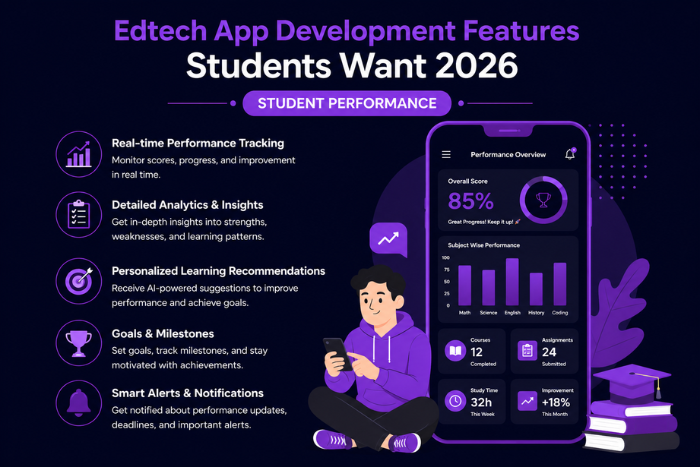
Downloadable resources with smart syncing. - Learning Analytics & Progress Tracking
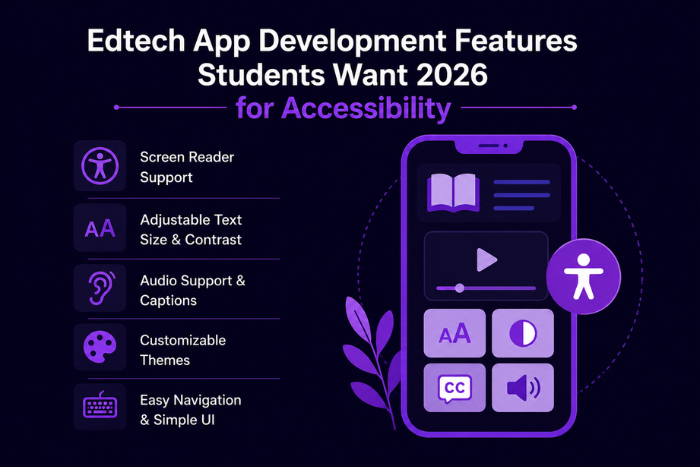
Performance dashboards and predictive insights. - Voice Search & AI Tutors
Conversational learning assistants and accessibility tools. - Multi-Language Support
Localization for global education scalability. - Blockchain Certifications
Secure digital credentials and academic verification. - Career Mapping Integration
Skills alignment with career opportunities.
Development Process
Building future-ready edtech apps requires a strategic, user-centered development process:
- Market Research & Student Behavior Analysis
Identify target learners, educational gaps, and demand trends. - Feature Planning & MVP Development
Define core features aligned with student needs. - UI/UX Design
Create intuitive, mobile-first, and student-friendly experiences. - Technology Stack Selection
Choose scalable infrastructure and integrations. - App Development
Build front-end, back-end, and AI-driven learning systems. - Third-Party Integrations
Add payment gateways, LMS tools, analytics, and communication systems. - Testing & Quality Assurance
Validate performance, accessibility, and engagement. - Deployment & Launch
Release across platforms with growth strategies. - Post-Launch Optimization
Monitor user feedback and continuously improve.
Technology Stack for Edtech App Development Features Students Want 2026
Modern educational apps leverage powerful technologies:
Programming Languages: Python, JavaScript, Swift, Kotlin
Mobile Frameworks: Flutter, React Native
AI/ML Frameworks: TensorFlow, PyTorch
Backend Technologies: Node.js, Django, Laravel
Cloud Platforms: AWS, Google Cloud, Microsoft Azure
Database Systems: PostgreSQL, MongoDB, Firebase
Video Streaming Tools: WebRTC, Zoom SDK, Agora
DevOps Tools: Docker, Kubernetes
Cost Factors for Edtech App Development Features Students Want 2026
Several factors influence edtech app development investment:
- Feature Complexity
AI, gamification, and live learning features increase costs. - UI/UX Requirements
Student-centered design impacts budgets. - Content Development
Multimedia and course creation require additional resources. - Third-Party Integrations
LMS, payment systems, and communication tools affect pricing. - Cloud Infrastructure
Scalable hosting for large user bases. - Maintenance & Updates
Continuous improvements and support. - Security & Compliance
Data privacy for minors and institutions. - Development Team Expertise
Specialized edtech developers and strategists.
Latest Trends in Edtech App Development Features Students Want 2026
Educational technology continues evolving with transformative trends:
- AI-First Learning Platforms
Personalized education at scale. - Gamified Learning Expansion
Increased student motivation and retention. - AR/VR Learning Experiences
Immersive education for practical skills. - Microlearning Growth
Short-form, mobile-friendly educational modules. - Blockchain Credentialing
Secure digital certification systems. - Social Learning Communities
Peer collaboration and engagement. - Voice-Based Learning
Conversational interfaces for accessibility. - Career-Focused Learning Ecosystems
Skill mapping with employability outcomes.
Why Choose Us
Building successful edtech platforms requires more than standard app development—it demands educational expertise, student behavior insights, and future-focused technology strategies. Our team creates scalable, student-centered educational applications designed to maximize engagement, learning outcomes, and business growth.
Edtech Development Expertise
Deep experience in building innovative educational platforms for diverse learning models.
Student-Centered Design
Apps designed around engagement, accessibility, and personalized learning.
AI & Advanced Learning Systems
Intelligent educational ecosystems powered by automation and analytics.
Scalable Infrastructure
Future-ready solutions for institutions, startups, and enterprises.
Gamification & Engagement Focus
Retention-driven features that improve educational outcomes.
End-to-End Development Support
From strategy and design to launch and optimization.
Performance & Security Excellence
Reliable, secure, and scalable digital learning environments.
Transparent Collaboration
Strategic communication and measurable project success.
We help businesses transform digital education through innovative, scalable, and conversion-focused edtech app solutions.
Ready to build the next generation of student-focused edtech apps in 2026?
Let’s create powerful, engaging educational platforms tailored to your vision.
Contact us today for expert edtech app development services.
Key Points :
- AI-powered personalized learning is a top feature students expect from edtech apps in 2026.
- Gamification boosts student engagement through rewards, challenges, and interactive experiences.
- Live classes, real-time collaboration, and virtual classrooms are essential for modern digital learning.
- Microlearning and mobile-first design support flexible, on-the-go education experiences.
- Learning analytics and progress tracking improve academic performance and retention.
FAQ's
Students prioritize AI personalization, gamification, live collaboration, microlearning, and mobile accessibility.
Personalized learning improves engagement, retention, and educational effectiveness.
Gamification increases motivation, participation, and long-term user retention.
Yes, AI tutors provide real-time assistance, personalized support, and scalable learning experiences.
Costs vary based on features, complexity, integrations, and scalability requirements.
Students increasingly prefer flexible, on-the-go learning experiences across devices.