



Learn Android app size optimization for new Play Store rules to improve performance, reduce size, and ensure compliance.

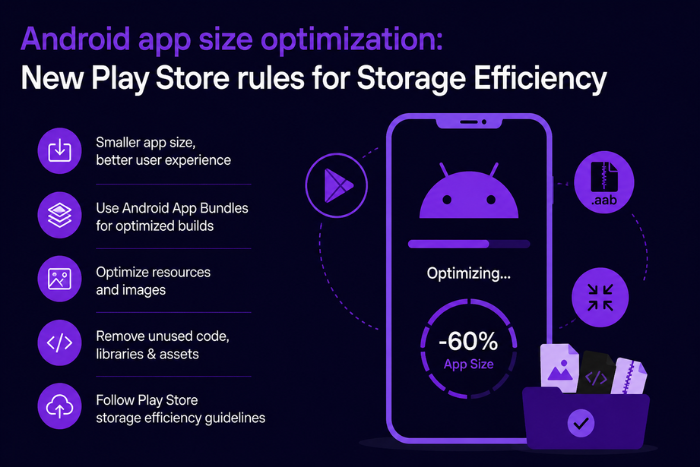
Introduction
As Android applications grow more feature-rich, managing app size has become a critical factor for success on the Google Play Store. With the introduction of new Play Store rules—including stricter size limits, improved performance standards, and compatibility requirements like 16 KB page size support—developers must rethink how they build and optimize their apps.
Android app size optimization: new Play Store rules is no longer just about reducing megabytes—it’s about ensuring faster downloads, better device compatibility, improved user retention, and compliance with evolving platform guidelines. Large apps can lead to higher uninstall rates, slower performance, and even rejection during Play Store submission.
Businesses and developers must adopt modern optimization techniques such as app bundling, code shrinking, resource compression, and native library alignment. These practices not only help meet Play Store requirements but also enhance user experience and operational efficiency.
In 2026, app size optimization is a competitive advantage. Apps that are lightweight, fast, and compliant stand out in crowded marketplaces and deliver superior performance across a wide range of Android devices.
Why Android App Size Optimization: New Play Store Rules is Important
Adhering to Play Store size and performance guidelines is essential for both compliance and user satisfaction.
- Faster App Downloads
Smaller apps install quickly, improving user acquisition. - Better User Retention
Lightweight apps reduce drop-offs and uninstall rates. - Play Store Compliance
Meets new requirements like app bundle standards and 16 KB page size compatibility. - Improved Performance
Optimized apps run smoother across devices. - Reduced Storage Usage
Critical for users with limited device space. - Enhanced Device Compatibility
Supports a wider range of Android devices. - Lower Data Consumption
Important for users in low-bandwidth regions. - Higher App Rankings
Performance and size influence Play Store visibility.
Types of Solutions for Android App Size Optimization: New Play Store Rules
Different optimization strategies are used depending on app architecture and requirements:
- APK & App Bundle Optimization
Reducing package size using Android App Bundles (AAB). - Code Shrinking & Minification
Removing unused code using tools like R8 and ProGuard. - Resource Optimization
Compressing images, removing unused assets, and optimizing layouts. - Native Library Optimization
Aligning ELF segments and reducing binary sizes. - Dynamic Feature Modules
Delivering features on demand instead of bundling everything upfront. - Asset Delivery Optimization
Using Play Asset Delivery for large media files. - Dependency Management
Eliminating unnecessary libraries and reducing bloat. - UI/UX Simplification
Designing lightweight interfaces for efficiency.
Key Features of Android App Size Optimization: New Play Store Rules
Modern optimization solutions offer advanced capabilities:
- App Bundle Implementation
Efficient delivery tailored to user devices. - 16 KB Page Size Compatibility
Ensures compliance with new Play Store requirements. - Advanced Code Optimization
Removes redundant code and improves performance. - Resource Compression
Reduces image and media sizes without quality loss. - Dynamic Delivery Systems
Loads features only when needed. - Performance Monitoring
Tracks app size impact on user experience. - Cross-Device Optimization
Ensures compatibility across different Android versions. - Security Preservation
Maintains app integrity while optimizing size.
Development Process
A structured approach ensures effective optimization and compliance:
- App Size Audit
Analyze current app size and identify bottlenecks. - Requirement Analysis
Understand Play Store rules and target device requirements. - Code Refactoring
Remove unused code and optimize architecture. - Resource Optimization
Compress assets and eliminate redundancies. - Native Library Alignment
Ensure compatibility with 16 KB page size standards. - App Bundle Implementation
Convert APK to optimized Android App Bundle. - Testing & Validation
Verify performance, compatibility, and compliance. - Deployment & Monitoring
Release optimized app and track performance metrics.
Technology Stack for Android App Size Optimization: New Play Store Rules
Efficient optimization relies on modern tools and technologies:
Programming Languages: Kotlin, Java, C++
Build Tools: Android Gradle Plugin, Gradle
Optimization Tools: R8, ProGuard, APK Analyzer
Packaging Tools: Bundletool, Android App Bundle (AAB)
Native Tools: Android NDK, ELF alignment tools
Testing Tools: Android Emulator, Firebase Test Lab
CI/CD Tools: Jenkins, GitHub Actions
Monitoring Tools: Firebase Analytics, Crashlytics
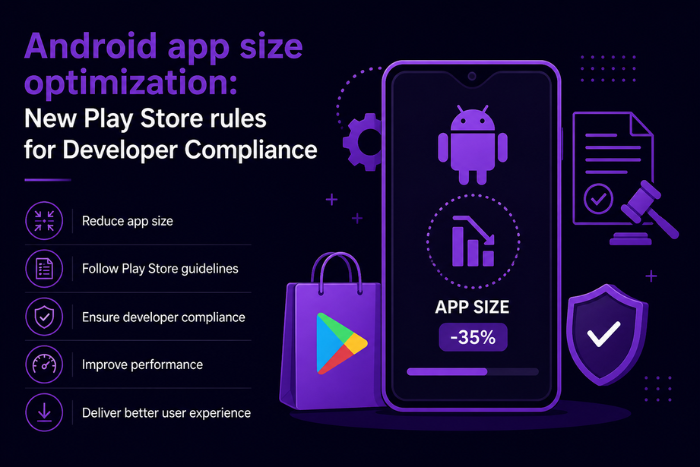
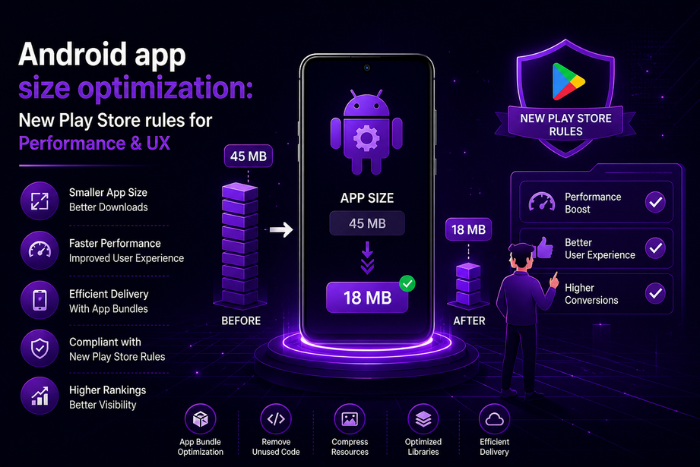
Cost Factors for Android App Size Optimization: New Play Store Rules
Several factors influence optimization costs:
- App Complexity
Larger apps require more optimization effort. - Codebase Structure
Poor architecture increases refactoring time. - Native Code Usage
Additional work needed for library alignment. - Third-Party Dependencies
Removing or replacing libraries may add cost. - Testing Requirements
Multi-device testing increases effort. - Compliance Requirements
Meeting Play Store rules adds development overhead. - Development Team Expertise
Skilled engineers impact project cost. - Maintenance Needs
Continuous optimization for future updates.
Latest Trends
Key trends shaping Android app size optimization include:
- Mandatory App Bundles
AAB replacing APK as the standard format. - Dynamic Feature Delivery
Modular apps for better performance. - 16 KB Page Size Adoption
New requirement for modern Android devices. - AI-Based Optimization Tools
Automated size reduction and performance tuning. - Edge Device Optimization
Supporting low-end and mid-range devices. - Cloud-Assisted Optimization
Offloading heavy features to cloud services. - Minimalist App Design
Lightweight UI/UX strategies gaining popularity.
Why Choose Us for Android App Size Optimization: New Play Store Rules
Optimizing Android apps requires deep technical expertise and a strategic approach. We help businesses ensure compliance while improving performance and user experience.
Proven Optimization Expertise
Extensive experience in reducing app size without compromising functionality.
Play Store Compliance Focus
We ensure your app meets all latest Google Play requirements.
Performance-Driven Approach
Optimization strategies focused on speed and efficiency.
Advanced Tool Integration
Use of cutting-edge tools for precise optimization.
Scalable Solutions
Apps designed for long-term growth and updates.
Cost-Efficient Methods
Maximize performance while minimizing development costs.
Transparent Workflow
Clear communication and measurable results.
End-to-End Support
From audit to deployment and ongoing optimization.
We help you build lightweight, high-performance Android apps that meet Play Store standards and deliver exceptional user experiences.
Ready to optimize your Android app for the latest Play Store rules?
Let’s reduce app size and boost performance for better rankings.
Contact us today for expert Android app optimization services.
Key Points :
- Smaller apps improve download speed, user retention, and overall performance.
- Techniques like code shrinking, resource compression, and dynamic delivery reduce app size.
- Native library optimization is crucial for modern Android compatibility.
- Regular optimization helps maintain performance after updates and new features.
- Play Store ranking and visibility improve with better app efficiency.
- Lightweight apps perform better across low-end and high-end Android devices.
FAQ's
Google Play now emphasizes app bundles, optimized delivery, and compatibility requirements like 16 KB page size.
It improves performance, reduces downloads, and enhances user retention.
By using code shrinking, resource compression, and dynamic feature modules.
Tools include R8, ProGuard, APK Analyzer, and Bundletool.
Yes, smaller and faster apps often perform better in rankings.
Yes, even complex apps can significantly reduce size with proper techniques.