




Astro vs Next.js vs Remix: Performance benchmarks 2026 comparing speed, SEO, scalability, DX, and framework ROI.
Introduction
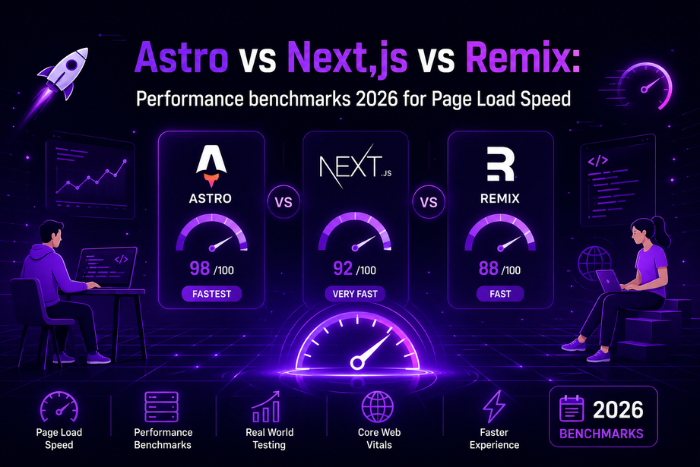
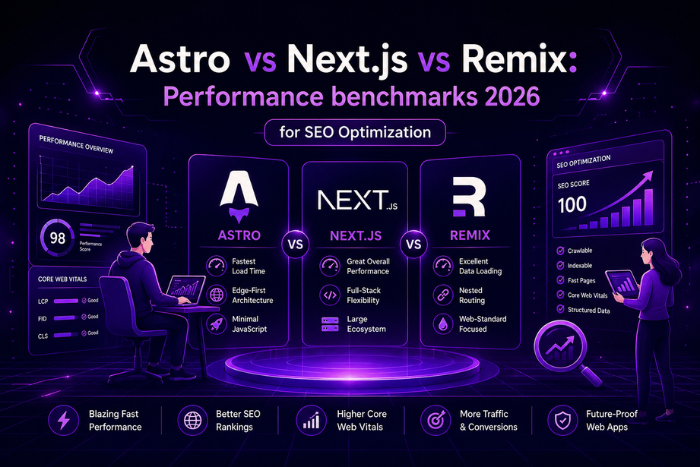
As modern businesses demand faster websites, better SEO, stronger scalability, and optimized user experiences, selecting the right front-end framework has become a critical strategic decision. Understanding Astro vs Next.js vs Remix: Performance benchmarks 2026 helps businesses, developers, and digital leaders choose the ideal technology for long-term ROI.
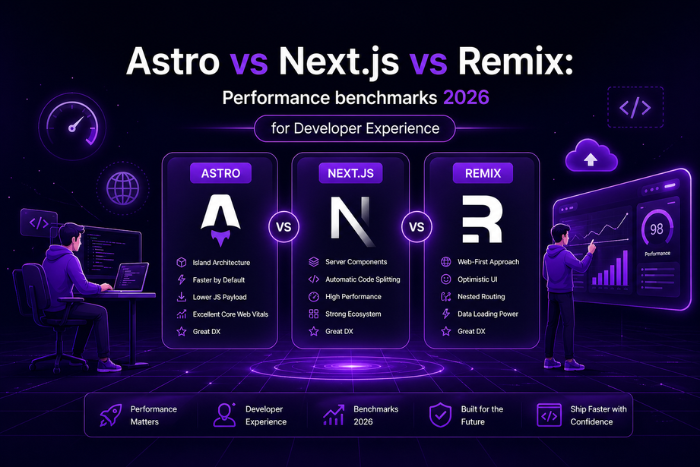
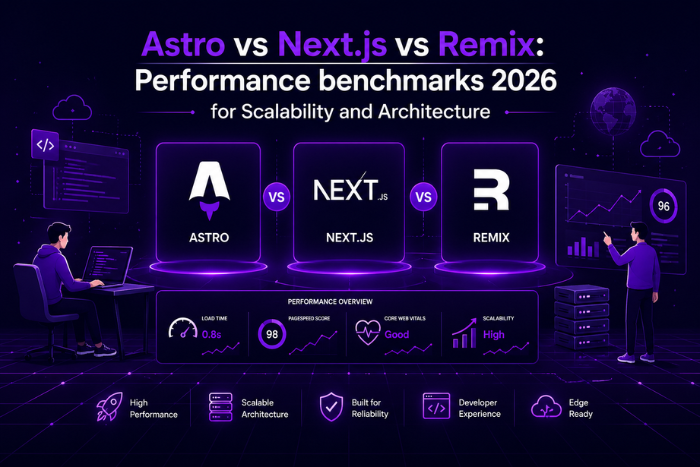
In 2026, Astro, Next.js, and Remix each offer unique advantages. Astro emphasizes zero-JavaScript by default and exceptional content-focused speed. Next.js continues dominating enterprise web development with full-stack React capabilities, advanced rendering strategies, and scalability. Remix focuses on web standards, progressive enhancement, and highly efficient server-side rendering.
The best framework choice depends on project goals—whether building marketing websites, SaaS platforms, e-commerce ecosystems, or enterprise applications. Performance benchmarks across Core Web Vitals, Time to First Byte (TTFB), SEO, development speed, and maintenance costs are essential for making informed technology investments that support growth and digital competitiveness.
Why Astro vs Next.js vs Remix: Performance Benchmarks 2026 is Important
Framework decisions directly affect website profitability, user experience, and scalability.
- Website Speed
Performance impacts SEO rankings and conversions. - Core Web Vitals
Google prioritizes technical performance. - Scalability
Framework flexibility supports future growth. - Development Efficiency
Faster builds reduce project timelines. - SEO Performance
Technical architecture affects visibility. - Operational Costs
Development and maintenance budgets vary. - User Experience
Faster, smoother interactions improve engagement. - Technology Future-Proofing
Long-term framework stability matters.
Types of Solutions for Astro vs Next.js vs Remix in 2026
Different frameworks excel for specific business needs:
- Astro for Content Websites
Blogs, documentation, and marketing sites. - Next.js for Enterprise Platforms
SaaS, e-commerce, and scalable applications. - Remix for Transactional Web Apps
Dynamic applications prioritizing speed and standards. - Headless CMS Integrations
API-driven content ecosystems. - Progressive Web Apps
Mobile-friendly web experiences. - E-Commerce Websites
SEO and conversion-focused storefronts. - Corporate Websites
High-performance lead generation platforms. - Custom Web Applications
Tailored digital systems.
Key Features of Astro vs Next.js vs Remix: Performance Benchmarks 2026
Each framework offers distinct technical strengths:
- Astro Islands Architecture
Minimal JavaScript and superior speed. - Next.js Partial Prerendering
Static speed with dynamic flexibility. - Remix Nested Routing
Efficient data loading and UX. - Server-Side Rendering (SSR)
Strong SEO support. - Static Site Generation (SSG)
Faster content delivery. - Edge Deployment
Global performance optimization. - Developer Experience
Build speed, tooling, and maintainability. - API Integrations
Scalable third-party system support. - Modern Security Standards
Enterprise-grade architecture.
Development Process
Choosing the right framework requires strategic planning:
- Business Requirement Analysis
Define project objectives and scalability needs. - Performance Benchmark Evaluation
Compare Core Web Vitals and rendering speed. - Architecture Selection
Choose SSR, SSG, or hybrid approaches. - UI/UX Design
Build optimized user journeys. - Development Implementation
Deploy framework-specific solutions. - SEO Optimization
Technical search readiness. - Testing & Validation
Speed, security, and functionality. - Continuous Scaling
Ongoing optimization.
Technology Stack
Modern framework ecosystems rely on advanced technologies:
Astro Stack: Astro, TypeScript, Markdown, Tailwind CSS
Next.js Stack: Next.js 15+, React, Node.js, Vercel
Remix Stack: Remix, React Router, Node.js, Cloudflare
CMS Platforms: Contentful, Sanity, WordPress Headless
Hosting: Vercel, Netlify, AWS, Cloudflare Pages
Databases: PostgreSQL, MongoDB, Supabase
Performance Tools: Lighthouse, WebPageTest, Core Web Vitals
SEO Tools: Schema, Search Console, Ahrefs
Cost Factors for Astro vs Next.js vs Remix: Performance Benchmarks 2026
Several factors influence framework investment:
- Project Complexity
Enterprise systems require larger budgets. - Developer Expertise
Specialized talent affects costs. - Maintenance Requirements
Long-term support varies. - Hosting Infrastructure
Performance environments differ. - Scalability Goals
Growth impacts architecture investment. - SEO Optimization
Technical improvements add value. - Third-Party Integrations
API complexity affects pricing. - Migration Costs
Transitioning between frameworks can be expensive.
Latest Trends in Astro vs Next.js vs Remix Framework Development 2026
Framework ecosystems continue evolving rapidly:
- Partial Hydration Growth
Reduced JavaScript for better UX. - Edge-Native Architectures
Faster global delivery. - AI-Powered Development
Enhanced developer productivity. - Composable Web Architectures
Modular digital ecosystems. - Performance-Driven SEO
Core Web Vitals prioritization. - Headless CMS Expansion
Flexible content infrastructure. - Progressive Enhancement
Better accessibility and resilience. - Multi-Framework Strategies
Businesses using hybrid solutions.
Why Choose Us for Astro vs Next.js vs Remix: Performance Benchmarks 2026
We help businesses make strategic framework investments that maximize ROI.
Advanced Framework Expertise
Deep specialization across Astro, Next.js, and Remix.
Performance-First Development
Optimized for speed, SEO, and conversions.
Business-Centric Technology Consulting
Framework selection aligned with business goals.
Scalable Digital Architecture
Future-ready development solutions.
Transparent Cost Planning
Clear budgeting and ROI forecasting.
SEO Optimization Excellence
Technical architecture built for rankings.
Enterprise Security Standards
Robust protection for digital assets.
Continuous Innovation Support
Helping businesses stay ahead of framework evolution.
We empower businesses to build faster, smarter, and more scalable websites using the right framework for long-term digital success.
Ready to choose the best framework for your business in 2026?
Let’s build high-performance digital platforms optimized for growth and profitability.
Contact us today for expert framework consultation and development.
Key Points :
- Compare Astro vs Next.js vs Remix: Performance benchmarks 2026 for speed, SEO, scalability, and business ROI.
- Understand which framework delivers the best Core Web Vitals, TTFB, and user experience.
- Evaluate Astro for content-focused websites, Next.js for enterprise platforms, and Remix for dynamic applications.
- Learn how framework architecture impacts SEO rankings, conversions, and long-term scalability.
- Explore development costs, hosting requirements, and maintenance considerations for each framework.
- Leverage modern technologies like SSR, SSG, edge deployment, and headless CMS integrations.
FAQ's
Astro often delivers the best raw speed for content-heavy websites due to minimal JavaScript.
Yes, Next.js excels for complex enterprise applications and scalable ecosystems.
Remix is ideal for dynamic web applications focused on progressive enhancement.
All three can perform well, but implementation strategy matters most.
It can work, but Next.js or Remix may be better for highly interactive SaaS apps.
Developer preference varies, but Next.js generally has broader ecosystem support.