


Core Web Vitals update April 2026: New INP thresholds explained for SEO, UX, performance optimization, and website ranking success.
Introduction
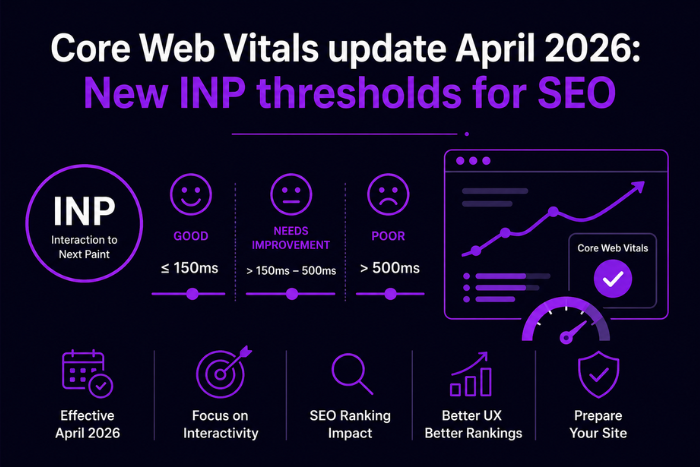
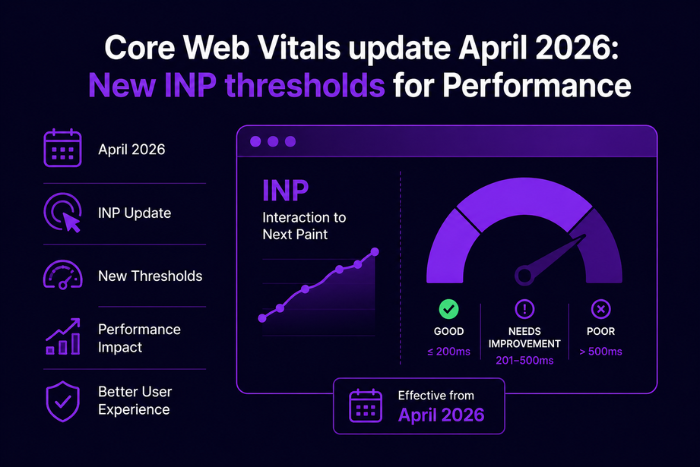
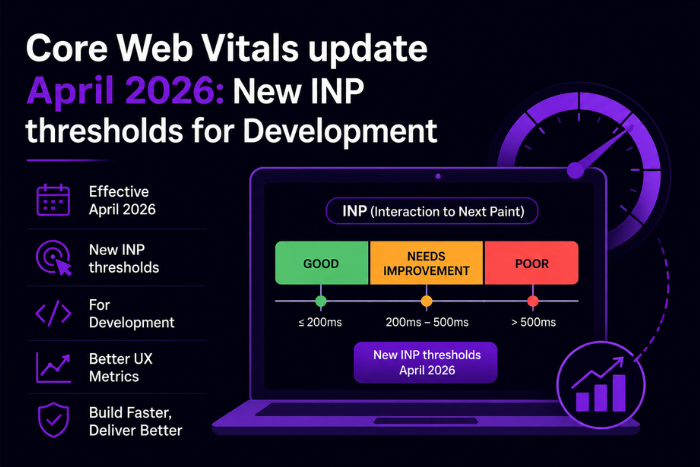
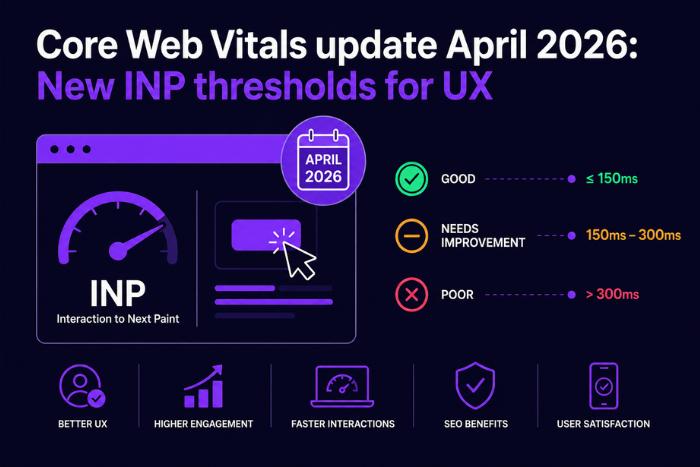
Google’s Core Web Vitals update April 2026: New INP thresholds marks a major shift in how website performance is measured and ranked. Interaction to Next Paint (INP) has become increasingly critical as Google refines user experience standards, replacing outdated responsiveness metrics with stricter benchmarks that better reflect real-world interactivity.
For businesses, website owners, developers, and SEO professionals, adapting to the new INP thresholds is essential for maintaining search visibility, improving user engagement, and protecting conversion rates. A poor INP score can directly affect search rankings, bounce rates, and customer satisfaction, especially for mobile-first websites and interactive web applications.
This update requires organizations to focus more aggressively on JavaScript optimization, third-party script management, server response times, and front-end efficiency. Understanding the implications of Core Web Vitals update April 2026: New INP thresholds is crucial for future-proofing digital performance strategies and ensuring websites remain competitive in Google’s evolving algorithm landscape.
Why Core Web Vitals Update April 2026: New INP Thresholds is Important
The April 2026 update significantly impacts website SEO, user experience, and revenue performance.
- Improved Search Rankings
Better INP scores can strengthen organic visibility. - Enhanced User Experience
Faster interactions improve customer satisfaction. - Higher Conversion Rates
Responsive websites reduce friction during user journeys. - Mobile Optimization
Critical for mobile-first indexing and performance. - Competitive SEO Advantage
Businesses with optimized performance outperform slower competitors. - Reduced Bounce Rates
Faster responsiveness keeps users engaged. - Future Algorithm Compliance
Staying ahead of Google’s ranking changes protects long-term traffic. - Revenue Protection
Performance directly impacts lead generation and sales.
Types of Solutions for Core Web Vitals Update April 2026
Organizations need various optimization strategies to meet new thresholds:
- JavaScript Performance Optimization
Reducing main-thread blocking and script execution times. - Server-Side Rendering (SSR)
Faster initial rendering for better interactivity. - Static Site Generation (SSG)
Pre-rendered pages improving responsiveness. - Code Splitting
Loading only essential resources. - Third-Party Script Management
Limiting performance-heavy external tools. - Real User Monitoring (RUM)
Tracking field performance metrics. - Progressive Web Apps (PWAs)
Enhanced mobile responsiveness. - Edge Delivery Networks
Faster global content delivery.
Key Features of Core Web Vitals Update April 2026: New INP Thresholds
Key performance improvements required under new standards include:
- Lower Input Latency
Faster response to user interactions. - Optimized JavaScript Execution
Reduced processing bottlenecks. - Efficient Resource Loading
Faster scripts, fonts, and images. - Improved Main Thread Availability
Smoother browsing experiences. - Reduced Third-Party Impact
Lower script interference. - Advanced Monitoring Tools
Continuous performance analysis. - Mobile-First Responsiveness
Superior smartphone performance. - Enhanced UX Signals
Better engagement metrics.
Development Process
Meeting new INP thresholds requires a strategic technical process:
- Performance Audit
Analyze current Core Web Vitals metrics. - INP Bottleneck Identification
Detect scripts and resources causing delays. - Code Optimization
Improve JavaScript, CSS, and rendering efficiency. - Infrastructure Upgrades
Enhance hosting, CDN, and server performance. - Third-Party Script Reduction
Minimize unnecessary external dependencies. - Testing & Validation
Monitor lab and real-world performance. - SEO Alignment
Ensure technical optimization supports rankings. - Continuous Monitoring
Adapt to evolving Google standards.
Technology Stack
Modern optimization relies on advanced technologies:
Performance Tools: Lighthouse, PageSpeed Insights, WebPageTest, CrUX
Frameworks: Next.js, Nuxt.js, React, Vue
Monitoring: Cloudflare Web Analytics, New Relic, Datadog
CDN Services: Cloudflare, Fastly, Akamai
Build Tools: Vite, Webpack, Parcel
Code Optimization: Tree Shaking, Lazy Loading, Code Splitting
Hosting Platforms: Vercel, Netlify, AWS
Security & Speed: HTTP/3, Brotli Compression, Edge Functions
Cost Factors for Core Web Vitals Update April 2026: New INP Thresholds
Optimization costs vary depending on website complexity:
- Performance Audits
Initial diagnostic and reporting expenses. - Development Resources
Front-end and back-end optimization work. - Infrastructure Upgrades
CDN, hosting, and server improvements. - Third-Party Tool Replacement
Removing inefficient scripts may require alternatives. - Continuous Monitoring
Ongoing analytics subscriptions. - SEO Recovery Costs
Ranking losses may require additional investment. - Custom Development
Larger websites may require architectural redesigns. - Maintenance
Continuous updates to remain compliant.
Latest Trends in Core Web Vitals Update April 2026: New INP Thresholds
Performance optimization is evolving rapidly:
- INP-Centric SEO Strategies
Businesses prioritizing responsiveness optimization. - Edge Computing Adoption
Faster interactions via distributed infrastructure. - AI-Powered Performance Monitoring
Automated bottleneck detection. - JavaScript Minimization
Leaner front-end development. - Server Components
Reducing client-side processing. - Third-Party Script Governance
Stronger control over integrations. - Predictive Resource Loading
Anticipating user behavior for speed gains. - Performance-Driven UX Design
Building faster interfaces from inception.
Why Choose Us for Core Web Vitals Update April 2026: New INP Thresholds
We help businesses proactively adapt to Google’s evolving performance standards.
Core Web Vitals Expertise
Specialized experience in Google performance optimization.
Advanced INP Optimization
We target real-world responsiveness improvements.
SEO-Focused Performance Strategy
Performance enhancements aligned with ranking growth.
Technical Development Excellence
Deep front-end, server, and infrastructure expertise.
Scalable Solutions
Optimizations that support future updates.
Transparent Reporting
Clear performance metrics and measurable ROI.
Conversion-Focused Results
Faster websites that drive better business outcomes.
Continuous Monitoring Support
Ongoing compliance with future algorithm changes.
We empower businesses to maintain search visibility, improve user experience, and maximize digital growth through advanced performance optimization.
Ready to meet Google’s April 2026 Core Web Vitals standards?
Let’s optimize your website for faster interactions, better SEO, and stronger conversions.
Contact us today for expert performance optimization solutions.
Key Points :
- Learn how stricter INP standards affect website responsiveness, user experience, and conversions.
- Optimize JavaScript, server response times, and third-party scripts for improved INP performance.
- Discover essential strategies for maintaining Google search visibility under updated Core Web Vitals.
- Improve mobile-first website performance to meet new Google interactivity benchmarks.
- Explore technology solutions like SSR, CDN, code splitting, and real user monitoring.
FAQ's
INP (Interaction to Next Paint) measures how quickly a website responds to user interactions.
To create stricter standards for real-world website responsiveness and user experience.
Heavy JavaScript, third-party scripts, slow rendering, and server delays.
By optimizing code, reducing scripts, improving hosting, and monitoring real user data.
Yes, mobile devices often experience greater performance challenges.
Google PageSpeed Insights, Lighthouse, CrUX, and real user monitoring platforms.