


Explore the important features of a property management website including tenant portals, rent payments, listings, maintenance tracking, and analytics.
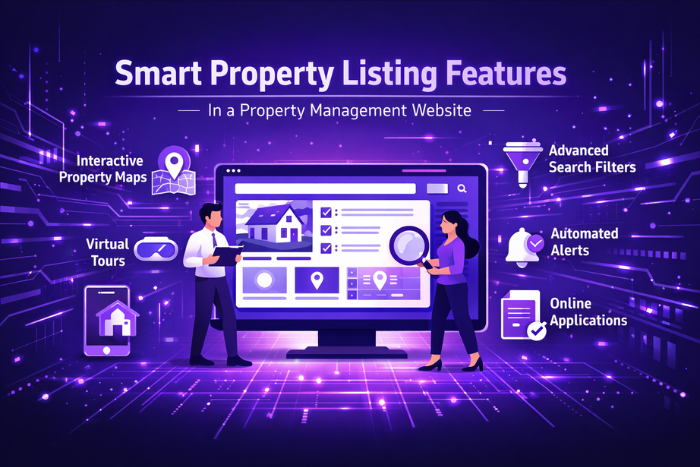
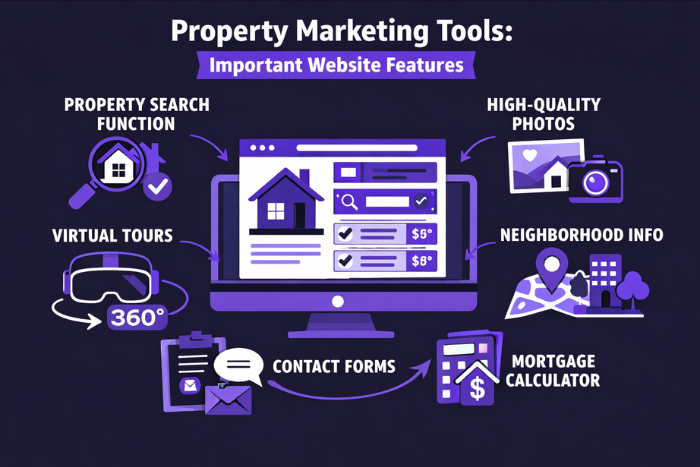
Important Features of a Property Management Website
The real estate industry is increasingly moving toward digital platforms to manage properties, communicate with tenants, and streamline administrative tasks. A modern property management website acts as a centralized platform where property owners, tenants, and managers can interact efficiently. Understanding the important features of a property management website is essential for real estate companies, property managers, and housing associations looking to simplify operations and improve tenant experiences.
Property management websites allow landlords and property managers to manage listings, collect rent payments, track maintenance requests, and monitor financial performance from a single dashboard. For tenants, these platforms provide convenient access to property information, online rent payment options, maintenance request forms, and communication tools.
A well-designed property management platform also helps businesses showcase available properties, attract potential tenants, and maintain transparency in property operations. By integrating advanced features such as automated billing, tenant portals, reporting tools, and cloud-based accessibility, property managers can significantly improve operational efficiency.
Whether you manage residential apartments, commercial buildings, vacation rentals, or multi-property portfolios, implementing the right features ensures a smooth management process and a better user experience. In this guide, we explore the key features, development process, technology stack, cost considerations, and latest trends in property management website development.
Why Important Features of a Property Management Website Are Necessary
A feature-rich property management website helps automate complex real estate operations while improving communication between tenants and property managers.
Here’s why implementing the important features of a property management website is essential:
Simplified Property Management
Managers can track tenants, leases, payments, and maintenance requests through a centralized system.Improved Tenant Experience
Online portals provide tenants with easy access to rent payments, maintenance requests, and communication tools.Efficient Financial Management
Automated billing and reporting tools help track rental income, expenses, and financial performance.Better Property Marketing
Property listings and availability updates help attract potential tenants and investors.Enhanced Communication
Built-in messaging systems keep tenants, owners, and managers connected.Scalable Real Estate Operations
Digital property management systems allow businesses to manage multiple properties efficiently.
With the right features, property management websites can improve productivity while providing transparency for all stakeholders.
Types of Property Management Platform Solutions
Property management platforms can be designed for different real estate business models depending on operational requirements.
Residential Property Management Platforms
Designed for managing apartments, rental homes, and housing communities.
Tenant management
Lease tracking
Rent collection
Commercial Property Management Systems
Used for managing office buildings, retail spaces, and commercial real estate.
Lease agreements
Tenant contracts
Financial reporting
Vacation Rental Management Platforms
These platforms manage short-term rental properties.
Online booking systems
Availability calendars
Guest management
Real Estate Listing and Management Websites
Platforms designed to display available properties and manage tenants.
Property listings
Inquiry management
Lead generation tools
Multi-Property Management Platforms
Suitable for property management companies handling multiple buildings or complexes.
Centralized dashboards
Portfolio management
Reporting tools
Each solution requires specific features depending on property type and management scale.
Key Features of a Property Management Website
To effectively manage real estate operations, property management websites must include several essential functionalities.
Tenant and Lease Management
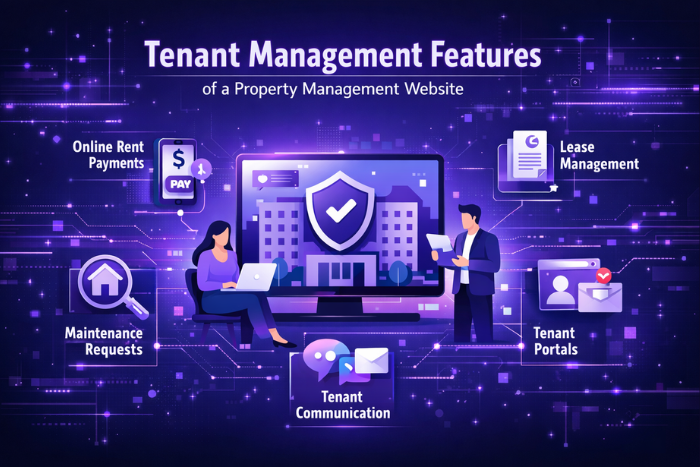
The platform should allow property managers to track tenant details, lease agreements, rental terms, and contract renewals.
Online Rent Collection and Billing
Tenants should be able to pay rent online through secure payment gateways, reducing delays and manual work.
Property Listings and Vacancy Management
Property managers can display available units, update vacancy status, and manage rental applications.
Maintenance Request Management
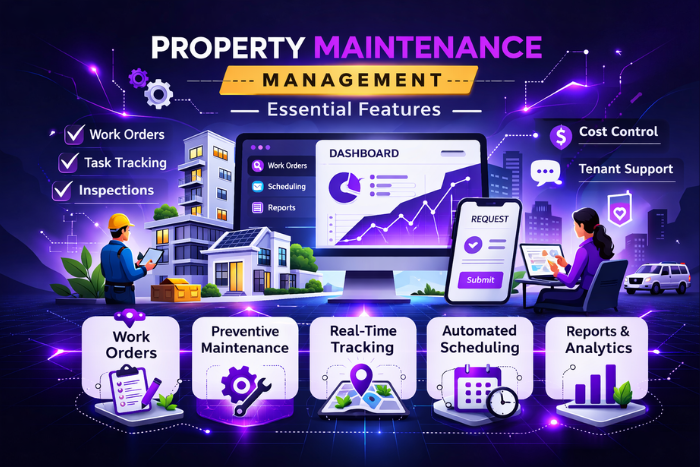
Tenants should be able to submit maintenance requests, which managers can track and assign to service providers.
Financial Reporting and Accounting
Real-time financial reports help track income, expenses, and property performance.
Document Management System
Important documents such as lease agreements, contracts, and legal forms can be securely stored and accessed.
Communication and Notifications
Built-in messaging systems allow property managers to communicate with tenants and send reminders for rent payments or maintenance updates.
Role-Based Access Control
Different users such as managers, tenants, and property owners can access specific sections of the platform.
Mobile-Friendly and Cloud-Based Access
Cloud-based platforms allow property managers to access the system from anywhere.
Analytics and Performance Dashboard
Dashboards provide insights into property occupancy, financial performance, and tenant activity.
These features create a comprehensive property management platform that improves efficiency and tenant satisfaction.
Development Process for a Property Administration Website
Building a property management website requires a structured development process to ensure functionality and scalability.
Requirement Analysis and Planning
Identify business needs, property types, and essential features.UI/UX Design and Wireframing
Create intuitive interfaces for property managers, tenants, and administrators.Technology Stack Selection
Choose frameworks, databases, and cloud infrastructure.Frontend and Backend Development
Develop the user interface, dashboards, and backend management systems.Feature Integration
Implement tenant portals, payment systems, reporting tools, and communication modules.Testing and Quality Assurance
Conduct security testing, usability testing, and performance optimization.Deployment and Launch
Launch the website on secure hosting platforms.Maintenance and Updates
Continuous updates ensure the platform remains secure and functional.
Following a structured development process ensures a reliable and scalable property management platform.
Technology Stack for Property Management Website Development
Modern property management platforms rely on robust technologies for performance and security.
Frontend Technologies: HTML5, CSS3, JavaScript, React, Angular
Backend Technologies: Node.js, Python, PHP, Laravel
Database Systems: MySQL, PostgreSQL, MongoDB
Cloud Platforms: AWS, Google Cloud Platform, Microsoft Azure
Payment Gateways: Stripe, PayPal, Razorpay
DevOps Tools: Docker, Kubernetes, GitHub Actions
Security Technologies: SSL encryption, OAuth authentication, firewall protection
Using a modern technology stack ensures scalability, reliability, and secure data handling.
Cost Factors in Property Management Website Development
The cost of building a property management website depends on multiple technical and operational factors.
Key cost considerations include:
Number of properties and management modules
Custom design and UI/UX requirements
Payment gateway and third-party integrations
Cloud infrastructure and hosting
Security and compliance requirements
Development team size and location
Maintenance and support services
Basic property management platforms require smaller investments, while advanced systems with automation and analytics require larger budgets.
Latest Trends in Property Management Website Development
Technology innovations continue to reshape the real estate and property management industry.
Key trends include:
AI-powered tenant screening systems
Automated rent reminders and smart billing systems
Smart building and IoT integrations
Cloud-based multi-property management platforms
Mobile-first property management solutions
Virtual property tours and digital leasing
Predictive analytics for property performance
Blockchain-based property transactions
These trends help property managers improve efficiency and provide better services to tenants.
Why Choose Us for Property Management Website Development
Developing a successful property management platform requires expertise in both real estate operations and modern web technologies.
Here’s why businesses choose us:
Expertise in Real Estate Software Solutions
We build scalable property management platforms tailored to the needs of real estate companies.Custom Feature Development
Our team integrates all important features of a property management website for efficient operations.Scalable and Secure Systems
Our platforms support multi-property portfolios with advanced security protocols.User-Friendly Interface Design
We create intuitive dashboards that make property management simple and efficient.Mobile and Cloud Integration
Access your property management system anytime from anywhere.End-to-End Development Services
From planning and design to deployment and maintenance.
We help real estate companies build powerful property management platforms that simplify operations and improve tenant experiences.
Looking to build a modern property management website for your business?
Our experts can develop a feature-rich platform tailored to your real estate operations.
Contact us today for a free consultation and project estimate.
Key Points :
- Property management websites help landlords and managers handle tenants, leases, rent payments, and maintenance from one platform.
- Key features include tenant and lease management, online rent collection, property listings, and maintenance request tracking.
- Financial reporting, communication tools, and role-based access improve transparency and operational efficiency.
- These platforms use technologies like cloud hosting, secure databases, payment gateways, and modern web frameworks.
- Development costs depend on features, integrations, UI/UX complexity, and hosting infrastructure.
- Trends include AI tenant screening, virtual property tours, smart building integrations, and cloud-based property management systems.
FAQ's
Key features include tenant management, online rent payments, maintenance tracking, property listings, financial reporting, and communication tools.
It provides a digital platform where property managers can manage tenants, collect rent, track maintenance requests, and manage property listings.
Yes. Modern platforms allow property managers to handle multiple properties through centralized dashboards.
Yes. Modern platforms allow property managers to handle multiple properties through centralized dashboards.
Technologies include modern web frameworks, cloud hosting platforms, secure databases, and payment gateway integrations.
Yes. Many platforms are designed for both small property owners and large real estate companies.
Yes. Many systems integrate with accounting and financial reporting tools to simplify bookkeeping.