

React Native 0.76 new architecture: Migration guide 2026 for faster apps, TurboModules, Fabric, migration costs, and scalable development.
Introduction
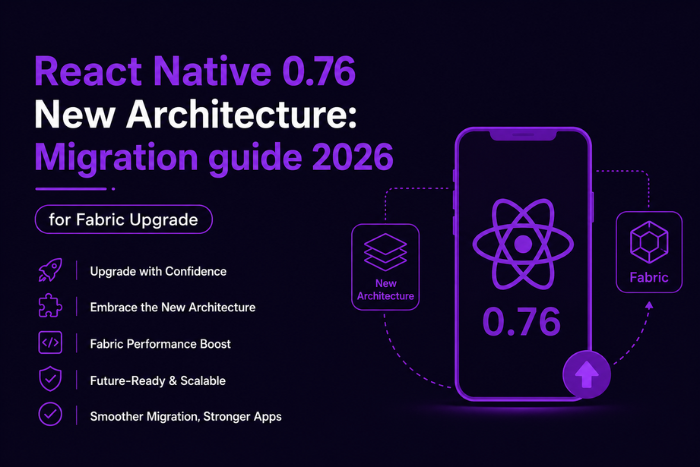
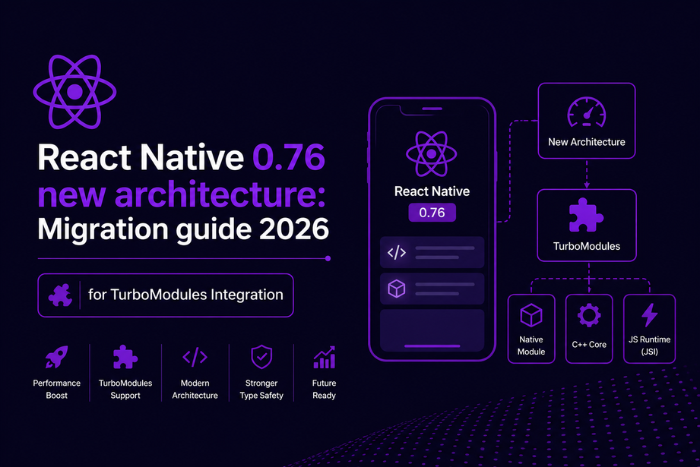
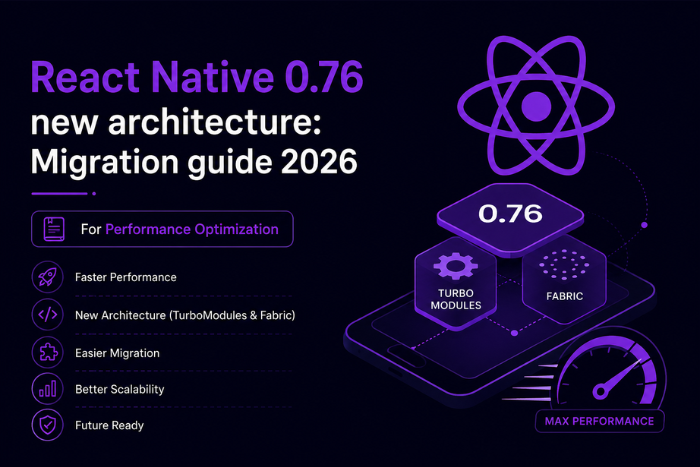
React Native 0.76 new architecture: Migration guide 2026 is essential for businesses and developers aiming to modernize mobile applications for improved performance, scalability, and maintainability. With React Native 0.76 making the new architecture the default standard, adopting technologies like Fabric, TurboModules, JSI, and Codegen is no longer optional for teams seeking long-term competitiveness.
Migrating to React Native’s new architecture significantly enhances app startup speed, rendering efficiency, native module performance, and overall user experience. However, successful migration requires strategic planning, dependency audits, native module adjustments, and compatibility management.
Understanding React Native 0.76 new architecture: Migration guide 2026 helps organizations future-proof applications while minimizing technical debt. Whether you are upgrading an existing enterprise app, scaling a startup product, or improving cross-platform mobile experiences, this migration can deliver substantial business and technical benefits. This guide covers migration strategy, development processes, technology requirements, costs, and trends to help businesses navigate React Native modernization successfully.
Why React Native 0.76 New Architecture: Migration Guide 2026 is Important
Modern mobile applications require faster performance and scalable infrastructure, and React Native’s architectural overhaul directly addresses these demands.
- Improved App Performance
Fabric and TurboModules reduce latency and improve rendering speed. - Enhanced Developer Productivity
Better debugging, native integration, and modularity improve workflows. - Long-Term Framework Stability
Future React Native updates prioritize the new architecture. - Reduced Bridge Bottlenecks
JSI enables faster communication between JavaScript and native code. - Scalable Enterprise Readiness
Supports larger applications with improved maintainability. - Better User Experience
Faster interactions, smoother animations, and reduced crashes.
Types of Solutions for React Native 0.76 New Architecture Migration
React Native migration services apply to various mobile app categories.
- Enterprise Mobile Applications
Large-scale apps requiring performance optimization and maintainability. - E-commerce Applications
Improved UI responsiveness and customer experiences. - Healthcare Apps
Secure, scalable, and reliable cross-platform systems. - Fintech Solutions
Performance-sensitive applications with enhanced security. - On-Demand Service Apps
Faster navigation, real-time updates, and improved user retention. - Social Media Platforms
High-performance rendering for dynamic content. - Educational Applications
Interactive, scalable mobile learning environments. - Custom SaaS Mobile Apps
Modernized app infrastructure for business growth.
Key Features of React Native 0.76 New Architecture: Migration Guide 2026
The new architecture introduces major technical improvements.
- TurboModules
Lazy-loaded modules improve native module performance. - Fabric Renderer
Faster UI rendering with modernized component architecture. - JavaScript Interface (JSI)
Direct communication without bridge bottlenecks. - Codegen Integration
Type-safe native bindings and automation. - Hermes Optimization
Improved JavaScript engine performance. - Enhanced Debugging Tools
Better developer visibility and troubleshooting. - Smaller App Sizes
Improved build efficiency for optimized deployment. - Future Compatibility
Preparedness for upcoming React Native releases.
Development Process
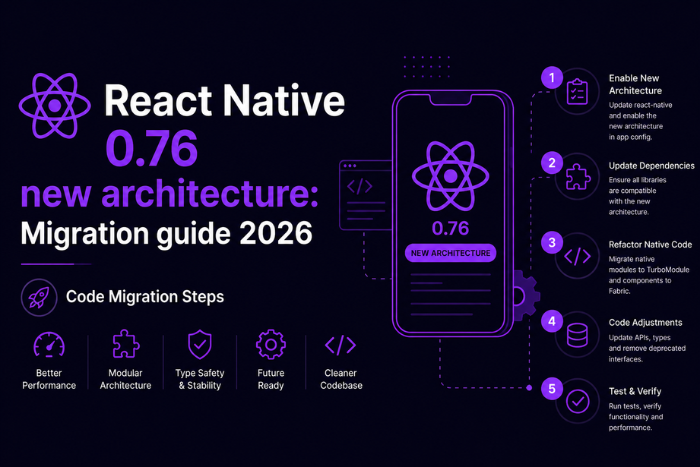
- Project Audit & Compatibility Assessment
Reviewing existing codebase, libraries, and native modules for migration readiness. - Dependency Validation
Ensuring third-party packages support React Native 0.76 architecture. - Architecture Enablement
Configuring Fabric, TurboModules, Hermes, and Codegen. - Custom Native Module Migration
Refactoring legacy modules into TurboModules. - UI Component Migration
Updating native UI components to Fabric. - Testing & Performance Optimization
Validating speed improvements, bug fixes, and compatibility. - Deployment & Continuous Monitoring
Launching upgraded applications with ongoing maintenance.
Technology Stack
Modern migration projects rely on advanced technologies.
Programming Languages: JavaScript, TypeScript, Swift, Kotlin, Java, Objective-C
Frameworks: React Native 0.76, Expo SDK, React Navigation
Architecture Tools: JSI, TurboModules, Fabric, Codegen
JavaScript Engine: Hermes
Testing Tools: Jest, Detox, Appium
CI/CD Tools: GitHub Actions, Bitrise, CircleCI
Cloud Platforms: AWS, Firebase, Azure
Performance Monitoring: Sentry, Firebase Crashlytics
Cost Factors for React Native 0.76 New Architecture Migration
Migration costs vary depending on technical complexity.
- Application Size
Larger codebases require more extensive migration work. - Third-Party Library Compatibility
Unsupported dependencies increase redevelopment needs. - Custom Native Module Complexity
Advanced native integrations raise implementation costs. - Testing Requirements
QA, performance audits, and bug resolution impact budgets. - Developer Expertise
Skilled React Native migration specialists improve outcomes but may cost more. - Deployment Infrastructure
CI/CD and cloud optimization may require additional investment. - Ongoing Maintenance
Future updates and architecture support contribute to long-term expenses.
Latest Trends
React Native development continues evolving rapidly.
- New Architecture Adoption by Default
Most modern projects are migrating proactively. - TypeScript-First Development
Improved scalability and maintainability. - Expo Managed Workflow Expansion
Easier integrations for enterprise projects. - Enhanced Performance Monitoring
Advanced tools for optimization. - Cross-Platform Enterprise Growth
Businesses increasingly prioritize unified development. - AI-Powered Mobile App Integrations
Combining GPT-based services with React Native apps. - Improved DevOps Automation
Faster releases and deployment cycles.
Why Choose Us for React Native 0.76 New Architecture Migration Guide 2026
Migrating to React Native 0.76 requires specialized technical expertise and strategic execution. We help businesses modernize mobile applications while minimizing risks and maximizing performance gains.
React Native Migration Expertise
Deep experience with Fabric, TurboModules, Hermes, and advanced React Native architecture.
End-to-End Migration Support
From audits and planning to deployment and optimization.
Performance-Focused Development
We prioritize measurable speed, efficiency, and scalability improvements.
Cost-Optimized Solutions
Efficient migration strategies that reduce technical debt and unnecessary expenses.
Enterprise-Ready Security
Secure, compliant, and future-proof development practices.
Scalable App Modernization
Building mobile applications designed for long-term growth.
Transparent Development Process
Clear communication, milestone tracking, and reliable delivery.
We empower businesses to transition seamlessly into the future of React Native development with confidence and efficiency.
Ready to modernize your mobile app with React Native 0.76?
Let’s build faster, scalable, future-ready applications together.
Contact us today for expert React Native migration support.
Key Points :
- React Native 0.76 new architecture migration improves app speed, scalability, and long-term maintainability
- TurboModules, Fabric, and JSI deliver faster rendering and reduced bridge bottlenecks
- Strategic migration planning minimizes compatibility risks and technical debt
- Hermes engine optimization enhances performance, startup speed, and resource efficiency
- Migration costs depend on app complexity, native modules, and third-party dependency updates
- Future-proof mobile applications with React Native 0.76 default architecture adoption
FAQ's
It includes Fabric, TurboModules, JSI, and Codegen for improved app performance and scalability.
Migration improves speed, stability, maintainability, and future compatibility.
Timelines range from weeks to months based on project complexity.
Yes, the new architecture significantly reduces bottlenecks and enhances performance.
Not all; dependency audits are essential before migration.