
Web3 integration for business websites: Use cases 2026 for security, digital ownership, payments, identity, and business innovation.
Introduction
As digital transformation evolves, businesses are rapidly exploring decentralized technologies to improve security, ownership, customer engagement, and operational transparency. Web3 integration for business websites: Use cases 2026 is emerging as a strategic priority for organizations seeking to stay competitive in the next generation of the internet.
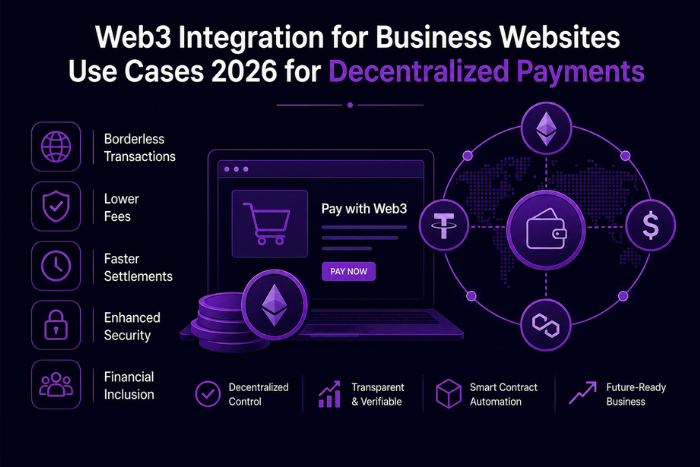
Web3 introduces blockchain-powered solutions that enable decentralized payments, digital identity verification, tokenization, smart contracts, NFT ecosystems, and transparent customer interactions. For business websites, this means more than simply accepting cryptocurrency—it represents a complete shift toward secure, trust-driven, and user-controlled digital ecosystems.
From e-commerce and SaaS to healthcare, finance, and enterprise operations, Web3 technologies are creating innovative opportunities for businesses to unlock new revenue streams, enhance customer trust, and future-proof their online infrastructure. Understanding the most valuable Web3 use cases in 2026 is essential for organizations aiming to leverage blockchain technology for growth, innovation, and competitive differentiation.
Why Web3 Integration for Business Websites: Use Cases 2026 is Important
Web3 adoption is transforming business websites into decentralized, secure, and innovation-driven platforms.
- Enhanced Security
Blockchain reduces fraud and strengthens data protection. - Digital Ownership
Users gain control over identity and assets. - Decentralized Payments
Cryptocurrency and token transactions expand payment options. - Transparency
Blockchain records improve trust and accountability. - New Revenue Models
NFTs, tokenization, and smart contracts unlock monetization. - Global Accessibility
Borderless transactions expand international reach. - Customer Engagement
Web3 communities foster loyalty. - Future-Proof Infrastructure
Businesses prepare for decentralized digital ecosystems.
Types of Solutions for Web3 Integration for Business Websites: Use Cases 2026
Businesses can implement Web3 in multiple strategic ways:
- Crypto Payment Gateways
Accept decentralized payments securely. - NFT Marketplaces
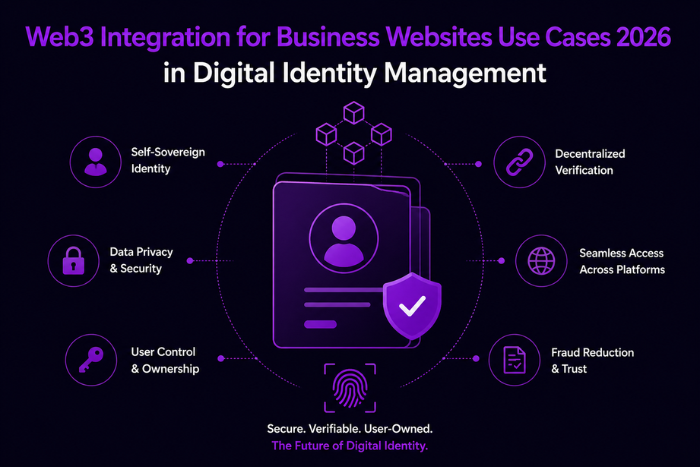
Monetize digital products and loyalty systems. - Decentralized Identity Verification
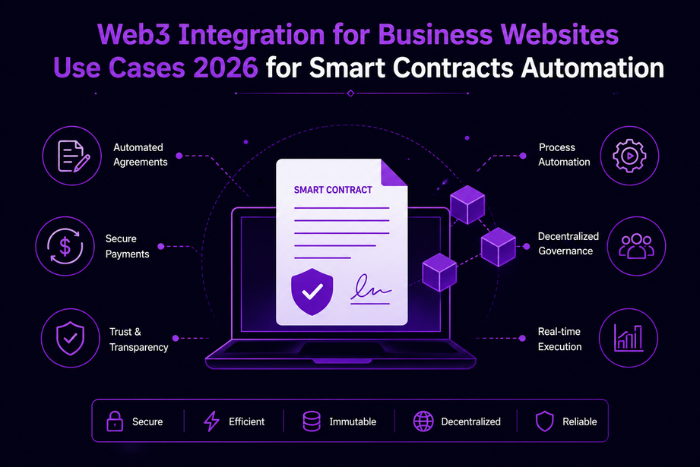
Blockchain-powered authentication systems. - Smart Contract Automation
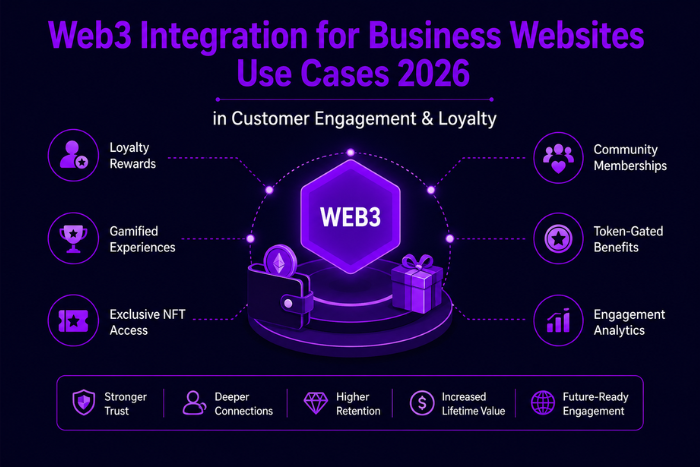
Secure, automated business agreements. - Tokenized Membership Systems
Reward-based ecosystems for customers. - DAO Governance Models
Community-driven decision-making platforms. - Blockchain Supply Chain Transparency
Verifiable product tracking systems. - Decentralized Data Storage
Secure hosting alternatives. - Web3 E-Commerce Platforms
Blockchain-enhanced online retail systems.
Key Features of Web3 Integration for Business Websites: Use Cases 2026
Modern Web3-enabled business websites benefit from advanced capabilities:
- Blockchain Security
Tamper-resistant infrastructure. - Wallet Integration
User-controlled authentication and transactions. - Tokenization
Digital assets and customer rewards. - Smart Contracts
Automated business processes. - Cross-Border Payments
Reduced transaction friction. - Decentralized Hosting
Enhanced uptime and censorship resistance. - Transparent Transactions
Publicly verifiable records. - Interoperability
Multi-chain integration possibilities. - Community Governance
Increased stakeholder participation.
Development Process
Implementing Web3 requires a structured technical strategy:
- Business Needs Analysis
Identify practical Web3 opportunities. - Blockchain Architecture Planning
Choose chains, wallets, and protocols. - UX/UI Design
Build user-friendly decentralized experiences. - Smart Contract Development
Automate transactions and workflows. - Security Auditing
Protect against vulnerabilities. - Frontend & Backend Integration
Connect blockchain infrastructure with websites. - Testing & Deployment
Ensure stability and scalability. - Maintenance & Scaling
Support evolving ecosystems.
Technology Stack for Web3 Integration for Business Websites: Use Cases 2026
Successful Web3 integration relies on advanced tools:
Blockchain Networks: Ethereum, Polygon, Solana, Avalanche
Smart Contracts: Solidity, Rust
Wallets: MetaMask, WalletConnect, Coinbase Wallet
Frontend: Next.js, React, Vue.js
Backend: Node.js, Express, Python
Storage: IPFS, Filecoin, Arweave
Security: Chainlink, OpenZeppelin
Payments: Stripe Crypto, Coinbase Commerce
Analytics: Dune, The Graph, Etherscan APIs
Cost Factors for Web3 Integration for Business Websites: Use Cases 2026
Several financial variables affect implementation costs:
- Blockchain Selection
Transaction fees vary by network. - Smart Contract Complexity
Advanced automation increases costs. - Security Audits
Essential for safe deployment. - Custom Frontend Development
UX quality impacts investment. - Wallet & Payment Integration
Additional infrastructure expenses. - Scalability Requirements
Enterprise systems require larger budgets. - Regulatory Compliance
Legal frameworks may increase costs. - Maintenance & Upgrades
Ongoing protocol support is critical.
Latest Trends in Web3 Integration for Business Websites: Use Cases 2026
Web3 innovation is accelerating rapidly:
- Real-World Asset Tokenization
Businesses digitizing ownership. - Decentralized Identity Expansion
Secure user authentication. - Layer 2 Adoption
Faster, lower-cost blockchain transactions. - AI + Web3 Integration
Smarter decentralized systems. - Enterprise Blockchain Adoption
Mainstream corporate implementation. - Zero-Knowledge Proofs
Privacy-focused authentication. - Web3 Loyalty Programs
Tokenized customer retention. - Cross-Chain Interoperability
Multi-network digital ecosystems.
Why Choose Us for Web3 Integration for Business Websites: Use Cases 2026
We help businesses strategically integrate Web3 technologies for measurable growth.
Blockchain Development Expertise
Deep experience in decentralized infrastructure.
Business-Driven Web3 Strategy
Practical use cases tailored for ROI.
Security-First Implementation
Comprehensive blockchain protection.
Scalable Web3 Architecture
Future-ready decentralized systems.
UX-Focused Development
Making Web3 user-friendly for mainstream adoption.
Transparent Project Delivery
Clear planning and communication.
Multi-Industry Experience
Solutions for e-commerce, SaaS, fintech, and enterprise.
Continuous Innovation Support
Helping businesses adapt to evolving Web3 opportunities.
We empower businesses to unlock decentralized innovation, improve trust, and create powerful digital ecosystems through advanced Web3 website integration.
Ready to transform your business website with Web3 innovation?
Let’s build secure, scalable, and future-ready decentralized digital experiences.
Contact us today for expert Web3 development solutions.
Key Points :
- Explore Web3 integration for business websites: Use cases 2026 for security, digital ownership, and innovation.
- Implement blockchain-powered solutions like crypto payments, smart contracts, and decentralized identity systems.
- Improve business website security, transparency, and customer trust through Web3 technologies.
- Discover tokenization, NFT ecosystems, and DAO governance opportunities for new revenue models.
- Build scalable decentralized websites using Ethereum, Polygon, Next.js, smart contracts, and blockchain APIs.
- Future-proof your website with next-generation decentralized technologies and customer engagement strategies.
FAQ's
It involves adding blockchain-powered features like payments, identity, smart contracts, and tokenization.
Web3 enhances security, transparency, ownership, and customer engagement.
Not always, but they are a common and valuable use case.
E-commerce, finance, healthcare, SaaS, and supply chain sectors.
Costs depend on complexity, blockchain choice, and security requirements.
Yes, decentralized systems often reduce common vulnerabilities.